
Harry Sidebottom
Author of Fire in the East
About the Author
Series
Works by Harry Sidebottom
The Burning Road: The scorching new historical thriller from the Sunday Times bestseller (2021) 32 copies
Il guerriero di Roma: Fuoco a Oriente-Il re dei re-Sole bianco-Il silenzio della spada (2014) 4 copies
The Wolves of the North 1 copy
Lion of the Sun 1 copy
The Mark of Death 1 copy
Strijder voor Rome 1 copy
King of Kings 1 copy
Associated Works
War and Society in the Roman World (Leicester-Nottingham Studies in Ancient Society) (1993) — Contributor — 53 copies
Tagged
Common Knowledge
- Canonical name
- Sidebottom, Harry
- Gender
- male
- Education
- Corpus Christi College, University of Oxford (D.Phil)
University of Manchester (M.Phil|1982) - Occupations
- historian
professor
author - Organizations
- Merton College, University of Oxford
Lincoln College, University of Oxford (Lecturer in Ancient History) - Agent
- Felicity Bryan Associates Literary Agency
- Short biography
- Cf. http://www.harrysidebottom.co.uk/Biog...
- Nationality
- UK
- Birthplace
- Newmarket, Suffolk, England, UK
- Associated Place (for map)
- England, UK
Members
Reviews
This arrived as a Christmas present. I am not sure I would have acquired for myself, but enjoyed it a lot. It inspired me to go back to the Historia Augusta.
Sidebottom is both an Oxford don in ancient history and a historical novelist; both show in The Mad Emperor. He tells a good story about a truly crazy character, but also manages to discuss the ancient sources and a good many historical problems in reconstructing the life of Heliobabalus and his family. The third century is not really my show more period, but I know enough to judge the quality of Sidebottom's book and it is quite high. I especially enjoy his snarky and spot on comments about what scholars commonly believe, as he demonstrates that they aren't looking very carefully at the data that has survived. My only complaint is that I had to go to the publisher's website to download the endnotes and bibliography. O tempora, o mores! show less
Sidebottom is both an Oxford don in ancient history and a historical novelist; both show in The Mad Emperor. He tells a good story about a truly crazy character, but also manages to discuss the ancient sources and a good many historical problems in reconstructing the life of Heliobabalus and his family. The third century is not really my show more period, but I know enough to judge the quality of Sidebottom's book and it is quite high. I especially enjoy his snarky and spot on comments about what scholars commonly believe, as he demonstrates that they aren't looking very carefully at the data that has survived. My only complaint is that I had to go to the publisher's website to download the endnotes and bibliography. O tempora, o mores! show less
This well-written volume picks up where Iron and Rust left off. Maximinus has become a tyrant, concerned only with his Northern army. The main theme is the Gordian Revolt against Maximinus Thrax. The Gordianii, father and son, are acclaimed joint emperors, although Maximinus still lives. First blood is drawn: the Praetorian Prefect, Vitalianus is stabbed to death by Menophilus, a senator and Gordian supporter. Father and son are declared emperors by the Senate; Maximinus is hated for his show more policies, cruelty, and uncouthness. The book consisted of several subplots like Book 1 in the series, with many of the same characters, now aligned either for or against Maximus and for or against the Gordianii. Conspiracies, treachery, and betrayal run heavily through the book. We also see the seamy side of life in that period as represented by a die-cutter--never named, who has a secret life, a knife-boy, and a prostitute. The Machiavellian action switches between Gordian supporters and Maximinus supporters, with side trips to the slums of the Subura and to battle with Sassanid Persians, now a rising power.
Outstanding moments for me: an exciting wild animal hunt in Africa, also an ambush of brigands in Spain. Maximus's winter battle against the Iazyges Sarmations had my blood pumping, as well as the Battle of Carrhae against the Sassanids and final face-off between the Gordianii and Capelius, Governor of Numidia in Africa, at Carthage. The elder Gordian and Capelius had hated each other for years and both fought hard.
The stories of several characters still left alive at novel's end lack closure; maybe that will come further along.
Some of the sex depicted was too graphic for me but I suppose it fits in with the stories of Iunia Fadilla, the abused wife of Maximinus's dissolute son, Maximus, and of the prostitute, Caenis, forced into that life by necessity. She dreams of escaping and finding a decent husband. That would remove the stigma of infamia from her. I wish the author would have softened the sex aspect. I saw no point to the chapter on the mime performance; the book would have lost nothing with its being left out. I could sympathize with Maximinus as far as he saw himself, not because of his actions and the way he presented himself to the outside world, that didn't know his motivations. Most characters were reprehensible.
The author followed the same format: maps, lists of characters--one short with only the most important, the other with everyone as they first appeared in the novel, and other supplementary material.
Highly recommended. I urge people to read a little on the Year of the Six Emperors beforehand, and on the six individuals. This novel covers the first three. show less
Outstanding moments for me: an exciting wild animal hunt in Africa, also an ambush of brigands in Spain. Maximus's winter battle against the Iazyges Sarmations had my blood pumping, as well as the Battle of Carrhae against the Sassanids and final face-off between the Gordianii and Capelius, Governor of Numidia in Africa, at Carthage. The elder Gordian and Capelius had hated each other for years and both fought hard.
The stories of several characters still left alive at novel's end lack closure; maybe that will come further along.
Some of the sex depicted was too graphic for me but I suppose it fits in with the stories of Iunia Fadilla, the abused wife of Maximinus's dissolute son, Maximus, and of the prostitute, Caenis, forced into that life by necessity. She dreams of escaping and finding a decent husband. That would remove the stigma of infamia from her. I wish the author would have softened the sex aspect. I saw no point to the chapter on the mime performance; the book would have lost nothing with its being left out. I could sympathize with Maximinus as far as he saw himself, not because of his actions and the way he presented himself to the outside world, that didn't know his motivations. Most characters were reprehensible.
The author followed the same format: maps, lists of characters--one short with only the most important, the other with everyone as they first appeared in the novel, and other supplementary material.
Highly recommended. I urge people to read a little on the Year of the Six Emperors beforehand, and on the six individuals. This novel covers the first three. show less
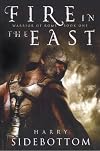
I came to this from the author's excellent Throne of the Caesars series. As a first book in this series, a lot of it was introduction to the characters, time and place, although we've met Ballista before. Years have passed since the death of Maximinus Thrax and Aquileia; this story places us in the reign of Valerian, years later. Ballista strikes me as an "outsider" who struggles to fit in, much as the characters of Gillian Bradshaw. Perusing the list of characters and recognizing some names show more from Throne of the Caesars, I wondered: are these the same people, but a few years on? Not much originality in the cover: the same ubiquitous Roman soldier. Can't any publisher come up with something more striking for Roman military novels?
I've seen other people's reviews and many complaints about how slowly the book begins, with many details of excruciating [to them] detail. Sometimes I enjoy a slow-burner--pun, based on the title :) -- with all the asides and tidbits of details. I didn't read the novel for the siege only, but enjoyed the journey to get to Arete and of course the final siege and conflagration. Arete lay very close to the Roman/Persian border. Ballista has been given orders by the emperor to prepare defenses and finally to defend the city from the Sassanid Persians. He can ask for extra troops from other cities and levy citizens. The emperor promises to send reinforcements. There were many exciting incidents: a storm at sea, fight with Gothic pirates, then various skirmishes, extramural missions and the final siege and its aftermath. Someone is a traitor. Near the end Ballista muses: Is [the outcome] my fault? Did I concentrate so much on the Sassanid siege works that I did not pay enough attention to the possibility of treachery? ... would clues have been there? Would I have seen them?
The first time through I read it solely for the adventure but when I reread I concentrated more on some of the loose ends, motivations I feel the author didn't explain. Who killed Scribonius Mucianus and why? One culprit or two? What was the blackmail surrounding Turpio, which he didn't explain and Ballista never pushed? Who sabotaged the armory? What was Acilius Glabrio's motivation in giving the perfume for Ballista's bath since the two hated each other? I feel there were genuine but subtle clues, also red herrings. I do have my suspicions, but....
I felt like the city of Arete was a thinly-disguised Dura-Europos: http://dura-europos.com/
put into a fictional context. In the author's notes, he states he DID base his fictional city on it. I felt like this novel was several cuts above any Roman potboilers flooding the market, due to the construction of the story and the author's impeccable historicity. The Ballista name was silly, but there WAS a historical Ballista.
Most highly recommended. (less) show less
I've seen other people's reviews and many complaints about how slowly the book begins, with many details of excruciating [to them] detail. Sometimes I enjoy a slow-burner--pun, based on the title :) -- with all the asides and tidbits of details. I didn't read the novel for the siege only, but enjoyed the journey to get to Arete and of course the final siege and conflagration. Arete lay very close to the Roman/Persian border. Ballista has been given orders by the emperor to prepare defenses and finally to defend the city from the Sassanid Persians. He can ask for extra troops from other cities and levy citizens. The emperor promises to send reinforcements. There were many exciting incidents: a storm at sea, fight with Gothic pirates, then various skirmishes, extramural missions and the final siege and its aftermath. Someone is a traitor. Near the end Ballista muses: Is [the outcome] my fault? Did I concentrate so much on the Sassanid siege works that I did not pay enough attention to the possibility of treachery? ... would clues have been there? Would I have seen them?
The first time through I read it solely for the adventure but when I reread I concentrated more on some of the loose ends, motivations I feel the author didn't explain. Who killed Scribonius Mucianus and why? One culprit or two? What was the blackmail surrounding Turpio, which he didn't explain and Ballista never pushed? Who sabotaged the armory? What was Acilius Glabrio's motivation in giving the perfume for Ballista's bath since the two hated each other? I feel there were genuine but subtle clues, also red herrings. I do have my suspicions, but....
I felt like the city of Arete was a thinly-disguised Dura-Europos: http://dura-europos.com/
put into a fictional context. In the author's notes, he states he DID base his fictional city on it. I felt like this novel was several cuts above any Roman potboilers flooding the market, due to the construction of the story and the author's impeccable historicity. The Ballista name was silly, but there WAS a historical Ballista.
Most highly recommended. (less) show less

This latest Ballista novel is heads above the others in the series, especially the later ones. This one is a happy marriage between the thriller and the 3rd century historical fiction genres. I was enthralled all through from the very first pulse-pounding page to the last. Ballista gets wind of a conspiracy to kill Emperor Gallienus and has from sunset to next day sunset to foil the plot. He races through all parts of Rome, obstacles put in his way, which he overcomes, often with brutal show more fighting. He often disguises himself and uses other subterfuges to reach the emperor at the games in the Coliseum. A final standoff, with minutes to spare, had my heart in my mouth.
A stark, laconic style fit right in with the urgency and breathlessness of the plot. Description of Rome made me feel I was right there along with Ballista. The identity of the leader of the plot wasn't given, except an alias--"the peasant." I believe I did figure out his identity from clues from his description, but the next book might reveal his identity and take care of him.... With Scarpio the name of one of the villains--head of the City Watch--I wondered if the author used this name with the evil police chief, Scarpia, from the opera "Tosca", in mind. Except this villain wasn't stabbed with a letter opener. I guessed from the author's Notes, Sidebottom conflated the Urban Cohorts AND the Vigiles, calling this entity the City Watch. In the novel it had duties of both groups: maintaining law and order AND firefighting.
Highly recommended. show less
A stark, laconic style fit right in with the urgency and breathlessness of the plot. Description of Rome made me feel I was right there along with Ballista. The identity of the leader of the plot wasn't given, except an alias--"the peasant." I believe I did figure out his identity from clues from his description, but the next book might reveal his identity and take care of him.... With Scarpio the name of one of the villains--head of the City Watch--I wondered if the author used this name with the evil police chief, Scarpia, from the opera "Tosca", in mind. Except this villain wasn't stabbed with a letter opener. I guessed from the author's Notes, Sidebottom conflated the Urban Cohorts AND the Vigiles, calling this entity the City Watch. In the novel it had duties of both groups: maintaining law and order AND firefighting.
Highly recommended. show less
Lists
Awards


You May Also Like


Associated Authors
Statistics
- Works
- 40
- Also by
- 4
- Members
- 2,135
- Popularity
- #12,050
- Rating
- 3.7
- Reviews
- 51
- ISBNs
- 265
- Languages
- 9