
Ian Ross (3)
Author of War at the Edge of the World (Twilight of Empire)
For other authors named Ian Ross, see the disambiguation page.
Series
Works by Ian Ross
Tagged
Common Knowledge
Members
Reviews
War Cry: The gripping 13th century medieval adventure for fans of Matthew Harffy and Elizabeth Chadwick (de Norton trilogy) by Ian Ross
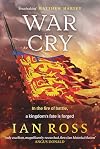
After the battle of Lewes, Adam de Norton is knighted and has regained one of the manors stolen from him by his stepfather. King Henry is completely under the power of Simon de Montfort but his eldest son Edward is more of a prisoner and more of a threat. Adam is sworn to serve de Montfort and therefore is called up when rebellion hits the Welsh Marches.
I really enjoyed the first book in this series and this is probably even stronger. The Baron's War saw father pitted against son as family show more loyalties were divided between honour and belief in the system. Here Ross uses a fictional character to explore those complex relationships and it works well. The fight scenes are excellent, the romance slightly less convincing! show less
I really enjoyed the first book in this series and this is probably even stronger. The Baron's War saw father pitted against son as family show more loyalties were divided between honour and belief in the system. Here Ross uses a fictional character to explore those complex relationships and it works well. The fight scenes are excellent, the romance slightly less convincing! show less
Did the other reviewer and I read the same book? I got exactly the opposite reaction from the same novel.
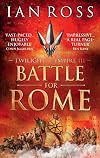
Author is improving all facets of this series with each book! This is the best yet! Heart-pounding action starts from page 1 of the Prologue. I was utterly enthralled all through and Castus is becoming one of my favorite male heroes. More depth of his personality is revealed in each book. This novel, which traces Constantine's Italian campaign, starting in Gaul, culminates in Battle at show more Milvian Bridge with the defeat of usurper, Maxentius, and Constantine's triumphal entry [called here an adventus] into Rome.
I liked the author's interpretation of Constantine's dream/vision before the battle. His thoughts on that incident in his Notes were enlightening [pun intended]. The author's outdone himself in describing the various battle scenes along with his use of Castus as presenting the idea of using scaling ladders and incendiaries at Segusio and his importance in the middle of the action **but** still based heavily on primary sources. I am amazed at his creativity. I had my heart in my mouth in ambush scenes, especially the one outside the Baths of Diocletian. Castus reveals more of his personality--this time dealing with personal problems between him and his wife, Sabina, who has been seduced by a smooth talker and his promises into betrayal for which she is eventually remorseful. Castus's soldier friends, Felix and Diogenes, are likeable, too. The scene between Castus and the dying enemy soldier was poignant. Pacing was excellent. Only one small criticism: please, Mr. Ross, use the Latin vocative Domine while addressing a superior. The fault of using Dominus as vocative occurred often enough in the novel to become irritating.
Most highly recommended. show less
Author is improving all facets of this series with each book! This is the best yet! Heart-pounding action starts from page 1 of the Prologue. I was utterly enthralled all through and Castus is becoming one of my favorite male heroes. More depth of his personality is revealed in each book. This novel, which traces Constantine's Italian campaign, starting in Gaul, culminates in Battle at show more Milvian Bridge with the defeat of usurper, Maxentius, and Constantine's triumphal entry [called here an adventus] into Rome.
I liked the author's interpretation of Constantine's dream/vision before the battle. His thoughts on that incident in his Notes were enlightening [pun intended]. The author's outdone himself in describing the various battle scenes along with his use of Castus as presenting the idea of using scaling ladders and incendiaries at Segusio and his importance in the middle of the action **but** still based heavily on primary sources. I am amazed at his creativity. I had my heart in my mouth in ambush scenes, especially the one outside the Baths of Diocletian. Castus reveals more of his personality--this time dealing with personal problems between him and his wife, Sabina, who has been seduced by a smooth talker and his promises into betrayal for which she is eventually remorseful. Castus's soldier friends, Felix and Diogenes, are likeable, too. The scene between Castus and the dying enemy soldier was poignant. Pacing was excellent. Only one small criticism: please, Mr. Ross, use the Latin vocative Domine while addressing a superior. The fault of using Dominus as vocative occurred often enough in the novel to become irritating.
Most highly recommended. show less
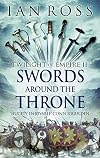
I'm sure this will become a favorite Roman series and Castus a favorite character. Well written with nonstop action, this one finds Centurion Castus, after his saving the life of Emperor Constantine, now promoted to a Protector [one of the elite bodyguard of the emperor]--a "sword around the throne". Although this promotion means higher status [and his meeting his lady-love, Sabina], it is at best a mixed blessing; the gauche, naïve Castus is thrown headlong into the murky palace politics. show more Although he states on several occasions he hates them and envies his colleagues in the VI Legion and other legionaries he comes into contact with, we find he still copes very well, in spite of lies, betrayals, treachery and assassination attempts. He still remains honest, stalwart, loyal and kind, although his low self-esteem will still show itself in his thoughts on occasion.
The climax comes at the Siege of Massilia [present-day Marseilles] before which the empress tasks him to find a way to surrender the city to Constantine, and to thwart the imperial ambition of her own father who is leading a rebellion. "Find men not afraid of dying," she commands. And so he does and devises a dangerous plan for relief of the city. Outstanding to me were this siege and also the attempted escape over the aqueduct by him and several of his Protector comrades. I felt characterization was deep, even those of secondary figures. My estimation of Sabina went down several notches with her calling attention to Castus's ugliness at one point--to his face; I still don't quite trust her. I hope that eventually Castus and Marcellina, the envoy's daughter from Book 1 might get together; I like her better than Sabina. Even Luciana, the brave Christian girl, might be a far-fetched possibility. I'm eager to see how Castus develops and the march of Constantine to hold onto power.
Very highly recommended. show less
The climax comes at the Siege of Massilia [present-day Marseilles] before which the empress tasks him to find a way to surrender the city to Constantine, and to thwart the imperial ambition of her own father who is leading a rebellion. "Find men not afraid of dying," she commands. And so he does and devises a dangerous plan for relief of the city. Outstanding to me were this siege and also the attempted escape over the aqueduct by him and several of his Protector comrades. I felt characterization was deep, even those of secondary figures. My estimation of Sabina went down several notches with her calling attention to Castus's ugliness at one point--to his face; I still don't quite trust her. I hope that eventually Castus and Marcellina, the envoy's daughter from Book 1 might get together; I like her better than Sabina. Even Luciana, the brave Christian girl, might be a far-fetched possibility. I'm eager to see how Castus develops and the march of Constantine to hold onto power.
Very highly recommended. show less
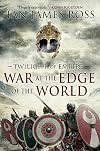
Absolutely enthralling and packed with action! Set in Roman Britain, during late reign of Emperor Constantius and subsequent acclamation of Constantine by the troops in the 4th century A.D., a time not treated much in fiction. Aurelius Castus, a common soldier, who, in fighting Persians, because of his valor at his unthinking rush into the breach when his centurion is killed, is decorated. After defeating barbarians in Pannonia is promoted to centurion and sent to Roman Britain. He becomes show more part of a diplomatic mission to the Picts and the mission goes terribly wrong. He surrenders himself to the Picts in exchange for his men's lives; his century has come with him as honor guard. The envoy takes his own life, as a matter of honor and rather than suffer brutality. Castus waits for the right opportunity then escapes, making his way back to his fort, pursued by the Picts and their dogs. The town of Isurium and surrounding countryside is burned and the Roman inhabitants killed. The home of the envoy is near Isurium. The honorable Castus seeks it out and rescues the envoy's daughter, Marcellina, from the barbarians. He takes her to Eboracum with him at her request. Upon the order of Emperor Constantius, he leads a punitive expedition north again, to destroy native villages, then the Pictish hillfort in which he had been imprisoned.
I feel the author chose an excellent name for his unforgettable protagonist. That name expresses his personality perfectly: Castus = Chaste in the secondary senses of decent, simple, uncomplicated, guileless. The envoy's daughter, Marcellina, expresses it best: "[you] always appear[ing] the strong, obedient soldier, unthinking, like a dumb animal .... you are a good man, Centurion." She sees something more to him than what others see: she senses something deeper: kindness and a code of honor, maybe even the self-deprecation and lack of self-confidence that I picked up on. As centurion, he has learned to mask his feelings in front of his men. I am sure, as this series progresses, he will blossom. His mantras have always been "Duty" and "Following Orders", but he shows great initiative in his evading recapture and his actions at the hillfort. If he can become more assertive outside his military role....
The novel was well written and carried me back into that era. I felt many emotions: identification with Castus and his feelings, anger at the Picts, fear for him on his flight, sadness at the massacre of his century, especially as the Picts had let them go, promising him they would not harm the men. I appreciated that no scenes with Marcellina turned sexual--that Castus respected her, her station and the class gulf between them. Outstanding were the pages on the harrowing escape from the Picts and their dogs and the climactic battle at the hillfort, including preparations. I am eager to follow him on his further adventures.
Highly recommended. show less
I feel the author chose an excellent name for his unforgettable protagonist. That name expresses his personality perfectly: Castus = Chaste in the secondary senses of decent, simple, uncomplicated, guileless. The envoy's daughter, Marcellina, expresses it best: "[you] always appear[ing] the strong, obedient soldier, unthinking, like a dumb animal .... you are a good man, Centurion." She sees something more to him than what others see: she senses something deeper: kindness and a code of honor, maybe even the self-deprecation and lack of self-confidence that I picked up on. As centurion, he has learned to mask his feelings in front of his men. I am sure, as this series progresses, he will blossom. His mantras have always been "Duty" and "Following Orders", but he shows great initiative in his evading recapture and his actions at the hillfort. If he can become more assertive outside his military role....
The novel was well written and carried me back into that era. I felt many emotions: identification with Castus and his feelings, anger at the Picts, fear for him on his flight, sadness at the massacre of his century, especially as the Picts had let them go, promising him they would not harm the men. I appreciated that no scenes with Marcellina turned sexual--that Castus respected her, her station and the class gulf between them. Outstanding were the pages on the harrowing escape from the Picts and their dogs and the climactic battle at the hillfort, including preparations. I am eager to follow him on his further adventures.
Highly recommended. show less
Awards

You May Also Like


Statistics
- Works
- 8
- Members
- 221
- Popularity
- #101,334
- Rating
- 4.1
- Reviews
- 15
- ISBNs
- 99
- Languages
- 2