
Manda Scott
Author of Boudica: Dreaming the Eagle
About the Author
Image credit:
www.vjbooks.com
Series
Works by Manda Scott
Boudica 1 copy
Associated Works
Reader's Digest Condensed Books: A Prisoner of Birth • Child 44 • The Choice • The Crystal Skull 4 copies, 1 review
Frontier First Encounters: Further Stories of Life on the Frontier (1995) — Contributor, some editions — 4 copies
Hebbes 4 — Contributor — 3 copies
Tagged
Common Knowledge
- Other names
- Scott, M. C.
- Birthdate
- 1962
- Gender
- female
- Education
- University of Glasgow (veterinary surgery)
- Organizations
- The Unusual Suspects
- Agent
- Jane Judd (Jane C. Judd Literary Agency)
- Nationality
- UK
- Birthplace
- Glasgow, Scotland, UK
- Places of residence
- Shropshire, England, UK
- Map Location
- Scotland, UK
Members
Reviews
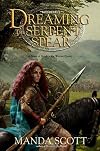
In this the final novel in Manda Scott's Boudica series, the entire historical credibility of the novels falls apart for this reader. Scott seemingly abandons research in favour of complete immersion into lucid-dreaming and its alleged effects upon the physical world.
Her portrayal of pre-pubescent Grainne, who was raped by half a century of Roman troops, goes beyond any hope of credibility. If the child lived after such brutality, it is highly likely she would have been so traumatized both show more physically and emotionally as to be incapable of functioning, yet Scott has Grainne discussing military tactics and strategy with her elders, a discussion a healthy, functioning child would be hard-pressed to conduct, let alone one as brutalized as Grainne.
Scott further weaves the not very subtle threads for a possible Arthurian link here, which she admits in her author's epilogue, a literary device perfectly acceptable if one were writing fantasy, but certainly not for any kind of credible historical fiction.
Character point of view looses any coherence in the final novel, so that within any chapter the reader might first be presented with Grainne's point of view, then switch to Breaca's, or Valerius', or any number of others. Where the editor was leaves me wondering.
There is a substantial scene Scott has woven into the denouement which seems of little relevance to the story arc other than the author's own fascination with the Iron Age peat bog find of the Lindow Man. This scene completely arrests the tension and action, and again one has to wonder about the editor assigned to this novel.
For me, a disappointing end to a middling series. show less
Her portrayal of pre-pubescent Grainne, who was raped by half a century of Roman troops, goes beyond any hope of credibility. If the child lived after such brutality, it is highly likely she would have been so traumatized both show more physically and emotionally as to be incapable of functioning, yet Scott has Grainne discussing military tactics and strategy with her elders, a discussion a healthy, functioning child would be hard-pressed to conduct, let alone one as brutalized as Grainne.
Scott further weaves the not very subtle threads for a possible Arthurian link here, which she admits in her author's epilogue, a literary device perfectly acceptable if one were writing fantasy, but certainly not for any kind of credible historical fiction.
Character point of view looses any coherence in the final novel, so that within any chapter the reader might first be presented with Grainne's point of view, then switch to Breaca's, or Valerius', or any number of others. Where the editor was leaves me wondering.
There is a substantial scene Scott has woven into the denouement which seems of little relevance to the story arc other than the author's own fascination with the Iron Age peat bog find of the Lindow Man. This scene completely arrests the tension and action, and again one has to wonder about the editor assigned to this novel.
For me, a disappointing end to a middling series. show less
To me, this is historical fiction done to an extremely high standard. These detail-rich tales of resistance to imperial oppression are always timely but in these times especially so. And for me Scott has a unique talent in capturing a plausible view of what our ancestors' heathen (and I count myself proudly as a heathen as well) spirituality may have looked like as a lived experience; for that alone these books would be worth a look. In all, I'd say if you like historical fiction and are show more interested in the interplay between Rome and the peoples she did and wished to subjugate, an interplay that shows the nuances of value and meaning that run across all sides, you'd do well to read these books. I will move on to the next, when I have had some time to let this one settle . show less
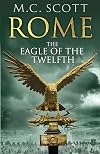
Third in M.C. Scott's four novels in her Rome series with Pantera the spy as protagonist. In this departure from the others, in the hero is the young unwilling conscript, Demalion of Macedon, telling us his story of the last five years in the unlucky XII Legion : his basic training, bonding with the others in his contubernium, winter survival exercises against another legion to toughen the men. There are exciting heart-stopping battles and skirmishes against Parthians and against Jewish show more rebels in Judaea. The rebels steal the Eagle and Demalion, along with Pantera and others are charged to recover it. We see Demalion grow from raw recruit into experienced, blooded veteran and leader. The legion regains its honor.
Out of the whole series, I consider this volume easily the best. I could not relate to Pantera; he seemed like an unbelievable superhero, often unpleasant and I feel he was present only to further the action. The well-drawn Demalion touched me with his emotions and deep feelings. Writing was superb. The small amount of m/m romance was tastefully done. Especially poignant was the incident of one soldier's death and his comrades parceling out his possessions, thereby each man remembering him.
Highly recommended. show less
Out of the whole series, I consider this volume easily the best. I could not relate to Pantera; he seemed like an unbelievable superhero, often unpleasant and I feel he was present only to further the action. The well-drawn Demalion touched me with his emotions and deep feelings. Writing was superb. The small amount of m/m romance was tastefully done. Especially poignant was the incident of one soldier's death and his comrades parceling out his possessions, thereby each man remembering him.
Highly recommended. show less
I've made it my unofficial goal in life to read every Scottish crime novel I can find, ever since discovering Laidlaw so many years ago (speaking of Laidlaw, did anyone else wonder if Hen's Teeth gave a nod to McIlvanney? Not a flattering one if so, and I've enjoyed wondering about it.). Over the years I've managed to keep a map of sorts in my mind, each major Scottish city pinned with the local detective. At one point I even got obsessive enough to try and plot each location given in the show more Rebus series. It was a form of tourism, I suppose.
I mention this because, near the end of Stronger Than Death, my mind rather randomly put it together that Kellen Stewart and Maureen O'Donnell were experiencing their own kinds of trauma around the same time. I looked it up, and sure enough, Maureen (of the excellent Garnet Hill cycle) was making her initial horrific discovery pretty close to the time that Kellen was experiencing yet another brush with murder in this final (?) novel of her series. It's been a comparison I've not been able to shake, not because they are alike --they are and they aren't. I kept forgetting Kellen Stewart was in Glasgow, so much of her time is spent at her farm on the outskirts.
There is probably much to be said about the similarities between Maureen and Kellen; I can see plenty of them without having to stretch too far. But it wasn't any similarity between the two, or even between the two Glasgows, that made the connection to me. Rather, it was that the last time I sat stunned at the feelings evoked from a book was way back when I first read Garnet Hill. In fact, it is the feeling, the verb, that stands out, now that I've finished the three Kellen Stewart novels.
All of this is to say that I've been absolutely percolating for the last three or four days, as I really started to read at a steady clip. Manda Scott's three Stewart novels (because this is really a review of the three, on the occasion of finishing the last) are each better than the last, but in quiet ways. Crime seems to happen around Kellen, which is an interesting and refreshing way to structure crime novels. As a result, Kellen finds herself in varying degrees of involvement in these crimes. By the time of Stronger Than Death, she's in some ways frustrated that she's not more at the center of things, crimewise, than she is, but it makes for a much better experience for the reader. That, for me, is where the emotional resonance really hit home.
I'm rambling. I really should have thought more about this before posting, but I've not been keeping up with my "reviews," and I wanted something for posterity with this one. Manda Scott is a different kind of crime writer, excellently different. Like Denise Mina and few others that I've read in Scottish crime fiction, she seems more interested in the interior lives of characters, particularly Kellen's, and particularly in Stronger Than Death. Chapter five is a revelation, or at least it was to me. I've read it multiple times, and it stands alone so well that I've made a note to try and use it in my teaching. For what, I don't know (yet). It is so beautiful and devastating in how it uses impending death to give us insight into both Kellen and her patient. That chapter, and this book, for me, embodies that comforting kind of sadness that comes from looking back on loss and grief. Excellent read. show less
I mention this because, near the end of Stronger Than Death, my mind rather randomly put it together that Kellen Stewart and Maureen O'Donnell were experiencing their own kinds of trauma around the same time. I looked it up, and sure enough, Maureen (of the excellent Garnet Hill cycle) was making her initial horrific discovery pretty close to the time that Kellen was experiencing yet another brush with murder in this final (?) novel of her series. It's been a comparison I've not been able to shake, not because they are alike --they are and they aren't. I kept forgetting Kellen Stewart was in Glasgow, so much of her time is spent at her farm on the outskirts.
There is probably much to be said about the similarities between Maureen and Kellen; I can see plenty of them without having to stretch too far. But it wasn't any similarity between the two, or even between the two Glasgows, that made the connection to me. Rather, it was that the last time I sat stunned at the feelings evoked from a book was way back when I first read Garnet Hill. In fact, it is the feeling, the verb, that stands out, now that I've finished the three Kellen Stewart novels.
All of this is to say that I've been absolutely percolating for the last three or four days, as I really started to read at a steady clip. Manda Scott's three Stewart novels (because this is really a review of the three, on the occasion of finishing the last) are each better than the last, but in quiet ways. Crime seems to happen around Kellen, which is an interesting and refreshing way to structure crime novels. As a result, Kellen finds herself in varying degrees of involvement in these crimes. By the time of Stronger Than Death, she's in some ways frustrated that she's not more at the center of things, crimewise, than she is, but it makes for a much better experience for the reader. That, for me, is where the emotional resonance really hit home.
I'm rambling. I really should have thought more about this before posting, but I've not been keeping up with my "reviews," and I wanted something for posterity with this one. Manda Scott is a different kind of crime writer, excellently different. Like Denise Mina and few others that I've read in Scottish crime fiction, she seems more interested in the interior lives of characters, particularly Kellen's, and particularly in Stronger Than Death. Chapter five is a revelation, or at least it was to me. I've read it multiple times, and it stands alone so well that I've made a note to try and use it in my teaching. For what, I don't know (yet). It is so beautiful and devastating in how it uses impending death to give us insight into both Kellen and her patient. That chapter, and this book, for me, embodies that comforting kind of sadness that comes from looking back on loss and grief. Excellent read. show less
Lists
al.vick-series (1)
Awards


You May Also Like


Associated Authors
Statistics
- Works
- 26
- Also by
- 6
- Members
- 3,798
- Popularity
- #6,675
- Rating
- 3.8
- Reviews
- 110
- ISBNs
- 245
- Languages
- 13
- Favorited
- 9
