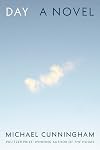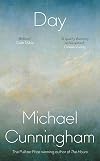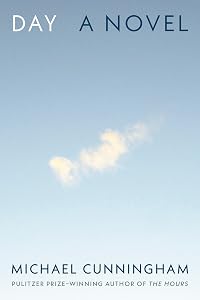
Day
by Michael Cunningham
On This Page
Description
"April 5th, 2019: In a cozy brownstone in Brooklyn, the veneer of domestic bliss is beginning to crack. Dan and Isabel, troubled husband and wife, are both a little bit in love with Isabel's younger brother, Robbie. Robbie, wayward soul of the family, who still lives in the attic loft; Robbie, who, trying to get over his most recent boyfriend, has created a glamorous avatar online; Robbie, who now has to move out of the house - and whose departure threatens to break the family apart. And show more then there is Nathan, age ten, taking his first uncertain steps toward independence, while Violet, five, does her best not to notice the growing rift between her parents. April 5th, 2020: As the world goes into lockdown, the brownstone is feeling more like a prison. Violet is terrified of leaving the windows open, obsessed with keeping her family safe. Isabel and Dan communicate mostly in veiled jabs and frustrated sighs. And beloved Robbie is stranded in Iceland, alone in a mountain cabin with nothing but his thoughts - and his secret Instagram life -- for company. April 5th, 2021: Emerging from the worst of the crisis, the family reckons with a new, very different reality - with what they've learned, what they've lost, and how they might go on"-- show lessTags
Recommendations






Member Reviews
This novel broke my heart. I saw it coming, but read on.
April 5, 2019. April 5, 2020. April 5, 2021. One day, over three years, and the changes in one small family.
Isabel and Dan, their children Nathan and Violet. Isabel’s brother Robbie, beloved uncle, beloved brother-in-law, beloved brother. He lives with the family and is an integral part of their lives. Their love for each other is sustaining.
But Nathan needs his own bedroom, and that means Robbie needs to move out. His last relationship has ended and what he can afford is an hour away.
Robbie also loves Dan’s brother Garth, and Garth loves Robbie. Garth has had a child with his college friend Chess, and he has fallen in love with the child. He was never meant to be a part of show more this family; he was only a means to an end.
Dan is struggling with growing older, wondering if he can reclaim his earlier rock and roll life, write a few songs and make a comeback. He had given it all up with Nathan’s birth, became a responsible dad and father. Isabel, though, is overwhelmed with this life she chose, out of love with motherhood–and Dan.
A year later finds them in the midst of the Covid epidemic. Another year passes, and they all are struggling with losses and change and the end of love and the beginning of a new chapter.
I love this book, this writing, this story. I loved these characters, their struggles, their love for each other. It captures the essence of relationships, the many kinds of love, how the loss of one person alters the entire world, how grief hits and how we react to loss. It captures the inner lives of children and adults, the writing is gob-smacking gorgeous. Read it.
Thanks to the publisher for a free book. show less
April 5, 2019. April 5, 2020. April 5, 2021. One day, over three years, and the changes in one small family.
Isabel and Dan, their children Nathan and Violet. Isabel’s brother Robbie, beloved uncle, beloved brother-in-law, beloved brother. He lives with the family and is an integral part of their lives. Their love for each other is sustaining.
But Nathan needs his own bedroom, and that means Robbie needs to move out. His last relationship has ended and what he can afford is an hour away.
Robbie also loves Dan’s brother Garth, and Garth loves Robbie. Garth has had a child with his college friend Chess, and he has fallen in love with the child. He was never meant to be a part of show more this family; he was only a means to an end.
Dan is struggling with growing older, wondering if he can reclaim his earlier rock and roll life, write a few songs and make a comeback. He had given it all up with Nathan’s birth, became a responsible dad and father. Isabel, though, is overwhelmed with this life she chose, out of love with motherhood–and Dan.
A year later finds them in the midst of the Covid epidemic. Another year passes, and they all are struggling with losses and change and the end of love and the beginning of a new chapter.
I love this book, this writing, this story. I loved these characters, their struggles, their love for each other. It captures the essence of relationships, the many kinds of love, how the loss of one person alters the entire world, how grief hits and how we react to loss. It captures the inner lives of children and adults, the writing is gob-smacking gorgeous. Read it.
Thanks to the publisher for a free book. show less
This novel takes place on three separate days over three years. We meet the characters on April 5, 2019: a couple and their two children, the wife’s brother who lives with them, and the husband’s brother and his partner. None of the adults are living the lives they hoped for; everyone is unhappy to varying degrees. One year later, they are coping with the fear and uncertainty of a global pandemic but the focus is mostly on the characters’ emotional struggles and relationship issues. The virus remains mostly in the background … until it isn’t. By April 5, 2021 their lives have irrevocably changed but the unease and dissatisfaction persists.
Michael Cunningham’s writing is gorgeous, but the characters were shallow. They were show more unable to empathize with and support one another, and focused more on what they wanted from others than what they were able to give. I never quite understood why this was the case and it left me feeling frustrated. show less
Michael Cunningham’s writing is gorgeous, but the characters were shallow. They were show more unable to empathize with and support one another, and focused more on what they wanted from others than what they were able to give. I never quite understood why this was the case and it left me feeling frustrated. show less
Day is divided into three parts, each taking place on April 5 in successive years - 2019, 2020, and 2021. It's a novel of family - siblinghood, parenthood, childhood - but this is a unique kind of modern family, formed both by nature and by choice. This is also sort of a COVID novel, but it's not about that; rather, the virus is an agent for change and transformation - a disruptor for a situation that was already headed towards instability.
The beauty of this novel is its interiority - we experience these lives, this family, from several points of view through interior monologues and only limited direct dialogue. Cunningham's prose is poetic in parts - I want to say luminescent, too - it illuminates truths but from a kind of distance. I show more felt like I was watching a play, at times. A very powerful and compelling one, but one in which I never lost my sense of being separate, sitting in an audience. This could be somewhat intentional - the truth that one can never fully know or experience another's reality but can still recognize and internalize universal truths. It's a beautiful book.
4.5 stars
NB: I listened to this on audio, narrated by the actress Julianne Moore. Her strong, quiet voice is a perfect fit for the story. show less
The beauty of this novel is its interiority - we experience these lives, this family, from several points of view through interior monologues and only limited direct dialogue. Cunningham's prose is poetic in parts - I want to say luminescent, too - it illuminates truths but from a kind of distance. I show more felt like I was watching a play, at times. A very powerful and compelling one, but one in which I never lost my sense of being separate, sitting in an audience. This could be somewhat intentional - the truth that one can never fully know or experience another's reality but can still recognize and internalize universal truths. It's a beautiful book.
4.5 stars
NB: I listened to this on audio, narrated by the actress Julianne Moore. Her strong, quiet voice is a perfect fit for the story. show less
Rating: 4* of five
The Publisher Says: As the world changes around them, a family weathers the storms of growing up, growing older, falling in and out of love, losing the things that are most precious—and learning to go on—from the Pulitzer Prize–winning author of The Hours
April 5, 2019 : In a cozy brownstone in Brooklyn, the veneer of domestic bliss is beginning to crack. Dan and Isabel, troubled husband and wife, are both a little bit in love with Isabel’s younger brother, Robbie. Robbie, wayward soul of the family, who still lives in the attic loft; Robbie, who, trying to get over his most recent boyfriend, has created a glamorous avatar online; Robbie, who now has to move out of the house—and whose departure threatens to show more break the family apart. Meanwhile Nathan, age ten, is taking his first uncertain steps toward independence, while Violet, five, does her best not to notice the growing rift between her parents.
April 5, 2020: As the world goes into lockdown, the brownstone is feeling more like a prison. Violet is terrified of leaving the windows open, obsessed with keeping her family safe, while Nathan attempts to skirt her rules. Isabel and Dan communicate mostly in veiled jabs and frustrated sighs. And beloved Robbie is stranded in Iceland, alone in a mountain cabin with nothing but his thoughts—and his secret Instagram life—for company.
April 5, 2021: Emerging from the worst of the crisis, the family reckons with a new, very different reality—with what they’ve learned, what they’ve lost, and how they might go on.
From the brilliant mind of Pulitzer Prize winner Michael Cunningham, Day is a searing, exquisitely crafted meditation on love and loss and the struggles and limitations of family life—how to live together and apart.
I RECEIVED A DRC FROM THE PUBLISHER VIA NETGALLEY. THANK YOU.
My Review: A novel about liminal spaces, a story about transitions, endings, startings-out, and ultimately survival. So, status quo ante for Author Cunningham. As one expects from him, the prose is just beautiful, the characters appealing, the story, while slow paced, one that compels the reader's attention.
The fact of the matter is that novels about the COVID pandemic...a distinct class from pandemic novels, which can be set at any time...are going to need a certain timelessness to be anything other than nonce books. Cunningham's track record suggests that he's well-aware of his task ([The Hours] was an epidemic novel on several levels and has survived the epidemics it was set during). How better to address this than to focus on the family?
The great, consuming monster that is family, made or found, genetic or simply relational.
The Big Lie of postwar culture was that falling in love with someone meant that one should feel fulfilled, completed, and Happy with them as a partner. The divorce rates of the 1960s and 1970s gave that a thorough debunking. What happens in the made family that, in US culture, goes by the apt name "Nuclear" is often, inevitably more akin to fission than fusion. Dan, the husband, is an almost-was musician turned househusband. Isabel, the mother, is frustrated that she never got the life she expected with the husband she wanted. Robbie, the gay uncle, is their relief valve. They rely on him way too much to jell their emotional experiences of life together. He's living in their attic...which metaphor I'll leave unexplored... while he sorts out his own tangled love-life and career. There's also Dan's brother, his brother's platonic babymama, and their child. Dan and Isabel have two kids, and the kids are unaware of how much this life they've all lived together can change.
For a novel that takes place on three days albeit ones separated by one year from each other, this felt from the get-go to me like an overabundance of points of view. Nothing that happened changed my mind. The brother/babymama drama left me wondering how the lummox didn't see this coming, nor were his family members innocent in not discouraging him from being a sperm donor. He wasn't emotionally prepared for fatherhood so shouldn't have consented. There lies my first bleat of irritation. Isabel, during the pandemic, decides to write Violet, her traumatized daughter, a letter detailing her emotional unraveling and the end of her marriage to Dan to the fifteen-years-older Violet. Since Robbie is at that point in Iceland living his online masquerade life as Wolfe (it actually makes sense in the book) she had to express her disillusionment with her life choices to someone. May I just say that, as someone who was waaay overshared with by his parents (to put it mildly), I say without hesitation that this is a truly terrible idea. There is no point at which a child needs to know what led Mom to not wanting to be mom anymore. If they ask, parents are well advised to deflect.
Robbie, the fulcrum of the levers shoving these people ever-farther apart, is a case-study all by himself in how not to be in relationships. He's crafted...with Isabel, his sister...an Instagram persona that is an extrapolation of himself into omnicompetence, an unattainable goal for flesh-and-blood people, and is seducing others into accepting it as real not just the extra-curated version of himself. There's an element of catfishing in this; it's dishonest at the minimum. The fact that Isabel is both a co-conspirator in and, bizarrely, a victim of, this weird catfishing says a lot about the fundamental performative nature of family life. Aren't we all constructing and curating personas within a family, in fact a relationship of any sort? There's an entire sociological concept devoted to this idea.
If this is to be a lasting artwork explaining the COVID pandemic to us and our heirs, it has to get something otherwise unavailable from the pandemic setting. Here's where I falter in my appreciation for Author Cunningham's dramaturgical eye. I got my expected frisson of lovely-language-gasm. I got my soap-opera needs met with the dynamics of the family decohering and then showing signs of coalescing into other forms. But did any of this illuminate the pandemic's unique social upheaval?
On balance, yes but in a curious way no. This family was always going to undergo fission...people who can't, or don't, or won't communicate clearly and honestly with each other will always fail as a system...and that is just accelerated by the pandemic. That the family is made up of generationally appropriately queer-friendly people is just recognizing realities that are the source of the screeching angst of the change-intolerant religious nuts. The parts of the story that I felt illuminated the pandemic were the grace notes of style, using the forms and format of social media, to make the point that life moved on even while reality stopped. I think some people saw this as a bug, but I believe it's a feature. Insta will, goddesses willing, be long dead by the time pandemic babies are old enough to read this novel, but they'll see how deep and unquenchable life's demand for love and conncection really was back in the quaint pre-wearable-quantum devices days of Mom and Dad's youth. They'll see that the familys they live in were new, slightly scary, ideas yet to develop into what they accept as normal. They can get from this read a sense of the liminality of forced change and its many many echoes.
I think this novel will, like The Hours, stand up to the passage of time. Of course, I'll be dead by the time the verdict is rendered. But I feel good about my chances of being right. show less
The Publisher Says: As the world changes around them, a family weathers the storms of growing up, growing older, falling in and out of love, losing the things that are most precious—and learning to go on—from the Pulitzer Prize–winning author of The Hours
April 5, 2019 : In a cozy brownstone in Brooklyn, the veneer of domestic bliss is beginning to crack. Dan and Isabel, troubled husband and wife, are both a little bit in love with Isabel’s younger brother, Robbie. Robbie, wayward soul of the family, who still lives in the attic loft; Robbie, who, trying to get over his most recent boyfriend, has created a glamorous avatar online; Robbie, who now has to move out of the house—and whose departure threatens to show more break the family apart. Meanwhile Nathan, age ten, is taking his first uncertain steps toward independence, while Violet, five, does her best not to notice the growing rift between her parents.
April 5, 2020: As the world goes into lockdown, the brownstone is feeling more like a prison. Violet is terrified of leaving the windows open, obsessed with keeping her family safe, while Nathan attempts to skirt her rules. Isabel and Dan communicate mostly in veiled jabs and frustrated sighs. And beloved Robbie is stranded in Iceland, alone in a mountain cabin with nothing but his thoughts—and his secret Instagram life—for company.
April 5, 2021: Emerging from the worst of the crisis, the family reckons with a new, very different reality—with what they’ve learned, what they’ve lost, and how they might go on.
From the brilliant mind of Pulitzer Prize winner Michael Cunningham, Day is a searing, exquisitely crafted meditation on love and loss and the struggles and limitations of family life—how to live together and apart.
I RECEIVED A DRC FROM THE PUBLISHER VIA NETGALLEY. THANK YOU.
My Review: A novel about liminal spaces, a story about transitions, endings, startings-out, and ultimately survival. So, status quo ante for Author Cunningham. As one expects from him, the prose is just beautiful, the characters appealing, the story, while slow paced, one that compels the reader's attention.
The fact of the matter is that novels about the COVID pandemic...a distinct class from pandemic novels, which can be set at any time...are going to need a certain timelessness to be anything other than nonce books. Cunningham's track record suggests that he's well-aware of his task ([The Hours] was an epidemic novel on several levels and has survived the epidemics it was set during). How better to address this than to focus on the family?
The great, consuming monster that is family, made or found, genetic or simply relational.
The Big Lie of postwar culture was that falling in love with someone meant that one should feel fulfilled, completed, and Happy with them as a partner. The divorce rates of the 1960s and 1970s gave that a thorough debunking. What happens in the made family that, in US culture, goes by the apt name "Nuclear" is often, inevitably more akin to fission than fusion. Dan, the husband, is an almost-was musician turned househusband. Isabel, the mother, is frustrated that she never got the life she expected with the husband she wanted. Robbie, the gay uncle, is their relief valve. They rely on him way too much to jell their emotional experiences of life together. He's living in their attic...which metaphor I'll leave unexplored... while he sorts out his own tangled love-life and career. There's also Dan's brother, his brother's platonic babymama, and their child. Dan and Isabel have two kids, and the kids are unaware of how much this life they've all lived together can change.
For a novel that takes place on three days albeit ones separated by one year from each other, this felt from the get-go to me like an overabundance of points of view. Nothing that happened changed my mind. The brother/babymama drama left me wondering how the lummox didn't see this coming, nor were his family members innocent in not discouraging him from being a sperm donor. He wasn't emotionally prepared for fatherhood so shouldn't have consented. There lies my first bleat of irritation. Isabel, during the pandemic, decides to write Violet, her traumatized daughter, a letter detailing her emotional unraveling and the end of her marriage to Dan to the fifteen-years-older Violet. Since Robbie is at that point in Iceland living his online masquerade life as Wolfe (it actually makes sense in the book) she had to express her disillusionment with her life choices to someone. May I just say that, as someone who was waaay overshared with by his parents (to put it mildly), I say without hesitation that this is a truly terrible idea. There is no point at which a child needs to know what led Mom to not wanting to be mom anymore. If they ask, parents are well advised to deflect.
Robbie, the fulcrum of the levers shoving these people ever-farther apart, is a case-study all by himself in how not to be in relationships. He's crafted...with Isabel, his sister...an Instagram persona that is an extrapolation of himself into omnicompetence, an unattainable goal for flesh-and-blood people, and is seducing others into accepting it as real not just the extra-curated version of himself. There's an element of catfishing in this; it's dishonest at the minimum. The fact that Isabel is both a co-conspirator in and, bizarrely, a victim of, this weird catfishing says a lot about the fundamental performative nature of family life. Aren't we all constructing and curating personas within a family, in fact a relationship of any sort? There's an entire sociological concept devoted to this idea.
If this is to be a lasting artwork explaining the COVID pandemic to us and our heirs, it has to get something otherwise unavailable from the pandemic setting. Here's where I falter in my appreciation for Author Cunningham's dramaturgical eye. I got my expected frisson of lovely-language-gasm. I got my soap-opera needs met with the dynamics of the family decohering and then showing signs of coalescing into other forms. But did any of this illuminate the pandemic's unique social upheaval?
On balance, yes but in a curious way no. This family was always going to undergo fission...people who can't, or don't, or won't communicate clearly and honestly with each other will always fail as a system...and that is just accelerated by the pandemic. That the family is made up of generationally appropriately queer-friendly people is just recognizing realities that are the source of the screeching angst of the change-intolerant religious nuts. The parts of the story that I felt illuminated the pandemic were the grace notes of style, using the forms and format of social media, to make the point that life moved on even while reality stopped. I think some people saw this as a bug, but I believe it's a feature. Insta will, goddesses willing, be long dead by the time pandemic babies are old enough to read this novel, but they'll see how deep and unquenchable life's demand for love and conncection really was back in the quaint pre-wearable-quantum devices days of Mom and Dad's youth. They'll see that the familys they live in were new, slightly scary, ideas yet to develop into what they accept as normal. They can get from this read a sense of the liminality of forced change and its many many echoes.
I think this novel will, like The Hours, stand up to the passage of time. Of course, I'll be dead by the time the verdict is rendered. But I feel good about my chances of being right. show less
This is masterful writing. In "Day", Michael Cunningham gives us three annual snapshots spanning two full years: a beginning, a middle, and an end -- photos in an album that we have happened upon. With such care that one has to look to see the artistry, he has built around the small events of these three separate days the inner lives of his eight inter-connected characters. The forced intimacy of the pandemic confinement, paradoxically, only emphasized how limited are our abilities to communicate with one another and how fundamentally alone each of us is. These are issues that Cunningham has explored before; here he does it with a subtlety and a tenderness that are deeply moving. "Day" is a novel to read more than once simply to enjoy show more the beauty of its construction and the music of its prose. show less
I have just finished binge watching One Day on Netflix, the story of a boy and a girl who meet on the 15th of July as they finish university and then follows them on that day every year for the next 10 to 12 years. It's a great structure made for a series. A film was made many years ago but it wasn't very good. And so, this book is structured in a similar way where we meet a family on the 5th of April 2019 and then on 2020 and 2021 so this book takes in the Covid pandemic, a before, during and after if you like and is an exploration of one family during these times. A true pandemic novel.
This is an extended family with Lisa , Dan her partner, Robbie who is Lisa's brother and Lisa and Dan's children Nathan and Violet. Then there are show more Chess and Garth, Dan's brother, and their baby Odin. With all of these people, Robbie is the lynch pin, someone everyone loves and who makes the world go round by understanding everyone as an individual. It all seems to go horribly wrong when Robbie is asked to move out of the family home because Nathan needs his own bedroom and the only space is in the attic where Robbie is living. In truth the marriage of Dan and Lisa is stuttering before this but it seems to be a catalyst. Robbie then travels to Iceland and gets stuck there during the lockdown in a cabin, miles away from anywhere on his own.
This is not a book about what was going on in the outside world but one that focuses on the internal worlds of the family as it breaks down and why. Robbie and Lisa create a third sibling, the brother they never had, and make an instagram account for him and post to it regularly with images and ideas 'borrowed' from around the internet. He is a 30ish years old man named Wolfe (I have read that there are strong connections between Cunningham and Woolfe), a paediatrician, stylish with his life 'together' and probably someone both Lisa and Robbie want to fall in love with. I found this part of the novel the hardest to get to grips with why it was included.
Disappointment in mid-life looms large but there is always Violet, the daughter who 'sees' things and understands way more than her six years might lead us to expect. She is her own person in her yellow dress that her mother keeps telling her is a difficult colour to wear, as if that matters, and one who has to be obeyed. With the parents engaged in distancing themselves from each other, neither has the time or inclination to talk to their children, to relieve their anxieties or even to check up on what is really going on. Lockdowns were a time of great stress even when things were fine but for anyone who was in a less than wonderful situation, you were trapped.
I'm not entirely sure what the message of this book is and the role that the pandemic plays in it. There is no happy ending just a glimmer of hope so this book could be classed as a tragedy. It is extremely well-written, the sentences just flow but what is it saying? Something about parents and parenting under stress? show less
This is an extended family with Lisa , Dan her partner, Robbie who is Lisa's brother and Lisa and Dan's children Nathan and Violet. Then there are show more Chess and Garth, Dan's brother, and their baby Odin. With all of these people, Robbie is the lynch pin, someone everyone loves and who makes the world go round by understanding everyone as an individual. It all seems to go horribly wrong when Robbie is asked to move out of the family home because Nathan needs his own bedroom and the only space is in the attic where Robbie is living. In truth the marriage of Dan and Lisa is stuttering before this but it seems to be a catalyst. Robbie then travels to Iceland and gets stuck there during the lockdown in a cabin, miles away from anywhere on his own.
This is not a book about what was going on in the outside world but one that focuses on the internal worlds of the family as it breaks down and why. Robbie and Lisa create a third sibling, the brother they never had, and make an instagram account for him and post to it regularly with images and ideas 'borrowed' from around the internet. He is a 30ish years old man named Wolfe (I have read that there are strong connections between Cunningham and Woolfe), a paediatrician, stylish with his life 'together' and probably someone both Lisa and Robbie want to fall in love with. I found this part of the novel the hardest to get to grips with why it was included.
Disappointment in mid-life looms large but there is always Violet, the daughter who 'sees' things and understands way more than her six years might lead us to expect. She is her own person in her yellow dress that her mother keeps telling her is a difficult colour to wear, as if that matters, and one who has to be obeyed. With the parents engaged in distancing themselves from each other, neither has the time or inclination to talk to their children, to relieve their anxieties or even to check up on what is really going on. Lockdowns were a time of great stress even when things were fine but for anyone who was in a less than wonderful situation, you were trapped.
I'm not entirely sure what the message of this book is and the role that the pandemic plays in it. There is no happy ending just a glimmer of hope so this book could be classed as a tragedy. It is extremely well-written, the sentences just flow but what is it saying? Something about parents and parenting under stress? show less
[4.25] This masterfully written book uses a creative structure to tell a compelling and heartbreaking story about a dysfunctional family. Wait. Cunningham might challenge the “dysfunctional” label. In an interview on Northeast Public Radio, he described with precision the family dynamics this way: “A marriage that isn’t quite good enough to be good, but isn’t quite bad enough to dissolve. It’s sort of that undramatic middle in which a lot of us reside.” How true. Another possible misstep would be to label this memorable work a “pandemic novel,” as it really doesn’t focus much on Covid. Instead, it explores how an inability to fully love one another can cause pain and harm to children. Cunningham’s use of the word show more “undramatic” in his radio interview is my lone beef – a minor one, for sure. There were a few sections in this short work that dragged a bit in my estimation. But I quibble. “Day” is a beautiful book that shares some important messages. I’m red-faced to admit that this was my first Cunningham tome. It will not be my last. show less
Members
- Recently Added By
Lists

Books Read in 2024
4,727 works; 128 members
Author Information

38+ Works 23,426 Members
Michael Cunningham was born November 6, 1952 in Cincinnati, Ohio and grew up in Pasadena, California. He received a B.A. in English literature from Stanford University and an M.F.A. in creative writing from the University of Iowa. Cunningham is the recipient of a Guggenheim Fellowship in 1993 and a Whiting Writers' Award in 1995. In 1999, he show more received the Pulitzer Prize for Fiction and the PEN/Faulkner Award for his novel, The Hours, which was later made into an Oscar-winning 2002 movie of the same name starring Nicole Kidman, Meryl Streep and Julianne Moore. Cunningham taught at the Fine Arts Work Center in Provincetown, Massachusetts and in the creative writing M.F.A. program at Brooklyn College. He is a senior lecturer of creative writing at Yale University. show less
Some Editions
Awards and Honors
Awards
Distinctions
Notable Lists
Common Knowledge
- Canonical title
- Day
- Original publication date
- 2023-11-14; 2023
- People/Characters
- Isabel Walker; Dan Byrne; Nathan; Violet; Garth Byrne; Chess (show all 8); Robbie Walker; Wolfe
- Important events
- Covid 19 Pandemic
- Epigraph
- Rising from the past, my shadow
Comes silently to meet me.
- Anna Akhmatova - Dedication
- This book is for Frances Coady
- First words
- This early, the East River takes on a thin layer of translucence, a bright steely skin that appears to float over the river itself as the water turns from its nocturnal black to the opaque deep green of the approaching day.
- Last words
- (Click to show. Warning: May contain spoilers.)It's almost time now.
- Blurbers
- McCann, Colum; Greer, Andrew Sean; Aw, Tash; Vuong, Ocean; Toibin, Colm; Caldwell, Lucy
Classifications
Statistics
- Members
- 526
- Popularity
- 57,080
- Reviews
- 28
- Rating
- (3.50)
- Languages
- 7 — Dutch, English, Finnish, French, Italian, Polish, Spanish
- Media
- Paper, Audiobook, Ebook
- ISBNs
- 21
- ASINs
- 5