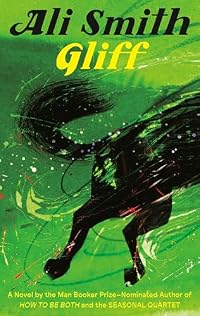
On This Page
Description
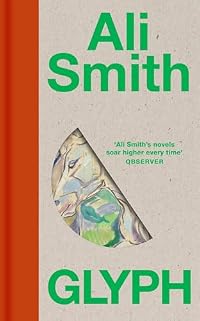
From a literary master, a moving and genre-bending story about our era-spanning search for meaning and knowingAn uncertain near-future. A story of new boundaries drawn between people daily. A not-very brave new world.
Add two children. And a horse.
From a Scottish word meaning a transient moment, a shock, a faint glimpse, Gliff explores how and why we endeavour to make a mark on the world. In a time when western industry wants to reduce us to algorithms and data—something easily show more categorizable and predictable—Smith shows us why our humanity, our individual complexities, matter more than ever.
. show less
Tags
Recommendations
Member Reviews
Summary: Two “Unverifiable” children meet up with a horse slated for rendering in a courageous attempt to find their way in a dystopian world.
Two “Unverifiable” children are in flight. They have to leave their home which has been outlined in red for destruction. There mother has been called away in an emergency. Leif, her partner, piles them and their essential belongings into his campervan…until it is also circled in red after an overnight in a parking lot. A train ride takes them to a new town. Leif finds them an abandoned house, stocks them with food and some cash and leaves for a week. They see neither Leif nor their mother again.
The two are Rose and Bri whose gender is ambiguous. Bri is the narrator. Rose and Bri’s show more mother has avoided smartphones and other elements of the surveillance society as much as possible, so they are used to living off the grid.
As Rose explores their surroundings, she discovers a neighboring farm with a field of used-up horses feeding. She later learns it is part of a rendering operation. These horses are as much on the margins as Rose and Bri. Rose befriends one, who she names Griff, a Scottish word meaning “transient moment, a shock, a faint glimpse.”
For a time, they shelter in an abandoned school with others who are “off the grid.” Oona, an older woman, becomes a kind of mentor and protector until the school is slated for demolition. The children flee on the horse. But eventually Bri is captured by the authorities,
Bri is subjected to processing and re-educated. During this, they are classified as a male. Bri becomes a manager of a factory in which child workers often suffer horrendous injuries. Bri enjoys a modicum of success and safety until someone from the past turns up. Someone who knows about Rose.
Ali Smith portrays an ugly, banal world in a dystopian totalitarianism. Everyone is surveilled, and all their information resides in vast servers. The accounts of Rose and Bri and Gliff represent a remnant of color, of personhood in this depersonalized world where people are reduced to production quotas and horses are fit only for rendering.
This is a brave new world (a motif in the second part of the book) where everything distinctive, beautiful, ambiguous, and colorful is reduced to bland functionality. It’s a world of prosperous oligarchs and a faceless society serving them. There are hints that people are eking out an existence in a climate-scorched world. It’s an uncomfortably possible future and faces us with the challenges of finding one’s personhood and meaning in a world trying to erase all of that. show less
Two “Unverifiable” children are in flight. They have to leave their home which has been outlined in red for destruction. There mother has been called away in an emergency. Leif, her partner, piles them and their essential belongings into his campervan…until it is also circled in red after an overnight in a parking lot. A train ride takes them to a new town. Leif finds them an abandoned house, stocks them with food and some cash and leaves for a week. They see neither Leif nor their mother again.
The two are Rose and Bri whose gender is ambiguous. Bri is the narrator. Rose and Bri’s show more mother has avoided smartphones and other elements of the surveillance society as much as possible, so they are used to living off the grid.
As Rose explores their surroundings, she discovers a neighboring farm with a field of used-up horses feeding. She later learns it is part of a rendering operation. These horses are as much on the margins as Rose and Bri. Rose befriends one, who she names Griff, a Scottish word meaning “transient moment, a shock, a faint glimpse.”
For a time, they shelter in an abandoned school with others who are “off the grid.” Oona, an older woman, becomes a kind of mentor and protector until the school is slated for demolition. The children flee on the horse. But eventually Bri is captured by the authorities,
Bri is subjected to processing and re-educated. During this, they are classified as a male. Bri becomes a manager of a factory in which child workers often suffer horrendous injuries. Bri enjoys a modicum of success and safety until someone from the past turns up. Someone who knows about Rose.
Ali Smith portrays an ugly, banal world in a dystopian totalitarianism. Everyone is surveilled, and all their information resides in vast servers. The accounts of Rose and Bri and Gliff represent a remnant of color, of personhood in this depersonalized world where people are reduced to production quotas and horses are fit only for rendering.
This is a brave new world (a motif in the second part of the book) where everything distinctive, beautiful, ambiguous, and colorful is reduced to bland functionality. It’s a world of prosperous oligarchs and a faceless society serving them. There are hints that people are eking out an existence in a climate-scorched world. It’s an uncomfortably possible future and faces us with the challenges of finding one’s personhood and meaning in a world trying to erase all of that. show less
If McEwan‘s Atonement was a rework of Hartley’s The Go-Between, could Gliff be a reworking of Huxley’s Brave New World? Not really but there are some deliberate similarities.
In Gliff you notice as you do now in Brave New World, many of the technological “ innovations” seem old-fashioned or even in the case of Gliff, current. But Huxley was presenting an imagined future world, whereas Smith knows our present only too well. Her references to technical surveillance is deliberately of this world. The CCTV cameras on street corners seem out of place in Smith’s book that is meant to be set in the near future. Of course it’s done on purpose as she fears that the near future is already upon us. Smith deliberately refers to songs show more by recent musicians, putting them into in the future now.
What I really enjoyed about the actual read was the word-play. But first what of the storyline? The book is not just word-play although at times it seems that way. There is a story - two girls an absent mother, a horse, and a couple of young boys tell of the progress of two sisters from childhood on, in a world dominated by government surveillance and petro-chemicals. The story is told almost as if it’s a background to the word-play, it hovers there, letting the reader pick up the missing pieces as they read along.
The sisters are called Briar and Rose, and the story starts with their moving from their home to a temporary dwelling that is empty, apparently abandoned. The sisters are alone and ponder on the people who used to live there. Briar: I reached and slid a finger along one of the spaces between the boards.If you could take these boards up and look at what had ended up down there. In that under-the-board space it would look like just dirt and brine, but you don’t just have DNA galore. You’d have the actual matter of what was left of those people in their times. This was a completely different sort of matter the kind people say it doesn’t matter when they talk about what history is.
Words like “matter” are given several meanings, often contradictory. They change as the book moves forward, and this is particularly evident in how the words, “brave new world” change along the way. The words mutate and erode. Individual letters are missed or replaced and the well-known title, Brave New World does not form itself completely until the end.
The younger sister Rose is innocent in her would-play. In Gliff UVs stand for Unverifiables, those people who are discarded by society. Like undocumented immigrants, they do not exist. But the precocious Rose is a master of malapropisms. She takes the modern meeting and bends it to her own : UVs Untra violets, flowers, Marianne Faithful becomes Marianne Unfaithful. When asked about passports, Rose legitimately explains that passports don’t have people attached to them, that. people have themselves and own the passports not the other way around. The reader cannot help but smile while listening to her.
As the reader reveals the story to herself, the word-plays seem to increase. Reading the novel is like listening to music. It’s not necessary to know why it was written. One can enjoy it in the how. The now.
4 stars show less
In Gliff you notice as you do now in Brave New World, many of the technological “ innovations” seem old-fashioned or even in the case of Gliff, current. But Huxley was presenting an imagined future world, whereas Smith knows our present only too well. Her references to technical surveillance is deliberately of this world. The CCTV cameras on street corners seem out of place in Smith’s book that is meant to be set in the near future. Of course it’s done on purpose as she fears that the near future is already upon us. Smith deliberately refers to songs show more by recent musicians, putting them into in the future now.
What I really enjoyed about the actual read was the word-play. But first what of the storyline? The book is not just word-play although at times it seems that way. There is a story - two girls an absent mother, a horse, and a couple of young boys tell of the progress of two sisters from childhood on, in a world dominated by government surveillance and petro-chemicals. The story is told almost as if it’s a background to the word-play, it hovers there, letting the reader pick up the missing pieces as they read along.
The sisters are called Briar and Rose, and the story starts with their moving from their home to a temporary dwelling that is empty, apparently abandoned. The sisters are alone and ponder on the people who used to live there. Briar: I reached and slid a finger along one of the spaces between the boards.If you could take these boards up and look at what had ended up down there. In that under-the-board space it would look like just dirt and brine, but you don’t just have DNA galore. You’d have the actual matter of what was left of those people in their times. This was a completely different sort of matter the kind people say it doesn’t matter when they talk about what history is.
Words like “matter” are given several meanings, often contradictory. They change as the book moves forward, and this is particularly evident in how the words, “brave new world” change along the way. The words mutate and erode. Individual letters are missed or replaced and the well-known title, Brave New World does not form itself completely until the end.
The younger sister Rose is innocent in her would-play. In Gliff UVs stand for Unverifiables, those people who are discarded by society. Like undocumented immigrants, they do not exist. But the precocious Rose is a master of malapropisms. She takes the modern meeting and bends it to her own : UVs Untra violets, flowers, Marianne Faithful becomes Marianne Unfaithful. When asked about passports, Rose legitimately explains that passports don’t have people attached to them, that. people have themselves and own the passports not the other way around. The reader cannot help but smile while listening to her.
As the reader reveals the story to herself, the word-plays seem to increase. Reading the novel is like listening to music. It’s not necessary to know why it was written. One can enjoy it in the how. The now.
4 stars show less
If there’s a dystopia to be written about, then for Ali Smith it’s essentially the place where we already live, with its data centres and camera surveillance and the murky giant corporations that seem to do all kinds of other ill-defined things besides their ostensible roles in making household chemicals and pharmaceuticals, delivering parcels, or providing security guards for us.
In this reworking of Brave New World (with a few shovelfuls of Black Beauty), two children — sometimes assisted by a horse and an elusive old lady — find themselves trapped on the outside of the data society after a mysterious red line is drawn around their house, and are inspired into a gesture of resistance. Smith riffs on her usual topics, like the show more power of words and of the ability to name things (and ourselves) as we choose, the importance of community and spontaneity, and the subversive capacity of books. Powerful stuff, as ever, but she seems to be getting a shade or two darker with each book. Or is the world simply getting worse? show less
In this reworking of Brave New World (with a few shovelfuls of Black Beauty), two children — sometimes assisted by a horse and an elusive old lady — find themselves trapped on the outside of the data society after a mysterious red line is drawn around their house, and are inspired into a gesture of resistance. Smith riffs on her usual topics, like the show more power of words and of the ability to name things (and ourselves) as we choose, the importance of community and spontaneity, and the subversive capacity of books. Powerful stuff, as ever, but she seems to be getting a shade or two darker with each book. Or is the world simply getting worse? show less
In her novel, GLIFF, Smith forces us to look at our world today and to glimpse into what seems to be our certain future. What does she show us? A place where we are all connected, but also under constant surveillance. A place where our personal data are always at risk but also determinate of our standing in society. A place where being unverified or, to use a more familiar term, undocumented is the ultimate hardship. A place where government and corporations manipulate language to obtain power and justify oppression. Indeed, her central theme seems to be the controlling power of words. How we derive meaning from words. How words can be manipulated as tools to obtain power and wealth.
Smith offers a ray of hope in the face of this show more blighted landscape by giving us two precocious children to admire. Clearly, children often are born sceptics with a strong ethical sense. They are quick to become subversive, taking to the streets or setting up encampments to protest the injustices and criminal behaviors societies easily accept. Briar/Brice is the older binary sibling whose most prominent feature seems to be curiosity, especially about words and their meanings. Rose is 11 years old but bold beyond her years. Empathy for a doomed horse seems to be her main motivation. Slated for the abattoir, this ageing gelding she names “gliff.” This Scottish word is more than just the title of Smith’s novel, it is freighted with meaning. In fact, Blair discovers so many meanings for it as to make it practically meaningless.
The plot is a little hard to follow because it lacks the constraints imposed by time and place and leaves a lot unsaid. Put simply, the sisters become separated from their mother, a person who may be at risk because she had the temerity to be a whistleblower. After losing their passports, the girls face the worst possible fate in this surveillance society. They become “unverifiables.” Eventually, they contact a like-minded resistance group occupying an abandoned schoolhouse. While Rose disappears, Bri is apprehended by the authorities and is “re-educated.” As it turns out, this process isn’t entirely successful with Bri.
Smith’s prose adopts a mood of danger, giving the novel a fairy tale quality (i.e., abandoned children at risk from some malevolent force). Moreover, her penchant for wordplay not only provides an ironic tone to her characters but also serves as a way to explore the nature of language and meaning as a powerful tools for control. show less
Smith offers a ray of hope in the face of this show more blighted landscape by giving us two precocious children to admire. Clearly, children often are born sceptics with a strong ethical sense. They are quick to become subversive, taking to the streets or setting up encampments to protest the injustices and criminal behaviors societies easily accept. Briar/Brice is the older binary sibling whose most prominent feature seems to be curiosity, especially about words and their meanings. Rose is 11 years old but bold beyond her years. Empathy for a doomed horse seems to be her main motivation. Slated for the abattoir, this ageing gelding she names “gliff.” This Scottish word is more than just the title of Smith’s novel, it is freighted with meaning. In fact, Blair discovers so many meanings for it as to make it practically meaningless.
The plot is a little hard to follow because it lacks the constraints imposed by time and place and leaves a lot unsaid. Put simply, the sisters become separated from their mother, a person who may be at risk because she had the temerity to be a whistleblower. After losing their passports, the girls face the worst possible fate in this surveillance society. They become “unverifiables.” Eventually, they contact a like-minded resistance group occupying an abandoned schoolhouse. While Rose disappears, Bri is apprehended by the authorities and is “re-educated.” As it turns out, this process isn’t entirely successful with Bri.
Smith’s prose adopts a mood of danger, giving the novel a fairy tale quality (i.e., abandoned children at risk from some malevolent force). Moreover, her penchant for wordplay not only provides an ironic tone to her characters but also serves as a way to explore the nature of language and meaning as a powerful tools for control. show less
A socially conscious dystopic novel about a pair of sisters. While I admired it, I found it hard to connect with it. An interesting change of pace. Still, there were characteristic Smith traits (such as an intermittent focus on language and the multiple meanings of words) which seems like an fascination for her.
This book totally hit the spot for me. It's tragic and terrifying on a global scale while at the same time fiercely personal and quiet. I love how the story unfolds and the feeling of hope that accompanies the fear and uncertainty. The way I feel reading this one reminds me of how I felt reading Smith's There But For The, which isn't really anything like this one in plot or structure.
The Short of It:
Thought-provoking. A tad terrifying given our current times.
The Rest of It:
An uncertain near-future. A story of new boundaries drawn between people daily. A not-very brave new world.
Add two children. And a horse. ~ the publisher
You know when you pick up a book because you just finished one and you want to keep the momentum going? Gliff was that book for me. I had seen it around. I had absolutely no idea what it was about but it was readily available from the library so I tucked in and fell right into it.
What an odd read.
Gliff -an unexpected view of something startling
Two children. Their parents, no longer around. Are they alive? I think yes, but somewhere else, or possibly living in another time. The children, Briar and show more Rose quietly fight for their survival as boundary markers, men who walk around marking boundaries around structures, make things disappear.
Living in abandoned structures and existing on canned sustenance, they make an adventure of their current situation. Briar, slightly older than Rose, turns every task into a simple yet critical need, gently hiding how dangerous the situation actually is.
People are desperate and there are bad people. Briar is constantly on the lookout assessing things in order to keep them safe.
Enter the horse.
In one of the abandoned dwellings that they take refuge in, Rose befriends a boy across the way who has a horse. Rose wants to own this horse. It’s not feasible to own a horse in their particular situation but Rose is obsessed with what will become of the horse if she doesn’t step in to save him.
As meager as their means are, they hand over what they have and walk the horse over to their temporary home. They keep him inside, for fear of people seeing him. Realizing how temporary the situation is, Briar heads out, looking for something. Not knowing quite what she’s looking for, she runs into a strange woman.
This woman knows where all the cameras are and which areas of the neighborhood are unseen due to vantage point. She tells Briar about the underground, literally a world living beneath them that is unseen and not monitored. People work there and then return to life after boundaries.
What transpires is not a revolution per se, but an understanding that things must be done in order to live, and escape. Does a better world exist elsewhere? Will Briar be able to reach it given what she knows?
This was a fascinating read. Nothing is spelled out for the reader. You digest it and decide what is going on. If you are the type who needs everything to be clearly wrapped up by that last page, then this might not be for you. I found it to be quite good. Dystopian reads just hit different in these times we are living in.
I recommend this one.
For more reviews, visit my blog: Book Chatter. show less
Thought-provoking. A tad terrifying given our current times.
The Rest of It:
An uncertain near-future. A story of new boundaries drawn between people daily. A not-very brave new world.
Add two children. And a horse. ~ the publisher
You know when you pick up a book because you just finished one and you want to keep the momentum going? Gliff was that book for me. I had seen it around. I had absolutely no idea what it was about but it was readily available from the library so I tucked in and fell right into it.
What an odd read.
Gliff -an unexpected view of something startling
Two children. Their parents, no longer around. Are they alive? I think yes, but somewhere else, or possibly living in another time. The children, Briar and show more Rose quietly fight for their survival as boundary markers, men who walk around marking boundaries around structures, make things disappear.
Living in abandoned structures and existing on canned sustenance, they make an adventure of their current situation. Briar, slightly older than Rose, turns every task into a simple yet critical need, gently hiding how dangerous the situation actually is.
People are desperate and there are bad people. Briar is constantly on the lookout assessing things in order to keep them safe.
Enter the horse.
In one of the abandoned dwellings that they take refuge in, Rose befriends a boy across the way who has a horse. Rose wants to own this horse. It’s not feasible to own a horse in their particular situation but Rose is obsessed with what will become of the horse if she doesn’t step in to save him.
As meager as their means are, they hand over what they have and walk the horse over to their temporary home. They keep him inside, for fear of people seeing him. Realizing how temporary the situation is, Briar heads out, looking for something. Not knowing quite what she’s looking for, she runs into a strange woman.
This woman knows where all the cameras are and which areas of the neighborhood are unseen due to vantage point. She tells Briar about the underground, literally a world living beneath them that is unseen and not monitored. People work there and then return to life after boundaries.
What transpires is not a revolution per se, but an understanding that things must be done in order to live, and escape. Does a better world exist elsewhere? Will Briar be able to reach it given what she knows?
This was a fascinating read. Nothing is spelled out for the reader. You digest it and decide what is going on. If you are the type who needs everything to be clearly wrapped up by that last page, then this might not be for you. I found it to be quite good. Dystopian reads just hit different in these times we are living in.
I recommend this one.
For more reviews, visit my blog: Book Chatter. show less
Members
- Recently Added By
Published Reviews
ThingScore 100
Foreground and background are almost indistinguishable here. They fade through and past each other in this matter-of-fact, wordplay-loving liberation story, which is full of explicated and dissected terms, incidental etymologies, and puns.
added by paradoxosalpha
Lists

Books Read in 2024
4,623 works; 126 members

Books Read in 2025
4,043 works; 97 members

Llibres que he llegit el 2025
81 works; 2 members

2026 Tournament of Books Longlist
70 works; 2 members

Top Five Books of 2025
950 works; 302 members
Author Information

54+ Works 17,461 Members
Some Editions
Awards and Honors
Awards
Distinctions
Notable Lists
Series

Common Knowledge
- Canonical title
- Gliff
- Original publication date
- 2024
- Dedication
- For Luigi, Luis and Alex Sacco and the story at the heart of every chance encounter,
to keep in mind Bette MacDonald, horse woman,
for everyone at the Portobello Bookshop - long story short,
and for Sarah... (show all) Wood, brave art. - First words
- Our mother came down to the docking gate to say cheerio to us.
- Quotations*
- You can learn some of those languages, if you want, she said, while you're heren. I'll teach you.
What, for speaking? I said. To people?
You've no idea the doors that open when a word in one language crosses into anothe... (show all)r language, she shaid. - Last words
- (Click to show. Warning: May contain spoilers.)We'll be making it up as we go, you tell them both over your shoulder.
- Canonical DDC/MDS
- 823.914
- Canonical LCC
- PR6069 .M4213 .G59
*Some information comes from Common Knowledge in other languages. Click "Edit" for more information.
Classifications
Statistics
- Members
- 391
- Popularity
- 79,245
- Reviews
- 17
- Rating
- (3.92)
- Languages
- Catalan, Dutch, English, Norwegian (Bokmål)
- Media
- Paper, Audiobook, Ebook
- ISBNs
- 15
- ASINs
- 3