On This Page
Description
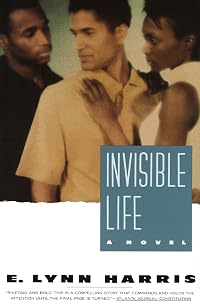
The remarkable first novel by a young, gay, black author who fashioned a deeply moving and compelling coming-of-age story out of the controversial issues of bisexuality and AIDSLaw school, girlfriends, and career choices were all part of Raymond Tyler's life, but there were other, more terrifying issues for him to confront. Being black was tough enough, but Raymond was becoming more and more conscious of sexual feelings that he knew weren't "right." He was completely committed to Sela, his show more longtime girlfriend, but his attraction to Kelvin, whom he had met during his last year in law school, had become more than just a friendship.
Fleeing to New York to escape both Sela and Kelvin, Raymond finds himself more confused than ever before. New relationships—both male and female—give him enormous pleasure but keep him from finding the inner peace and lasting love he so desperately desires. The horrible illness and death of a friend eventually force Raymond, at last, to face the truth.
Invisible Life has been hailed as "one of the most thought-provoking books—since James Baldwin's Another Country" (Richmond Voice), and Harris's "stories have become the toast of bookstores, reading groups, men, women, and gay and straight people" (Atlanta Journal-Constitution). show less
Tags
Recommendations












Member Reviews
The first time I read this book, I was completely blown away. Never before had I read a book which was so true it was scary. "Invisible Life" managed to do what most books hadn't done before, tell what it feels like to come to terms with your sexuality realistically. By this, I mean that most of the times I read books in which the character was gay, the author would sugar coat the issue or worse, spend most of the book debating about the pros and cons of "coming out".However what E. Lynn Harris has managed to do it create a character who realizes that he is gay and from that point on learns to accept this. Harris doesn't try to take the easy way out in this story by having him tell everyone and they just accept it and move on. Instead, show more Harris places his character in a situation in which he could either deny who he is or accept himself.From reading this book, I learned a lot of things. Mainly, I realized that life is hard for everyone, no matter if you're straight or gay. Also, I learned that before you make peace with yourself, you have to learn to accept yourself for who you are.So, for anyone who liked this book as much as I did, I recommend that you read all of E. Lynn Harris' books: Just As I Am, Abide With Me, If This World Was Mine, and This Too Shall Pass. show less
The first time I read this book, I was completely blown away. Never before had I read a book which was so true it was scary. "Invisible Life" managed to do what most books hadn't done before, tell what it feels like to come to terms with your sexuality realistically. By this, I mean that most of the times I read books in which the character was gay, the author would sugar coat the issue or worse, spend most of the book debating about the pros and cons of "coming out".However what E. Lynn Harris has managed to do it create a character who realizes that he is gay and from that point on learns to accept this. Harris doesn't try to take the easy way out in this story by having him tell everyone and they just accept it and move on. Instead, show more Harris places his character in a situation in which he could either deny who he is or accept himself.From reading this book, I learned a lot of things. Mainly, I realized that life is hard for everyone, no matter if you're straight or gay. Also, I learned that before you make peace with yourself, you have to learn to accept yourself for who you are.So, for anyone who liked this book as much as I did, I recommend that you read all of E. Lynn Harris' books: Just As I Am, Abide With Me, If This World Was Mine, and This Too Shall Pass. show less
I'm pretty conflicted about this book. I read it in about 1997? And really felt like I was being exposed to a world I'd never know about otherwise. At the time, as an already out bisexual person I think it was simply incredible to see a character toiling with my own conflicts while existing in a culture I barely understood at the time.
It doesn't hold up to a re-read, alas. The writing is painfully stilted ("I was beginning to become embarrassed.") First person is bizarre choice when much of the MC's inner turmoil and decision making is hidden. And it doesn't have much of a story, as in no real arc for the MC. He just goes on and on with things happening to him that he reacts too. Which I guess is function of this being a trilogy? Maybe show more the arc finishes in the third book, but overall made for a VERY unsatisfying ending.
Having lived through the time period it's set in I can say that the homophobia, biphobia, and racism is certainly true to the era. But this story does such a disservice to women, particularly black women, and femme gay men that it hurt to read at times. And a lot of the AAVE was written in italics, a publishing standard usually reserved for foreign language words, which seemed like a weird choice. Seeing "snow queen" and "pulling" among other things, singled out as something foreign added to my current sense of disconnection the story.
At times it is really just a political info dump on gay culture, and black men living on the down low. But at the same time, way back in 1997, I learned a lot from that info dump. I think this book still has value for all that. But maybe as a historical document and not a story for entertainment value, because it really falls short for that. show less
It doesn't hold up to a re-read, alas. The writing is painfully stilted ("I was beginning to become embarrassed.") First person is bizarre choice when much of the MC's inner turmoil and decision making is hidden. And it doesn't have much of a story, as in no real arc for the MC. He just goes on and on with things happening to him that he reacts too. Which I guess is function of this being a trilogy? Maybe show more the arc finishes in the third book, but overall made for a VERY unsatisfying ending.
Having lived through the time period it's set in I can say that the homophobia, biphobia, and racism is certainly true to the era. But this story does such a disservice to women, particularly black women, and femme gay men that it hurt to read at times. And a lot of the AAVE was written in italics, a publishing standard usually reserved for foreign language words, which seemed like a weird choice. Seeing "snow queen" and "pulling" among other things, singled out as something foreign added to my current sense of disconnection the story.
At times it is really just a political info dump on gay culture, and black men living on the down low. But at the same time, way back in 1997, I learned a lot from that info dump. I think this book still has value for all that. But maybe as a historical document and not a story for entertainment value, because it really falls short for that. show less
E. Lynn Harris was in Seattle recently promoting his latest book. I read a couple of interviews with him that peeked my interest so I got his first book - this one and read it. It's really an easy read and a really interesting view into the life of a black gay man. As a white straight woman, this is a world I honestly don't know at all and this small novel was a really interesting read.
A good book about a sensitive topic. A well written novel about a young black man who has to confront his homosexuality. He never felt "gay" and even had a long term girl friend he had real feelings for, so how did this happen? Is he still a man, and what will his family and friends say? Harris covers the entire gamut in his novel. The real benefit is that the author doesn't try to sugar coat the real emotional confusion, fear, and health concerns surrounding living as a bi-sexual black man particularly if you're in the closet (on the down-low).
Very well written fictional expose on the life of friends, family and new associates and their relations...It will keep your interest until completed....
Ratings
Members
- Recently Added By
Author Information

22+ Works 4,544 Members
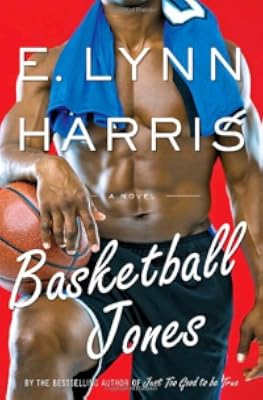
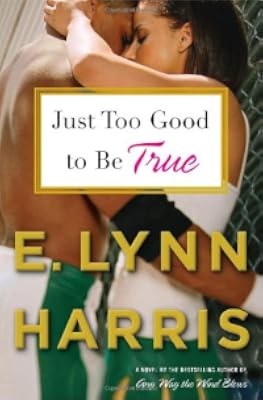
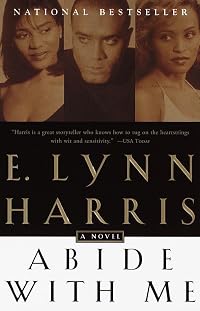
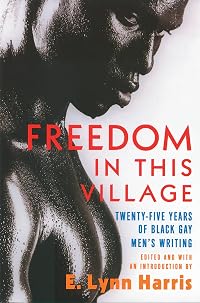
Born in Flint, Michigan and raised in Little Rock, Arkansas, E. Lynn Harris graduated from the University of Arkansas at Fayetteville in 1977, earning a degree in journalism with honors. After college, Harris sold computers for IBM, Hewlett-Packard, and AT&T for 13 years before quitting his job to write his first novel. The resulting book, show more Invisible Life, was self-published in 1992 and sold mostly at beauty salons and black-owned bookstores. After being published in trade paperback by Anchor Books, Invisible Life became the #1 book on the Blackboard Bestseller List of African-American Titles and spent a total of 25 consecutive months on the list. Harris was an openly gay African American and was best known for his depictions of African American men on the down low or in the closet. He won numerous awards for his work including two Novel of the Year Prizes by the Blackboard African-American Bestsellers, Inc. for Just As I Am and Any Way the Wind Blows, the James Baldwin Award for Literary Excellence for If This World Were Mine, and the Lambda Literary Award for the anthology Freedom in This Village. His other books include And This Too Shall Pass; Abide with Me; Not a Day Goes By; A Love of My Own; I Say a Little Prayer; What Becomes of the Brokenhearted; Just Too Good to Be True, and Basketball Jones. His work also appeared in American Visions, Essence, Washington Post Sunday Magazine, Sports Illustrated and the award-winning anthology Brotherman: The Odyssey of Black Men in America. He died on July 23, 2009 at the age of 54. (Bowker Author Biography) show less
Series

Common Knowledge
- Original publication date
- 1991
- People/Characters
- Raymond Tyler, Jr.; Nicole Springer
Classifications
Statistics
- Members
- 580
- Popularity
- 50,578
- Reviews
- 6
- Rating
- (3.93)
- Languages
- English
- Media
- Paper, Audiobook, Ebook
- ISBNs
- 9
- ASINs
- 6