On This Page
Description
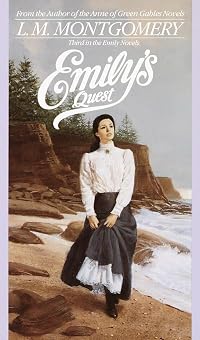
Emily Starr is now seventeen years old and a high-school graduate. With her new-found freedom, she grows as a writer and waits day in and day out for the return of her friend Teddy Kent, who went on to continue his education away from the town of New Moon. As her life unfurls, Emily is faced with heartache and newfound opportunities.Tags
Recommendations












Member Recommendations
Member Reviews
Likely my 2010 review:
A beautiful conclusion to the Emily trilogy. As befits the maturity of the protagonist, this work is more reflective, with elegant ruminations throughout the narrative on life, nature, getting older, friendship and the ties that bind. It's a very quick read, and even if you're pretty sure things will turn out all right, the road is not without bumps along the way. The most touching part of the book for me was Chapter 3, which nearly reduced me to a blubbering mess on the bus. Montgomery is an excellent writer, really putting the reader at the heart of the action. The series as a whole is very highly recommended.
2023 review:
This time I got more blubbery toward the end of the book, even as I thought the mechanisms show more for pulling everything together might have been a bit too pat. Never mind! Sometimes you need a book with an implausibly happy or sentimental ending. show less
A beautiful conclusion to the Emily trilogy. As befits the maturity of the protagonist, this work is more reflective, with elegant ruminations throughout the narrative on life, nature, getting older, friendship and the ties that bind. It's a very quick read, and even if you're pretty sure things will turn out all right, the road is not without bumps along the way. The most touching part of the book for me was Chapter 3, which nearly reduced me to a blubbering mess on the bus. Montgomery is an excellent writer, really putting the reader at the heart of the action. The series as a whole is very highly recommended.
2023 review:
This time I got more blubbery toward the end of the book, even as I thought the mechanisms show more for pulling everything together might have been a bit too pat. Never mind! Sometimes you need a book with an implausibly happy or sentimental ending. show less
The third and final installment of L.M. Montgomery's series of books devoted to the adventures of aspiring writer Emily Byrd Starr - begun in Emily of New Moon, and continued in Emily Climbs - Emily's Quest sometimes reads like a Prince Edward Island soap-opera, with all the romantic twists and turns implicit in such a description. The most mature of the three novels, it follows its eponymous heroine through a number of years at New Moon, as she becomes engaged, then unengaged, realizes her true love, becomes estranged from him (and watches as he prepares to wed another), all while spreading her literary wings, and achieving her first true success as an author...
But despite the sense of melodrama that sometimes makes itself felt, this show more novel still has the power to affect me deeply, involving me emotionally in Emily's turbulent journey through her young adult years. Although many of my fellow readers, particularly in our discussions over at the Kindred Spirits Book Club to which I belong, have expressed a distaste for the character of Dean Priest, citing his manipulative and possessive behavior, and his dishonesty regarding Emily's writing, I actually find him a moving character. His faults are considerable, but something about his lonely life - enriched by knowledge and impoverished by cynicism - always speaks to my heart. Given that this is so, I have always thought that Montgomery demonstrated great insight and wisdom in refraining from emulating that overused trope - so popular in sentimental novels - of the young innocent who redeems the world-weary cynic. That alone would make this book a worthwhile reading experience for me, although I found many other qualities to admire.
Montgomery's descriptions of her beloved Prince Edward Island are as lush as ever, with none of the purple prose that sometimes appeared in Emily of New Moon, and her cast of characters, from the Murrays of New Moon to the seemingly remote Ilse and Teddy, are well drawn. I did wish that Emily's three childhood friends appeared more often, but perhaps that too is a sign of a well-crafted narrative. After all, Emily is growing up, and change must come. The fact that the reader shares her wistful sense of things not turning out quite as expected - as in the bittersweet scene in which she reads her letter to herself at twenty-four, written when she was fourteen - is another testament to Montgomery's powers as a writer.
All in all, I am glad to report that Emily's Quest (along with the entire Emily Trilogy) has withstood the test of time, appealing as much to my adult self as it did to the adolescent reader of yesteryear. show less
But despite the sense of melodrama that sometimes makes itself felt, this show more novel still has the power to affect me deeply, involving me emotionally in Emily's turbulent journey through her young adult years. Although many of my fellow readers, particularly in our discussions over at the Kindred Spirits Book Club to which I belong, have expressed a distaste for the character of Dean Priest, citing his manipulative and possessive behavior, and his dishonesty regarding Emily's writing, I actually find him a moving character. His faults are considerable, but something about his lonely life - enriched by knowledge and impoverished by cynicism - always speaks to my heart. Given that this is so, I have always thought that Montgomery demonstrated great insight and wisdom in refraining from emulating that overused trope - so popular in sentimental novels - of the young innocent who redeems the world-weary cynic. That alone would make this book a worthwhile reading experience for me, although I found many other qualities to admire.
Montgomery's descriptions of her beloved Prince Edward Island are as lush as ever, with none of the purple prose that sometimes appeared in Emily of New Moon, and her cast of characters, from the Murrays of New Moon to the seemingly remote Ilse and Teddy, are well drawn. I did wish that Emily's three childhood friends appeared more often, but perhaps that too is a sign of a well-crafted narrative. After all, Emily is growing up, and change must come. The fact that the reader shares her wistful sense of things not turning out quite as expected - as in the bittersweet scene in which she reads her letter to herself at twenty-four, written when she was fourteen - is another testament to Montgomery's powers as a writer.
All in all, I am glad to report that Emily's Quest (along with the entire Emily Trilogy) has withstood the test of time, appealing as much to my adult self as it did to the adolescent reader of yesteryear. show less
While Valancy remains my favorite of LM's girls, Emily is one of my beloved book characters. I have since then read Emily Climbs and Emily's Quest, and a good amount of other LM books. Emily is a very different character than Anne (both of them possess a grand imagination, but Anne is more spunky, Emily's more quiet) with a subtle resilience to her spirit that gives her unexpected strength at times (giving her aunt Elizabeth the Murray look). If you liked Anne of Green Gables, you should enjoy this.
We saw Emily grow in Emily Climbs, and this book is a supremely satisfying finale on many ends. Readers should be glad that Emily ended up with Ted, but personally I had been hoping she would marry Dean Priest. Oh well. overall a great book, show more Emily becomes a beautiful and splendid young woman. Bravo! show less
We saw Emily grow in Emily Climbs, and this book is a supremely satisfying finale on many ends. Readers should be glad that Emily ended up with Ted, but personally I had been hoping she would marry Dean Priest. Oh well. overall a great book, show more Emily becomes a beautiful and splendid young woman. Bravo! show less
This book is almost perfect (I'm prepared to defend my choice in italics). I really tried to not like these books—I wanted to stay loyal to Anne forever!—but there are so many things about Emily's saga that appeal to me more than the Anne books do. First and foremost being that we don't have to sit through endless pages of gossiping biddies telling stories. (I just want to read about Anne and Gilbert, geez.)
Emily and I aren't all that similar, but she has so much depth to her I couldn't help relating to her anyway. And because Montgomery's writing is so good, I felt everything Emily felt—heartbreak, hurt, loneliness, elation, happiness, regret, doubt. I've said this before, but Montgomery's writing is at its absolute best when she show more lets some melancholy in. There's nothing silly about this book; it's all soul. This book captured me with its deep portrayal of a life lived, without brushing over the disappointments that we're never prepared for.
But I still love the Anne/Gilbert love story the most. Just thought I'd make that clear. Emily and Teddy crossed the line from deeply romantic to stupidly frustrating one too many times. show less
Emily and I aren't all that similar, but she has so much depth to her I couldn't help relating to her anyway. And because Montgomery's writing is so good, I felt everything Emily felt—heartbreak, hurt, loneliness, elation, happiness, regret, doubt. I've said this before, but Montgomery's writing is at its absolute best when she show more lets some melancholy in. There's nothing silly about this book; it's all soul. This book captured me with its deep portrayal of a life lived, without brushing over the disappointments that we're never prepared for.
But I still love the Anne/Gilbert love story the most. Just thought I'd make that clear. Emily and Teddy crossed the line from deeply romantic to stupidly frustrating one too many times. show less
To say that this book took me on a ride is the understatement of the century. The sheer number of emotions I experienced are too many to count. I read this at the same time my husband did, and at one point while reading I turned to him in desperation and said, “Is she trying to kill us?!?”
By the time I reached the end, this book was officially an all time favorite, along with the rest of the series, and such a great conclusion to Emily’s story! Well done, Lucy Maud Montgomery, and well played!
By the time I reached the end, this book was officially an all time favorite, along with the rest of the series, and such a great conclusion to Emily’s story! Well done, Lucy Maud Montgomery, and well played!
What is interesting about this conclusion to Emily's story is how full it is of grief and doubt and mistakes. Ms. Montgomery brings it right in the end, but the heartbreaking emotions and the battle of head over heart is very real and pervasive in the book. I never really like Dean in this series and this last book makes me really despise him - Emily is a much more forgiving person than I am, and it is a tribute to her maturity that she knows forgiving will give her more peace than not forgiving. I love the end - and probably for Teddy all the mistakes made him a man worth loving. Of course, most of what we know about Teddy in this book comes from Ilse, who is sort of suspect as a narrator!
The first half was great. Emily's development as a writer and an adult is believable and well-paced. I found her injury and the decisions she makes in its aftermath to be the most interesting parts of the story. Poor Dean would have won me over if not for his deceit, and his near total destruction of Emily's career. He's such an interesting, sympathetic character next to Teddy's beauty and blankness.
The second half of the book is pretty tedious. NOTHING happens until Teddy and Ilse's almost-wedding, and the passive pridefulness of both Emily and Teddy drags the book on for about fifty pages (and, what,
Members
- Recently Added By
Lists

Best L.M. Montgomery novels
20 works; 8 members

In and About the 1920s
181 works; 31 members

New Canadian Library
191 works; 7 members

Bibliography for How to be a Heroine
148 works; 12 members

Fiction with Women's Names in the Title
378 works; 15 members

Female Protagonist
1,056 works; 57 members

Most Popular Books Tagged Canada
34 works; 1 member

Books Set in Canada
57 works; 10 members

Favourite Virago Modern Classics
183 works; 38 members
Books tagged favorites
390 works; 30 members

Children's Literature 1900 - 1950 in order
413 works; 8 members
Author Information

383+ Works 159,567 Members
One of the best-loved children's/young adult authors, Lucy Maud Montgomery was born on November 30, 1874 in Clifton, Prince Edward Island, Canada, the daughter of Hugh John and Clara Woolner. After attending Prince of Wales College and Dalhouse College in Halifax, she became a certified teacher, eventually teaching in Bideford, Prince Edward show more Island. She also served as an assistant at the post office and as a writer for the local newspaper, The Halifax Daily Echo. Best known for her Anne of Avonlea and Anne of Green Gables books, Montgomery received many high honors. She was named a Fellow of the Royal Society of Arts in 1923 and a Canadian stamp commemorates Montgomery and Anne of Green Gables. In addition, various museums dedicated to the book series and Montgomery's life dot Prince Edward Island. The books in the Anne series follow the growth and adventures of a red-haired, spritely, high-spirited and imaginative orphan named Anne who lives on Prince Edward Island. The success of these books rested in Montgomery's ability to vividly recollect childhood and her easy storytelling ability. They are tremendously popular to this day and have been translated into more than 35 languages and adapted as movies and PBS television productions. On July 5, 1911, L.M. Montgomery married Ewan Macdonald, a Presbyterian minister, and the marriage produced three children. She died on April 24, 1942. (Bowker Author Biography) show less
Some Editions
Series

Belongs to Publisher Series
Work Relationships
Common Knowledge
- Canonical title
- Emily's Quest
- Original title
- Emily's Quest
- Original publication date
- 1927
- People/Characters
- Emily Byrd Starr; Dean Priest; Teddy Kent; Elizabeth Murray; Laura Murray; Ilse Burnley (show all 7); Perry Miller
- Important places
- Prince Edward Island, Canada; Blair Water
- Related movies
- Emily of New Moon (1998 | IMDb); Kaze no Shoujo Emily (2007)
- Dedication
- To
Stella Campbell Keller
of the tribe of Joseph - First words
- "No more cambric tea" had Emily Bird Starr written in her diary when she had come to New Moon from Shrewsbury, with her high school days behind her and immortality before her.
- Last words
- (Click to show. Warning: May contain spoilers.)Before her on the dark hill, against the sunset, was the little beloved grey house that was to be disappointed no longer.
- Original language
- English
- Canonical DDC/MDS
- 813.52
Classifications
- Genres
- Fiction and Literature, Children's Books, Kids, Young Adult
- DDC/MDS
- 813.52 — Literature & rhetoric American literature in English American fiction in English 1900-1999 1900-1945
- LCC
- PZ3 .M767 .E — Language and Literature Fiction and juvenile belles lettres Fiction and juvenile belles lettres Fiction in English
- BISAC
Statistics
- Members
- 3,168
- Popularity
- 5,489
- Reviews
- 40
- Rating
- (4.03)
- Languages
- 11 — Danish, English, Finnish, French, German, Italian, Latvian, Polish, Spanish, Swedish, Turkish
- Media
- Paper, Audiobook, Ebook
- ISBNs
- 73
- UPCs
- 1
- ASINs
- 41