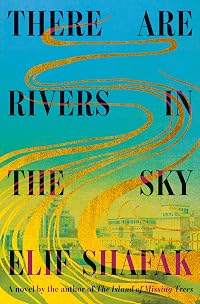
There are Rivers in the Sky
by Elif Shafak
On This Page
Description
This is the story of one lost poem, two great rivers, and three remarkable lives - all connected by a single drop of water. In the ruins of Nineveh, that ancient city of Mesopotamia, there lies hidden in the sand fragments of a long-forgotten poem, the Epic of Gilgamesh. In Victorian London, an extraordinary child is born at the edge of the dirt-black Thames. Arthur's only chance of escaping poverty is his brilliant memory. When his gift earns him a spot as an apprentice at a printing press, show more Arthur's world opens up far beyond the slums, with one book soon sending him across the seas: Nineveh and Its Remains. In 2014 Turkey, Narin, a Yazidi girl living by the River Tigris, waits to be baptised with water brought from the holy sit of Lalish in Iraq. The ceremony is cruelly interrupted, and soon Narin and her grandmother must journey across war-torn lands in the hope of reaching the sacred valley of their people. In 2018 London, broken-hearted Zaleekhah, a hydrologist, moves to a houseboat on the Thames to escape the wreckage of her marriage. Zaleekhah foresees a life drained of all love and meaning - until an unexpected connection to her homeland changes everything. A dazzling feat of storytelling from one of the greatest writers of our time, Elif Shafak's There are Rivers in the Sky is a rich, sweeping novel that spans centuries, continents and cultures, entwined by rivers, rains, and waterdrops. show lessTags
Recommendations










Member Reviews
There Are Rivers in the Sky - Shafak
5 stars
Very definitely a 5 star book. There were aspects of the plot that I felt were forced. And, at least one character was awkwardly introduced and too conveniently placed in the contemporary storyline. In another book, that might have lowered my personal rating. But, I just can’t do it with this book. So much of the writing was beautiful. So much of the emotional impact was devastating.
This is a very ambitious book. Following a prologue set in ancient Nineveh, it connects three characters in three different timelines. Arthur is in 19th century London struggling to escape a dysfunctional family and abject poverty. Nine year old Narin, a Yazidi girl in 21st century Turkey and Iraq is struggling show more to survive the destruction of her homeland and the terror of ISIS. In 2018, Zaleekah, a British/Turkish doctor of hydrology, is living on the Thames in a houseboat while contemplating suicide.
I enjoyed the book’s 19th century storyline, including Arthur’s brief encounters with Charles Dickens. For all of his odd abilities and eccentric personality, Arthur is a completely believable character. Arthur’s story is sad, but sufficiently distant to still feel like a story. Narin’s 21st century tragedy is starkly realistic. Shafak does a good job of turning yesterday’s evening news into a personal gut punch.
I said the book is ambitious. Shafak touches on the political violence, social injustice, and environmental destruction of both centuries. Each of her major characters face overwhelming life challenges. The vast elements of their different lives are tied together by a mutual fascination with the myth of Gilgamesh. Shafak uses a touch of magical realism to inject a sense of renewal with the cyclical reappearance of a single drop of water; a drop of water that retains the essence of past events as it moves through the water cycle.
Given the hardship and loss in each of the storylines, this should have been a depressing book. It didn’t leave me that way. I feel a bit like that drop of water. I could return to this book many times and still find something else to think about.
I’d recommend this book to anyone who enjoyed A Constellation of Vital Phenomenon and Birds Without Wings. It’s a great book for serious discussion. show less
5 stars
Very definitely a 5 star book. There were aspects of the plot that I felt were forced. And, at least one character was awkwardly introduced and too conveniently placed in the contemporary storyline. In another book, that might have lowered my personal rating. But, I just can’t do it with this book. So much of the writing was beautiful. So much of the emotional impact was devastating.
This is a very ambitious book. Following a prologue set in ancient Nineveh, it connects three characters in three different timelines. Arthur is in 19th century London struggling to escape a dysfunctional family and abject poverty. Nine year old Narin, a Yazidi girl in 21st century Turkey and Iraq is struggling show more to survive the destruction of her homeland and the terror of ISIS. In 2018, Zaleekah, a British/Turkish doctor of hydrology, is living on the Thames in a houseboat while contemplating suicide.
I enjoyed the book’s 19th century storyline, including Arthur’s brief encounters with Charles Dickens. For all of his odd abilities and eccentric personality, Arthur is a completely believable character. Arthur’s story is sad, but sufficiently distant to still feel like a story. Narin’s 21st century tragedy is starkly realistic. Shafak does a good job of turning yesterday’s evening news into a personal gut punch.
I said the book is ambitious. Shafak touches on the political violence, social injustice, and environmental destruction of both centuries. Each of her major characters face overwhelming life challenges. The vast elements of their different lives are tied together by a mutual fascination with the myth of Gilgamesh. Shafak uses a touch of magical realism to inject a sense of renewal with the cyclical reappearance of a single drop of water; a drop of water that retains the essence of past events as it moves through the water cycle.
Given the hardship and loss in each of the storylines, this should have been a depressing book. It didn’t leave me that way. I feel a bit like that drop of water. I could return to this book many times and still find something else to think about.
I’d recommend this book to anyone who enjoyed A Constellation of Vital Phenomenon and Birds Without Wings. It’s a great book for serious discussion. show less
This beautifully written saga inventively employs a single drop of water to connect the lives of three characters from different centuries, continents and cultures.
The book provides fascinating insights about ancient Mesopotamia, “the land where civilization began” and the birthplace of numerous milestones, including the earliest known writing system (cuneiform). Kudos to Shafak for skillfully weaving in ancient history and lore that loosely shape some of the book’s characters and events. It’s no easy feat to deliver a novel that touches on everything from religion and ecology to geopolitics and social justice.
Now for my critique. Any novel that hits 400 pages — and especially one that flirts with 500 — must be exceptional show more to retain my attention. “There are Rivers in the Sky” is quite good, but it doesn’t quite reach the exceptional rung. Truth be told, I fold the pacing to be tedious, especially in the second half. I also had issues with some of the dialogue that seemed “clunky” in spots.
Having said that, “There are Rivers in the Sky” is definitely a thought-provoking read. show less
The book provides fascinating insights about ancient Mesopotamia, “the land where civilization began” and the birthplace of numerous milestones, including the earliest known writing system (cuneiform). Kudos to Shafak for skillfully weaving in ancient history and lore that loosely shape some of the book’s characters and events. It’s no easy feat to deliver a novel that touches on everything from religion and ecology to geopolitics and social justice.
Now for my critique. Any novel that hits 400 pages — and especially one that flirts with 500 — must be exceptional show more to retain my attention. “There are Rivers in the Sky” is quite good, but it doesn’t quite reach the exceptional rung. Truth be told, I fold the pacing to be tedious, especially in the second half. I also had issues with some of the dialogue that seemed “clunky” in spots.
Having said that, “There are Rivers in the Sky” is definitely a thought-provoking read. show less
This novel exemplifies what writing and reading are all about. Phenomenal, time-spanning, globe-trotting, read about... water, its history, the world's history. Our personal lives. The lives of those wealthy and in power; and the harm their, selfish choices cause the powerless and poor. Fortunes and kingdoms come and go over time. Like rivers in England, Turkey, Iraq and around the globe, whose water is life-sustaining but once neglected, taken for granted and badly polluted changes into a killer. People both rich and poor die from cholera and other deadly water-borne diseases. The clueless authorities then bury these rivers so people wouldn’t know they failed to keep people safe.
Arthur is a poor child but becomes an incredible man show more passionate about words, books, history, poetry, archeology, and love. He works in the British Museum decoding tablets depicting the poem: The Epic of Gilgamesh. Soon he is sent to Mesopotamia to search for missing tablets. He lives with the Yazidis, respects them and falls in love with Leila, their seer. Narin is Leila’s young descendant Everything she learns about Yazidi culture and love is from the insightful grandmother who raises her.
Arthur learns how the Yazidis are vilified for generations by Muslims, who encourage their genocide. He tries to get people to understand the injustice and brutality but people think he is foolish. He is devastated and loses his passion for life.
Zuleikha is raised by her wealthy aunt and uncle in London after her parents’ death in a flood. Now separated from her husband, and depressed she moves into a houseboat and befriends its owner, Nen who teaches her about coffee, cuneiform and love.
Like drops of water, these characters are connected through history and through time.
Water, like time, like history, it remembers and repeats itself in both good and bad form.
A stunningly beautiful and sad read to be savored.
Need to read more of Shafak's works. show less
Arthur is a poor child but becomes an incredible man show more passionate about words, books, history, poetry, archeology, and love. He works in the British Museum decoding tablets depicting the poem: The Epic of Gilgamesh. Soon he is sent to Mesopotamia to search for missing tablets. He lives with the Yazidis, respects them and falls in love with Leila, their seer. Narin is Leila’s young descendant Everything she learns about Yazidi culture and love is from the insightful grandmother who raises her.
Arthur learns how the Yazidis are vilified for generations by Muslims, who encourage their genocide. He tries to get people to understand the injustice and brutality but people think he is foolish. He is devastated and loses his passion for life.
Zuleikha is raised by her wealthy aunt and uncle in London after her parents’ death in a flood. Now separated from her husband, and depressed she moves into a houseboat and befriends its owner, Nen who teaches her about coffee, cuneiform and love.
Like drops of water, these characters are connected through history and through time.
Water, like time, like history, it remembers and repeats itself in both good and bad form.
A stunningly beautiful and sad read to be savored.
Need to read more of Shafak's works. show less
Elif Shafak verbindt in ‘Er stromen rivieren in de lucht’ de levens van Arthur, Narin en Zaleekhah zoals de gebogen watermolecule gevormd wordt. Door niet lineair te werken, brengt ze de geschiedenis van Arthur in de negentiende eeuw in haar slotapotheose samen met de verhalen van Narin en Zaleekhah. Bij de eerste staat er boven ieder hoofdstuk een O, bij de twee anderen een H, zodat je H2O krijgt.
Water loopt als een blauwe draad doorheen het boek. Al in de proloog wordt dit duidelijk bij de voorstelling van de regendruppel mét geheugen. In die jaren, in die lang vervlogen jaren, lang geleden (630 vC) valt deze druppel op het hoofd van de wrede koning Assurbanipal. Eeuwen daarna heeft hij de vorm van een sneeuwvlok aangenomen die show more in baby Arthurs mond valt. Dezelfde waterdruppel komt ook bij Narin én Zaleekhah, een origineel uitgangspunt.
‘Water is de ultieme immigrant, gevangen in doortocht, nooit in staat zich ergens te settelen.'
De inhoud van de verschillende delen gaat crescendo: van regendruppel en mysteries van water over rusteloze rivieren en herinneringen van water tot de zondvloed. Het wisselen tussen de verschillende personages/hoofdstukken voelt heel natuurlijk aan, want er zijn heel wat elementen die bij alle drie terugkomen: behalve de waterdruppel en het Gilgamesj-epos, zijn er de kleitabletten in spijkerschrift met een bijzondere in lapis lazulli, de lamassu’s, levensbepalende reizen, al dan niet verborgen rivieren, verhalen vertellen en hun vergeten godin Nasibi.
Het personage van Arthur wordt het meest uitgediept. Hij is losjes gebaseerd op George Smith, een autodidactische assyrioloog en ontdekker van het Gilgamesj-epos. We volgen hem van bij zijn geboorte tot zijn dood. Zijn IQ is waanzinnig hoog en helpt hem bij het ontcijferen van het spijkerschrift. Hij is in armoede aan de Theems geboren, maar eens hij met de Tigris, Leila en de Jezidi heeft kennisgemaakt, lijkt hij zich ver van huis meer thuis te voelen.
‘De Tigris is zijn leven binnengedrongen en gestold, als druipende kaarsenwas.’
Het meisje Narin lijkt eerder een symbool voor de tragedie van de Jezidi’s. Dankzij de verhalen van haar oma leren we deze onderdrukte bevolkingsgroep van duivelaanbidders beter kennen. Zaleekhah maakt dankzij Nen de grootste ontwikkeling door: van een depressieve, wankele hydroloog naar een vrouw die opkomt voor haar waarden, van kil met een hoog IQ naar warm met een hoog EQ. Zaleekhah begint met een overvolle rugzak, bij Narin wordt die rugzak almaar zwaarder. Is Zaleekhah Narins axiretê?
De thema’s zijn erg gevarieerd: depressiviteit, vervolging, klimaatverandering, roofkunst, extreme armoede tegenover schandalige rijkdom, een stukje feminisme, ... Deze worden niet alleen in een originele opbouw verpakt, maar de beeldende schrijfstijl van Elif Shafak is de strik rond dit prachtige cadeau. Haar stijl wisselt tussen beeldspraak, dialogen, verhalen en informatieve stukken. De schrijfster verweeft bijna ongemerkt informatieve zaken in haar poëtische beschrijvingen van zowel mens als natuur.
‘Als armoede een plaats was, een onherbergzaam landschap waar je expres in werd geduwd of per ongeluk in terechtkwam, dan zou het een vervloekt bos zijn - een vochtige, naargeestige jungle waar de tijd stilstaat. De takken grijpen je vast, de boomstammen houden je tegen, de doornstruiken trekken je terug en willen je niet laten ontsnappen. Ook al zou je het ene obstakel kunnen omhakken, dan komt onmiddellijk het volgende ervoor in de plaats. Je schaaft je handen open, terwijl je blijft ploeteren om ergens anders een pad vrij te maken, maar zodra je even niet oplet word je weer omringd door de bomen. Armoede ondermijnt je wilskracht, stukje bij beetje.'
Elif Shafak bouwt met dit boek een brug tussen de Theems en de Tigris, tussen het verleden en het heden. Het perspectief om vanuit een waterdruppel naar de wereld te kijken én de opbouw, waarbij H2O de verhalen van Arthur, Narin en Shaleekhah verbindt, getuigen van originaliteit. Doorheen de drie levens stromen er evenveel interessante thema's als er rivieren in de lucht zijn en dat allemaal in een bloemrijke schrijfstijl. Het is een aanrader die me nieuwsgierig maakt naar haar andere boeken! show less
Water loopt als een blauwe draad doorheen het boek. Al in de proloog wordt dit duidelijk bij de voorstelling van de regendruppel mét geheugen. In die jaren, in die lang vervlogen jaren, lang geleden (630 vC) valt deze druppel op het hoofd van de wrede koning Assurbanipal. Eeuwen daarna heeft hij de vorm van een sneeuwvlok aangenomen die show more in baby Arthurs mond valt. Dezelfde waterdruppel komt ook bij Narin én Zaleekhah, een origineel uitgangspunt.
‘Water is de ultieme immigrant, gevangen in doortocht, nooit in staat zich ergens te settelen.'
De inhoud van de verschillende delen gaat crescendo: van regendruppel en mysteries van water over rusteloze rivieren en herinneringen van water tot de zondvloed. Het wisselen tussen de verschillende personages/hoofdstukken voelt heel natuurlijk aan, want er zijn heel wat elementen die bij alle drie terugkomen: behalve de waterdruppel en het Gilgamesj-epos, zijn er de kleitabletten in spijkerschrift met een bijzondere in lapis lazulli, de lamassu’s, levensbepalende reizen, al dan niet verborgen rivieren, verhalen vertellen en hun vergeten godin Nasibi.
Het personage van Arthur wordt het meest uitgediept. Hij is losjes gebaseerd op George Smith, een autodidactische assyrioloog en ontdekker van het Gilgamesj-epos. We volgen hem van bij zijn geboorte tot zijn dood. Zijn IQ is waanzinnig hoog en helpt hem bij het ontcijferen van het spijkerschrift. Hij is in armoede aan de Theems geboren, maar eens hij met de Tigris, Leila en de Jezidi heeft kennisgemaakt, lijkt hij zich ver van huis meer thuis te voelen.
‘De Tigris is zijn leven binnengedrongen en gestold, als druipende kaarsenwas.’
Het meisje Narin lijkt eerder een symbool voor de tragedie van de Jezidi’s. Dankzij de verhalen van haar oma leren we deze onderdrukte bevolkingsgroep van duivelaanbidders beter kennen. Zaleekhah maakt dankzij Nen de grootste ontwikkeling door: van een depressieve, wankele hydroloog naar een vrouw die opkomt voor haar waarden, van kil met een hoog IQ naar warm met een hoog EQ. Zaleekhah begint met een overvolle rugzak, bij Narin wordt die rugzak almaar zwaarder. Is Zaleekhah Narins axiretê?
De thema’s zijn erg gevarieerd: depressiviteit, vervolging, klimaatverandering, roofkunst, extreme armoede tegenover schandalige rijkdom, een stukje feminisme, ... Deze worden niet alleen in een originele opbouw verpakt, maar de beeldende schrijfstijl van Elif Shafak is de strik rond dit prachtige cadeau. Haar stijl wisselt tussen beeldspraak, dialogen, verhalen en informatieve stukken. De schrijfster verweeft bijna ongemerkt informatieve zaken in haar poëtische beschrijvingen van zowel mens als natuur.
‘Als armoede een plaats was, een onherbergzaam landschap waar je expres in werd geduwd of per ongeluk in terechtkwam, dan zou het een vervloekt bos zijn - een vochtige, naargeestige jungle waar de tijd stilstaat. De takken grijpen je vast, de boomstammen houden je tegen, de doornstruiken trekken je terug en willen je niet laten ontsnappen. Ook al zou je het ene obstakel kunnen omhakken, dan komt onmiddellijk het volgende ervoor in de plaats. Je schaaft je handen open, terwijl je blijft ploeteren om ergens anders een pad vrij te maken, maar zodra je even niet oplet word je weer omringd door de bomen. Armoede ondermijnt je wilskracht, stukje bij beetje.'
Elif Shafak bouwt met dit boek een brug tussen de Theems en de Tigris, tussen het verleden en het heden. Het perspectief om vanuit een waterdruppel naar de wereld te kijken én de opbouw, waarbij H2O de verhalen van Arthur, Narin en Shaleekhah verbindt, getuigen van originaliteit. Doorheen de drie levens stromen er evenveel interessante thema's als er rivieren in de lucht zijn en dat allemaal in een bloemrijke schrijfstijl. Het is een aanrader die me nieuwsgierig maakt naar haar andere boeken! show less
In There Are Rivers in the Sky, Elif Shafak weaves together three lives connected by a single drop of water across different centuries and continents. The novel moves between 1840s London, where Arthur Smyth, a gifted but impoverished Victorian boy, works at the British Museum; 2014 on the banks of the River Tigris, where Narin, a young Yazidi girl, faces an uncertain future; and contemporary London in 2018, where hydrologist Zaleekhah Clarke lives on a houseboat on the Thames.
Shafak takes her time exploring history, memory, identity, and the symbolism of water. Her writing is lyrical, reflective, and richly layered, connecting personal stories with the ancient world of Mesopotamia, the Epic of Gilgamesh, nineteenth-century show more archaeological discoveries, the traditions and struggles of the Yazidi people, and contemporary environmental concerns surrounding rivers and water.
The novel's greatest strength lies in the way it reveals the interconnectedness of people, places, and time. Water becomes both a literal and symbolic thread linking lives that appear separate but are deeply entwined. Through these interconnected narratives, Shafak reminds us that history continues to shape the present and that nothing exists in isolation.
Thought-provoking, beautifully written, and ambitious in scope, There Are Rivers in the Sky is a meditation on memory, belonging, loss, and resilience, leaving the reader with a profound appreciation of the invisible connections that bind humanity together. show less
Shafak takes her time exploring history, memory, identity, and the symbolism of water. Her writing is lyrical, reflective, and richly layered, connecting personal stories with the ancient world of Mesopotamia, the Epic of Gilgamesh, nineteenth-century show more archaeological discoveries, the traditions and struggles of the Yazidi people, and contemporary environmental concerns surrounding rivers and water.
The novel's greatest strength lies in the way it reveals the interconnectedness of people, places, and time. Water becomes both a literal and symbolic thread linking lives that appear separate but are deeply entwined. Through these interconnected narratives, Shafak reminds us that history continues to shape the present and that nothing exists in isolation.
Thought-provoking, beautifully written, and ambitious in scope, There Are Rivers in the Sky is a meditation on memory, belonging, loss, and resilience, leaving the reader with a profound appreciation of the invisible connections that bind humanity together. show less
This is the kind of book I absolutely love, the kind that has my head spinning while I put aside all other books, unable to stop reading. The kind of book that needs rereading because you know you will learn more each time. With wonderful characters and storytelling it deeply explores the human experience across history.
Water is the vehicle that unites the story. The rivers of Mesopotamia and London, the cycle of water that is timeless. The story of Gilgamesh and ancient Nineveh motivates the characters. The destruction of a civilization and a culture, the trauma of war, and religious division afflict the characters. Storytelling gives meaning and understanding.
A single drop of water has come to each character. The raindrop that lands show more on the king of Nineveh’s hair later becomes the snowflake that lands in the mouth of a newborn baby, son of a London mudlark, who as an adult searches for the missing tablets of the Epic of Gilgamesh. The drop of water travels back and forth across the world and across time, touching the lives of persecuted Yazidi and contemporary people in London. The drop is part of the neverending rivers of the sky, an eternal cycle.
Shafak weaves the characters’ destinies together to reach a heartbreaking conclusion.
Thanks to the publisher for a free book through NetGalley. show less
Water is the vehicle that unites the story. The rivers of Mesopotamia and London, the cycle of water that is timeless. The story of Gilgamesh and ancient Nineveh motivates the characters. The destruction of a civilization and a culture, the trauma of war, and religious division afflict the characters. Storytelling gives meaning and understanding.
A single drop of water has come to each character. The raindrop that lands show more on the king of Nineveh’s hair later becomes the snowflake that lands in the mouth of a newborn baby, son of a London mudlark, who as an adult searches for the missing tablets of the Epic of Gilgamesh. The drop of water travels back and forth across the world and across time, touching the lives of persecuted Yazidi and contemporary people in London. The drop is part of the neverending rivers of the sky, an eternal cycle.
Shafak weaves the characters’ destinies together to reach a heartbreaking conclusion.
Thanks to the publisher for a free book through NetGalley. show less
This is a novel that reminds me what excellent writing is. Elif Shafak manages to span time and place and yet link stories together elegantly. Water, cholera, rivers, Mesopotamia, The Epic of Gilgamesh and massacres and oppression of the Yazedis, these are all here and much more, linking England and Iraq from distant past to the 19th and to the 21st century.
Arthur, born by the River Thames in the 19th century, lives in poverty but his gift for memory and languages shines through. He has some schooling, works for a printer and then at the British Museum, translating the Mesopotamian tablets and finding the Gilgamesh poem and the original flood and ark tale. Arthur is fictional but based on George Smith, with a similar life story who was show more a Assyriologist. Travelling to Iraq Arthur meets Yazidi families and enjoys their company and hospitality. He also encounters the prejudice and brutality of them.
Narin is a young 21st century Yazidi, living with her loving grandmother and, often absent, father. They travel to Iraq from Turkey to visit the falls at Lalish for Narin's baptism. The story takes a sad and terrifying turn.
Zaleekhah lost her parents in a flood and was raised by her wealthy aunt and uncle in London in the 20th and 21st century. She is a scientist working with water and separated from her husband and depressed she rents a houseboat from Nen, a tattoo artist who uses cuneiform.
Long ago, King Ashurbanipal in Nineveh keeps his large library of tablets and he introduces the reader to Mesopotamia and Gilgamesh.
A drop of water links these characters as it makes its long journey through falling, evaporation, falling and evaporation. The novel neatly suggests that some water holds a memory of its past. show less
Arthur, born by the River Thames in the 19th century, lives in poverty but his gift for memory and languages shines through. He has some schooling, works for a printer and then at the British Museum, translating the Mesopotamian tablets and finding the Gilgamesh poem and the original flood and ark tale. Arthur is fictional but based on George Smith, with a similar life story who was show more a Assyriologist. Travelling to Iraq Arthur meets Yazidi families and enjoys their company and hospitality. He also encounters the prejudice and brutality of them.
Narin is a young 21st century Yazidi, living with her loving grandmother and, often absent, father. They travel to Iraq from Turkey to visit the falls at Lalish for Narin's baptism. The story takes a sad and terrifying turn.
Zaleekhah lost her parents in a flood and was raised by her wealthy aunt and uncle in London in the 20th and 21st century. She is a scientist working with water and separated from her husband and depressed she rents a houseboat from Nen, a tattoo artist who uses cuneiform.
Long ago, King Ashurbanipal in Nineveh keeps his large library of tablets and he introduces the reader to Mesopotamia and Gilgamesh.
A drop of water links these characters as it makes its long journey through falling, evaporation, falling and evaporation. The novel neatly suggests that some water holds a memory of its past. show less
Members
- Recently Added By
Lists

Maybe This Year? Books to Look Forward To
412 works; 9 members

Fiction: Historical
288 works; 3 members

READ in 2024
262 works; 1 member
FAB 2024
17 works; 1 member

Books Read in 2024
4,623 works; 126 members

Books Read in 2025
4,091 works; 97 members

Llibres que he llegit el 2025
81 works; 2 members

Top Five Books of 2025
954 works; 303 members

Take Four Books
130 works; 1 member
Author Information

36+ Works 12,363 Members
Elif Shafak is an assistant professor of Near Eastern Studies at the University of Arizona.
Some Editions
Awards and Honors
Awards
Distinctions
Notable Lists
Common Knowledge
- Canonical title
- There are Rivers in the Sky
- Original publication date
- 2024
- People/Characters*
- Arthur (1840); Narin (2014); Zaleekhah Clarke (2018); Koning Assurbanipal (Koning van Nineve); Arabella (1840, riooljutster); Arthur Smyth (1840, haar zoontje, Koning Arthur van de Riolen en Sloppen) (show all 29); Narin (2014); Besma (2014, oma Narin, schoonmoeder Khaled); Meneer Hopkin (1840, onderwijzer Arthur); Samuel Birch (1840, Directeur van Oosterse Antiquiteiten, British Museum, Londen); Malek (2018, oom Zaleekhah); Brian (2018, man van Zaleekhah); Ook Malek (2018, broer van Zaleekhah's moeder); Tanta Malek (2018, zijn vrouw); Helen (2018, hun dochter); Meneer Evans (1840, jongste vennoot drukkerij); Meneer Bradbury (1840, oudste vennoot drukkerij); Leila (2014, grootmoeder van Besma); Kareem (2018, butler familie Malek); Oom Elias (2014, oom Narin); Tante Mona (2014, zijn vrouw); Khaled (2014, vader Narin); Charles Dickens (1840, schrijver, klant drukkerij); Edward (1840, assistent meneer Birch); Nen (2018, tatoeë | erder, vriendin Zaleekhah); Mabel (1840, vrouw Arthur); Dishan (1840, gids Arthur); Florence (1840, dienstmeisje Mabel en Arthur); Mahmoud (1840, gids Arthur)
- Important places
- London, England, UK; Turkey; Nineveh
- Dedication
- Voor een dierbare auteur die,
na de vraag van de schrijver over 'vrouwen en fictie',
aan de oever van een rivier ging zitten
en zich afvroeg wat die woorden betekenden.
For a cherished author who,
after the writer's question about ‘women and fiction',
sat down on the bank of a river
and wondered what those words meant. - First words
- Later, als de storm voorbij is, zal iedereen het hebben over de verwoesting die er is aangericht, maar niemand, ook de koning zelf niet, zal nog weten dat het allemaal was begonnen met een enkele regendruppel.
Later, when the storm has passed, everyone will speak of the devastation it wrought; yet no one—not even the king himself—will remember that it all began with a single raindrop. - Quotations
- Een druppel holt een steen uit
- Ovidius
A drop hollows out a stone. — Ovid
Ga mee, o mensenkind!
naar het water en de wildernis,
mee met een fee, hand in hand,
want de wereld kent meer tranen dan jij kunt bevatten
- W.B. Yeats
Come away, O human child!
To the w... (show all)aters and the wild,
With a faery, hand in hand,
For the world has more tears than you can understand.
— W.B. Yeats
Er zijn verschillende putten in ons binnenste.
Sommige lopen vol met elke goede regenbui,
andere zijn veel, veel te diep
daarvoor
- Hafiz
There are various wells within us.
Some fill up with ever... (show all)y good rain shower;
others are much, much too deep
for that.
— Hafiz
In die dagen, in die lang vervlogen dagen...
in die nachten, in die lang vervlogen nachten,
in die jaren, in die lang vervlogen jaren,
lang geleden...
Zag je de zonen van Soemer en Akkad?
Ja, ik zag ze.
H... (show all)oe is het met ze?
Ze drinken water van de plaats van een bloedbad.
- Tablet XII, Gilgamesj-epos
In those days, in those long-vanished days...in those nights, in those long-vanished nights, in those years, in those long-vanished years, long ago...Did you see the sons of Sumer and Akkad? Yes, I saw them. How are they? They drink water from the place of a massacre. — Tablet XII, *Epic of Gilgamesh*
Voor nu en altijd,
Geprezen zij Nisaba
For now and always, Praised be Nisaba.
Deze roman is het werk van een jonge schrijver,
een van de vele dichters, liedschrijvers en verhalenverteller
die er op aarde zijn
Wij weven gedichten, liederen en verhalen van elke ademtocht.
Opdat wij in heri... (show all)nnering blijven.
This novel is the work of a young writer—
one of the many poets, songwriters, and storytellers
who walk the earth.
We weave poems, songs, and stories from every breath,
so that we may be remembered. - Last words
- (Click to show. Warning: May contain spoilers.)Machtige rivieren die eeuwig blijven stromen.
Mighty rivers that flow forever. - Blurbers*
- Ozeki, Ruth; Sinclair, Safiya; Frankopan, Peter; Beard, Mary; Mohamed, Nadifa; Boyd, William (show all 9); McCann, Colum; Roy, Arundhati; McEwan, Ian
- Original language
- English
*Some information comes from Common Knowledge in other languages. Click "Edit" for more information.
Classifications
Statistics
- Members
- 1,217
- Popularity
- 20,353
- Reviews
- 55
- Rating
- (4.23)
- Languages
- 7 — Dutch, English, French, German, Italian, Polish, Spanish
- Media
- Paper, Audiobook, Ebook
- ISBNs
- 27
- ASINs
- 10