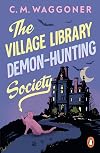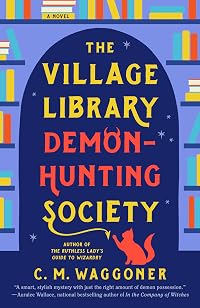
The Village Library Demon-Hunting Society
by C. M. Waggoner
On This Page
Description
A librarian with a knack for solving murders realizes there is something decidedly supernatural afoot in her little town in this cozy fantasy mystery. Librarian Sherry Pinkwhistle keeps finding bodies—and solving murders. But she's concerned by just how many killers she's had to track down in her quaint village. None of her neighbors seem surprised by the rising body count...but Sherry is becoming convinced that whatever has been causing these deaths is unnatural. When someone close to show more Sherry ends up dead, and her cat, Lord Thomas Crowell, becomes possessed by what seems to be an ancient demon, Sherry begins to think she’s going to need to become an exorcist as well as an amateur sleuth. With the help of her town's new priest, and an assortment of friends who dub themselves the "Demon-Hunting Society," Sherry will have to solve the murder and get rid of a demon. This riotous mix of Buffy the Vampire Slayer and Murder, She Wrote is a lesson for demons and murderers alike: Never mess with a librarian. show lessTags
Recommendations



Member Reviews
IN A NUTSHELL
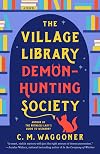
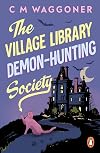
This wasn't the cosy scooby-doo meets 'Murder She Wrote' that the cover and the title led me to expect.
It was clever, complex and focused not on a demon-hunting society but on Sherry's struggle to find out why so many people in her small town are murdered and why she, the village librarian, is always the one who works out who killed them.
Sherry was well-drawn and relatable. Her friends were fun. The demons were a little disappointing,
The mysteries were entertaining. I loved the central conceit of the story. The ending was satisfying but for me, the pacing in the middle of the book was a little slow.
Sometimes, when I'm reading cosy mysteries, I'm aware that part of what makes them cosy is that people are nicer than I am. show more Sherry Pinkwhistle, the librarian at the heart of this story, wasn't nicer than me. She was someone I could relate to and believe in. She's more like Jane Marple than Jessica Fletcher. Her thoughts about herself at the start of the book made me smile and want to know her better:
"she could watch someone crying or laughing or rocking back and forth in a corner and feel curiosity instead of either suspicion or sympathy."
"She spent so much time pretending to be a nice old lady from a book that her actual, somewhat strange and ghoulish personality tended to take her by surprise."
The first 40% of the book carried me along quite happily. I was enjoying Sherry and I was amused by her misfit gang of allies. As I watched Sherry solve a murder, it was obvious that something bigger was going on. The mystery worked but the murder felt... staged. That was intriguing but not entirely satisfying. I knew this was a cozy supernatural mystery but I had expected a little more tension. This had all the threat of playing a game of Cluedo
Sherry's first unambiguous encounter with the supernatural was underwhelming. Instead of cranking up the tension and moving the story forward, it felt like an arms-length experience and it slowed everything down. I couldn't see the point of having two demons: a minion demon who presents as Lord Thomas Cromwell (Why? What does he have to do with a small town in upstate New York?) and the big bad that he's working for who doesn't manifest until much later The Lord Thomas Cromwell demon didn't work for me. He wasn't interesting and he kept the supernatural threat at a distance.
The action in the middle of the book was slow. The Village Library Demon-hunting Society members barely featured in the story. The focus was on Sherry, who was being plagued by a demon and her own guilt. At that point in the story I wasn't being pulled along by the plot but by Sherry's dry wit.
As I entered the last third of the book, the plot started to take on a new and surprising shape but there still wasn't much tension. The demon element gave the murder investigations an odd spin - making them more abstract - the puzzle being not who killed whom and why but figuring out what the demon got out of it.
Then, in the last fifth of the book, everything came together very quickly and in quite a satisfying way. The big bad was front and centre. Sherry had finally worked out what was going on (but not what to do about it), the plot came into focus and the threat level finally rose. I liked that the ending was clever and that it moved Sherry forward personally. show less
This wasn't the cosy scooby-doo meets 'Murder She Wrote' that the cover and the title led me to expect.
It was clever, complex and focused not on a demon-hunting society but on Sherry's struggle to find out why so many people in her small town are murdered and why she, the village librarian, is always the one who works out who killed them.
Sherry was well-drawn and relatable. Her friends were fun. The demons were a little disappointing,
The mysteries were entertaining. I loved the central conceit of the story. The ending was satisfying but for me, the pacing in the middle of the book was a little slow.
Sometimes, when I'm reading cosy mysteries, I'm aware that part of what makes them cosy is that people are nicer than I am. show more Sherry Pinkwhistle, the librarian at the heart of this story, wasn't nicer than me. She was someone I could relate to and believe in. She's more like Jane Marple than Jessica Fletcher. Her thoughts about herself at the start of the book made me smile and want to know her better:
"she could watch someone crying or laughing or rocking back and forth in a corner and feel curiosity instead of either suspicion or sympathy."
"She spent so much time pretending to be a nice old lady from a book that her actual, somewhat strange and ghoulish personality tended to take her by surprise."
The first 40% of the book carried me along quite happily. I was enjoying Sherry and I was amused by her misfit gang of allies. As I watched Sherry solve a murder, it was obvious that something bigger was going on. The mystery worked but the murder felt... staged. That was intriguing but not entirely satisfying. I knew this was a cozy supernatural mystery but I had expected a little more tension. This had all the threat of playing a game of Cluedo
Sherry's first unambiguous encounter with the supernatural was underwhelming. Instead of cranking up the tension and moving the story forward, it felt like an arms-length experience and it slowed everything down. I couldn't see the point of having two demons: a minion demon who presents as Lord Thomas Cromwell (Why? What does he have to do with a small town in upstate New York?) and the big bad that he's working for who doesn't manifest until much later The Lord Thomas Cromwell demon didn't work for me. He wasn't interesting and he kept the supernatural threat at a distance.
The action in the middle of the book was slow. The Village Library Demon-hunting Society members barely featured in the story. The focus was on Sherry, who was being plagued by a demon and her own guilt. At that point in the story I wasn't being pulled along by the plot but by Sherry's dry wit.
As I entered the last third of the book, the plot started to take on a new and surprising shape but there still wasn't much tension. The demon element gave the murder investigations an odd spin - making them more abstract - the puzzle being not who killed whom and why but figuring out what the demon got out of it.
Then, in the last fifth of the book, everything came together very quickly and in quite a satisfying way. The big bad was front and centre. Sherry had finally worked out what was going on (but not what to do about it), the plot came into focus and the threat level finally rose. I liked that the ending was clever and that it moved Sherry forward personally. show less
What a pleasant surprise! I adore a cozy murder mystery, and was fully prepared for this book to continue in that vain. The twist was effective and engaging. I loved the tone and the protagonist was very relatable. The twist and the tone together throw refreshing, humanizing, and funny wrench into the genre format. I have one critique, which is a spoiler: once the twist is revealed our protagonist and her society start doing things differently. Waggoner pumps the breaks on the whole investigation plot and the characters start addressing the larger problem. While we do jump back to that larger problem at the end of the book, the third quarter or so of it returns too completely toward the investigation alone. I understand that the show more protagonist is submitting to the inevitability of her circumstance, and there are plenty of fun "demon problems" to break up the investigation scenes, but I feel like our demon hunting society does...very little demon hunting and sort of disappears during a large chunk of the book after their formation. Besides that I was absolutely smitten. Waggoner's choices with the demon were witty. I deeply appreciated the perspective she gave the spirit. It makes me curious about Waggoner's extracurriculars honestly. Looking forward to reading more of Waggoner's books! show less
The Village Library Demon-Hunting Society is an urban fantasy novel that borrows heavily from the cozy mystery genre. Sherry is a typical cozy mystery heroine, a (seemingly) sweet elderly woman who works a cozy job and has a cat with an adorably funny name. She thinks of herself as being something like Miss Marple, and she genuinely enjoys solving mysteries. Until something happens that hits way too close to home.
The early portion of the book reads almost entirely like a cozy mystery, with just a few hints of something being off. Then things take a turn. By the end, the book reads like it's satirizing or at least lightly parodying the cozy mystery genre. Because of that, I think this book will appeal more to those anticipating the show more reveal of the demonic presence than those who unapologetically love cozy mysteries. Not that this is a problem as long as readers know enough about what's coming that the beginning doesn't put them off.
One thing that's consistent throughout the book, however, is its humor. Sherry's thoughts, reflected in the third-person limited narration, often contain observations and judgments with lighthearted phrasing and a comedic twist. I smiled and laughed throughout, although portions of the book were sad and certain moments were creepy. The humor was always present at appropriate times, creating a reading experience that was quite enjoyable, while the other elements prevented it from feeling one-note. Some of Sherry's thoughts grated on me in the beginning, but she gets a bit of a wakeup call at the same time as the twist I keep mentioning, so this again is something readers could wait out if they have the patience.
Personally, though, I was a bit annoyed by the depiction of Catholicism in this book. On the plus side, it isn't a negative portrayal, or at least not heavily negative. Sherry is a self-proclaimed "lapsed Catholic" who doesn't go into many details as to why and becomes interested again solely because she needs help with the demon problem. And the priest in the story is depicted as a kind man who does everything he can to help and becomes a good friend to her. But his actions consistently struck me as being unrealistic, Sherry uses some terminology that hasn't been in use since the early nineties, and neither of these things is addressed or resolved in the way the mysterious lack of technology eventually is.
I don't get the impression that the author was trying to give a negative impression of the Catholic church by doing such things as making Father Barry a newly ordained priest who's been put in charge of a small-town parish entirely on his own instead of, say, starting as an associate pastor to someone more experienced. And I don't want to say it's impossible for such a thing to happen. It just doesn't seem like something the church would do. It seems like a situation the author set up because she didn't want him to be exceptionally competent.
It also seems she didn't want to suggest that Catholic practices are the only way to deal with "demons", especially because it turns out the demon may not even be a demon but rather a supernatural something-or-other that presents itself according to the belief system of the person it's trying to possess or frighten. The book seems to be very explicit in showing that crystals and other such things do an equally good job if the person believes in them. All of which serves to make the book attractive to a wider audience, but in my opinion it comes at the cost of making it difficult to predict what weapons will be effective against the main antagonist and in what way they will even function. This system might have worked if each character was using techniques based on a strong personal faith in whatever they did believe in, but Sherry seemed to have little more than a superstitious belief in the power of such things as holy water. It often read as though she was tricking the demon into thinking she believed in it and not, in my opinion, being very convincing about it.
Overall, this book read as though the author wanted the atmosphere of Catholicism without its substance. As though the author wanted a demon without the religious "baggage" (as I imagine some might say). And that might work perfectly well for many readers. In fact, I imagine it may put some at ease... if they even got past the mention of demons in the title and to this point in a review.
I think this book has a bit of an uphill battle in terms of marketing, at least if it wants to market to its ideal audience instead of, say, fans of cozy mystery who don't want any of its conventions being questioned or people who like reading about traditional demons just fine. But if you are reading this review as one of those people who now feels encouraged to read through the opening until it gets to what, for you, will be the good part, I'm glad! I do think you'll have a great time smiling and laughing along as the book spins its supernatural twist on an otherwise clearly defined genre. Tell your friends the treat they're in for if they like the same. show less
The early portion of the book reads almost entirely like a cozy mystery, with just a few hints of something being off. Then things take a turn. By the end, the book reads like it's satirizing or at least lightly parodying the cozy mystery genre. Because of that, I think this book will appeal more to those anticipating the show more reveal of the demonic presence than those who unapologetically love cozy mysteries. Not that this is a problem as long as readers know enough about what's coming that the beginning doesn't put them off.
One thing that's consistent throughout the book, however, is its humor. Sherry's thoughts, reflected in the third-person limited narration, often contain observations and judgments with lighthearted phrasing and a comedic twist. I smiled and laughed throughout, although portions of the book were sad and certain moments were creepy. The humor was always present at appropriate times, creating a reading experience that was quite enjoyable, while the other elements prevented it from feeling one-note. Some of Sherry's thoughts grated on me in the beginning, but she gets a bit of a wakeup call at the same time as the twist I keep mentioning, so this again is something readers could wait out if they have the patience.
Personally, though, I was a bit annoyed by the depiction of Catholicism in this book. On the plus side, it isn't a negative portrayal, or at least not heavily negative. Sherry is a self-proclaimed "lapsed Catholic" who doesn't go into many details as to why and becomes interested again solely because she needs help with the demon problem. And the priest in the story is depicted as a kind man who does everything he can to help and becomes a good friend to her. But his actions consistently struck me as being unrealistic, Sherry uses some terminology that hasn't been in use since the early nineties, and neither of these things is addressed or resolved in the way the mysterious lack of technology eventually is.
I don't get the impression that the author was trying to give a negative impression of the Catholic church by doing such things as making Father Barry a newly ordained priest who's been put in charge of a small-town parish entirely on his own instead of, say, starting as an associate pastor to someone more experienced. And I don't want to say it's impossible for such a thing to happen. It just doesn't seem like something the church would do. It seems like a situation the author set up because she didn't want him to be exceptionally competent.
It also seems she didn't want to suggest that Catholic practices are the only way to deal with "demons", especially because it turns out the demon may not even be a demon but rather a supernatural something-or-other that presents itself according to the belief system of the person it's trying to possess or frighten. The book seems to be very explicit in showing that crystals and other such things do an equally good job if the person believes in them. All of which serves to make the book attractive to a wider audience, but in my opinion it comes at the cost of making it difficult to predict what weapons will be effective against the main antagonist and in what way they will even function. This system might have worked if each character was using techniques based on a strong personal faith in whatever they did believe in, but Sherry seemed to have little more than a superstitious belief in the power of such things as holy water. It often read as though she was tricking the demon into thinking she believed in it and not, in my opinion, being very convincing about it.
Overall, this book read as though the author wanted the atmosphere of Catholicism without its substance. As though the author wanted a demon without the religious "baggage" (as I imagine some might say). And that might work perfectly well for many readers. In fact, I imagine it may put some at ease... if they even got past the mention of demons in the title and to this point in a review.
I think this book has a bit of an uphill battle in terms of marketing, at least if it wants to market to its ideal audience instead of, say, fans of cozy mystery who don't want any of its conventions being questioned or people who like reading about traditional demons just fine. But if you are reading this review as one of those people who now feels encouraged to read through the opening until it gets to what, for you, will be the good part, I'm glad! I do think you'll have a great time smiling and laughing along as the book spins its supernatural twist on an otherwise clearly defined genre. Tell your friends the treat they're in for if they like the same. show less
Sherry Pinkwhistle is a librarian in the small town of Winesap, a timeless place where everyone's neighbourly and the body count is unnaturally—supernaturally—high. Sherry's gained a local reputation as the go-to person for figuring out whodunnit, but she's also gradually starting to realise that there's something about her world that's not quite right.
This was a fun bit of escapism, with a great idea at its core and some enjoyable commentary on some of the inherent weirdness of the cosy mystery genre that is lovable rather than mean-spirited (one of my go-to rewatch shows, Murder She Wrote, is name-checked a lot here). It did feel like C.M. Waggoner needed at least one more major editing pass through the book, though. The pacing show more and internal tension are both a bit off, and the internal logic of the premise needed a bit of tweaking to make sense. (Also, the title was a bad pick. Attention grabbing, but doesn't really reflect the vibe of the book.) show less
This was a fun bit of escapism, with a great idea at its core and some enjoyable commentary on some of the inherent weirdness of the cosy mystery genre that is lovable rather than mean-spirited (one of my go-to rewatch shows, Murder She Wrote, is name-checked a lot here). It did feel like C.M. Waggoner needed at least one more major editing pass through the book, though. The pacing show more and internal tension are both a bit off, and the internal logic of the premise needed a bit of tweaking to make sense. (Also, the title was a bad pick. Attention grabbing, but doesn't really reflect the vibe of the book.) show less
A clever, layered mystery that is neither so cozy nor so collective as the cover or title imply, this is never the less an intriguing and enjoyable read. It has a meta vibe, with a "normal" murder mystery nestled within a larger mystery of the town and its circumstances. I loved the layers and the little details that unfolded piece by piece. I also enjoyed the idea of stories as the only thing that would entertain a bored immortal -- that kind of theme is right up my alley -- so I went with it when the mystery is solved on multiple levels at once, even though that second layer was less than convincing at times. There are definitely some pacing issues here -- the middle bogged down so much that I struggled to pick it back up for several show more days -- and, despite the substantial interiority of the main character, why she takes certain actions when she does remains unclear. But overall, this is an enjoyable and refreshingly inventive paranormal mystery. show less
Sherry Pinkwhistle, the local librarian, has solved mysterious murders for the town of Winesap for the past two years. But a personal tragedy makes her wonder: why are there so many homicides in such a little town?
This send-up of the cozy mystery genre was hilarious. The story follows all the rules and tropes of the genre: it's set in a small town, the colorful characters all have secrets, the endearing heroine has a job that somehow permits her to take all the time she needs to solve the mysteries, Sherry is always one step ahead of the bumbling police investigator, etc. But each trope is presented with a wicked twist that sends the story in an unexpected, zany direction. You'll never again look at a cozy mystery novel in the same way.
This send-up of the cozy mystery genre was hilarious. The story follows all the rules and tropes of the genre: it's set in a small town, the colorful characters all have secrets, the endearing heroine has a job that somehow permits her to take all the time she needs to solve the mysteries, Sherry is always one step ahead of the bumbling police investigator, etc. But each trope is presented with a wicked twist that sends the story in an unexpected, zany direction. You'll never again look at a cozy mystery novel in the same way.
I really liked the metafictional element - as someone who watches my fair share of crime shows, it was fun to see the genre deconstructed: what would seeing that much death do to a real person? How come no one notices the way that plot armor protects all of the named characters? Why does no one used their darn cell phone to look up anything? Although these are trite concerns, I thought Waggoner raised them in new and cute ways. But overall, the pacing didn't hang together for me, with the supernatural side feeling like a thin excuse to do a conventional murder mystery.
One thing I haven't seen anyone mention: for readers with a strong mental reading voice, the fact that there are Sherry, Barry and Mary and also Sherry, Sherrif Brown and show more Charlotte made the book sound like an unhinged Dr. Seuss book in my head. show less
One thing I haven't seen anyone mention: for readers with a strong mental reading voice, the fact that there are Sherry, Barry and Mary and also Sherry, Sherrif Brown and show more Charlotte made the book sound like an unhinged Dr. Seuss book in my head. show less
Members
- Recently Added By
Author Information

4 Works 1,926 Members
Some Editions
Awards and Honors
Distinctions
Common Knowledge
- Original title
- The Village Library Demon-Hunting Society
- Original publication date
- 2024-09-24
- People/Characters
- Sherry Pinkwhistle; Lord Thomas Cromwell; Alice Murdoch; Charlotte Jacobs; Sheriff Peter Brown; Alan Thompson
- Important places
- Winesap, New York, USA
- Dedication
- For Chloe and Emily, because friends will help you move,
good friends will help you move a body, but best friends will badger you into taking a nap, going on a walk, and drinking a glass of water before you snap an... (show all)d commit felony homicide in the first place. - First words
- Sherry Pinkwhistle woke up to the deep silence of snowfall, cozily ensconced in the warmth of her bed and the knowledge that she had just solved another murder.
- Quotations
- That was the sort of man Alan was. You could tell from the mustache. It was, Sherry always thought, the kindest mustache she had ever seen.
- Last words
- (Click to show. Warning: May contain spoilers.)"And I'm sure we have some good books about vampire myths and New Orleans history. I might have a little time to do some extra reading."
- Publisher's editor
- Wade, Jessica
- Blurbers
- Sampson, Freya; Olson, Quenby
- Canonical DDC/MDS
- 813.6; 813.6 dc23
- Canonical LCC
- PS3623.A3533 V55
Classifications
Statistics
- Members
- 468
- Popularity
- 65,119
- Reviews
- 27
- Rating
- (3.43)
- Languages
- English
- Media
- Paper, Audiobook, Ebook
- ISBNs
- 6
- ASINs
- 3