
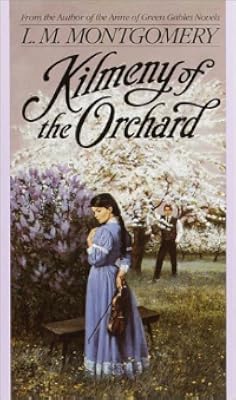
Kilmeny of the Orchard
by L. M. Montgomery
On This Page
Description
Immerse yourself in this captivating romance from the author of Anne of Green Gables. Young teacher Eric Marshall is granted a position on Prince Edward Island and falls in love with a beautiful, mysterious girl named Kilmeny, who is unable to speak. Although she comes to feel the same way about Eric, Kilmeny refuses his advances, wanting to spare him the difficulty of spending a lifetime with a wife who is less than perfect. Will the young lovers find a way around this obstacle?.
Tags
Recommendations

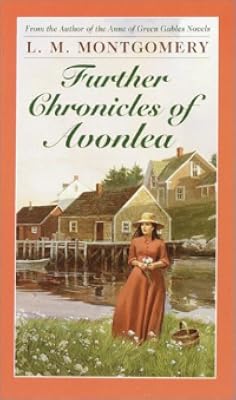
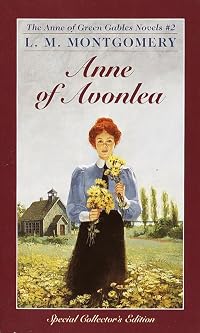
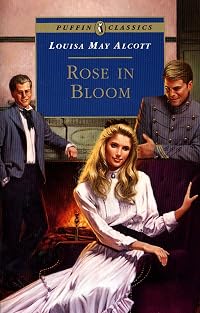


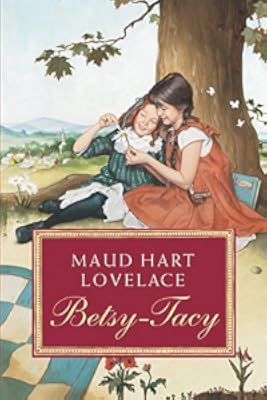



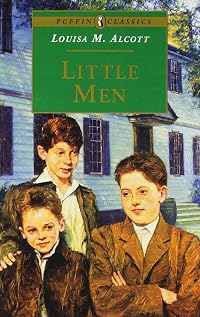

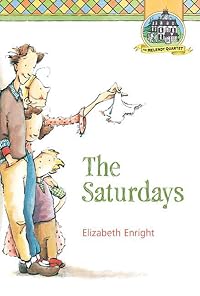
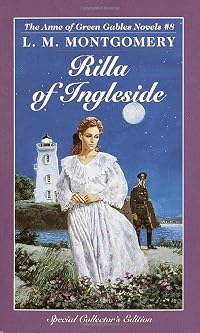
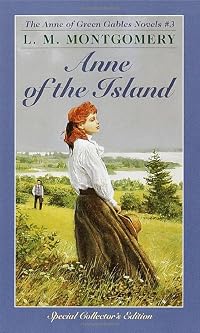
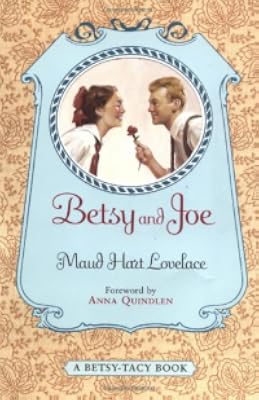
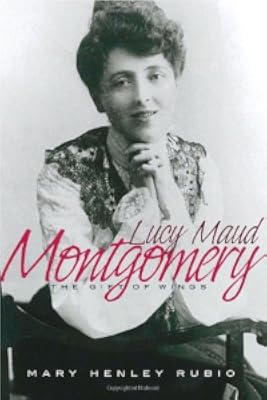
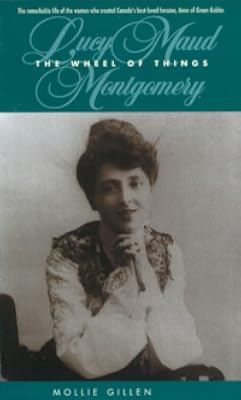
Member Recommendations

charlie68 Similar themes
Member Reviews
Published in 1910, Kilmeny of the Orchard was L.M. Montgomery's third novel, following upon her beloved children's classic Anne of Green Gables (1908), and its first sequel, Anne of Avonlea (1909). A thoroughly romantic tale, it owes more - in both style and narrative content - to the sentimental novels of the late nineteenth-century, than any of her other works. The tale of Eric Marshall - a wealthy young college graduate who takes a teaching position on Prince Edward Island to oblige a friend, and who falls deeply in love with a beautiful mute girl named Kilmeny Gordon - it follows a fairly standard formula, in which the obstacles to marital bliss are overcome in dramatic and unlikely ways, and the unworthy disappear conveniently from show more the scene.
Beautifully written as it is - and I find it quite an enjoyable book on many levels - Kilmeny of the Orchard is a somewhat problematic text for me, owing to Montgomery's apparent eugenist leanings, manifest in frequent references to the importance of bloodline, and of racial and/or ethnic heritage. Surfacing early on in the story, when Eric discusses issues of heredity with his cousin David Baker, it is a theme most fully explored in the character of Neil Gordon - the Gordon's adopted Italian son. Confronting Neil at one point, Eric thinks: "He was working himself up into a fury again - the untamed fury of the Italian peasant thwarted in his heart's desire. It overrode all the restraint of his training and environment."
As much as this unfortunate belief in innate ethnic and national qualities was the product of its time and place, so too was the insistence on the heroine's spotless virtue and complete unworldly innocence. Kilmeny - whose unsurpassed beauty seems to be one of her chief virtues - is described as a child, until Eric's kiss makes her a woman. She is trusting and naive, obedient and utterly passive. Her one moment of self-assertion, which the narrative paints as an act of "selfless love," owes much to a belief in her own unworthiness - that her disability is a "defect."
Although Montgomery's casual and oblique references to a eugenist world-view, and chauvinist insistence on passive beauty in a romantic heroine, did prevent me from taking Kilmeny of the Orchard entirely to heart, they did not ruin the book completely. There is still much here to enjoy, from the author's lyrical passages concerning the beauties of Prince Edward Island, to her well-drawn cast of eccentric secondary characters. It is an engaging story, and reads quickly. Unfortunately, it is also somewhat dated, and has none of the transcendence of her greater works. show less
Beautifully written as it is - and I find it quite an enjoyable book on many levels - Kilmeny of the Orchard is a somewhat problematic text for me, owing to Montgomery's apparent eugenist leanings, manifest in frequent references to the importance of bloodline, and of racial and/or ethnic heritage. Surfacing early on in the story, when Eric discusses issues of heredity with his cousin David Baker, it is a theme most fully explored in the character of Neil Gordon - the Gordon's adopted Italian son. Confronting Neil at one point, Eric thinks: "He was working himself up into a fury again - the untamed fury of the Italian peasant thwarted in his heart's desire. It overrode all the restraint of his training and environment."
As much as this unfortunate belief in innate ethnic and national qualities was the product of its time and place, so too was the insistence on the heroine's spotless virtue and complete unworldly innocence. Kilmeny - whose unsurpassed beauty seems to be one of her chief virtues - is described as a child, until Eric's kiss makes her a woman. She is trusting and naive, obedient and utterly passive. Her one moment of self-assertion, which the narrative paints as an act of "selfless love," owes much to a belief in her own unworthiness - that her disability is a "defect."
Although Montgomery's casual and oblique references to a eugenist world-view, and chauvinist insistence on passive beauty in a romantic heroine, did prevent me from taking Kilmeny of the Orchard entirely to heart, they did not ruin the book completely. There is still much here to enjoy, from the author's lyrical passages concerning the beauties of Prince Edward Island, to her well-drawn cast of eccentric secondary characters. It is an engaging story, and reads quickly. Unfortunately, it is also somewhat dated, and has none of the transcendence of her greater works. show less
As someone noted either in the comments here or elsewhere, this is the purplest of prose and reads like something Anne Shirley might have written. I still enjoyed it, though certainly not as much as other works of Montgomery's. Nevertheless, it was still charming in its way (with some interestingly weird 19th century class/race stuff about Italian peasants).
I think the first and foremost problem with this story is that very little time is spent actually introducing the characters as real, diverse people. The main character (Eric) is introduced, as are his father and best friend, only to have him thrust into the storyline almost immediately after, leaving those two characters behind until the very end. The best friend can only be described as a plot device: he gets absolutely no more development than that.
The love interest, Kilmeny, is introduced just as quickly, and it seems contrived through the story as she and Eric “fall in love” over her music and his books. I know it’s possible, but the usual spark I feel for the characters in LMM novels as they fall in love was missing. To me, show more these two were just two young people infatuated, who ignore all the difficulties which can and will arise due to her being unable to speak.
I scoffed aloud when I came to the part where the reasoning for her not being able to speak comes to light. It is, again, contrived and almost forced. The difficulties which present themselves are overcome so quickly that the reader hardly has time to appreciate that it is a difficulty. In my eyes, the conflicts were little more than speed bumps, temporarily slowing the coming of the plot’s resolution. In the end, of course, everyone lives happily ever after except for the ill-fated Neil, who was essentially raised as Kilmeny’s brother but fell in love with her anyhow. Kilmeny gets over her inability to speak, Eric gets to marry her with the blessing of everyone and the little town in which he was supposed to finish out the school term for a friend benefited from seeing the mysterious Kilmeny, long hidden from their eyes.
I would say that of all of the LMM novels and short stories that I’ve read to date, this is by far the worst. It is contrived and forced; the characters are not sympathetic or even all that interesting and it lacks the charm that most of her novels possess. If I weren’t so set on having all of her novels, this would be one that I would give away. show less
The love interest, Kilmeny, is introduced just as quickly, and it seems contrived through the story as she and Eric “fall in love” over her music and his books. I know it’s possible, but the usual spark I feel for the characters in LMM novels as they fall in love was missing. To me, show more these two were just two young people infatuated, who ignore all the difficulties which can and will arise due to her being unable to speak.
I scoffed aloud when I came to the part where the reasoning for her not being able to speak comes to light. It is, again, contrived and almost forced. The difficulties which present themselves are overcome so quickly that the reader hardly has time to appreciate that it is a difficulty. In my eyes, the conflicts were little more than speed bumps, temporarily slowing the coming of the plot’s resolution. In the end, of course, everyone lives happily ever after except for the ill-fated Neil, who was essentially raised as Kilmeny’s brother but fell in love with her anyhow. Kilmeny gets over her inability to speak, Eric gets to marry her with the blessing of everyone and the little town in which he was supposed to finish out the school term for a friend benefited from seeing the mysterious Kilmeny, long hidden from their eyes.
I would say that of all of the LMM novels and short stories that I’ve read to date, this is by far the worst. It is contrived and forced; the characters are not sympathetic or even all that interesting and it lacks the charm that most of her novels possess. If I weren’t so set on having all of her novels, this would be one that I would give away. show less
Kilmeny of the Orchard by L.M. Montgomery is a short, overly sweet love story about a young man who falls in love with a mute girl. This girl is Kilmeny, a great beauty but who never learned to speak. Due to the shortness of the book, the characters are never fully developed although we are told many times that the young man is rich and handsome whereas Kilmeny is described as perfection itself (although I found her to be rather naive and boring). They appear to fall in love with each other based solely on looks which makes the whole story seem shallow.
To my mind the most interesting character in the story was Neil. He was abandoned as a baby by Italian tinkers and raised along with Kilmeny by her aunt and uncle. He is also in love with show more her and takes it very badly when she falls in love with the young school master. He is treated much like a hired hand by the people who raised him and they also consider him having ideas above his station when they learn of his feelings for Kilmeny. I felt very sorry for this boy who grew up always being treated as a low class foreigner.
I found the whole “disabled girl who is able to miraculously speak perfectly when she needs to” very far-fetched. Unfortunately Kilmeny of the Orchard has neither the charm nor the humor of the Anne books to help the reader accept the improbable plot. This is one book that should have simply stayed up on the shelf. show less
To my mind the most interesting character in the story was Neil. He was abandoned as a baby by Italian tinkers and raised along with Kilmeny by her aunt and uncle. He is also in love with show more her and takes it very badly when she falls in love with the young school master. He is treated much like a hired hand by the people who raised him and they also consider him having ideas above his station when they learn of his feelings for Kilmeny. I felt very sorry for this boy who grew up always being treated as a low class foreigner.
I found the whole “disabled girl who is able to miraculously speak perfectly when she needs to” very far-fetched. Unfortunately Kilmeny of the Orchard has neither the charm nor the humor of the Anne books to help the reader accept the improbable plot. This is one book that should have simply stayed up on the shelf. show less
To help out a friend who has fallen ill, 24 year old Eric takes a job teaching in the sleepy little town of Lindsay. One day he encounters the most beautiful girl he has every seen playing the violin in an old orchard. Her name is Kilmeny Gordon, and she has been unable to speak since birth. As Eric and Kilmeny fall in love, Eric sets out to learn the secrets of her past and make Kilmeny his wife...
This short novella (It's less than 200 pages) was written by L.M Montgomery in 1910. I read it for the first time in 5th grade, when I was devouring everything the author of Anne of Green Gables had ever written. Re-reading it as an adult, I can say that unlike most of Mongomery's works, Kilmeny is definitely a book that shows it's age, not show more just in the flowery language and various archetypal characters, but also, and unfortunately by the blatant racism shown in the depiction of the novel's villain, an Italian boy born who was raised by Kilmeny's aunt and uncle.
If you can overlook that, it's a short, sweet and quick read, if nothing amazingly profound or memorable. (Except for the climatic scene at the end) show less
This short novella (It's less than 200 pages) was written by L.M Montgomery in 1910. I read it for the first time in 5th grade, when I was devouring everything the author of Anne of Green Gables had ever written. Re-reading it as an adult, I can say that unlike most of Mongomery's works, Kilmeny is definitely a book that shows it's age, not show more just in the flowery language and various archetypal characters, but also, and unfortunately by the blatant racism shown in the depiction of the novel's villain, an Italian boy born who was raised by Kilmeny's aunt and uncle.
If you can overlook that, it's a short, sweet and quick read, if nothing amazingly profound or memorable. (Except for the climatic scene at the end) show less
I cannot but agree with some obvious critical statements on that book. Nevertheless, I think we need to make a certain allowance for the weak points of that story.
Any rational approach would kill this fragile fantasy. I feel like Lucy Maud opened her sacred charmed world for us, a perfect place where all the stories have a good end, like in Kilmeny, and I do not dare to step in this charmed Orchard of her inner dreams and cut all the trees off by my rational invading. I'll just stay quietly under the blooming tree...
Any rational approach would kill this fragile fantasy. I feel like Lucy Maud opened her sacred charmed world for us, a perfect place where all the stories have a good end, like in Kilmeny, and I do not dare to step in this charmed Orchard of her inner dreams and cut all the trees off by my rational invading. I'll just stay quietly under the blooming tree...
My first read on my Nook! It's fitting that I should plunge into the world of technological books with a title penned long before anyone had dreamed of electronic reading devices. Kilmeny of the Orchard, published in 1910, is a short little novella by L. M. Montgomery, whose depictions of life on Prince Edward Island around the turn of the nineteenth century are poignant, humorous, and beloved by generations of readers.
Unfortunately, this story encapsulates all of Montgomery's flaws with very little of her usual insight into human nature. There is a marked ethnocentrism, doubtless natural to her characters and to herself, that cannot but be a little unsettling to a modern reader. And to add to that, Montgomery indulges in long show more descriptions of her characters' perfect physical beauty and spotless morals. They have not the spice of imperfection and original sin which enlivens and humanizes Montgomery's later creations.
There is something sweet about the story, of course — a young man filling in at a remote country school stumbles upon a beautiful young woman in an orchard, mute but for her exquisite violin. Eric Marshall naturally falls in love with Kilmeny Gordon and eventually proposes marriage, but she rejects him because of the burden of her muteness. Nothing, it seems, is really wrong with her voice except a strange repression she inherited from her mother, which can only be cured by some sudden emotional shock... The plot really is a bit forced, and the general sense of is one of contrivance and convenience, with the happy ending hastily procured.
Kilmeny of the Orchard is an early work, coming just after Montgomery's first two Anne books. I believe the elements I found objectionable later lost force in her developing imagination and hardly figure at all in her best-loved novels. I try not to judge authors by standards quite foreign to their times and this review is not based on my distaste for any smack of racist thought. Rather, this low rating is for the predictability and oversweetness of the story itself — problems that Montgomery herself no doubt saw and corrected in the novels that followed. She had to learn her art somehow, and if this was her process of trial and error, I can easily endure it for the sake of her other stories, which are among my most beloved books. Still, Kilmeny is best read only by completists; Montgomery has left far superior work to represent her in literature. show less
Unfortunately, this story encapsulates all of Montgomery's flaws with very little of her usual insight into human nature. There is a marked ethnocentrism, doubtless natural to her characters and to herself, that cannot but be a little unsettling to a modern reader. And to add to that, Montgomery indulges in long show more descriptions of her characters' perfect physical beauty and spotless morals. They have not the spice of imperfection and original sin which enlivens and humanizes Montgomery's later creations.
There is something sweet about the story, of course — a young man filling in at a remote country school stumbles upon a beautiful young woman in an orchard, mute but for her exquisite violin. Eric Marshall naturally falls in love with Kilmeny Gordon and eventually proposes marriage, but she rejects him because of the burden of her muteness. Nothing, it seems, is really wrong with her voice except a strange repression she inherited from her mother, which can only be cured by some sudden emotional shock... The plot really is a bit forced, and the general sense of is one of contrivance and convenience, with the happy ending hastily procured.
Kilmeny of the Orchard is an early work, coming just after Montgomery's first two Anne books. I believe the elements I found objectionable later lost force in her developing imagination and hardly figure at all in her best-loved novels. I try not to judge authors by standards quite foreign to their times and this review is not based on my distaste for any smack of racist thought. Rather, this low rating is for the predictability and oversweetness of the story itself — problems that Montgomery herself no doubt saw and corrected in the novels that followed. She had to learn her art somehow, and if this was her process of trial and error, I can easily endure it for the sake of her other stories, which are among my most beloved books. Still, Kilmeny is best read only by completists; Montgomery has left far superior work to represent her in literature. show less
Members
- Recently Added By
Lists

Best L.M. Montgomery novels
20 works; 8 members

Fiction with Women's Names in the Title
378 works; 15 members

Books Read in 2023
5,547 works; 145 members

Books Read in 2024
4,623 works; 126 members

Books We Loved As Children
603 works; 252 members
Author Information

383+ Works 159,016 Members
One of the best-loved children's/young adult authors, Lucy Maud Montgomery was born on November 30, 1874 in Clifton, Prince Edward Island, Canada, the daughter of Hugh John and Clara Woolner. After attending Prince of Wales College and Dalhouse College in Halifax, she became a certified teacher, eventually teaching in Bideford, Prince Edward show more Island. She also served as an assistant at the post office and as a writer for the local newspaper, The Halifax Daily Echo. Best known for her Anne of Avonlea and Anne of Green Gables books, Montgomery received many high honors. She was named a Fellow of the Royal Society of Arts in 1923 and a Canadian stamp commemorates Montgomery and Anne of Green Gables. In addition, various museums dedicated to the book series and Montgomery's life dot Prince Edward Island. The books in the Anne series follow the growth and adventures of a red-haired, spritely, high-spirited and imaginative orphan named Anne who lives on Prince Edward Island. The success of these books rested in Montgomery's ability to vividly recollect childhood and her easy storytelling ability. They are tremendously popular to this day and have been translated into more than 35 languages and adapted as movies and PBS television productions. On July 5, 1911, L.M. Montgomery married Ewan Macdonald, a Presbyterian minister, and the marriage produced three children. She died on April 24, 1942. (Bowker Author Biography) show less
Some Editions
Series
Belongs to Publisher Series
Work Relationships
Common Knowledge
- Canonical title
- Kilmeny of the Orchard
- Original title
- Kilmeny of the Orchard
- Original publication date
- 1910
- People/Characters
- Kilmeny Gordon; Eric Marshall; David Baker; Neil Gordon; Thomas Gordon; Janet Gordon
- Important places
- Prince Edward Island, Canada
- Dedication
- To my cousin Beatrice A. McIntyre this book is affectionately dedicated
- First words
- The sunshine of a day in early spring, honey pale and honey sweet, was showering over the red brick buildings of Queenslea College and the grounds about them, throwing through the bare, budding maples and elms, delicate, evas... (show all)ive etchings of gold and brown on the paths, and coaxing into life the daffodils that were peering greenly and perkily up under the windows of the co-eds' dressing-room.
- Last words
- (Click to show. Warning: May contain spoilers.)Eric turned abruptly away to hide his emotion and on his face was a light as of one who sees a great glory widening and deepening down the vista of his future.
Classifications
- Genres
- Fiction and Literature, Children's Books, Young Adult
- DDC/MDS
- 813.52 — Literature & rhetoric American literature in English American fiction in English 1900-1999 1900-1945
- LCC
- PZ3 .M767 — Language and Literature Fiction and juvenile belles lettres Fiction and juvenile belles lettres Fiction in English
- BISAC
Statistics
- Members
- 1,333
- Popularity
- 17,961
- Reviews
- 30
- Rating
- (3.52)
- Languages
- 6 — English, Finnish, French, Italian, Polish, Swedish
- Media
- Paper, Audiobook, Ebook
- ISBNs
- 93
- ASINs
- 42