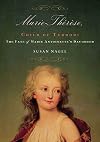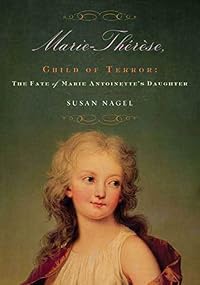
Marie-Therese, Child of Terror: The Fate of Marie Antoinette's Daughter
by Susan Nagel
On This Page
Description
The biography of Marie Antoinette's only child to survive the revolution and the woman who helped shape the future of nineteenth-century Europe.Tags
Recommendations







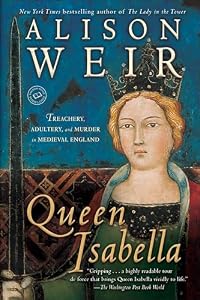

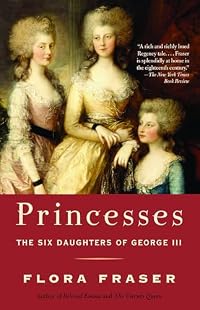
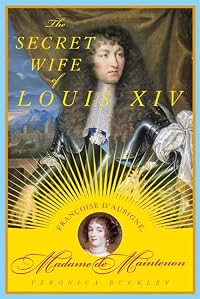

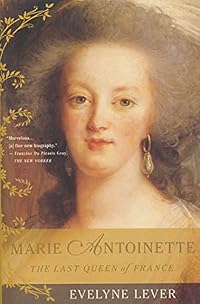




Member Recommendations

Member Reviews
My head is full of France. I have lately finished Marie-Therese, Child of Terror: The Fate of Marie Antoinette’s Daughter by Susan Nagel, an engrossing book that tells of Marie-Therese's life. In this fascinating and clearly well-researched account, Nagel brings the reader from before Madame Royale's birth on through and after her death. The book illustrates her life as a child of King Louis XVI and Marie Antoinette, who, as one may have gathered from the recent movie depicting an interpretation of Marie Antoinette's life, said at her daughter's birth: "Poor little thing; you are not what they wanted, but we will love you nonetheless. A son would have belonged to the State; you shall be mine, and have all my care; you shall share in show more my happiness and soften my sorrows."
I personally had not previously found much interest in the French Revolution and the events surrounding the Reign of Terror, but before I even reached Page 100 I was enthralled in the mysterious tales surrounding the time. The writing style flows comfortably and almost throughout the whole book, it tricked this reader into late nights with wide eyes and genuine sympathy. I could not put it down; indeed, I wouldn't, even when others distractions sought my attention.
This book seeks to confirm the identity and character of Marie-Therese, which apparently has been under some debate. Marie-Therese was the only surviving child of her parents through the Reign of Terror; her mother, father, Aunt Elisabeth and brother Louis Charles were imprisoned with her at the Temple Prison and each made his or her way to death with the exception of Marie-Therese. An illigitimate half sister was said to have been switched with her, and several legends sprung forth from speculation.
Though Marie-Therese, Child of Terror faithfully follows the life of the Marie-Therese who endured years of emotional torment, withstood political uncertainty, handled annoying relatives, and even stood up to Napoleon, who, awestruck, called her the "only man in the family," there is also mention of an unknown, unrevealed woman called "the Dark Countess" travelled with a man, Vavel de Versay. Some insist that this mysterious figure was, in fact, Marie-Therese, though the people who knew of the identity of this stranger took that secret with them to death.
Susan Nagel has used handwriting samples, DNA testing and family letters to solve the mystery. The identity of the Dark Countess is not revealed, though Nagel is certain that she is not Marie-Therese. It is possible that she is an aforementioned illegitimate half-sister; however, the woman had some resemblance to her mother. She was identified as Sophie Botta by her companion, Vavel de Versay, though Nagel later reveals that her research proved no one under the name of "Sophie Botta" existed long enough to be this woman. Years after the funeral to this Dark Countess, "a Doctor Lommler, who performed the autopsy on the body, admitted that he was stunned by the corpse's resemblance to Marie Antoinette."
Equally interesting to me was the mystery surrounding Marie-Therese's brother, Louis Charles, who was said to have died in the Temple Prison. Marie-Therese was left in the dark about all deaths around her except her father's, who died before she was forever separated from her mother, aunt and brother. A body for Louis Charles, also known as King Louis XVII after his father's death, was never found; throughout Marie-Therese's life, men of appropriate age attempted to prove their legitimance as the rightful heir of the throne. His heart was said to have been separated from his body, but for over 200 years there was no proof that this heart was that of the 10 year old King of France and not of an imposter switched to save the life of Louis Charles. (I have read that current DNA testing has proved it to be the correct heart, but I have also read that the testing can't prove that it's Louis Charles' heart - only that it is a heart related to the family. Thus, I can't give any conclusive evidence here until I look into it further.)
Though the book doesn't elaborate on this mystery, except where it concerned Marie-Therese specifically, I found the parallels quite enchanting. To me, there was the possiblity that both Louis Charles and Marie-Therese were safely hidden away while others took their places in the world - for Louis, an already diseased child, and for Marie-Therese, a half-sister. Though it seems clear to me that the Dark Countess was not Marie-Therese, I still wonder about the 10 year old king.
Susan Nagel vividly writes Marie-Therese as a kind, forgiving, saintly woman who put her loyalty to France above all else. Though others have described her as cold, harsh and intimidating, Marie-Therese, Child of Terror depicts through letters, journal entries, and other accounts made during her life the astonishing and fascinating tale of a strong woman. I admit that when I received this book I didn't expect much from it, but I now find myself enamored with this era of France and I am willing and ready to soak up any material concerning Marie-Therese, the Dark Countess, and Louis Charles that I can get my paws on. It is rare for a single book to encite such interest in me; I blame this entirely on the writing style and vivacious portrayal of an admirable Marie-Therese. show less
I personally had not previously found much interest in the French Revolution and the events surrounding the Reign of Terror, but before I even reached Page 100 I was enthralled in the mysterious tales surrounding the time. The writing style flows comfortably and almost throughout the whole book, it tricked this reader into late nights with wide eyes and genuine sympathy. I could not put it down; indeed, I wouldn't, even when others distractions sought my attention.
This book seeks to confirm the identity and character of Marie-Therese, which apparently has been under some debate. Marie-Therese was the only surviving child of her parents through the Reign of Terror; her mother, father, Aunt Elisabeth and brother Louis Charles were imprisoned with her at the Temple Prison and each made his or her way to death with the exception of Marie-Therese. An illigitimate half sister was said to have been switched with her, and several legends sprung forth from speculation.
Though Marie-Therese, Child of Terror faithfully follows the life of the Marie-Therese who endured years of emotional torment, withstood political uncertainty, handled annoying relatives, and even stood up to Napoleon, who, awestruck, called her the "only man in the family," there is also mention of an unknown, unrevealed woman called "the Dark Countess" travelled with a man, Vavel de Versay. Some insist that this mysterious figure was, in fact, Marie-Therese, though the people who knew of the identity of this stranger took that secret with them to death.
Susan Nagel has used handwriting samples, DNA testing and family letters to solve the mystery. The identity of the Dark Countess is not revealed, though Nagel is certain that she is not Marie-Therese. It is possible that she is an aforementioned illegitimate half-sister; however, the woman had some resemblance to her mother. She was identified as Sophie Botta by her companion, Vavel de Versay, though Nagel later reveals that her research proved no one under the name of "Sophie Botta" existed long enough to be this woman. Years after the funeral to this Dark Countess, "a Doctor Lommler, who performed the autopsy on the body, admitted that he was stunned by the corpse's resemblance to Marie Antoinette."
Equally interesting to me was the mystery surrounding Marie-Therese's brother, Louis Charles, who was said to have died in the Temple Prison. Marie-Therese was left in the dark about all deaths around her except her father's, who died before she was forever separated from her mother, aunt and brother. A body for Louis Charles, also known as King Louis XVII after his father's death, was never found; throughout Marie-Therese's life, men of appropriate age attempted to prove their legitimance as the rightful heir of the throne. His heart was said to have been separated from his body, but for over 200 years there was no proof that this heart was that of the 10 year old King of France and not of an imposter switched to save the life of Louis Charles. (I have read that current DNA testing has proved it to be the correct heart, but I have also read that the testing can't prove that it's Louis Charles' heart - only that it is a heart related to the family. Thus, I can't give any conclusive evidence here until I look into it further.)
Though the book doesn't elaborate on this mystery, except where it concerned Marie-Therese specifically, I found the parallels quite enchanting. To me, there was the possiblity that both Louis Charles and Marie-Therese were safely hidden away while others took their places in the world - for Louis, an already diseased child, and for Marie-Therese, a half-sister. Though it seems clear to me that the Dark Countess was not Marie-Therese, I still wonder about the 10 year old king.
Susan Nagel vividly writes Marie-Therese as a kind, forgiving, saintly woman who put her loyalty to France above all else. Though others have described her as cold, harsh and intimidating, Marie-Therese, Child of Terror depicts through letters, journal entries, and other accounts made during her life the astonishing and fascinating tale of a strong woman. I admit that when I received this book I didn't expect much from it, but I now find myself enamored with this era of France and I am willing and ready to soak up any material concerning Marie-Therese, the Dark Countess, and Louis Charles that I can get my paws on. It is rare for a single book to encite such interest in me; I blame this entirely on the writing style and vivacious portrayal of an admirable Marie-Therese. show less
Marie-Thérèse, sometimes called Madame Royale, was the daughter of Louis XVI and Marie Antoinette. As a young girl, she spent years living under severe restraints including a three-year stint in prison. Later in life, she was a member of the Bourbon diaspora, living a peripatetic life traveling from one place of exile to another. She participated in two restorations, only to be sent back on the road again, along with her royal family and its retinue. She was an integral yet never determinative member of a family that remained fascinating to millions while it became more and more mired in irrelevancy. Nagel, apparently an ultra-royalist, takes Marie-Thérèse's side at every opportunity, which is not necessarily the job of a show more biographer. She writes well, though, and her book has become the number one "reliable source" used by Wikipedia for articles on the later Bourbons and related topics. I have to say, however, that the shaggy dog story about the "dark count and countess" takes up too much space and time. show less
Marie-Therese was only a child when her parents, King Louis XVI and Queen Marie Antoinette of France, were beheaded during the French Revolution. After a childhood of privilege, she faced great deprivation as a teenager and endured constant struggle through the rest of her life, yet somehow managed to remain dedicated to France and her people. Marie-Therese was an inspirational woman and Susan Nagel has done well on writing her first biography. I have always wondered exactly what happened to Marie Antoinette’s children. So often, history focuses on her and her husband, ignoring that one of the children survived and went on to live a mostly healthy life.
Contrasted with Marie-Therese’s story, there are short snippets about another show more woman, “The Dark Countess”, whose story has convinced many that she was the real Marie-Therese. There was another girl very similar in appearance to Marie-Therese, but who died at a much younger age, so the identity of this woman has never been discovered. This story was relevant, but I was glad that it only had a small place in the book, as I thought the real Marie-Therese deserved her own story.
This book is horrifying to read at times, particularly when the royal family is imprisoned and treated disgracefully. As a historian, Nagel can tease out all the details and we can learn how unjust their treatment was. The entire family lived less extravagantly than their forebears and essentially fell prey to the ambition of their cousin, who made the most of a bad situation. The royal family remained loyal to France despite their despicable treatment as prisoners.
Nagel’s writing is always fluid and easy to read. At times, I did get bogged down in the vast number of people that I was supposed to be remembering, especially regarding the Dark Countess. I think that if I knew a bit more about post-Revolution France, or even if I spoke French, I would have had an easier time of it.
Regardless, I enjoyed this a lot and I felt I learned a great deal about one of those parts of history that isn’t normally focused on. Marie-Therese was an interesting person who led a fascinating life, even in its extremely unhappy parts. As the only royal to survive, she had a great legacy on her shoulders and she bore it well. I’d recommend this book to anyone interested in history.
http://chikune.com/blog/?p=179 show less
Contrasted with Marie-Therese’s story, there are short snippets about another show more woman, “The Dark Countess”, whose story has convinced many that she was the real Marie-Therese. There was another girl very similar in appearance to Marie-Therese, but who died at a much younger age, so the identity of this woman has never been discovered. This story was relevant, but I was glad that it only had a small place in the book, as I thought the real Marie-Therese deserved her own story.
This book is horrifying to read at times, particularly when the royal family is imprisoned and treated disgracefully. As a historian, Nagel can tease out all the details and we can learn how unjust their treatment was. The entire family lived less extravagantly than their forebears and essentially fell prey to the ambition of their cousin, who made the most of a bad situation. The royal family remained loyal to France despite their despicable treatment as prisoners.
Nagel’s writing is always fluid and easy to read. At times, I did get bogged down in the vast number of people that I was supposed to be remembering, especially regarding the Dark Countess. I think that if I knew a bit more about post-Revolution France, or even if I spoke French, I would have had an easier time of it.
Regardless, I enjoyed this a lot and I felt I learned a great deal about one of those parts of history that isn’t normally focused on. Marie-Therese was an interesting person who led a fascinating life, even in its extremely unhappy parts. As the only royal to survive, she had a great legacy on her shoulders and she bore it well. I’d recommend this book to anyone interested in history.
http://chikune.com/blog/?p=179 show less
I heard the author talk about this book at my library. It wasn't a great program, (the author just read from a script) but it was enough to intrigue me to want to know how the story ended, but I knew I'd never be able to get through reading the 400 plus pages(translates to 15 discs). So, I listened to the audio edition. And that was a great choice on my part. I was a fascinating story about the history of the French government after Louis XVI and Marie Antoinette, based around what happened to Marie-Therese plus some intrigue about a possible switch. But there were so many players, that it was sometimes hard to remember who did what and who was who. But, I wanted to read more non-fiction this year and this was a good story.
Good view of French Revolution history, but very long book. The ups and downs of Marie Therese's were continuous. Lots and lots of French name dropping, almost became tedious. Glad when it was done.
The bummer of historic biographies: nobody makes it out alive.
This book is about the life of Marie Antionette;s daughter and her life growing up begore her last days.
My personal experience is when I was younger my mother told me the life story of her uncle and what she liked about him and activities that she like to with him before de died.
Classroom extensions are to have students tell about a lost loved one and share one thing that they loved about them and fun activities that they loved to do before they died.
My personal experience is when I was younger my mother told me the life story of her uncle and what she liked about him and activities that she like to with him before de died.
Classroom extensions are to have students tell about a lost loved one and share one thing that they loved about them and fun activities that they loved to do before they died.
Members
- Recently Added By
Lists

Western & Northern Europe
60 works; 1 member
Author Information

3 Works 551 Members
Susan Nagel is the author of Mistress of the Elgin Marbles and a critically acclaimed book on the novels of Jean Giraudoux. Nagel has written for the stage, screen, and scholarly journals. She is a professor of humanities at Marymount Manhattan College and lives in New York City.
Common Knowledge
- Original publication date
- 2008-03-18
- People/Characters
- Marie-Thérèse of France, Duchess of Angoulême; Marie Antoinette; Louis XVI, King of France; Louis XVII of France (Louis-Charles, Prince Royal of France and Duke of Normandy); Élisabeth of France (Madame Elisabeth); Louis-Joseph, Dauphin of France (show all 7); Louis-Antoine, Duke of Angoulême
- Publisher's editor
- Dickerman, Colin
Classifications
- Genres
- History, Nonfiction, Biography & Memoir, General Nonfiction
- DDC/MDS
- 944.035092 — History & geography History of Europe France and Monaco France Bourbon 1589-1789 Louis XVI 1774-92
- LCC
- DC137.2 .N34 — History of Europe, Asia, Africa and Oceania France – Andorra – Monaco History of France Modern, 1515- 1715-1789. 18th century. Louis XV, Louis XVI
- BISAC
Statistics
- Members
- 270
- Popularity
- 119,181
- Reviews
- 9
- Rating
- (3.88)
- Languages
- English, Hungarian
- Media
- Paper, Audiobook, Ebook
- ISBNs
- 6
- ASINs
- 4