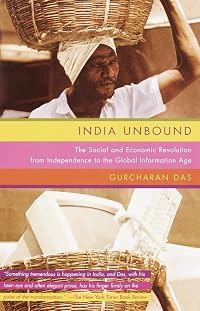
India Unbound: The Social and Economic Revolution from Independence to the Global Information Age
by Gurcharan Das
On This Page
Description
India today is a vibrant free-market democracy and has begun to flex its muscles in the global information economy and on the world stage. Now, acclaimed columnist Gurcharan Das traces India's recent social and economic transformations in an eminently readable, impassioned narrative. Das tells the stories of the major players in a period of rapid and profound change—from schoolchildren inspired by Nehru's speeches in the early days of Independence to the current software impresarios—and show more makes comprehensible and compelling the economic and political development responsible for these changes. He weaves his personal story into the larger context of contemporary history: his family's move to America in the mid-1950s, his education at Harvard, his years in India as a young marketing executive wrestling with a socialist system he feared would undermine the country's vast potential. He also shows us the reasons behind his optimism for his nation's future, among which is the exciting landscape of information technology today. Das argues that the changes of the past fifty years have, at last, amounted to a revolution—and it is one that has not been chronicled before. With India Unbound, he gives us a book that is at once vigorously analytical and vividly written—an essential insider's road map to India, then and now. From the Hardcover edition. show lessTags
Recommendations











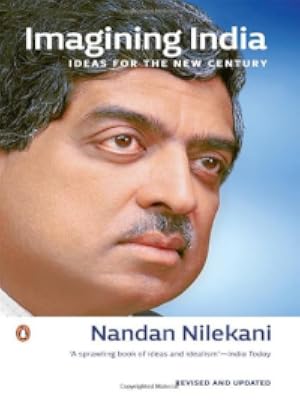
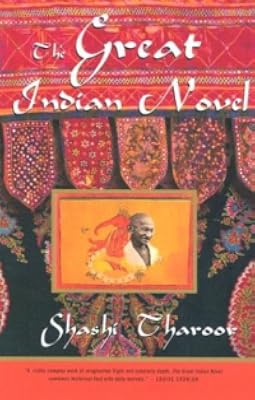

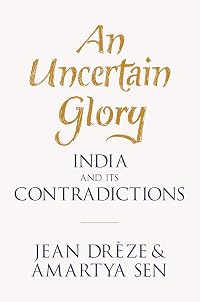
Member Reviews
I have memories of Naipaulesque India: people claiming cultural and spiritual superiority over the rest of the world while the country was consumed by poverty, the so called Indian socialists making a life and political career out of refuting everything in the world, leftist professors poisoning the minds of vulnerable uni students that they can remove the stupidity of the human nature by chanting slogans, all such nonsense only ended up in making India borrow food and pawn its gold.
Also on the other side of the coin, how within months of liberalization, our living rooms were flooded with Bold and the beautifuls, Remingtone steels, making every other aunt choose daquiri for lipstick shade; How Pepsi became the holy water and eventually show more how India became the land that launched half a billion mobile phones.
Mr Gurcharan Das traces magnificently in easy prose the co-ordinates of Indian economy , from the British East India Company to the great Indian IT revolution. And how the social, cultural precepts and the post-scripts of the times influenced the structure and the direction of the economy. He vividly paints the reasons for the failure of so called Indian socialism and how it choked the Indian economy for 40 years since her independence. Also, there is a wonderful chapter on the details of the reforms that took place in 1991 and changed the face of India forever. He further charts the challenges facing the economy and how to go about dealing with them. Having been a witness to both the sides of the economy I can relate to the sentiments of the book without any effort. It covers the economic core in the vast background of Indian social, political and cultural horizons without ever drifting into academic jargon or staying too away to be shallow.
India Unbound is an accomplishment, a must read for anyone keen on India in general and post-modern market India in particular. show less
Also on the other side of the coin, how within months of liberalization, our living rooms were flooded with Bold and the beautifuls, Remingtone steels, making every other aunt choose daquiri for lipstick shade; How Pepsi became the holy water and eventually show more how India became the land that launched half a billion mobile phones.
Mr Gurcharan Das traces magnificently in easy prose the co-ordinates of Indian economy , from the British East India Company to the great Indian IT revolution. And how the social, cultural precepts and the post-scripts of the times influenced the structure and the direction of the economy. He vividly paints the reasons for the failure of so called Indian socialism and how it choked the Indian economy for 40 years since her independence. Also, there is a wonderful chapter on the details of the reforms that took place in 1991 and changed the face of India forever. He further charts the challenges facing the economy and how to go about dealing with them. Having been a witness to both the sides of the economy I can relate to the sentiments of the book without any effort. It covers the economic core in the vast background of Indian social, political and cultural horizons without ever drifting into academic jargon or staying too away to be shallow.
India Unbound is an accomplishment, a must read for anyone keen on India in general and post-modern market India in particular. show less
Read this before my MBA i guess... really liked the author for frank commentary on some of the holy cows in India like Nehru.. but sadly teh author has started towing the line of congress lately in his HT articles.. this book is outstanding if you want to understand the india under license raj
(My review from http://www24.brinkster.com/reviews.html)
This is the story of changing India and comes with the author's personal perspective. The author is a Times of India columnist, ex-CEO of Procter and Gamble India, and has served on the board of, and advised many companies. The best part of the book is the chapters on pre-independence and just-independent India. There is some history of Indian trading culture such as the marwari class, and few anecdotes about both the common man and the famous and powerful. The social and economic zeal and idealism of Nehru's time is described with some reflection of why it all failed. Was interesting to read that this enthusiasm and idealistic spirit was not unique to the newly independent and show more young India but to the world in general, and particularly scholars of the time. Then the dark period of Indira Gandhi's rule and subsequent years of overall social and economic stagnation with License Raj etc. is described. All this is interspersed with the author's own experiences and observations of the time as he travelled around the country as a young executive. This is followed by a bit of inside story of the miracle of liberalization in 1991 during Narasimharao's tenure and how much India has changed since. However, there is a strong cautionary note as to how reforms have slowed down and only carried out with a defensive mindset of it being "inevitable" rather than "desirable".
All interesting reading, quite some insightful observations, though gets a lengthier and less interesting in the later sections. Also must observe that while the author's point is sometimes quite repetitive (across chapters) and sometimes not clear at all - you get the rough idea, but are not sure what exactly he wants to say. All in all though, a good read especially to learn about the post-independence days of India and how things have changed in a silent but sure way. show less
This is the story of changing India and comes with the author's personal perspective. The author is a Times of India columnist, ex-CEO of Procter and Gamble India, and has served on the board of, and advised many companies. The best part of the book is the chapters on pre-independence and just-independent India. There is some history of Indian trading culture such as the marwari class, and few anecdotes about both the common man and the famous and powerful. The social and economic zeal and idealism of Nehru's time is described with some reflection of why it all failed. Was interesting to read that this enthusiasm and idealistic spirit was not unique to the newly independent and show more young India but to the world in general, and particularly scholars of the time. Then the dark period of Indira Gandhi's rule and subsequent years of overall social and economic stagnation with License Raj etc. is described. All this is interspersed with the author's own experiences and observations of the time as he travelled around the country as a young executive. This is followed by a bit of inside story of the miracle of liberalization in 1991 during Narasimharao's tenure and how much India has changed since. However, there is a strong cautionary note as to how reforms have slowed down and only carried out with a defensive mindset of it being "inevitable" rather than "desirable".
All interesting reading, quite some insightful observations, though gets a lengthier and less interesting in the later sections. Also must observe that while the author's point is sometimes quite repetitive (across chapters) and sometimes not clear at all - you get the rough idea, but are not sure what exactly he wants to say. All in all though, a good read especially to learn about the post-independence days of India and how things have changed in a silent but sure way. show less
I really like Gurucharan Das. His book showed me that Indians are excellent authors. It also introduced me to alot of the issues that face contemporary India and how they got here.
It is well written book on the post independent India. Though I do not gree with the authors uncritical acceptance of Capitalis, Market economy and globalization I have to admit that it is a well written book.
Great Book. There is too much of economics in some of the chapters but overall the book is great.
Heard about this book and it was awsome wanna read this
Members
- Recently Added By
Author Information

14 Works 962 Members
Gurcharan Das, formerly CEO of Procter & Gamble India, is a venture capitalist and consultant, as well as a columnist for the Times of India. He lives in New Delhi.
Awards and Honors
Notable Lists
Classifications
Statistics
- Members
- 478
- Popularity
- 63,496
- Reviews
- 7
- Rating
- (4.10)
- Languages
- English
- Media
- Paper, Ebook
- ISBNs
- 8
- ASINs
- 3