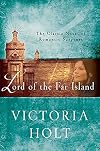
Lord of the Far Island
by Victoria Holt
On This Page
Description
Lovely Ellen Kellaway was rescued from a bleak future by her newly discovered guardian, Jago Kellaway, Lord of the Far Island, off the wild coast of Cornwall. There, Ellen was drawn deeper and deeper into the secrets of a past as alive and threatening as the present. There Jago offered her the fabled Island Necklace worn by the mistresses of Kellaway Castle. But was it a promise of happiness -- or a dark symbol of death . . .?Tags
Recommendations








Member Reviews
The August 2025 #TBRChallenge is "Do the Hustle." My mind immediately went to the song, which is not exactly conducive to my personal Mount TBR, LOL. So I decided to pick a book from the mountain that was released the same year as the song. I actually had a couple of choices, and settled fairly quickly on this one. Victoria Holt + Cornwall = 1000% my jam!
Ellen Kellaway is a twenty-year-old Poor Relation, and she has never been allowed to forget this fact. Her mother left her father when she was 3 years old, returning to the home of her mother (Ellen's grandmother), and tragically died a few years later. Grandmother wasn't too long for this mortal coil, either, and when she passed away, Ellen passed into the hands of her mother's distant show more cousin, Agatha. Agatha enjoys doing good works, and being seen doing good works, hence taking the poor orphan child into her home.
Ellen was a companion for Esmerelda, Agatha's only child. Esmerelda, like everyone else in Agatha's vicinity, is cowed by her mother's overbearing dominance. Ellen is the only one who is not intimidated by Agatha, and she grows up to be pretty resilient, considering she is expected to perform gratitude 24/7 to Agatha for the roof over her head, the clothes on her back, and the education she's given by being allowed to share in Esmerelda's lessons.
Agatha has Great Plans for Esmerelda, which basically culminate in wanting her to marry one of the sons of the great Carrington family. The son that is the girls' age, Philip, is introduced to them when they are tweens. Philip takes an immediate dislike to the milquetoast Esmerelda, but Ellen's fiery personality won't let him get the best of her. The three of them grow up together, and Agatha is carefully maneuvering her plans so that at Esmerelda's coming-out ball, it is expected that her engagement to Philip will be announced, thus linking their two families.
Ellen is not given a coming-out ball; in fact, she is given a big push out of the house towards a governess post with Agatha's friend and the equally odious Mrs Oman Lemming. Agatha is desperate for Ellen not to outshine her daughter (though Esmerelda herself wouldn't mind in the least). But it is much to everyone's surprise when, on the night of the ball, Philip proposes to Ellen instead, insisting that he's loved her since they were children and no one would make him happier. Ellen is not in love with Philip, but she certainly can see that marriage to a dear friend would be a much better fate than being a governess for the notoriously awful Mrs Lemming.
So plans are made and are moving smoothly. Philip finds a house he'd like to rent so that when they are married, they have their own place. Ellen does not like the house - she gets a really awful gut feeling and can barely even step foot in the place. She's starting to second-guess her decision to marry so young, to someone equally young, especially knowing her mother's marriage was not happy.
Six days before the wedding, Philip is shot and killed. It is ruled a suicide, but Ellen fervently believes he was murdered.
Her life is now falling apart. Agatha crowing all the while that she knew the marriage would never actually happen; Philip's brother accuses Ellen of being the reason he killed himself; Ellen herself has a horrible fall over Dead Man's Leap (though she is caught on a bush instead of tumbling to her death); and it seems she has no choice but to go with Mrs Lemming after all. Only - she receives a mysterious note in the mail, claiming to be from her long-lost father's family, inviting her to "the far island" to meet her relatives. She immediately decides to do this, even though it means leaving poor Esmerelda and Philip's family behind, and walking into a great unknown.
Ellen has never been told anything about her family of origin, other than her father basically ran her mother off. She travels to Cornwall to await a boat ride to the island a few miles off the coast, and she immediately starts asking questions of the locals. She learns that Jago Kellaway, the head of her family and lord and master of the isle, is feared and respected. Nobody wants to talk about her late father OR her mother, but she is desperate for answers. She gets a nasty surprise when she meets Jago Kellaway for the first time - he is a man she met in London, who claimed to be a "connection" of the Carrington family, who followed her around and even cornered her in the creepy house. Jago explains their (distant) familial relationship and starts pressuring her to forget her past and move forward with her future, there on the island with him.
The island is lovely, and Ellen is able to settle there, but there are lots of mysteries poking at her from the gothic castle interior. What really happened to her mother? Did her father really not care for children? Why did he not seek her out until he was dying? Who is the mysterious "SK", whose journals Ellen finds in her room? And why are the only other female members of the family watching her so closely and jealously guarding their own relationships with people from the mainland?
This is a deliciously gothic story with a refreshingly bright heroine who knows what she's about. She is very resilient and has common sense, enough to know that Philip didn't really commit suicide, and that Jago is not all he appears to be. She knows that he is pressuring her to marry him and stay on the island, but she's not going to give in until she learns the truth about her family - even, and especially, him.
The plot moves at a fairly steady clip throughout. Ellen not only has a powerful gut feeling about places, but she's also had a recurring dream of a certain room since she was a child, and she is more curious than even to discover if its a real place once she lands on the island and starts exploring her mother's history. I pretty much figured out all the links in the chain from the moment "SK" surfaces in the story, but it was still fun to go along for the ride with Ellen as she doggedly pursues her goal.
I was not much of a fan of Jago, unfortunately. He is somehow "only thirty" but grew up with Ellen's father (???) and he has a habit of being melodramatic all the time. He really pushes Ellen to marry him fairly quickly, and when the reasons why surface(she is the actual heiress to her father's estate, not him, which would make her incredibly wealthy and give her control of the island, which he has made known far and wide he considers his own personal kingdom) , I liked him even less. Ellen deserved better than him.
Still, this was a good read. If you enjoy Holt's gothics you will gobble this one up. show less
Ellen Kellaway is a twenty-year-old Poor Relation, and she has never been allowed to forget this fact. Her mother left her father when she was 3 years old, returning to the home of her mother (Ellen's grandmother), and tragically died a few years later. Grandmother wasn't too long for this mortal coil, either, and when she passed away, Ellen passed into the hands of her mother's distant show more cousin, Agatha. Agatha enjoys doing good works, and being seen doing good works, hence taking the poor orphan child into her home.
Ellen was a companion for Esmerelda, Agatha's only child. Esmerelda, like everyone else in Agatha's vicinity, is cowed by her mother's overbearing dominance. Ellen is the only one who is not intimidated by Agatha, and she grows up to be pretty resilient, considering she is expected to perform gratitude 24/7 to Agatha for the roof over her head, the clothes on her back, and the education she's given by being allowed to share in Esmerelda's lessons.
Agatha has Great Plans for Esmerelda, which basically culminate in wanting her to marry one of the sons of the great Carrington family. The son that is the girls' age, Philip, is introduced to them when they are tweens. Philip takes an immediate dislike to the milquetoast Esmerelda, but Ellen's fiery personality won't let him get the best of her. The three of them grow up together, and Agatha is carefully maneuvering her plans so that at Esmerelda's coming-out ball, it is expected that her engagement to Philip will be announced, thus linking their two families.
Ellen is not given a coming-out ball; in fact, she is given a big push out of the house towards a governess post with Agatha's friend and the equally odious Mrs Oman Lemming. Agatha is desperate for Ellen not to outshine her daughter (though Esmerelda herself wouldn't mind in the least). But it is much to everyone's surprise when, on the night of the ball, Philip proposes to Ellen instead, insisting that he's loved her since they were children and no one would make him happier. Ellen is not in love with Philip, but she certainly can see that marriage to a dear friend would be a much better fate than being a governess for the notoriously awful Mrs Lemming.
So plans are made and are moving smoothly. Philip finds a house he'd like to rent so that when they are married, they have their own place. Ellen does not like the house - she gets a really awful gut feeling and can barely even step foot in the place. She's starting to second-guess her decision to marry so young, to someone equally young, especially knowing her mother's marriage was not happy.
Six days before the wedding, Philip is shot and killed. It is ruled a suicide, but Ellen fervently believes he was murdered.
Her life is now falling apart. Agatha crowing all the while that she knew the marriage would never actually happen; Philip's brother accuses Ellen of being the reason he killed himself; Ellen herself has a horrible fall over Dead Man's Leap (though she is caught on a bush instead of tumbling to her death); and it seems she has no choice but to go with Mrs Lemming after all. Only - she receives a mysterious note in the mail, claiming to be from her long-lost father's family, inviting her to "the far island" to meet her relatives. She immediately decides to do this, even though it means leaving poor Esmerelda and Philip's family behind, and walking into a great unknown.
Ellen has never been told anything about her family of origin, other than her father basically ran her mother off. She travels to Cornwall to await a boat ride to the island a few miles off the coast, and she immediately starts asking questions of the locals. She learns that Jago Kellaway, the head of her family and lord and master of the isle, is feared and respected. Nobody wants to talk about her late father OR her mother, but she is desperate for answers. She gets a nasty surprise when she meets Jago Kellaway for the first time - he is a man she met in London, who claimed to be a "connection" of the Carrington family, who followed her around and even cornered her in the creepy house. Jago explains their (distant) familial relationship and starts pressuring her to forget her past and move forward with her future, there on the island with him.
The island is lovely, and Ellen is able to settle there, but there are lots of mysteries poking at her from the gothic castle interior. What really happened to her mother? Did her father really not care for children? Why did he not seek her out until he was dying? Who is the mysterious "SK", whose journals Ellen finds in her room? And why are the only other female members of the family watching her so closely and jealously guarding their own relationships with people from the mainland?
This is a deliciously gothic story with a refreshingly bright heroine who knows what she's about. She is very resilient and has common sense, enough to know that Philip didn't really commit suicide, and that Jago is not all he appears to be. She knows that he is pressuring her to marry him and stay on the island, but she's not going to give in until she learns the truth about her family - even, and especially, him.
The plot moves at a fairly steady clip throughout. Ellen not only has a powerful gut feeling about places, but she's also had a recurring dream of a certain room since she was a child, and she is more curious than even to discover if its a real place once she lands on the island and starts exploring her mother's history. I pretty much figured out all the links in the chain from the moment "SK" surfaces in the story, but it was still fun to go along for the ride with Ellen as she doggedly pursues her goal.
I was not much of a fan of Jago, unfortunately. He is somehow "only thirty" but grew up with Ellen's father (???) and he has a habit of being melodramatic all the time. He really pushes Ellen to marry him fairly quickly, and when the reasons why surface
Still, this was a good read. If you enjoy Holt's gothics you will gobble this one up. show less
This was written in 1975.
This was a mantra of mine as I read this book. Generally, I’m unaffected by dated material, or maybe not unaffected, but aware that reading the old stuff means a likelihood of butting up against outdated social mores, prejudices and attitudes, and I try not to let it colour my enjoyment of the story.
I could not do this with Lord of Far Island. The romantic hero drove me plum crazy.
The book starts off slow, with Part 1 a very verbose retrospective of the MC, Ellen’s, life. It’s almost entirely telling, rather than showing. Part 2 gets a lot more interesting, as Ellen has been invited to Kellaway Island, a deliciously gothic island off the coast of Cornwall, complete with castle and all the gothic show more accessories. The Kellaway’s are her father’s side of the family and a complete unknown to her. There she meets the “Lord” of the island, Jago Kellaway, a many times removed cousin and the romantic hero.
Also, an utter prat.
I’ll get to the prat part later, because that’s where my inability to put aside the differences between when this was written and when I read it most strongly come into play. I also had a hard time with this romance because of the cousin thing – which I can usually shrug off, but it kept coming up, keeping it at the forefront. Even more creepy, in my estimation, was the fact that he kept referring to her as his ward. She’s 20 and he’s “not much more than 30”, so everybody’s well beyond the age of consent. But her father died and he named Jago her guardian until she turned 21, and he constantly introduced her as his ward, and reminded her he was her guardian and the whole thing just started to feel really creepy.
Did I mention Jago was a prat? Well, he was. I can’t explain it better than he can so here’s a few quotes:
“She’ll tell your fortune. I know you like having your fortune told. All women do.”
“That was a fortunate release, my darling. That’s how you’re going to see it.”
“You go too fast. I have not yet said I will marry you.
This is perverse of you because you know as well as I do that you are going to.”
It turns out I don’t like my fictional MC’s being bossed around any more than I like being bossed around myself.
I suspect if I’d read this when I was far younger I’d have enjoyed it more, but there’s been too much water under the bridge, so to speak, for me to find Jago to be anything but a prat. show less
This was a mantra of mine as I read this book. Generally, I’m unaffected by dated material, or maybe not unaffected, but aware that reading the old stuff means a likelihood of butting up against outdated social mores, prejudices and attitudes, and I try not to let it colour my enjoyment of the story.
I could not do this with Lord of Far Island. The romantic hero drove me plum crazy.
The book starts off slow, with Part 1 a very verbose retrospective of the MC, Ellen’s, life. It’s almost entirely telling, rather than showing. Part 2 gets a lot more interesting, as Ellen has been invited to Kellaway Island, a deliciously gothic island off the coast of Cornwall, complete with castle and all the gothic show more accessories. The Kellaway’s are her father’s side of the family and a complete unknown to her. There she meets the “Lord” of the island, Jago Kellaway, a many times removed cousin and the romantic hero.
Also, an utter prat.
I’ll get to the prat part later, because that’s where my inability to put aside the differences between when this was written and when I read it most strongly come into play. I also had a hard time with this romance because of the cousin thing – which I can usually shrug off, but it kept coming up, keeping it at the forefront. Even more creepy, in my estimation, was the fact that he kept referring to her as his ward. She’s 20 and he’s “not much more than 30”, so everybody’s well beyond the age of consent. But her father died and he named Jago her guardian until she turned 21, and he constantly introduced her as his ward, and reminded her he was her guardian and the whole thing just started to feel really creepy.
Did I mention Jago was a prat? Well, he was. I can’t explain it better than he can so here’s a few quotes:
“She’ll tell your fortune. I know you like having your fortune told. All women do.”
“That was a fortunate release, my darling. That’s how you’re going to see it.”
“You go too fast. I have not yet said I will marry you.
This is perverse of you because you know as well as I do that you are going to.”
It turns out I don’t like my fictional MC’s being bossed around any more than I like being bossed around myself.
I suspect if I’d read this when I was far younger I’d have enjoyed it more, but there’s been too much water under the bridge, so to speak, for me to find Jago to be anything but a prat. show less
The plot works well and many scenes are vividly portrayed. Although certain outcomes were predictable, owing to the author “recycling” storylines from several of her previous works, certain revelations did surprise me.
The characters are all well-drawn, especially the heroine of the piece.
As usual with Ms Holt much of this novel revolves around a long suspenseful build-up to a climax that's over too soon. I often feel that this author doesn't squeeze the full potential out of dramatic/exciting/frightening scenarios. She's great at building suspense, creating mystery, but tends to resolve her heroine's most trying moments too quickly and too easily. She's certainly done so with this book’s finale.
Overall, a good read, though the show more ending had great potential to have been much better. show less
The characters are all well-drawn, especially the heroine of the piece.
As usual with Ms Holt much of this novel revolves around a long suspenseful build-up to a climax that's over too soon. I often feel that this author doesn't squeeze the full potential out of dramatic/exciting/frightening scenarios. She's great at building suspense, creating mystery, but tends to resolve her heroine's most trying moments too quickly and too easily. She's certainly done so with this book’s finale.
Overall, a good read, though the show more ending had great potential to have been much better. show less
Ellen Kellaway, orphaned at a young age, lives with her cousin Agatha and her family Ellen has constantly been told that she’s the Poor Relation and that therefore the best she can hope for is a post as a governess or companion. When she receives a marriage proposal from the son of a wealthy London family, Ellen’s life seems set to improve. But the death of her fiancée leads to an invitation that Ellen can’t refuse, and she goes to Cornwall to stay with her guardian, Jago. True to Victoria Holt form, her guardian’s invitation leads to much danger for our heroine.
Victoria Holt’s novels tend to be rather formulaic, which is why they work so well—for the most part. The downside is that her novels are rather predictable—if show more you’ve read anything else by her, you’ll know that things turn out rather well for Ellen in the end. There’s a lot less suspense in this novel than in some of Holt’s other novels, and the romance occurs rather too quickly to be believable to me. For most of the novel, Ellen doesn’t trust Jago much, but when she discovers that he’s not what she thought he was, she realizes she’s in love with him? It didn’t make much sense to me. Also, I never know if this is supposed to be historical fiction (Ellen wears a bonnet and they ride in hansom cabs) or if it’s contemporary setting (Ellen has complete freedom to go about on her own, especially when she obtains the key to the house she and Philip are interested in and goes there by herself).
Still, Holt is a good writer—there are a number of really good twists in the plot, and she paces things well. There are a lot of questions about Ellen’s family that are answered satisfactorily in the end, though the author wrapped things up too quickly for me. There’s a very magical feeling about the tone of this novel that I enjoyed as well. It seems that Cornwall is a place that fuels a lot of writers’ imaginations, and Lord of the Far Island is no exception, since it’s very evocative of the place. I had a lot of fun reading this novel, since it’s the perfect kind of book to read during the summertime. If you’re new to reading Victoria Holt’s novels, I’d suggest reading Mistress of Mellyn before this one. show less
Victoria Holt’s novels tend to be rather formulaic, which is why they work so well—for the most part. The downside is that her novels are rather predictable—if show more you’ve read anything else by her, you’ll know that things turn out rather well for Ellen in the end. There’s a lot less suspense in this novel than in some of Holt’s other novels, and the romance occurs rather too quickly to be believable to me. For most of the novel, Ellen doesn’t trust Jago much, but when she discovers that he’s not what she thought he was, she realizes she’s in love with him? It didn’t make much sense to me. Also, I never know if this is supposed to be historical fiction (Ellen wears a bonnet and they ride in hansom cabs) or if it’s contemporary setting (Ellen has complete freedom to go about on her own, especially when she obtains the key to the house she and Philip are interested in and goes there by herself).
Still, Holt is a good writer—there are a number of really good twists in the plot, and she paces things well. There are a lot of questions about Ellen’s family that are answered satisfactorily in the end, though the author wrapped things up too quickly for me. There’s a very magical feeling about the tone of this novel that I enjoyed as well. It seems that Cornwall is a place that fuels a lot of writers’ imaginations, and Lord of the Far Island is no exception, since it’s very evocative of the place. I had a lot of fun reading this novel, since it’s the perfect kind of book to read during the summertime. If you’re new to reading Victoria Holt’s novels, I’d suggest reading Mistress of Mellyn before this one. show less
I really enjoyed this book. Much like Janet Evanovich, it was just a fun read. It was one of those books you like to curl up with for pure entertainment. I liked that you didn’t find out the whole story until the very end. It was done so well, you didn’t even know there would be surprises…and there were many.
Ellen Kellaway, the “poor relation” to cousin Agatha and her husband Josiah, was never allowed to forget how she got to live in the lap of luxury, even though she never got to touch it per se. Her cousin Esmeralda (Agatha and Josiah’s daughter) never saw her as the poor relation, only as her friend whom she adored.
It was hoped—mostly by Agatha—that Esmeralda marry Phillip Carrington, the rich bachelor she felt show more worthy of her daughter. Much to Agatha’s chigrin, Phillip picks Ellen to be his bride on the eve of Esmeralda’s coming out party and coincidently the night Agatha assumed he would be claiming Esmeralda as his choice of bride.
Ellen’s life as the poor relation changes overnight until Phillip is suddenly taken from her. With heavy sadness in her heart, she receives word that her cousin Jago—several times removed—has been looking for her. She is the heir to an island and a vast fortune left by the father whom she thinks never wanted anything to do with her.
She learns of an older sister named Silva. But what happened to her? Where is she? Dead? How did she die and why didn’t anyone see her leave the island? There are a lot of twists and turns to this story and it will keep you interested and turning the pages until the end.
Reviewed for Suspense Magazine by: Terri Ann Armstrong, Author of "Morning Menace", published by Suspense Publishing, a company owned by Suspense Magazine.
"Reviews within this magazine are the opinions of the individual reviewers and are provided solely to provide readers assistance in determining another's thoughts on the book under discussion and shall not be interpreted as professional advice or the opinion of any other than the individual reviewer. The following reviewers who may appear in this magazine are also individual clients of Suspense Publishing, a company owned by Suspense Magazine: Mark P. Sadler, Starr Gardinier Reina, Terri Ann Armstrong.” show less
Ellen Kellaway, the “poor relation” to cousin Agatha and her husband Josiah, was never allowed to forget how she got to live in the lap of luxury, even though she never got to touch it per se. Her cousin Esmeralda (Agatha and Josiah’s daughter) never saw her as the poor relation, only as her friend whom she adored.
It was hoped—mostly by Agatha—that Esmeralda marry Phillip Carrington, the rich bachelor she felt show more worthy of her daughter. Much to Agatha’s chigrin, Phillip picks Ellen to be his bride on the eve of Esmeralda’s coming out party and coincidently the night Agatha assumed he would be claiming Esmeralda as his choice of bride.
Ellen’s life as the poor relation changes overnight until Phillip is suddenly taken from her. With heavy sadness in her heart, she receives word that her cousin Jago—several times removed—has been looking for her. She is the heir to an island and a vast fortune left by the father whom she thinks never wanted anything to do with her.
She learns of an older sister named Silva. But what happened to her? Where is she? Dead? How did she die and why didn’t anyone see her leave the island? There are a lot of twists and turns to this story and it will keep you interested and turning the pages until the end.
Reviewed for Suspense Magazine by: Terri Ann Armstrong, Author of "Morning Menace", published by Suspense Publishing, a company owned by Suspense Magazine.
"Reviews within this magazine are the opinions of the individual reviewers and are provided solely to provide readers assistance in determining another's thoughts on the book under discussion and shall not be interpreted as professional advice or the opinion of any other than the individual reviewer. The following reviewers who may appear in this magazine are also individual clients of Suspense Publishing, a company owned by Suspense Magazine: Mark P. Sadler, Starr Gardinier Reina, Terri Ann Armstrong.” show less
Ellen, orphaned, was raised by wealthy cousins. Nevertheless, she is haunted by a life long nightmare–urging her to uncover secrets of her long-lost family?
Ellen Kellaway, orphaned at age five, was raised by wealthy cousins, but was never allowed to forget that her every advantage was owed to the charity of others. However, when the son of a powerful London family asks for her hand in marriage, her world is opened up to untold wealth and social position. She never imagined that such an unlikely dream would come true.
Members
- Recently Added By
Author Information

67+ Works 16,181 Members
Some Editions
Work Relationships
Is contained in
Victoria Holt Lot of 8: On the Night of the Seventh Moon / My Enemy the Queen / The Devil on Horseback / The Curse of the Kings / The Spring of the Tiger / The Landowner Legacy / Lord of the Far Island / The Pride of the Peacock by Victoria Holt
Judas Kiss, My Enemy the Queen#, Curse of the Kings, Bride of Pendorric #, Menfreya, House of a Thousand Lanterns #, Spring of the Tiger, Pride of the Peacock, Kirkland Revels, Lord of the he Far Island, Mask of the Enchantress, Secret Woman, Night of the Seventh Moon, Black Opal, Time of the Hunters Moon, Landowner Legacy, Captive #, Secrets of a Nightingale, Silk Vendetta, Road to Paradise Island, India Fan #, Queen of Confession, King of the Castle, Demon Lover, Shadow of the Lynx, Crimson Falcon, Mistre by Victoria Holt
Is abridged in
Der Mann im Netz. - Holt, Victoria: Das Zimmer des roten Traums. - Falk, Hermann: 1 Grad Süd - 90 West. - Froncek, Thomas: Entführung nach Belgrad by Reader's Digest
Het Beste Boek 77: De baby en het slagschip / De grote treinroof / De gevaarlijke erfenis / De patiënten by Reader's Digest
Reader's Digest Condensed Books: In The Frame • Baker's Hawk • Bring on the Empty Horses • Lord of the Far Island • The Hessian by Reader's Digest
Reader's Digest Condensed Books: Eagle in the Sky • Lord of the Far Island • Stay of Execution • Cake in the Hat Box by Reader's Digest
Common Knowledge
- Canonical title*
- De gevaarlijke erfenis
- Original title
- The lord of the far island
- Original publication date
- 1975
- People/Characters
- Jago Kellaway; Ellen Kellaway; Esmeralda Loring; Philip Carrington; Rollo Carrington; Slack
- Important places
- London, England, UK
- First words
- The dream disturbed my sleep on the eve of Esmeralda's coming-out ball.
- Last words
- (Click to show. Warning: May contain spoilers.)Yes, I thought, ours, this fair Island, these beloved children, this good life. Ours.
*Some information comes from Common Knowledge in other languages. Click "Edit" for more information.
Classifications
Statistics
- Members
- 575
- Popularity
- 51,028
- Reviews
- 13
- Rating
- (3.61)
- Languages
- 7 — Danish, Dutch, English, Finnish, German, Spanish, Swedish
- Media
- Paper, Audiobook, Ebook
- ISBNs
- 45
- ASINs
- 19