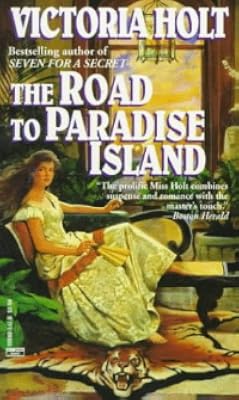
The Road to Paradise Island
by Victoria Holt
On This Page
Description
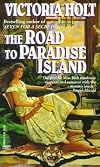
Annalice Mallory, the sheltered daughter of a family of map makers, discovers the cryptic diary of her long-dead ancestor that includes a map of a mysterious far-of island. Philip, Annalice's brother, sets sail for the island, lured by the promise of incomparable riches to be found. But when he doesn't return, Annalice sets out to find him -- and the secrets of the diary -- in a desperate journey that leads her through the worlds' most exciting outposts . . . and finally to the tropical show more islands of the South Seas, where she encounters heart-stopping peril, but also the promise of love. show lessTags
Recommendations










Member Reviews
The way this novel started, I thought it was going to be a five-star story, but from about one-third in, it started to lose its appeal.
Early on, the narrator Annalice Mallory discovers a grave hidden by weeds. The name on it is one of her ancestors: Ann Alice Mallory. Annalice becomes intrigued with this, as did I. Not long after this, she discovers Ann Alice’s diary.
This leads to a framed narrative. We switch to Ann Alice’s narration as we discover what secrets are in her diary, written about 100 years previously (late 1780s/early ’90s).
I must echo what some other reviews have stated, namely that Ann Alice’s diary is the novel’s highlight. It’s engaging from start to finish. She relates episodes with her father, show more governesses, stepmother, the man she loves, and the man she hates. This latter pursues and pesters her.
The diary has some excellent drama in it and I was sorry when the narrative switched back to Annalice. I liked Annalice, but not as much as her ancestor. I hoped the rest of the book would focus heavily on her finding out what happened after the diary’s last page. For a while, this is the case, but it begins to recede into the background, and all but disappears when Annalice finds the opportunity to sail to Australia to find her brother.
As Annalice leaves England, she also leaves the best part of the story behind her. References to Ann Alice and the diary rarely crop up after this. The main plot is for Annalice to find her brother, but she’s sidetracked for some time, as the friend she’s travelled with has married a man she loathes, so she stays with her for longer than planned. Some decent drama arises from this scenario, but when Annalice leaves, the story drops another notch or two in terms of engagement.
Quite a few scenes and events come about a bit too conveniently, which undermines the plot’s believability.
The story also suffers from too much reported speech like in the quote below, which would’ve been much more vivid if the author had dramatized the scene with action and dialogue:
‘When I had finished, I asked at the desk if they could give me the address of the Australian Botanical Association and was told without hesitation that it was in George Street. How could I get there? I asked. Did I need a conveyance? No, I was told, it was only about ten minutes' walk from the hotel. I was given instructions how to get there.’
It’s too passive, as are the likes of, ‘Water was brought to my room,’ or ‘The cider was brought.’ It’s blatant telling. The author could’ve shown whoever did the bringing with a brief description like, ‘A freckled-face girl brought a tray of drinks to our table.’
Whether writing as Victoria Holt or Philippa Carr, this author had an annoying habit of referring to male characters by both names nearly every time, rather than one or the other. This book has several examples, with the most notable being one of the lead male characters, Milton Harrington. No other characters are called Milton, and no others are called Harrington, so it did annoy me when Annalice keeps saying, ‘Milton Harrington did this, Milton Harrington did that,’ almost every time.
It's a shame Ann Alice’s diary didn’t occupy half the book and that Annalice’s story wasn’t half as short. It would’ve made a better read, particularly if the plot was altered so that Annalice spent most of her time searching for answers about Ann Alice and the other past characters, preferably without sailing from England, and rename the novel ‘The Road to the Past’.
I’ve now read all Eleanor Hibbert’s novels written as Victoria Holt. While this one wasn’t my favourite, it’s not the worst, either, and I encourage potential readers to give it a go for the diary chapter alone. Best Holt novel for me is ‘The Judas Kiss’. show less
Early on, the narrator Annalice Mallory discovers a grave hidden by weeds. The name on it is one of her ancestors: Ann Alice Mallory. Annalice becomes intrigued with this, as did I. Not long after this, she discovers Ann Alice’s diary.
This leads to a framed narrative. We switch to Ann Alice’s narration as we discover what secrets are in her diary, written about 100 years previously (late 1780s/early ’90s).
I must echo what some other reviews have stated, namely that Ann Alice’s diary is the novel’s highlight. It’s engaging from start to finish. She relates episodes with her father, show more governesses, stepmother, the man she loves, and the man she hates. This latter pursues and pesters her.
The diary has some excellent drama in it and I was sorry when the narrative switched back to Annalice. I liked Annalice, but not as much as her ancestor. I hoped the rest of the book would focus heavily on her finding out what happened after the diary’s last page. For a while, this is the case, but it begins to recede into the background, and all but disappears when Annalice finds the opportunity to sail to Australia to find her brother.
As Annalice leaves England, she also leaves the best part of the story behind her. References to Ann Alice and the diary rarely crop up after this. The main plot is for Annalice to find her brother, but she’s sidetracked for some time, as the friend she’s travelled with has married a man she loathes, so she stays with her for longer than planned. Some decent drama arises from this scenario, but when Annalice leaves, the story drops another notch or two in terms of engagement.
Quite a few scenes and events come about a bit too conveniently, which undermines the plot’s believability.
The story also suffers from too much reported speech like in the quote below, which would’ve been much more vivid if the author had dramatized the scene with action and dialogue:
‘When I had finished, I asked at the desk if they could give me the address of the Australian Botanical Association and was told without hesitation that it was in George Street. How could I get there? I asked. Did I need a conveyance? No, I was told, it was only about ten minutes' walk from the hotel. I was given instructions how to get there.’
It’s too passive, as are the likes of, ‘Water was brought to my room,’ or ‘The cider was brought.’ It’s blatant telling. The author could’ve shown whoever did the bringing with a brief description like, ‘A freckled-face girl brought a tray of drinks to our table.’
Whether writing as Victoria Holt or Philippa Carr, this author had an annoying habit of referring to male characters by both names nearly every time, rather than one or the other. This book has several examples, with the most notable being one of the lead male characters, Milton Harrington. No other characters are called Milton, and no others are called Harrington, so it did annoy me when Annalice keeps saying, ‘Milton Harrington did this, Milton Harrington did that,’ almost every time.
It's a shame Ann Alice’s diary didn’t occupy half the book and that Annalice’s story wasn’t half as short. It would’ve made a better read, particularly if the plot was altered so that Annalice spent most of her time searching for answers about Ann Alice and the other past characters, preferably without sailing from England, and rename the novel ‘The Road to the Past’.
I’ve now read all Eleanor Hibbert’s novels written as Victoria Holt. While this one wasn’t my favourite, it’s not the worst, either, and I encourage potential readers to give it a go for the diary chapter alone. Best Holt novel for me is ‘The Judas Kiss’. show less
The later Victoria Holts, when she was apparently writing more for the Harlequin audience, are considerably weaker than the earlier ones and this is a good example. A solid 100 pages could have been lost and would have improved things quite a bit, there are so many diversions and side stories that add very little to the story. There is so much time building up to the big reveal that is it a fairly uneventful 2 pages and then we are done. On the positive side, Annalice is a pretty good female character and is both level headed and brave on any number of occasions in what is a very untypical Gothic romance. Milton Harrington is not as objectionable as many of the bad boy heroes that Holt often creates. So, though it dragged alot and was show more far more about the The Road than Paradise Island, it wasn't a bad read. Except! Except for a few paragraphs of howling anachronisms involving astronomy and geology that ended up somewhat crucial to the final reveal and were so badly and clumsily placed it made me almost throw the book across the room. show less
rabck from jmsmom; Annalice, daughter of a mapmaker family, sets off as a companion to Felicity who is marrying an Australian. Annalice wants to find "paradise island" an island reported by her ancestors, and discover what happened to her seafaring brother. Only, who should she trust? Her almost fiancé in England? The overbearing sugar plantation owner in Cariba? Or a recluse on Lion's Island?
Inside Flap Copy
Annalice Mallory, the sheltered daughter of a family of map makers, discovers the cryptic diary of her long-dead ancestor that includes a map of a mysterious far-of island. Philip, Annalice's brother, sets sail for the island, lured by the promise of incomparable riches to be found. But when he doesn't return, Annalice sets out to find him -- and the secrets of the diary -- in a desperate journey that leads her through the worlds' most exciting outposts . . . and finally to the tropical islands of the South Seas, where she encounters heart-stopping peril, but also the promise of love.
Annalice Mallory, the sheltered daughter of a family of map makers, discovers the cryptic diary of her long-dead ancestor that includes a map of a mysterious far-of island. Philip, Annalice's brother, sets sail for the island, lured by the promise of incomparable riches to be found. But when he doesn't return, Annalice sets out to find him -- and the secrets of the diary -- in a desperate journey that leads her through the worlds' most exciting outposts . . . and finally to the tropical islands of the South Seas, where she encounters heart-stopping peril, but also the promise of love.
9788422668378
9788422668378
Members
- Recently Added By
Author Information

67+ Works 16,181 Members
Some Editions
Series
Belongs to Publisher Series
Work Relationships
Is contained in
A Victoria Holt Quartet: The Silk Vendetta, The Captive, The Landower Legacy, The Road to Paradise Island by Victoria Holt
Judas Kiss, My Enemy the Queen#, Curse of the Kings, Bride of Pendorric #, Menfreya, House of a Thousand Lanterns #, Spring of the Tiger, Pride of the Peacock, Kirkland Revels, Lord of the he Far Island, Mask of the Enchantress, Secret Woman, Night of the Seventh Moon, Black Opal, Time of the Hunters Moon, Landowner Legacy, Captive #, Secrets of a Nightingale, Silk Vendetta, Road to Paradise Island, India Fan #, Queen of Confession, King of the Castle, Demon Lover, Shadow of the Lynx, Crimson Falcon, Mistre by Victoria Holt
Common Knowledge
- Canonical title
- The Road to Paradise Island
- Original title
- The Road to Paradise Island
- Original publication date
- 1985
- People/Characters
- Annalice Mallory; Philip Mallory; Granny M; Milton Harrington; Raymond Billington; Felicity
- First words
- On the night of the great storm, our house, like so many in the village, was damaged; and it was due to this that the discovery was made.
- Last words
- (Click to show. Warning: May contain spoilers.)He seemed very satisfied with that observation.
Classifications
Statistics
- Members
- 470
- Popularity
- 65,097
- Reviews
- 7
- Rating
- (3.56)
- Languages
- 6 — Danish, English, Finnish, German, Hungarian, Spanish
- Media
- Paper, Audiobook, Ebook
- ISBNs
- 37
- ASINs
- 10