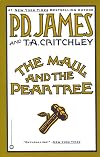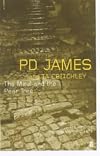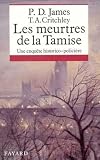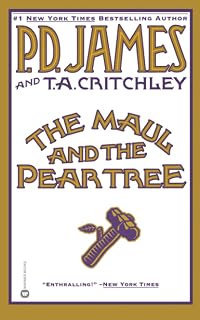
The Maul and the Pear Tree: The Ratcliffe Highway Murders, 1811
by P. D. James, T. A. Critchley
On This Page
Description
In 1811 John Williams was buried with a stake through his heart. Was he the notorious East End killer or the eighth victim in the Ratcliffe Highway Murders? Drawing on contemporary records and newspaper cuttings, the authors reconstruct the events.Tags
Recommendations








Member Recommendations

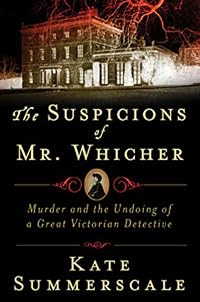
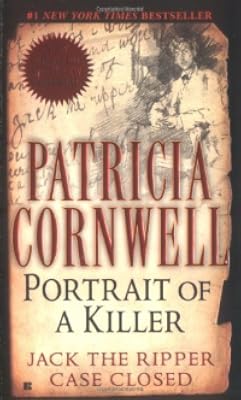
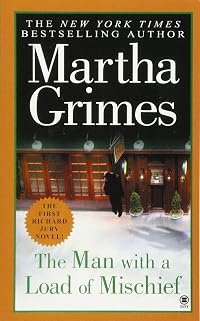
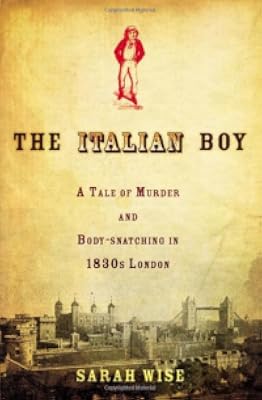
MiaCulpa Both books cover long ago murders where not is all that it seems once you dig below the surface.
Member Reviews
I found this retelling of the Ratcliffe Highway murders covered off more angles than the traditional more lurid true crime book - a careful, evidence-based investigation of whether the right man was blamed, coupled with an evocative picture of the Georgian East End and nascent police force. If nothing else it is an interesting take on the importance of effective information-sharing and rigorous analysis at a time when it is most needed but least likely to happen: in the midst of crisis and panic. The only aspect that left me unsatisfied was the limited exploration of motive for the proposed guilty parties, although the authors are careful to note that the answer to this question probably lies in lost documents. Recommended for those show more interested in London's social history. show less
I deliberately began reading The Maul and the Pear Tree exactly two hundred years to the day that the horrific killing spree known as the Ratcliffe Highway murders began, on December 7th 1811. Four innocent people, including a babe in arms, were butchered in London's East End that first night, stretching the rudimentary resources of the parish, the local magistrates and the Thames police based in Wapping. It inaugurated a period of terror, suspicion and xenophobia in St George's and the neighbouring parishes and, through the medium of the press, a few weeks of morbid fascination in the public at large. It also led to questions in Parliament on the adequacy of current policing by neighbourhood watchmen, with a scornful analysis by the show more playwright Sheridan on the floor of the House of Commons.
Panic really set in when, twelve days later, a second attack resulting in three more horrific murders took place, also around the witching hour of midnight. Various locals were arrested and questioned at length until, in desperation, a certain John Williams was identified as the prime suspect. He appeared to commit suicide while in custody, and though he was neither accused in open court, let along judged guilty of the crimes, in the dying days of 1811 his body was paraded through East End streets before being buried at a crossroads with a stake to pin it in place.
Even at the time it was not universally accepted that Williams was the murderer or had even acted on his own. 160 years afterwards two colleagues at the Home Office, Dr Thomas Critchley and P D James (who had by then begun her crime-writing career), undertook a review of contemporary documents related to the murders and concluded that not only was Williams framed but may have even been murdered while in custody by one or two of the original perpetrators of the crimes. The authors' review was as forensic as was possible given the passage of time, the wholescale loss of much of the contemporary landscape and the lack of any material evidence; and yet their careful presentation, unsensational analysis and dispassionate discussion of what documentary evidence there remained allowed the careful reader to form their own impressions and guesses before the authors suggested their own conclusions. It is a fascinating and vivid read, though it requires close attention to events and details (the cast list alone numbers nearly eighty persons). It throws a bright light not only on the inadequacies of policing in Regency England (one of Critchley's areas of interest at the time) but also the lack of political will to reform; even the assassination of Spencer Percival, the Prime Minister, in 1812 was not a sufficient wake-up call to prompt a re-think.
This recent edition includes a new introduction by James and her tribute to the late Critchley, with a fine cover illustration in imitation of a contemporary engraving. A little problem with this paperback is that a key thoroughfare is obscured on the two-page map showing the localities which would only be revealed by breaking the spine; but these days just a little internet research easily provides the missing details. And, in deference to James' deserved popularity, her name now appears over Critchley's.
http://calmgrove.wordpress.com/2012/05/20/ratcliffe/ show less
Panic really set in when, twelve days later, a second attack resulting in three more horrific murders took place, also around the witching hour of midnight. Various locals were arrested and questioned at length until, in desperation, a certain John Williams was identified as the prime suspect. He appeared to commit suicide while in custody, and though he was neither accused in open court, let along judged guilty of the crimes, in the dying days of 1811 his body was paraded through East End streets before being buried at a crossroads with a stake to pin it in place.
Even at the time it was not universally accepted that Williams was the murderer or had even acted on his own. 160 years afterwards two colleagues at the Home Office, Dr Thomas Critchley and P D James (who had by then begun her crime-writing career), undertook a review of contemporary documents related to the murders and concluded that not only was Williams framed but may have even been murdered while in custody by one or two of the original perpetrators of the crimes. The authors' review was as forensic as was possible given the passage of time, the wholescale loss of much of the contemporary landscape and the lack of any material evidence; and yet their careful presentation, unsensational analysis and dispassionate discussion of what documentary evidence there remained allowed the careful reader to form their own impressions and guesses before the authors suggested their own conclusions. It is a fascinating and vivid read, though it requires close attention to events and details (the cast list alone numbers nearly eighty persons). It throws a bright light not only on the inadequacies of policing in Regency England (one of Critchley's areas of interest at the time) but also the lack of political will to reform; even the assassination of Spencer Percival, the Prime Minister, in 1812 was not a sufficient wake-up call to prompt a re-think.
This recent edition includes a new introduction by James and her tribute to the late Critchley, with a fine cover illustration in imitation of a contemporary engraving. A little problem with this paperback is that a key thoroughfare is obscured on the two-page map showing the localities which would only be revealed by breaking the spine; but these days just a little internet research easily provides the missing details. And, in deference to James' deserved popularity, her name now appears over Critchley's.
http://calmgrove.wordpress.com/2012/05/20/ratcliffe/ show less
Being an armchair detective (of very limited abilities), I grabbed this book the moment I found it in my friend Big Dave's library. Considering the crime was already 160 years old when this book was written in 1971, the authors have done an amazing job of digging up files relating to the case and bringing the whole squalid story to life.
Lord knows if the authors have come to the right conclusion but I guess that is not the point of such books.
Lord knows if the authors have come to the right conclusion but I guess that is not the point of such books.
An unusual book to read, for me.
It is a look at two murders that happened in 1811 in London’s East End. Two families were murdered in their homes on two separate nights. The murders were extremely violent. The first was a tradesman, wife and baby; the second a pub owner, wife and servant.
Author P.D. James and historian T.A. Critchley heavily researched the murders in historical records from the era and published periodicals.
Not only do they write of the crime, they also five a picture of life in an area as rough as the East End was developing into. A formal police department had yet to be formed. Instead each parish took care of their own and didn’t share information. This meant a lot of information fell between the cracks. Because show more of the disjointed law system, it appears there was no justice done of either family.
It is a dry, historical read, with much detail. Interesting for someone who has a great interest of life and times in early 195h century London. show less
It is a look at two murders that happened in 1811 in London’s East End. Two families were murdered in their homes on two separate nights. The murders were extremely violent. The first was a tradesman, wife and baby; the second a pub owner, wife and servant.
Author P.D. James and historian T.A. Critchley heavily researched the murders in historical records from the era and published periodicals.
Not only do they write of the crime, they also five a picture of life in an area as rough as the East End was developing into. A formal police department had yet to be formed. Instead each parish took care of their own and didn’t share information. This meant a lot of information fell between the cracks. Because show more of the disjointed law system, it appears there was no justice done of either family.
It is a dry, historical read, with much detail. Interesting for someone who has a great interest of life and times in early 195h century London. show less
3451. The Maul and the Pear Tree: The Ratcliffe Highway Murders 1811, by P. D. James & T. A. Critchley (read May 28, 2001) Until Jack the Ripper came along in 1888 or so, the Ratcliffe Highway murders were apparently THE crime of the century in England. This carefully researched account of them nevertheless was less than absorbing reading as far as I was concerned. I suppose the fact I did not remember hearing of the crimes before detracted from my appreciation of the book, since some crimes (Lizzie Borden, the Lindbergh kidnapping, Jack the Ripper, e.g.,) have been the subject of my reading a number of books with undiminished interest.
through examination of the remaining available evidence. very interesting
account of famous Regency England murder case
Members
- Recently Added By
Lists

True Crime Books
62 works; 15 members

True Crime
216 works; 16 members
Author Information

149+ Works 69,449 Members
P. D. James, pseudonym of Phyllis Dorothy James White, was born on August 3, 1920 in Oxford, England. During World War II, she served as a Red Cross nurse. She worked in administration for 19 years with the National Health Service. After the death of her husband in 1964, she took a Civil Service examination and became an administrator in the show more forensic science and criminal law divisions of the Department of Home Affairs. She spent 30 years in British Civil Service. She became Baroness James of Holland Park in 1991. Her first novel, Cover Her Face, was published in 1962. She wrote approximately 20 books during her lifetime including the Adam Dalgliesh Mystery series, the Cordelia Gray Mystery series, and Death Comes to Pemberley. She became a full-time writer in 1979. Three titles in the Adam Dalgliesh Mystery series received the Silver Dagger award--Shroud for a Nightingale, The Black Tower, and A Taste for Death. In 2000, she published her autobiography, Time to Be in Earnest. Her dystopian novel, The Children of Men, was adapted into a movie in 2006. She received the Diamond Dagger award for lifetime achievement. She died on November 27, 2014 at the age of 94. (Bowker Author Biography) P. D. James served in the forensic & criminal justice departments of Great Britain's Home Office until her retirement in 1979. She was made a Life Peer in 1991. Her detective novels include "Cover Her Face", "An Unsuitable Job for a Woman", "Death of an Expert Witness", "A Taste for Death", "Original Sin", & "A Certain Justice", many of which have been adapted for television. Her autobiography, "Time to be in Earnest", was published in 2000. (Publisher Provided) show less
3+ Works 490 Members
Some Editions
Work Relationships
Is abridged in
Common Knowledge
- Original publication date
- 1971
- People/Characters
- Timothy Marr; Celia Marr; Timothy Marr Jr.; Margaret Jewell; James Gowen; John Williamson (show all 11); Elizabeth Williamson; Kitty Stillwell; Bridget Harrington; John Turner; John Williams
- Important places
- London, England, UK
- Epigraph
- 'Mr. Williams made his début on the stage of the Ratcliffe Highway, and executed those unparallelled murders which have procured for him such a brilliant and undying reputation. On which murders, by the way, I must ob... (show all)serve that in one respect they have had an ill effect, by making the connoisseur in murder very fastidious in his taste, and dissatisfied by anything that has since been done in that line. All other murders look pale by the deep crimson of his.'
Thomas de Quincey,
On the Knocking at the Gate in Macbeth - First words
- During the dark nights of December 1811 in the vicinity of Ratcliffe Highway, in the East End of London, two households, comprising seven people, were brutally clubbed to death within a period of twelve days. (Foreword)
A little before midnight on the last night of his life Timothy Marr, a linen draper of Ratcliffe Highway, set about tidying up the shop, helped by the shop-boy, James Gowen. (Chapter 1: Death of a Linen Draper) - Last words
- (Click to show. Warning: May contain spoilers.)It is perhaps fitting that John Williams's skull should have been treasured in a public house near the scene of his notoriety, and that his remaining bones, like those of the Marrs and Williamsons, should lie in a lost and unmarked grave. (Epilogue)
- Original language
- English
Classifications
- Genre
- Nonfiction
- DDC/MDS
- 364.1523094215 — Society, government, & culture Social problems and social services Crime Criminal offenses Offenses against the person Homicide Murder History, geographic treatment, biography Europe England & Wales London
- LCC
- HV6535 .G6 .L634 — Social sciences Social pathology. Social and public welfare. Criminology Social pathology. Social and public welfare. Criminology Crimes and offenses
- BISAC
Statistics
- Members
- 479
- Popularity
- 63,466
- Reviews
- 11
- Rating
- (3.39)
- Languages
- English, French, German, Spanish
- Media
- Paper, Ebook
- ISBNs
- 21
- ASINs
- 15