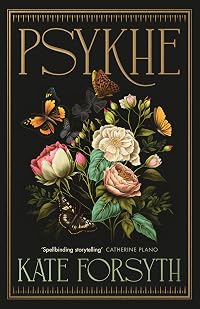
Psykhe
by Kate Forsyth
On This Page
Description
Psykhe has always been different. Fair as Venus, the goddess of love, and with the hard-won ability to save the lives of those of mortal blood, she is both shunned and revered. When she unwittingly provokes Venus, she and her sisters lose everything. Psykhe must find a way to make amends and support her family. Befriended by an old woman, Nokturna, Psykhe finds herself irresistibly drawn to her young friend, Ambrose. But neither is what they seem. For Psykhe has fallen in love with a man show more whose face she is forbidden to see. After disobeying this injunction, she must risk everything to try to save him, even if it means travelling down to the shadowy Underworld to face Proserpina, queen of the dead. The way to the realm of the dead is easy. A thrust of a sword, a sudden fall, a careless bite of toadstool, and the soul is sucked away. It is the return journey that is difficult... The story of Psyche and Eros has been told for more than two-and-a-half thousand years. Kate Forsyth infuses it with new vigour as a life-affirming celebration of female strength, sexual desire, and empowerment. show lessTags
Recommendations







Member Reviews
Having a relatively poor knowledge of Greek and Roman mythology, I was a little concerned when I picked up Psykhe by Kate Forsyth. It's a fictional re-telling of the Greek Godess Psyche and Cupid and I was worried I might end up lost in the narrative or missing references I couldn't place due to my lack of background in the classics.
Kate Forsyth is a favourite Australian author of mine and I should have trusted she would make her tale accessible to those familiar with ancient mythology and those relatively new to it.
Set in Italy, our protagonist introduces herself on the first page by recounting her dramatic birth. Born with the umbilical cord wrapped around her neck and appearing blue and all but dead, her mother's midwife blew air show more into her lungs and brought her back to life:
"So I was named Psykhe, which means breath and soul and butterfly, words having many meanings. Only gods die and return to this world alive. So as I grew into girlhood, many people began to think I too must be divine." Page 3
It's clear by the second page that Psykhe has albinism and it was interesting to read an historical fiction novel featuring a main character with the physical traits of albinism; white hair, low vision and extremely sensitive skin which can burn and blister in the sun. It's a topic that has interested me for years and you can read my review of Beyond the Pale - Folklore, Family and the Mystery of Our Hidden Genes by Emily Urquhart for more on albinism in history although I suspect there are better books on the topic.
I can't comment on how Psykhe having albinism compares to the original myth, however I did find it a stretch to believe that an albino woman would be considered a great beauty at the time. Usually albinism is accompanied by fears of curses, dark forces or magic.
Psykhe learns the healing properties of herbs and plants and becomes a midwife, also drawing attention to herself as a potential witch. These early years are where the book excels and it's clear the author loves writing about potions and tonics and the many uses for plants known at the time.
Psykhe's relationship with a cruel and absent father highlighted the complete lack of agency she and her sisters experience as young girls and later young women. Psykhe falls in love with an immortal, referred to as Cupid or Eros in ancient mythology and a romance ensues.
When introducing the Vestal Virgins of Rome - which I just learned about watching Those About to Die with Anthony Hopkins - the author describes the Roman temple:
"The round temple to Vesta, where virgins dressed in white tended the everlasting flame of the goddess of the hearth. Taken when only children, they would never know the touch of a man's hand, the deep kiss of desire, the swelling of a child in their womb, the suck of a babe on their breast." Page 103
Readers familiar with Greek and Roman mythology may have issue with some of the author's choices in the novel but I don't know my history well enough to pass judgement. I did find several elements a bit of a stretch (a caesarian section, mouth to mouth resuscitation and the albinism) but largely enjoyed the narrative. While unconvinced by the romance element, I enjoyed the challenges presented by loving a mortal, the supernatural and fantasy elements and the lengths Psykhe goes to for love; including her quest to the underworld.
Psykhe by Kate Forsyth is a feminist re-telling that will appeal to lovers of mythology, fantasy, romantasy and historical fiction. show less
Kate Forsyth is a favourite Australian author of mine and I should have trusted she would make her tale accessible to those familiar with ancient mythology and those relatively new to it.
Set in Italy, our protagonist introduces herself on the first page by recounting her dramatic birth. Born with the umbilical cord wrapped around her neck and appearing blue and all but dead, her mother's midwife blew air show more into her lungs and brought her back to life:
"So I was named Psykhe, which means breath and soul and butterfly, words having many meanings. Only gods die and return to this world alive. So as I grew into girlhood, many people began to think I too must be divine." Page 3
It's clear by the second page that Psykhe has albinism and it was interesting to read an historical fiction novel featuring a main character with the physical traits of albinism; white hair, low vision and extremely sensitive skin which can burn and blister in the sun. It's a topic that has interested me for years and you can read my review of Beyond the Pale - Folklore, Family and the Mystery of Our Hidden Genes by Emily Urquhart for more on albinism in history although I suspect there are better books on the topic.
I can't comment on how Psykhe having albinism compares to the original myth, however I did find it a stretch to believe that an albino woman would be considered a great beauty at the time. Usually albinism is accompanied by fears of curses, dark forces or magic.
Psykhe learns the healing properties of herbs and plants and becomes a midwife, also drawing attention to herself as a potential witch. These early years are where the book excels and it's clear the author loves writing about potions and tonics and the many uses for plants known at the time.
Psykhe's relationship with a cruel and absent father highlighted the complete lack of agency she and her sisters experience as young girls and later young women. Psykhe falls in love with an immortal, referred to as Cupid or Eros in ancient mythology and a romance ensues.
When introducing the Vestal Virgins of Rome - which I just learned about watching Those About to Die with Anthony Hopkins - the author describes the Roman temple:
"The round temple to Vesta, where virgins dressed in white tended the everlasting flame of the goddess of the hearth. Taken when only children, they would never know the touch of a man's hand, the deep kiss of desire, the swelling of a child in their womb, the suck of a babe on their breast." Page 103
Readers familiar with Greek and Roman mythology may have issue with some of the author's choices in the novel but I don't know my history well enough to pass judgement. I did find several elements a bit of a stretch (a caesarian section, mouth to mouth resuscitation and the albinism) but largely enjoyed the narrative. While unconvinced by the romance element, I enjoyed the challenges presented by loving a mortal, the supernatural and fantasy elements and the lengths Psykhe goes to for love; including her quest to the underworld.
Psykhe by Kate Forsyth is a feminist re-telling that will appeal to lovers of mythology, fantasy, romantasy and historical fiction. show less
Ratings
Members
- Recently Added By
Author Information

64+ Works 9,561 Members
She is an Australian author who is well known for her historical novel Bitter Greens, which won the Historical Fiction category on the American Literary Association 2015 Reading List. She is the author of several children's books including The Gypsy Crown, The Puzzle Ring, The Starthorn Tree, The Wildkin's Curse, The Starkin Crown, and Dragon show more Gold. She has also published two heroic fantasy series, The Witches of Eileanan and Rhiannon's Ride, the poetry collection Radiance, and the novel Full Fathom Five under her maiden name, Kate Humphrey. Her more recent books include Vasilisa the Wise and Tales of Other Brave Young Women, and The Silver Well, which won the 2017 Aurealis Award for the best Australian collection. (Bowker Author Biography) show less
Common Knowledge
- People/Characters
- Psykhe; Ambrose
- Important places
- Rome, Italy
Classifications
Statistics
- Members
- 49
- Popularity
- 612,954
- Reviews
- 1
- Rating
- (4.17)
- Languages
- English
- Media
- Paper, Audiobook, Ebook
- ISBNs
- 6
- ASINs
- 1