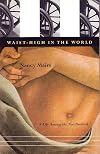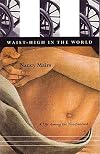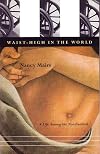
Waist-High in the World: A Life Among the Nondisabled
by Nancy Mairs
On This Page
Description
In a blend of intimate memoir and passionate advocacy, Nancy Mairs takes on the subject woven through all her writing: disability and its effect on life, work, and spirit.Tags
Recommendations










Member Reviews
We disagree on so much. The connection between mind & body (she is her body; I am not, and that’s a religious statement as much as a statement of current physical realitites). She doesn’t speak for me — and she doesn’t claim to! She says, specifically, she only writes about herself!
... but we’re held together under the same rickety, tattered umbrella of “disabled” (or “crippled”, if you prefer). So it doesn’t matter that we’re different; we’re the same in the ways it matters.
Her description of cripples as dealing more or less courageously to their lives, with a minimum or lack of self-pity, is ... not true to my personal experience. to put it mildly. Is this because my disabilities are invisible? undiagnosed show more (i’m still trying)? because i’m routinely told i’m making things up? Hmm.
Suicide (euthanasia) is, she says, kinda rude. Why would someone “not want to be a burden” when caring for others is such a joyful act? You’re basically giving your family a gift!!
Well.
There is a definite preference for the cheerfully disabled, the ones who don’t complain and whine but “just get on with it”, as she says, “because you have to.”
Of course you don’t have to. There is always a choice, sometimes even more than one. And though she calls suicide to be a failure to consider the options (have you tried -not- being chronically ill?), she’s wrong: it’s okay to choose something bad for you. It’s okay to eat nothing but chocolate for the rest of your life. It’s okay to date the wrong men. It is okay to decide that you’re sick of the whole goddamn thing and you want to end it. The choice is what matters. show less
... but we’re held together under the same rickety, tattered umbrella of “disabled” (or “crippled”, if you prefer). So it doesn’t matter that we’re different; we’re the same in the ways it matters.
Her description of cripples as dealing more or less courageously to their lives, with a minimum or lack of self-pity, is ... not true to my personal experience. to put it mildly. Is this because my disabilities are invisible? undiagnosed show more (i’m still trying)? because i’m routinely told i’m making things up? Hmm.
Suicide (euthanasia) is, she says, kinda rude. Why would someone “not want to be a burden” when caring for others is such a joyful act? You’re basically giving your family a gift!!
Well.
There is a definite preference for the cheerfully disabled, the ones who don’t complain and whine but “just get on with it”, as she says, “because you have to.”
Of course you don’t have to. There is always a choice, sometimes even more than one. And though she calls suicide to be a failure to consider the options (have you tried -not- being chronically ill?), she’s wrong: it’s okay to choose something bad for you. It’s okay to eat nothing but chocolate for the rest of your life. It’s okay to date the wrong men. It is okay to decide that you’re sick of the whole goddamn thing and you want to end it. The choice is what matters. show less
A different approach to the standard disabled biography. Nancy Mairs is very blunt, and at times shocking in her honesty. Her point of view is less that of a person with MS, and more from the approach of a women living life from a wheelchair. I appreciate her blunt appraisal and the various affects of an obvious disability while living life.
A lot of other books refer to this book as the authoritative book in the biographies-of-people-with-MS category, and I think I went into it with above-average expectations due to this. The first few chapters almost had me putting it away, but it redeemed itself in the later chapters. I'm not sure there was anything about it that really bothered me, it just wasn't above-average like I went into it expecting. A fairly good, if inconsistent, MS-related-biograpy.
Ratings
Members
- Recently Added By
Author Information
11+ Works 815 Members
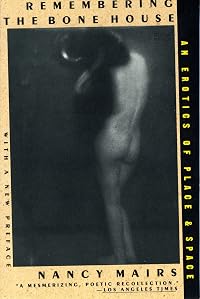
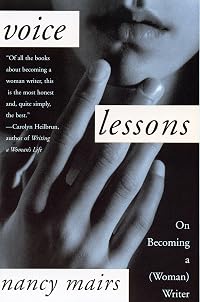
Nancy Mairs was born Nancy Pedrick Smith in Long Beach, California on July 23, 1943. She received a bachelor's degree from Wheaton College in 1964. She worked as a publications editor for the Smithsonian Astrophysical Observatory in Cambridge and the International Tax Program at Harvard Law School. She received an M.F.A. in poetry in 1975 and a show more doctorate in English in 1983 from the University of Arizona. Her dissertation was published as Plaintext: Deciphering a Woman's Life in 1986. In her late 20s, she suffered from agoraphobia and depression and once attempted suicide. Soon afterward, she was diagnosed with multiple sclerosis. She wrote several memoirs including Remembering the Bone-House: An Erotics of Place and Space, Carnal Acts, Ordinary Time: Cycles in Marriage, Faith and Renewal, Voice Lessons: On Becoming a (Woman) Writer, Waist-High in the World: A Life Among the Nondisabled, and A Dynamic God: Living an Unconventional Catholic Faith. She also published two collections of poetry entitled Instead It Is Winter and In All the Rooms of the Yellow House. In 2001, she wrote A Troubled Guest: Life and Death Stories. She died on December 3, 2016 at the age of 73. (Bowker Author Biography) show less
Common Knowledge
- Original title
- Tuesdays with Morrie: An Old Man, a Young Man, and Life's Greatest Lesson
- Original publication date
- 1996
- Epigraph
- There is only one question: how to love this world. --Mary Oliver "Spring"
- Dedication
- for Andrew Hrycyna enabler par excellence
- First words
- I cannot begin to write this book.
- Quotations
- For some reason, at any rate, the English attitude seens to be that infirmity, in and of itself, deserves compensation and solicitude. In the States, these is nothing meritorious about affliction. On the contrary, it is deeme... (show all)d shameful and at least a little suspect, as though one had become crippled on purpose and must be given as little consideration as possible lest one be tempted to suffer even more.
Classifications
- Genres
- Nonfiction, Biography & Memoir, General Nonfiction
- DDC/MDS
- 362.1 — Society, government, & culture Social problems and social services Social Welfare People with physical illnesses
- LCC
- RC377 .M25 — Medicine Internal medicine Internal medicine Neurosciences. Biological psychiatry. Neuropsychiatry Neurology. Diseases of the nervous system
- BISAC
Statistics
- Members
- 190
- Popularity
- 172,354
- Reviews
- 3
- Rating
- (3.91)
- Languages
- English
- Media
- Paper, Ebook
- ISBNs
- 6
- UPCs
- 1
- ASINs
- 2