On This Page
Description
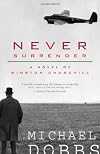
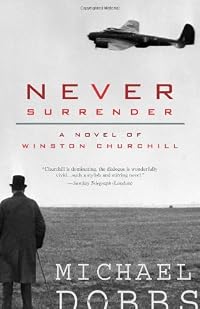
From Michael Dobbs, author of the book that inspired the smash hit Netflix series House of Cards, Never Surrender finds newly-elected Prime Minister Winston Churchill in a personal confrontation with Adolf Hitler. The battle begins on Friday, May 10, 1940, when Hitler launches a devastating attack that within days will overrun France, Holland and Belgium and bring Britain to its knees at Dunkirk. Never Surrender examines Churchill's courage and defiance and his ability to lead a nation show more during three of the most crucial weeks in its history. Without the physical forces necessary to stave off German attack, Churchill uses the force of words to stand in Hitler's way, to show that no accords will be made. show lessTags
Recommendations



















Member Reviews
This is the second book of Michael Dobbs' tetralogy based on Winston Churchill and his leadership in the period beginning with the 1938 Munich agreement and culminating with the eventual Allied victory over Nazi Germany. Never Surrender focuses on the brief period of time from Chruchill's accession to the position of Prime Minister through the evacuation of British and French troops from Dunkirk in early June 1940. In addition to the historical figures, Dobbs, tells his story through the words and deeds of fictitious characters, in particular a German emigre named Ruth Mueller and a father and son, Henry Chichester, an Anglican vicar based in Dover who is estranged from his son Donald, and who is undergoing a crisis of faith. Don, in show more turn, is a conscientious objector serving in an ambulance corps shipped off to Belgium. We follow Don's "progress" from advancing with the British Expeditionary Force through its retreat back into France ending up on the beaches of Dunkirk.
Ruth Mueller plays an unlikely role as a sometime volunteer research assistant to Churchill who is caught up in a round-up of German emigres of all political stripes and interned on the Isle of Man. In between she is Churchill's conscience, coach, and critic who taunts Churchill with unflattering comparisons with Hitler yet bolsters his resolve in the many moments of despair when everything goes wrong and Churchill's resolve to continue the fight to the end regardless of consequences is severely tested.
Along the way we are treated to an ongoing dialogue between Churchill and his late father, Randolph, whom the son could never please, wherein Churchill asks time and again for advice from Randolph's portrait on what he should do. I thought the father/son conflict between the Churchills a little over the top, but it does provide a neat parallel with the conflict between the vicar and his C.O. son.
Among the more prominent usual suspects are Joseph Kennedy, the defeatist American ambassador, Edward Halifax, the Foreign Minister, who pushes hard for entering into a negotiated peace via the mediation of Mussolini; Rab Butler, Chips Channon, Jock Colville all acolytes of Neville Chamberlain, who believe that Churchill 's ego and romantic world view is going to lead the country to its total ruin, and who believe that the collapse of the Belgian and French armies combined with the disastrous evacuation of the BEF will lead to Churchill's replacement by Halifax and a negotiated peace that will preserve Britain's independence and some measure of empire in return for recognizing Hitler's hegemony over Europe.
Dobbs illustrates the moral corruption of the privileged classes by contrasting the hardships of the common people and the suffering of the troops with the sumptuous meals enjoyed by the elites at their exclusive clubs (and consumed by Churchill in his office and at his home) and the efforts by the elites to spend money on luxury goods based on the assumption that the British pound's value would collapse along with the collapse of Britain's military.
Dobbs' narrative benefits from giving the appeasers their own voice and their best arguments which Churchill has to counter and not always successfully. We have the advantage of hindsight, but who can say for sure that in that time and under those circumstances we would not have subscribed to the thesis of Halifax and supported a negotiated peace in the name of survival.
Dobbs is a terrific storyteller who has written a gripping page turner in Never Surrender that I highly recommend. show less
Ruth Mueller plays an unlikely role as a sometime volunteer research assistant to Churchill who is caught up in a round-up of German emigres of all political stripes and interned on the Isle of Man. In between she is Churchill's conscience, coach, and critic who taunts Churchill with unflattering comparisons with Hitler yet bolsters his resolve in the many moments of despair when everything goes wrong and Churchill's resolve to continue the fight to the end regardless of consequences is severely tested.
Along the way we are treated to an ongoing dialogue between Churchill and his late father, Randolph, whom the son could never please, wherein Churchill asks time and again for advice from Randolph's portrait on what he should do. I thought the father/son conflict between the Churchills a little over the top, but it does provide a neat parallel with the conflict between the vicar and his C.O. son.
Among the more prominent usual suspects are Joseph Kennedy, the defeatist American ambassador, Edward Halifax, the Foreign Minister, who pushes hard for entering into a negotiated peace via the mediation of Mussolini; Rab Butler, Chips Channon, Jock Colville all acolytes of Neville Chamberlain, who believe that Churchill 's ego and romantic world view is going to lead the country to its total ruin, and who believe that the collapse of the Belgian and French armies combined with the disastrous evacuation of the BEF will lead to Churchill's replacement by Halifax and a negotiated peace that will preserve Britain's independence and some measure of empire in return for recognizing Hitler's hegemony over Europe.
Dobbs illustrates the moral corruption of the privileged classes by contrasting the hardships of the common people and the suffering of the troops with the sumptuous meals enjoyed by the elites at their exclusive clubs (and consumed by Churchill in his office and at his home) and the efforts by the elites to spend money on luxury goods based on the assumption that the British pound's value would collapse along with the collapse of Britain's military.
Dobbs' narrative benefits from giving the appeasers their own voice and their best arguments which Churchill has to counter and not always successfully. We have the advantage of hindsight, but who can say for sure that in that time and under those circumstances we would not have subscribed to the thesis of Halifax and supported a negotiated peace in the name of survival.
Dobbs is a terrific storyteller who has written a gripping page turner in Never Surrender that I highly recommend. show less
Winston Churchill was done no favor when he was named Prime Minister in May of1940 just hours before Adolph Hitler’s invasion of Belgium, Holland and France. As the world watched in horror, Hitler’s army marched through those countries with surprising ease and pushed Britain’s forces to the coast at Dunkirk where they seemed to be trapped like fleeing rats. Never Surrender tells the story of what turned out to be one of the most important three weeks of the twentieth century. It was during those dark days that Churchill almost single-handedly managed to keep his government from suing for peace with Hitler even when it appeared that his country would soon have no army or air force left with which to fight.
Michael Dobbs portrays a show more Winston Churchill who at times seems to succeed in spite of himself. Despite his bouts of depression, his drinking habits and the fact that most of his colleagues were convinced that he was already a failure, Churchill gave his countrymen the will to defy Hitler when it seemed near impossible that their resistance could ever succeed. The Winston Churchill of Never Surrender is a man filled with self-doubt, a man who still craves the approval of his long dead father, and a man who is willing to do whatever is necessary to save his beloved country. If he has to lie to his fellow ministers and staff, he will do it. If he has to ask thousands of men to sacrifice their lives in a hopeless battle to win time for others to escape Hitler’s trap, he will do that. He understands, even if only a few others do, that negotiating with Adolph Hitler is the same as surrender, and he will never surrender.
But there is more to Never Surrender than Winston Churchill. Dobbs uses side stories and characters to further detail what was happening at all levels of British society during those crucial days. There are Don Chichester, a young conscientious objector and orderly with the British army in France and his Anglican vicar father who considers him to be a coward for not taking up arms against the enemy. There is Ruth Mueller, a German refugee and Hitler biographer, who has fled to England after being sickened by what has become of her own country, and who becomes an unofficial adviser to Churchill about what makes Adolph Hitler tick. There is even Joseph Kennedy, U.S. ambassador to Britain, who watches smugly, and almost hopefully, as Churchill’s options become fewer and fewer, a man willing to mislead President Roosevelt despite the consequences.
Never Surrender is a suspenseful account of what one man achieved despite obstacles that would have stopped most men in their tracks. Faced with obstinate military leaders who would not follow orders, defeatist ministers who were ready to quit the fight, and self-doubts of his own, Churchill was still able to defy Hitler and to rescue more than three hundred thousand men from the beaches of Dunkirk, men who would live to fight another day. The world was lucky that Winston Churchill came along when he did. Michael Dobbs has done a remarkable job in explaining just how lucky.
Rated at: 4.0 show less
Michael Dobbs portrays a show more Winston Churchill who at times seems to succeed in spite of himself. Despite his bouts of depression, his drinking habits and the fact that most of his colleagues were convinced that he was already a failure, Churchill gave his countrymen the will to defy Hitler when it seemed near impossible that their resistance could ever succeed. The Winston Churchill of Never Surrender is a man filled with self-doubt, a man who still craves the approval of his long dead father, and a man who is willing to do whatever is necessary to save his beloved country. If he has to lie to his fellow ministers and staff, he will do it. If he has to ask thousands of men to sacrifice their lives in a hopeless battle to win time for others to escape Hitler’s trap, he will do that. He understands, even if only a few others do, that negotiating with Adolph Hitler is the same as surrender, and he will never surrender.
But there is more to Never Surrender than Winston Churchill. Dobbs uses side stories and characters to further detail what was happening at all levels of British society during those crucial days. There are Don Chichester, a young conscientious objector and orderly with the British army in France and his Anglican vicar father who considers him to be a coward for not taking up arms against the enemy. There is Ruth Mueller, a German refugee and Hitler biographer, who has fled to England after being sickened by what has become of her own country, and who becomes an unofficial adviser to Churchill about what makes Adolph Hitler tick. There is even Joseph Kennedy, U.S. ambassador to Britain, who watches smugly, and almost hopefully, as Churchill’s options become fewer and fewer, a man willing to mislead President Roosevelt despite the consequences.
Never Surrender is a suspenseful account of what one man achieved despite obstacles that would have stopped most men in their tracks. Faced with obstinate military leaders who would not follow orders, defeatist ministers who were ready to quit the fight, and self-doubts of his own, Churchill was still able to defy Hitler and to rescue more than three hundred thousand men from the beaches of Dunkirk, men who would live to fight another day. The world was lucky that Winston Churchill came along when he did. Michael Dobbs has done a remarkable job in explaining just how lucky.
Rated at: 4.0 show less
2nd in the series of four books about Winston Churchill's war. My review of Book 1 "Winston's War" is apposite. Dobbs does a good job of filling in gaps for the reader who starts with Book 2, but reading Book 1 first makes sense. This series is no mere hagiograph of Churchill. Dobbs gives him to us warts and all. The book ends with the evacuation of Dunkirk and there also Dobbs avoids the popular view of Dunkirk as some kind of success. The fictional characters that Dobbs invents give us the nitty-gritty and awfulness of the war. Now onto Book 3...
THe second in Dobbs' series taking a brief period in Churchill's life during the War and showing the intrigue and problems he faced whilst giving the broader context.
It seemed to me well researched and whilst it may have put extra 'spin' on the lack of support from Halifax, Kennedy and others, I am sure that they were difficult to handle.
The relationship with the memory of Churchill's father seemed over-played to me.
It seemed to me well researched and whilst it may have put extra 'spin' on the lack of support from Halifax, Kennedy and others, I am sure that they were difficult to handle.
The relationship with the memory of Churchill's father seemed over-played to me.
A novel, and I am not too keen on fiction even though this is based on fact, but it perhaps gives a feel for the beginning of the war and Churchill's character.
just finished it. loved it!
amazing insight into what Churchill did and why (both the good and the bad). can't wait for the next book
amazing insight into what Churchill did and why (both the good and the bad). can't wait for the next book
Members
- Recently Added By
Author Information

26+ Works 3,608 Members
Born in 1948 Michael Dobb was Chief of Staff and later Deputy Chairman of the Conservative Party. He has a doctorate in nuclear defense studies. Dobbs has also been Deputy Chairman of Saatchi & Saatchi, he presented the BBC TV current affairs program Despatch Box and was a columnist for The Mail on Sunday. Dobbs recently penned the hugely show more acclaimed theatre play, 'The Turning Point'. He is also the author of the Harry Jones Thrillers, Churchill Novels, and the Parliamentary Novels Series. The immensely popular Netflix series House of Cards is based on book 1 of the Parliamentary Novels by the same name. Michael became Lord Dobbs of Wylye in December 2010 after a long career in and around politics. (Bowker Author Biography) show less
Some Editions
Series

Common Knowledge
- Canonical title
- Never Surrender
- Original publication date
- 2003
- People/Characters
- Winston Spencer Chrurchill; Edward F. L. Wood, Viscount Halifax; Joseph P. Kennedy, Sr.; George VI, King of the United Kingdom
- Important places
- London, England, UK; Calais, Pas-de-Calais, Hauts-de-France, France; Dunkirk, Nord, Hauts-de-France, France
- Important events
- World War II (1939 | 1945)
Classifications
Statistics
- Members
- 222
- Popularity
- 146,375
- Reviews
- 7
- Rating
- (3.73)
- Languages
- English
- Media
- Paper, Audiobook, Ebook
- ISBNs
- 14
- UPCs
- 1
- ASINs
- 6