On This Page
Description
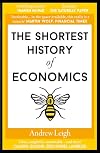
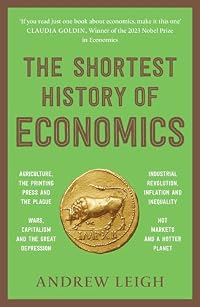
This small book tells a big story. From ancient times to the modern world, The Shortest History of Economics unearths the hidden economic forces behind war, innovation and social transformation. It traces how capitalism and the market system emerged, and introduces the key ideas and people who shaped the discipline of economics.Tags
Recommendations








Member Reviews
I’m not sure it’s a good way to start this book review, but I have to say I don’t know who this book is aimed at. Maybe that’s just me - I didn’t even understand when I picked it up that it’s part of a series of “The Shortest History of…” books.
So, anyway, I was expecting a walk through the history of economic ideas from time immemorial until now, with, maybe weighty end chapters on Marxism and Capitalism (in capital letters) to cap it off. After all, the introduction starts off with the words “In prehistoric times…”. And I do love history. So, that’s about all I read, other than the blurb on the back of the book, before I decided to buy it, and walked up to the counter with my purchase in hand.
Now you should show more know that this purchase falls into the “bored in the airport before a long flight and want something to read” category. Books that fall into that category, for me at least, tend to be hit or miss.
In fact, on my last few trips I’ve taken to surreptitiously taking a picture of book covers and walking out to mull over what interested me about a book and doing a little online research back at my seat at the gate before making a final decision to buy or not to buy. I did NOT do that with this book. After all, it is the SHORTEST history, so I reasoned that even if it’s bad I’ll know quickly enough so at least I wouldn’t be putting hours into an unsatisfactory read.
The other thing about airport book purchases is that I've learned I probably won’t actually read the book I purchase while I’m on the plane. Blame that on airline in-flight entertainment systems. They've gotten really good. Screens have gotten bigger, and the offerings of movies and TV shows are extensive enough that there’s always something (or a few somethings) available that I have been meaning to watch. I end up spending the majority of my time entertained in that way rather than cracking open the cover of my purchase. That is what happened with this book - it got set aside only to be picked up months later in the comfort of my own home.
I’m sorry this review has turned into an essay on airport book purchases.
Getting back to where I began - I’m not sure who the “target audience” is for this book. It’s not really the history I was expecting, let’s just say that. It’s more a collection of essays illustrating one or another facet of economics.
And each chapter is short - 10 to 20 pages (and these are not-quite-trade-paperback sized pages with a good-sized font). The author, of necessity, makes his point really quickly and then it’s on to the next thing. The book bounces around enough that you wonder if it’s going to hold the interest of any reader who overcame the perhaps unwelcome notion of reading a book about the history or economics in the first place. No matter how short.
Now, after everything that’s come so far, I’m sure you think I’m going to say I hated this book. But it’s actually quite good. I especially liked the very short chapter on Bretton Woods, the famous conference that set the ground rules for the global economic order post-WW II. In that chapter the author tells the story of Bill Phillips, a New Zealand economist who “working in his landlady’s garage” built “a hydraulic model of the economy” using, of all things, water pumps. What Phillips initially thought of as a teaching aid turned out to be a practical way to model money flows based on changes in policy. There is apparently still one of these machines in use today at the University of Cambridge.
So, while there’s a lot in this book an old fogey like me already knew about economics, there are new-to-me and interesting tidbits like that throughout that made for an entertaining read, at least as entertaining as a history of economics can be. Is anyone else going to be so entertained? I still can’t say for sure who, but at this point I suspect there are others out there, like me, who would enjoy the read.
One other thing. Turns out the author is both a professor of economics and a member of the Australian Parliament. I’m glad to know that there is somewhere in the world where a member of the government is simultaneously able to be a professional professorial politico, and also able to dash off a short, entertaining book like this one — on what’s usually a weighty topic. As the Aussies say - good on him. show less
So, anyway, I was expecting a walk through the history of economic ideas from time immemorial until now, with, maybe weighty end chapters on Marxism and Capitalism (in capital letters) to cap it off. After all, the introduction starts off with the words “In prehistoric times…”. And I do love history. So, that’s about all I read, other than the blurb on the back of the book, before I decided to buy it, and walked up to the counter with my purchase in hand.
Now you should show more know that this purchase falls into the “bored in the airport before a long flight and want something to read” category. Books that fall into that category, for me at least, tend to be hit or miss.
In fact, on my last few trips I’ve taken to surreptitiously taking a picture of book covers and walking out to mull over what interested me about a book and doing a little online research back at my seat at the gate before making a final decision to buy or not to buy. I did NOT do that with this book. After all, it is the SHORTEST history, so I reasoned that even if it’s bad I’ll know quickly enough so at least I wouldn’t be putting hours into an unsatisfactory read.
The other thing about airport book purchases is that I've learned I probably won’t actually read the book I purchase while I’m on the plane. Blame that on airline in-flight entertainment systems. They've gotten really good. Screens have gotten bigger, and the offerings of movies and TV shows are extensive enough that there’s always something (or a few somethings) available that I have been meaning to watch. I end up spending the majority of my time entertained in that way rather than cracking open the cover of my purchase. That is what happened with this book - it got set aside only to be picked up months later in the comfort of my own home.
I’m sorry this review has turned into an essay on airport book purchases.
Getting back to where I began - I’m not sure who the “target audience” is for this book. It’s not really the history I was expecting, let’s just say that. It’s more a collection of essays illustrating one or another facet of economics.
And each chapter is short - 10 to 20 pages (and these are not-quite-trade-paperback sized pages with a good-sized font). The author, of necessity, makes his point really quickly and then it’s on to the next thing. The book bounces around enough that you wonder if it’s going to hold the interest of any reader who overcame the perhaps unwelcome notion of reading a book about the history or economics in the first place. No matter how short.
Now, after everything that’s come so far, I’m sure you think I’m going to say I hated this book. But it’s actually quite good. I especially liked the very short chapter on Bretton Woods, the famous conference that set the ground rules for the global economic order post-WW II. In that chapter the author tells the story of Bill Phillips, a New Zealand economist who “working in his landlady’s garage” built “a hydraulic model of the economy” using, of all things, water pumps. What Phillips initially thought of as a teaching aid turned out to be a practical way to model money flows based on changes in policy. There is apparently still one of these machines in use today at the University of Cambridge.
So, while there’s a lot in this book an old fogey like me already knew about economics, there are new-to-me and interesting tidbits like that throughout that made for an entertaining read, at least as entertaining as a history of economics can be. Is anyone else going to be so entertained? I still can’t say for sure who, but at this point I suspect there are others out there, like me, who would enjoy the read.
One other thing. Turns out the author is both a professor of economics and a member of the Australian Parliament. I’m glad to know that there is somewhere in the world where a member of the government is simultaneously able to be a professional professorial politico, and also able to dash off a short, entertaining book like this one — on what’s usually a weighty topic. As the Aussies say - good on him. show less
Ratings
Members
- Recently Added By
Lists

Library Non-Fiction
157 works; 1 member
Author Information
35 Works 486 Members
Andrew Leigh teaches Classics at Winchester College, UK.
Series

Classifications
Statistics
- Members
- 56
- Popularity
- 544,641
- Reviews
- 1
- Rating
- (3.83)
- Languages
- English
- Media
- Paper, Ebook
- ISBNs
- 7