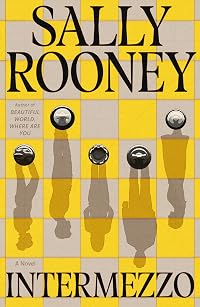
Intermezzo
by Sally Rooney
On This Page
Description
Brothers Peter and Ivan Koubek seemingly have little in common. Peter is a Dublin lawyer in his thirties - successful, competent and apparently unassailable. But in the wake of their father's death, he's medicating himself to sleep and struggling to manage his relationships with two very different women - his enduring first love Sylvia, and Naomi, a college student for whom life is one long joke. Ivan is a twenty-two-year-old competitive chess player. He has always seen himself as socially show more awkward, a loner, the antithesis of Peter. Now, in the early weeks of his bereavement, Ivan meets Margaret, an older woman emerging from her own turbulent past, and their lives become rapidly and intensely intertwined. For the brothers, this is a new interlude - a period of desire, despair and possibility - a chance to find out how much one life might hold inside itself without breaking. show lessTags
Recommendations

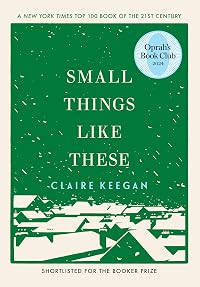
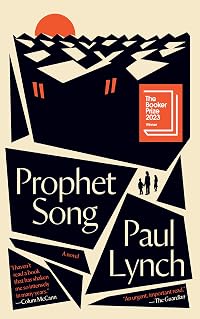
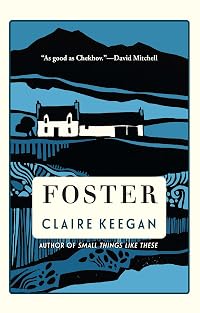
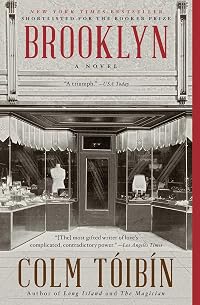
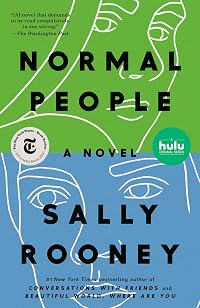
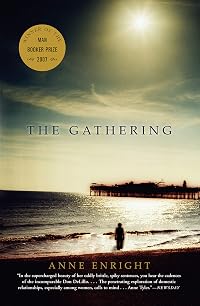
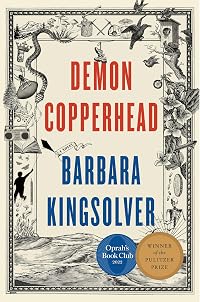
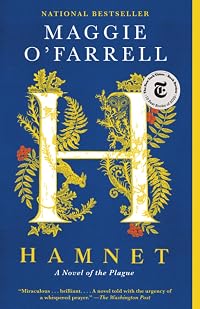

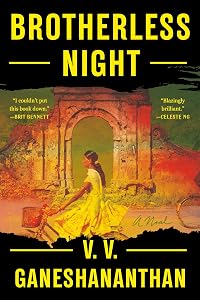
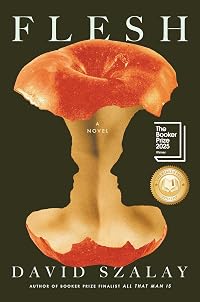

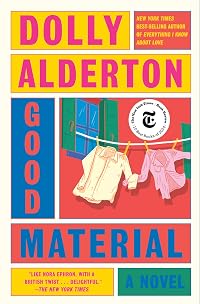
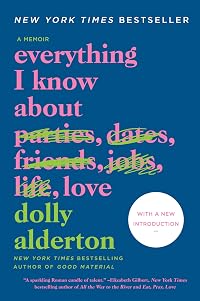
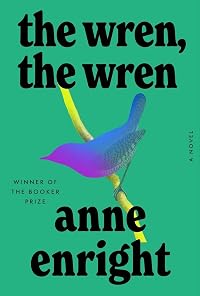
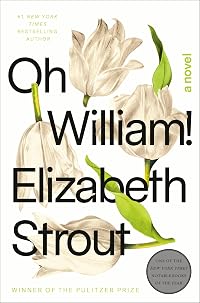
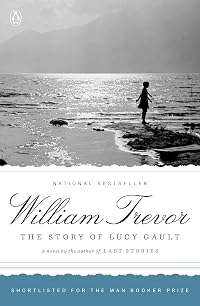
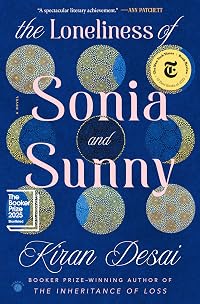
Member Recommendations

JuliaMaria Die Liebe einer Frau zu einem wesentlich jüngeren Mann oder umgekehrt: eines jungen Mannes zu einer älteren Frau
JuliaMaria Krankheit, Freundschaft und Liebe
Member Reviews
I had planned to finish this book over the next couple of days. Then my GR friend Derek finished it and reviewed it and I could not keep myself away. Instead of putting the finishing touches on a presentation I need to give tomorrow I hunkered down this evening and listened to this audiobook for three hours straight. I may regret this tomorrow, but right now I do not regret it in the least.
This is just so good. I have felt on the edge of tears for days, even when I was not reading this I was thinking about it, and worrying about every character I met. I am a Sally Rooney reader of long-standing. I liked Rooney's first two books well enough (I actually thought both streaming series were better than the books, and that is rare for me) but show more there was a self-consciousness that I thought kept them from being fantastic. I saw great promise, especially in her spectacularly good craft, and her palpable love for characters who were often not easy to love. One place I thought that Normal People and Conversations With Friends fell down a bit was that they tried too hard to make everyone edgy all the time. Some of the time we watched the the characters perform edginess, and that I thought was an authentic, insightful and wise way to portray artsy students at an elite college. Other times though there was no wink and nod and to me it just read like the young Ms. Rooney performing the edginess. I mention all of this because Sally has done grown up. She is now writing true people about whom she has a moving and true story to tell, and she does not care if you think she is not cool enough. That is just fine with her.
The action here revolves around two brothers, Peter and Ivan, ten years apart in age, and as different as chalk and cheese. The book begins after the death of the brothers' kind but weak and somewhat hapless father. A good deal of this book is about grief and trauma, and I found it made an interesting companion to Long Island Compromise, which until now was my book of the year (and is now maybe tied) which covered the same core subject, trauma response and unprocessed grief, though from an American Jewish perspective rather than an Irish Catholic perspective.
Peter and his mother are perhaps like that prior version of Sally Rooney who wrote Normal People and Conversations With Friends. They are both trying to be people they think others will look at with envy, or at least admiration. Peter is perhaps most like my imagined version of Rooney, a handsome barrister with impeccable taste in food/clothing/books, etc given to erudite conversation that show off his education and his impeccable politics. He pals around with his posh, well-traveled friends and pretends to be one of them, though he was raised decidedly middle-class by an immigrant father and a largely absent mother who is obsessed with being the well put-tegetehr suburban trophy wife. But as is often the case with people who live to impress others, Peter has a secret life and he is not a terribly happy man. In that he is not alone, there is a lot of unhappiness to go around here. This book looks at diving into the quicksand (whether one wants to or not the quicksand will find you) and maybe how to pull yourself out (or maybe not.) It also touches on how destructive it is to need to appear be right all the time, and to believe that there is always a right way to be. An important message at this historical moment.
I am just mad for this book. I loved and adored the last Rooney book, Beautiful World Where Are You, but this is even better. This book is messier, more sensual, and somehow fleshier -- it is like when you get comfortable kissing first thing in the morning without sneaking out to brush your teeth first. And speaking of kissing, this book is far more sexual than past books. I mean all the books are quite sexual, but mostly in the other books people talk about having sex and analyze the having of sex (there are exceptions, there are actual sex scenes in the other books too of course) but these sex scenes are, well, sexier. A lot of the sex here is part of love, emerging or established love and that love and sex (both) are antidotes, or at least bandaids, that lessen the sadness and dissonance these characters all feel. I usually hate depictions of the sex act in quality literature. I am a romance reader and have been known to enjoy straight-up erotica and think sex can be written very well, just generally not by very literary writers. I adore John Updike, but every time he puts sex on the page I reconsider abstinence as a valid life choice. And Nicholson Baker's Vox was off-puting in the way the smell of the inside of a long unwashed dumpster is off-putting. This though? It was good.
In every possible way, this is a great book. Go Sally!
Last note, the audiobook narrator, Eanna Hardwicke, was fantastic.
*** If anyone who was at my presentation (the one tomorrow) reads this and thought my presentation was subpar, blame Derek -- it is all the fault of his great review!
26 likes show less
This is just so good. I have felt on the edge of tears for days, even when I was not reading this I was thinking about it, and worrying about every character I met. I am a Sally Rooney reader of long-standing. I liked Rooney's first two books well enough (I actually thought both streaming series were better than the books, and that is rare for me) but show more there was a self-consciousness that I thought kept them from being fantastic. I saw great promise, especially in her spectacularly good craft, and her palpable love for characters who were often not easy to love. One place I thought that Normal People and Conversations With Friends fell down a bit was that they tried too hard to make everyone edgy all the time. Some of the time we watched the the characters perform edginess, and that I thought was an authentic, insightful and wise way to portray artsy students at an elite college. Other times though there was no wink and nod and to me it just read like the young Ms. Rooney performing the edginess. I mention all of this because Sally has done grown up. She is now writing true people about whom she has a moving and true story to tell, and she does not care if you think she is not cool enough. That is just fine with her.
The action here revolves around two brothers, Peter and Ivan, ten years apart in age, and as different as chalk and cheese. The book begins after the death of the brothers' kind but weak and somewhat hapless father. A good deal of this book is about grief and trauma, and I found it made an interesting companion to Long Island Compromise, which until now was my book of the year (and is now maybe tied) which covered the same core subject, trauma response and unprocessed grief, though from an American Jewish perspective rather than an Irish Catholic perspective.
Peter and his mother are perhaps like that prior version of Sally Rooney who wrote Normal People and Conversations With Friends. They are both trying to be people they think others will look at with envy, or at least admiration. Peter is perhaps most like my imagined version of Rooney, a handsome barrister with impeccable taste in food/clothing/books, etc given to erudite conversation that show off his education and his impeccable politics. He pals around with his posh, well-traveled friends and pretends to be one of them, though he was raised decidedly middle-class by an immigrant father and a largely absent mother who is obsessed with being the well put-tegetehr suburban trophy wife. But as is often the case with people who live to impress others, Peter has a secret life and he is not a terribly happy man. In that he is not alone, there is a lot of unhappiness to go around here. This book looks at diving into the quicksand (whether one wants to or not the quicksand will find you) and maybe how to pull yourself out (or maybe not.) It also touches on how destructive it is to need to appear be right all the time, and to believe that there is always a right way to be. An important message at this historical moment.
I am just mad for this book. I loved and adored the last Rooney book, Beautiful World Where Are You, but this is even better. This book is messier, more sensual, and somehow fleshier -- it is like when you get comfortable kissing first thing in the morning without sneaking out to brush your teeth first. And speaking of kissing, this book is far more sexual than past books. I mean all the books are quite sexual, but mostly in the other books people talk about having sex and analyze the having of sex (there are exceptions, there are actual sex scenes in the other books too of course) but these sex scenes are, well, sexier. A lot of the sex here is part of love, emerging or established love and that love and sex (both) are antidotes, or at least bandaids, that lessen the sadness and dissonance these characters all feel. I usually hate depictions of the sex act in quality literature. I am a romance reader and have been known to enjoy straight-up erotica and think sex can be written very well, just generally not by very literary writers. I adore John Updike, but every time he puts sex on the page I reconsider abstinence as a valid life choice. And Nicholson Baker's Vox was off-puting in the way the smell of the inside of a long unwashed dumpster is off-putting. This though? It was good.
In every possible way, this is a great book. Go Sally!
Last note, the audiobook narrator, Eanna Hardwicke, was fantastic.
*** If anyone who was at my presentation (the one tomorrow) reads this and thought my presentation was subpar, blame Derek -- it is all the fault of his great review!
26 likes show less
Some time ago, I reviewed a book by Elisabeth Strout and called her the Sally Rooney for boomers. I acknowledge the limitations of that comparison, but after reading this book by Rooney, I still stand by it, even in the reverse sense: Rooney as the Elisabeth Strout for Millennials.
Both introduce rather insignificant protagonists, average men and women—boomers in Strout’s case, teenagers and twenty-somethings in Rooney’s, although in this novel it also shifts towards thirty-somethings. In both Strout’s and Rooney’s work, the stories do not develop through action, but through dialogue—conversations about the problems of life and, above all, about the relationships between people; conversations that sometimes proceed awkwardly show more and haltingly, and in which, above all, much is left unsaid. And finally, both Strout and Rooney focus on the complexities of human interaction—people with their own backgrounds and characters, often carrying a heavy burden (even when they are still very young), struggling with the social conventions of the community in which they find themselves, and above all, not always able to express themselves aptly.
Because of the focus on that struggle, their novels have a strikingly reflective character: we are almost constantly inside the protagonists' heads and follow their laborious, confused musings closely. Naturally, there are differences, but I think the success of both Strout and Rooney can be attributed to their relatability, the fact that they both very accurately portray the struggles of the contrasting generations.
This is also the case in this, Rooney's third major novel. As I indicated earlier, the generation of her protagonists shifts slightly: now three thirty-somethings with a bit more life experience also appear, although Rooney continues to draw a link to the younger generation. At the center are two brothers, Peter and Ivan Koubek, sons of an Eastern European migrant and an Irish mother—two very different characters, two different lifestyles, one seemingly more successful than the other. But as might be expected: appearances are deceiving.
As in Rooney’s previous novels, the female characters feel a bit too constructed to serve the purpose of their interactions with the two brothers. This is particularly the case with Naomi, Peter’s young mistress; his former girlfriend Sylvia is also not entirely convincing. However, Margaret, the much older friend of Ivan, is a successful character in terms of complexity.
Ultimately, for all these characters, and for their interactions with one another, it revolves around their insecurity and their enormous need for affection, the need to be liked and loved. That sounds lame and soft, but I suspect that Rooney’s relatability is precisely this aspect.
Perhaps my rating is a bit flattering, but this novel did appeal to me, partly because some passages (such as the first chapter) are really skillfully executed from a literary-technical perspective. It was just that sappy ending, when everything seemingly appears resolved, that I struggled with a bit. Of course, it is emotionally moving, but for me, it leans just a little too much towards a Hollywood finale. show less
Both introduce rather insignificant protagonists, average men and women—boomers in Strout’s case, teenagers and twenty-somethings in Rooney’s, although in this novel it also shifts towards thirty-somethings. In both Strout’s and Rooney’s work, the stories do not develop through action, but through dialogue—conversations about the problems of life and, above all, about the relationships between people; conversations that sometimes proceed awkwardly show more and haltingly, and in which, above all, much is left unsaid. And finally, both Strout and Rooney focus on the complexities of human interaction—people with their own backgrounds and characters, often carrying a heavy burden (even when they are still very young), struggling with the social conventions of the community in which they find themselves, and above all, not always able to express themselves aptly.
Because of the focus on that struggle, their novels have a strikingly reflective character: we are almost constantly inside the protagonists' heads and follow their laborious, confused musings closely. Naturally, there are differences, but I think the success of both Strout and Rooney can be attributed to their relatability, the fact that they both very accurately portray the struggles of the contrasting generations.
This is also the case in this, Rooney's third major novel. As I indicated earlier, the generation of her protagonists shifts slightly: now three thirty-somethings with a bit more life experience also appear, although Rooney continues to draw a link to the younger generation. At the center are two brothers, Peter and Ivan Koubek, sons of an Eastern European migrant and an Irish mother—two very different characters, two different lifestyles, one seemingly more successful than the other. But as might be expected: appearances are deceiving.
As in Rooney’s previous novels, the female characters feel a bit too constructed to serve the purpose of their interactions with the two brothers. This is particularly the case with Naomi, Peter’s young mistress; his former girlfriend Sylvia is also not entirely convincing. However, Margaret, the much older friend of Ivan, is a successful character in terms of complexity.
Ultimately, for all these characters, and for their interactions with one another, it revolves around their insecurity and their enormous need for affection, the need to be liked and loved. That sounds lame and soft, but I suspect that Rooney’s relatability is precisely this aspect.
Perhaps my rating is a bit flattering, but this novel did appeal to me, partly because some passages (such as the first chapter) are really skillfully executed from a literary-technical perspective. It was just that sappy ending, when everything seemingly appears resolved, that I struggled with a bit. Of course, it is emotionally moving, but for me, it leans just a little too much towards a Hollywood finale. show less
Intermezzo is my third Sally Rooney and my favourite so far – a mesmerising, slow read as I found myself locked inside the heads of the Koubek brothers, Peter and Ivan, 10 years apart in age, worlds apart in character and personality but united in grieving the loss of their father.
The truncated, disjointed and chaotic narrative writing style took a bit of getting used to but reflected the confusion, turmoil and innermost thoughts of both brothers perfectly, particularly Peter, who became the key character for me. I felt his moments of unbearable pain and anguish, euphoria and hope, guilt and responsibility; lived his complex relationships with ex-girlfriend and best friend Sylvia, with new girlfriend and wild child Naomi, with chess show more genius yet awkward and socially inept younger brother Ivan.
Where Peter had me balancing on a knife edge and emotionally drained, Ivan melted my heart. His meeting and developing relationship with older, married Margaret was beautifully written; the sea, the cottage, the countryside (and Alexei the dog) easy to picture.
Denial, anger, bargaining, depression and acceptance – an interlude.
I wasn’t ready to leave Peter and Ivan, Sylvia, Naomi and Margaret at the end – Sally Rooney, tell us what happens next! show less
The truncated, disjointed and chaotic narrative writing style took a bit of getting used to but reflected the confusion, turmoil and innermost thoughts of both brothers perfectly, particularly Peter, who became the key character for me. I felt his moments of unbearable pain and anguish, euphoria and hope, guilt and responsibility; lived his complex relationships with ex-girlfriend and best friend Sylvia, with new girlfriend and wild child Naomi, with chess show more genius yet awkward and socially inept younger brother Ivan.
Where Peter had me balancing on a knife edge and emotionally drained, Ivan melted my heart. His meeting and developing relationship with older, married Margaret was beautifully written; the sea, the cottage, the countryside (and Alexei the dog) easy to picture.
Denial, anger, bargaining, depression and acceptance – an interlude.
I wasn’t ready to leave Peter and Ivan, Sylvia, Naomi and Margaret at the end – Sally Rooney, tell us what happens next! show less
Sally Rooney's new novel follows two brothers separated by ten years and a growing estrangement, as their relationship with each other and the women in their lives changes. Peter, the older brother, is outwardly highly successful as a human rights solicitor, but he's a mess. He's taking far too many drugs, both licit and illegal, and his personal life is divided between his college sweetheart, who ended their physical relationship after an accident left her in chronic pain, and his decade-younger girlfriend, a college student living in a squat and relying on him and her OnlyFans for her money. And Ivan, the younger brother, was deeply affected by their parents's divorce, by being unwelcome in his mother's new family and then by his show more father's death, which opens this book. He's was a chess prodigy but his career has stalled out, and he feels his abilities are failing. He is well-known enough in Irish chess circles to appear in provincial towns and it's through one of those appearances that he meets a divorced woman in her mid-thirties and they begin a relationship where the reservations are all Margaret's.
Once again, Rooney has written a novel focusing on the romantic relationships and social issues of a small group of people. This one is tightly focused on a relatively short span of time, and remains tightly focused on the points-of-view of three of the characters. Each character's voice is different and Rooney is a master of creating initially unsympathetic characters and situations and slowly drawing out the nuances and mitigating factors until the reader's attitudes are challenged and their mind is changed. I read this book at the beginning of November, during a stressful week that included the election and a family member in the hospital and this was the one book that could pull me into its world, despite me not liking either brother very much at the beginning of the book. show less
Once again, Rooney has written a novel focusing on the romantic relationships and social issues of a small group of people. This one is tightly focused on a relatively short span of time, and remains tightly focused on the points-of-view of three of the characters. Each character's voice is different and Rooney is a master of creating initially unsympathetic characters and situations and slowly drawing out the nuances and mitigating factors until the reader's attitudes are challenged and their mind is changed. I read this book at the beginning of November, during a stressful week that included the election and a family member in the hospital and this was the one book that could pull me into its world, despite me not liking either brother very much at the beginning of the book. show less
The title (as defined: a short connecting instrumental movement in an opera or other musical work or a short piece of music for a solo instrument) is apt for this novel of connections and solos. It's very very VERY wordy, and since the plot and characters are engrossing, it's the words that get in the way. Peter and Ivan, brothers with twelve years between, react very differently to the death of their father. Peter, the older brother, a successful lawyer, could not see his father's kindness and devotion as worthy. Ivan, a ranked chess player who appears to have a mild form of autism, had lived with his father and was quite dependent on him. Their reactions to loss cause a deeper chasm between. Ivan meets Margaret, who is Peter's age, show more and, at 22, falls in love for the first time. Margaret, divorced from an alcoholic husband, is concerned about her reputation in the small town and understandably nervous about being abandoned by Ivan as she ages. Ivan only cares about how good he feels when they are together. Peter's long term girlfriend Sylvia had been in a terrible (unexplained) accident that leaves her in intense daily pain and unable to continue their prior perfect coupledom. Peter meets Naomi, who is younger than he is by the same number of years that Margaret is older than Ivan, and who is dependent on Peter for financial and sexual support. Eventually all the tension between all five culminates in a tentatively satisfying ending. I liked this one the least of her novels so far, but Rooney is, as expected, most insightful on relationships, although Sylvia and Naomi are only seen through third person, which is probably a good idea! Hearing all five voices would be deafening and the book would be a brick. show less
I have often joked that Western lit can be divided into two kinds of books: those about lonely men, and those about awesome women.
Here, have both:
The lonely brothers, both wildly successful, starkly intelligent, and emotionally stunted. They'd rather sulk and fight than speak honestly about their feelings.
Not two but three awesome women to try to heal them and help them reach their potential. Which, of course they do.
Where the plot struggles to surprise, the performance carries. The audiobook narrated by Éanna Hardwicke is a masterclass in the various tenors and implications of the word "Hmm." The things that the characters do not say to each other shines through like a second language of non-committal responses.
Deeply indebted to show more Ulysses' stream of conscious narration and to Shakespeare encyclopedic vocabulary, the brothers' refreshingly distinguishable internal monologues are the novel's soul and it's propulsive force.
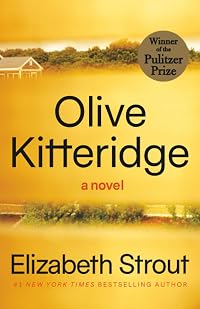
A can't put it down family drama. I'd put it on the shelf with Tomorrow and Tomorrow and Tomorrow, and with Olive Ketteridge. One of the best I've read this year. show less
Here, have both:
The lonely brothers, both wildly successful, starkly intelligent, and emotionally stunted. They'd rather sulk and fight than speak honestly about their feelings.
Not two but three awesome women to try to heal them and help them reach their potential. Which, of course they do.
Where the plot struggles to surprise, the performance carries. The audiobook narrated by Éanna Hardwicke is a masterclass in the various tenors and implications of the word "Hmm." The things that the characters do not say to each other shines through like a second language of non-committal responses.
Deeply indebted to show more Ulysses' stream of conscious narration and to Shakespeare encyclopedic vocabulary, the brothers' refreshingly distinguishable internal monologues are the novel's soul and it's propulsive force.
A can't put it down family drama. I'd put it on the shelf with Tomorrow and Tomorrow and Tomorrow, and with Olive Ketteridge. One of the best I've read this year. show less
Zero patience for this depressive and depressing author. Zero. Maybe I’m just too old, but I doubt I would like her work even if I were younger. Her gloomy, sad-sack characters with their ugly lives and her fragmentary writing style are not for me.
I don’t understand the attention Rooney receives. I’ve tried three of her novels and have never succeeded in getting far in a single one. I understood that Intermezzo was supposed to be different. It wasn’t—for me, at least. Aversion therapy has not been successful.
I don’t understand the attention Rooney receives. I’ve tried three of her novels and have never succeeded in getting far in a single one. I understood that Intermezzo was supposed to be different. It wasn’t—for me, at least. Aversion therapy has not been successful.
Members
- Recently Added By
Lists

Books recommended by Barack Obama
295 works; 28 members

Library ebooks and electronic audio books
52 works; 1 member

Obama Reads
181 works; 3 members

LoanStars | Adult List: September 2024
10 works; 2 members

2024
34 works; 1 member

Books Read in 2024
4,623 works; 126 members

Spotted in Public
9 works; 1 member

Books Read in 2025
4,091 works; 97 members

Top Five Books of 2025
954 works; 303 members

el
1,139 works; 1 member

The Five Books That Represent Us
391 works; 148 members
Author Information

24+ Works 21,904 Members
Sally Rooney is a writer, born in 1991, based in Dublin. Her work has appeared in the New Yorker, Granta, The White Review, The Dublin Review, The Stinging Fly, Kevin Barry's Stonecutter and The Winter Page anthology. Her first book, Conversations with Friends, was published in 2017. It won the Sunday Times/PFD Young Writer of the Year Award. Her show more next book, Normal People, was published in 2018 and won the 2018 Costa Prize for Best New Novel. (Bowker Author Biography) show less
Some Editions
Awards and Honors
Common Knowledge
- Canonical title
- Intermezzo
- Original publication date
- 2024
- People/Characters
- Peter Koubek; Iwan Koubek; Claire; Margaret; Naomi
- Important places*
- Dublin, Ireland
- Epigraph
- Aber fühlst du nicht jetzt den Kummer? („Aber spielst du nicht jetzt Schach?“
But don't you feel grief now ('But aren't you now playing chess?')
-Ludwig Wittgenstein,
Phil... (show all)osophical Investigations - First words
- Didn't seem fair on the young lad.
- Quotations*
- Manchmal stelle ich mir vor, was ich sagen könnte, aber dann stelle ich mir vor, wie langweilig es für die anderen wäre, und ich behalte es für mich.
- Last words
- (Click to show. Warning: May contain spoilers.)Go on in any case living.
*Some information comes from Common Knowledge in other languages. Click "Edit" for more information.
Classifications
Statistics
- Members
- 2,712
- Popularity
- 6,830
- Reviews
- 64
- Rating
- (3.89)
- Languages
- 13 — Catalan, Dutch, English, Finnish, French, German, Italian, Polish, Portuguese, Serbian, Spanish, Swedish, Turkish
- Media
- Paper, Audiobook, Ebook
- ISBNs
- 56
- ASINs
- 10