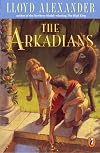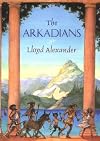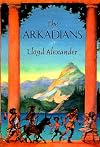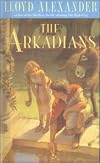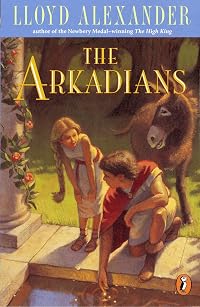
The Arkadians
by Lloyd Alexander 
On This Page
Description
To escape the wrath of the king and his wicked soothsayers, an honest young man joins with a poet-turned-jackass and a young girl with mystical powers on a series of epic adventures.Tags
Recommendations
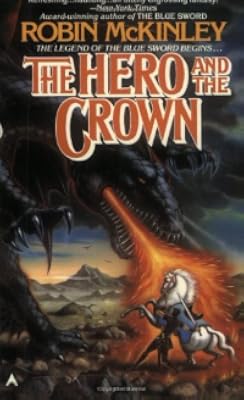
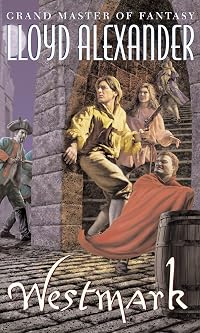
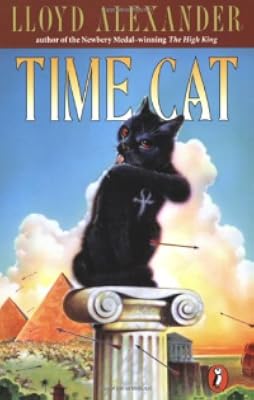
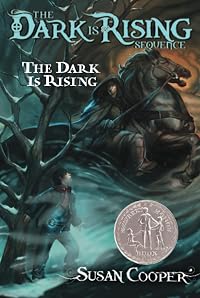


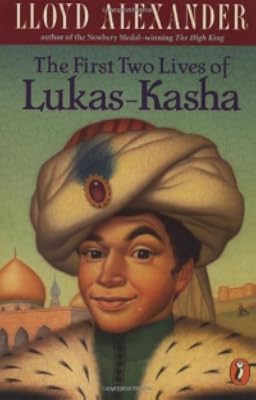
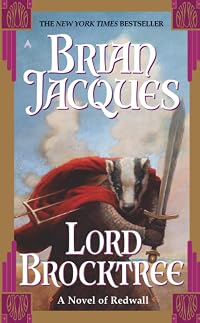
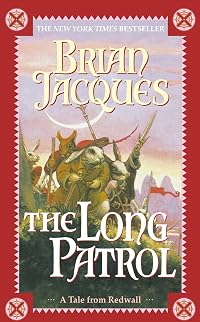
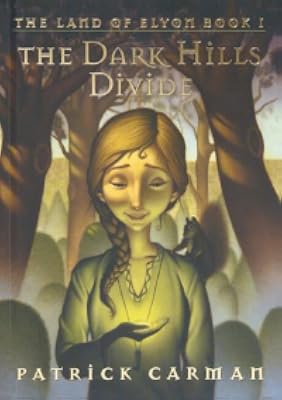
Member Recommendations
Member Reviews
Lloyd Alexander is best known for his outstanding Chronicles of Prydain fantasy series. And deservedly so; it's a great series, charming, unique, and with a powerful and moving sense of morality to it. It is, in many ways, a Lord of the Rings for the young-teen set.
For those who aren't familiar with Alexander, I should emphasize that he wrote most of his work before the modern craze for huge fantasy series and juvenile fantasy series (in both senses of the word "juvenile"). His work is far superior to most of the trash that's published as fantasy for young adults (or even full-fledged adults) today.
Alexander has a very strong and unmistakable writing style. This is, generally a strength. But in some - not all, but some of his other show more books, the style doesn't fit the story as well as it does in The Chronicles of Prydain. Put simply, while I'd rate that series as a "5" overall, most of his other works would be a "4" or "3" (I have yet to run across a book by Alexander that I'd rate less than a "3").
I picked up a copy of The Arkadians at the permanent book sale at our library. I didn't expect much; it's a stand-alone book, and the blurb on the back showed that it was based at least partly on Greek mythology, rather than the Welsh mythology which is Alexander's strongest suit.
I was pleasantly surprised. The Arkadians is strongly influenced by Greek mythology, yes, but with an enjoyable skew. The adventures of Lucian the one-time accountant on the run for his life, and of the friends he meets along the way - particularly Fronto, the poet who has been transformed into an ass, and Joy-In-The-Dance, a strong-willed young woman with unusual abilities - echo many elements of Greek mythology, but throughout Fronto and Lucian discuss "improving" them into forms much closer to the classic Greek tales.
But that's beside the point. The point is that the story is well-told, and exciting, and funny, and touching, all at the right moments and in the right places. The one place where it might fall down, slightly, is the last few paragraphs; the story draws to a close surprisingly quickly, and somehow with less emotion than I expected. But this is a minor point. All in all, The Arkadians is a very enjoyable story that reads easily and well, a strong four. I will certainly read it again. show less
For those who aren't familiar with Alexander, I should emphasize that he wrote most of his work before the modern craze for huge fantasy series and juvenile fantasy series (in both senses of the word "juvenile"). His work is far superior to most of the trash that's published as fantasy for young adults (or even full-fledged adults) today.
Alexander has a very strong and unmistakable writing style. This is, generally a strength. But in some - not all, but some of his other show more books, the style doesn't fit the story as well as it does in The Chronicles of Prydain. Put simply, while I'd rate that series as a "5" overall, most of his other works would be a "4" or "3" (I have yet to run across a book by Alexander that I'd rate less than a "3").
I picked up a copy of The Arkadians at the permanent book sale at our library. I didn't expect much; it's a stand-alone book, and the blurb on the back showed that it was based at least partly on Greek mythology, rather than the Welsh mythology which is Alexander's strongest suit.
I was pleasantly surprised. The Arkadians is strongly influenced by Greek mythology, yes, but with an enjoyable skew. The adventures of Lucian the one-time accountant on the run for his life, and of the friends he meets along the way - particularly Fronto, the poet who has been transformed into an ass, and Joy-In-The-Dance, a strong-willed young woman with unusual abilities - echo many elements of Greek mythology, but throughout Fronto and Lucian discuss "improving" them into forms much closer to the classic Greek tales.
But that's beside the point. The point is that the story is well-told, and exciting, and funny, and touching, all at the right moments and in the right places. The one place where it might fall down, slightly, is the last few paragraphs; the story draws to a close surprisingly quickly, and somehow with less emotion than I expected. But this is a minor point. All in all, The Arkadians is a very enjoyable story that reads easily and well, a strong four. I will certainly read it again. show less
To escape the wrath of the king and his wicked soothsayers, an honest young man joins forces with a poet-turned-jackass and a young girl with mystical powers as they embark on a series of epic adventures through the land of Arkadia.
This tale of three friends (a boy, a girl, and a poet turned into a donkey) borrows tales from the Iliad and Odyssey, and turns them into something new and exciting. The friends are off to save a kingdom, save a religion, and turn the poet human again (before he's a permanent donkey). Lucian and Joy-in-the-Dance are also falling in love and finding themselves.
I'd forgotten how wry Alexander can be and how delightful his characters are. I'm glad this came up at a good time for a revisit.
Alexander's whimsical story-telling voice is as strong as ever, but the plot and mythic elements did not move me in the way his other works have.
I felt the re-imagining of traditional tales in this context to be pleasant enough, but it didn't add to my experience, or draw out the spark I was hoping for.
I felt the re-imagining of traditional tales in this context to be pleasant enough, but it didn't add to my experience, or draw out the spark I was hoping for.
Lloyd Alexander is an author I have always enjoyed. This is one of his lesser known books and while it is not my favorite of his it is still quite good. His writing style is such that it definitely stands up to the test of time.
Alexander did so much better with other mythologies. This book is relatively insubstantial and only occasionally funny.
Members
- Recently Added By
Lists

Favorite Childhood Books
1,646 works; 517 members
Author Information

95+ Works 55,646 Members
Lloyd Alexander, January 30, 1924 - May 17, 2007 Born Lloyd Chudley Alexander on January 30, 1924, in Philadelphia, Pennsylvania to Allan Audley and Edna Chudley Alexander, Lloyd knew from a young age that he wanted to write. He was reading by the time he was 3, and though he did poorly in school, at the age of fifteen, he announced that he wanted show more to become a writer. At the age of 19 in 1942, Alexander dropped out of the West Chester State Teachers College in Pennsylvania after only one term. In 1943, he attended Lafayette College in Easton, PA, before dropping out again and joining the United States Army during World War II. Alexander served in the Intelligence Department, stationed in Wales, and then went on to Counter-Intelligence in Paris, where he was promoted to Staff Sergeant. When the war ended in '45, Alexander applied to the Sorbonne, but returned to the States in '46, now married. Alexander worked as an unpublished writer for seven years, accepting positions such as cartoonist, advertising copywriter, layout artist, and associate editor for a small magazine. Directly after the war, he had translated works for such artists as Jean Paul Sartre. In 1955, "And Let the Credit Go" was published, Alexander's first book which led to 10 years of writing for an adult audience. He wrote his first children's book in 1963, entitled "Time Cat," which led to a long career of writing for children and young adults. Alexander is best known for his "Prydain Chronicles" which consist of "The Book of Three" in 1964, "The Black Cauldron" in 1965 which was a Newbery Honor Book, as well as an animated motion picture by Disney which appeared in 1985, "The Castle of Llyr" in 1966, "Taran Wanderer" in 1967, a School Library Journal's Best Book of the Year and "The High King" which won the Newberry Award. Many of his other books have also received awards, such as "The Fortune Tellers," which was a Boston Globe Horn Book Award winner. In 1986, Alexander won the Regina Medal for Lifetime Achievement from the Catholic Library Association. His titles have been translated into many languages including, Dutch, Spanish, French, German, Hebrew, Italian, Japanese, Norwegian, Serbo-Croation and Swedish. He died on May 17, 2007. (Bowker Author Biography) show less
Lloyd Alexander has a Legacy Library. Legacy libraries are the personal libraries of famous readers, entered by LibraryThing members from the Legacy Libraries group.
Some Editions
Awards and Honors
Awards
Distinctions
Work Relationships
Is contained in
Common Knowledge
- Canonical title
- The Arkadians
- Original publication date
- 1995
- People/Characters
- Lucian; Joy-in-the-Dance; Fronto; Ops; Bromios; Lady of Wild Things (show all 11); Oudeis; Catch-a-Tick; See-Far-Ahead; Phobos; Calchas
- Important places
- Arkadia
- Dedication
- For hopeful storytellers and fond listeners
- First words
- This is the tale of a jackass and a young bean counter, a girl of marvels and mysteries, horsemen swift as wind, Goat Folk, Daughters of Morning, voyages, tempests, terrors, disasters.
- Last words
- (Click to show. Warning: May contain spoilers.)As the ship sailed from the harbor, the Daughters of Morning began a song of farewell, and the melody hung shimmering in the air long afterward.
- Original language
- English
Classifications
- Genres
- Fiction and Literature, Kids, Tween, Fantasy
- DDC/MDS
- 818 — Literature & rhetoric American literature in English American miscellaneous writings in English
- LCC
- PZ7 .A3774 .A — Language and Literature Fiction and juvenile belles lettres Fiction and juvenile belles lettres Juvenile belles lettres
- BISAC
Statistics
- Members
- 860
- Popularity
- 31,562
- Reviews
- 12
- Rating
- (3.80)
- Languages
- Danish, English, Swedish
- Media
- Paper, Audiobook, Ebook
- ISBNs
- 14
- ASINs
- 6