The Final Diagnosis
by Arthur Hailey
On This Page
Description
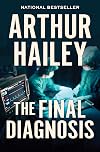
The classic medical novel from #1 New York Times-bestselling author Arthur Hailey takes readers behind the scenes of a great hospital. Change is in the air when a new board chairman sets out to modernize and expand Three Counties Hospital in Burlington, Pennsylvania - a once venerable institution whose standards have slipped. Dynamic Dr. Kent O'Donnell, a Harvard Medical School-trained surgeon, accepts the board's offer to lead and reform the rundown, disorganized hospital because he wants show more to make his mark on the world. As medical-board president, O'Donnell faces his greatest challenge in Dr. Joe Pearson, Three Counties' elderly head pathologist. Once an excellent diagnostician, Pearson is now out of touch with the latest research and procedures in laboratory medicine. But if the hospital lets the imperious doctor go, it risks losing an important benefactor's financial support. Arthur Hailey's fascinating, dramatic, and scrupulously researched story reveals both the professional, personal, and romantic aspects of an administrator-surgeon's life, as well as the tragedies and moments of joy that occur every day in a hospital - a place where life often begins and ends. show lessTags
Recommendations































Member Reviews
I had never read any of Hailey's umpty-million books until I picked up this BookCrossing release. As a novel I give it a “high average” score. I enjoyed it, but was also shocked by it in a way I’m sure the author did not intend.
First things first: This is a medical thriller, with layers of suspenseful subplots that all reach their greatest tension at the same time — a neat trick. It would have worked even better if Hailey hadn’t slipped into prose, late in the book, that sounds like it should be intoned by Charlton Heston in a beard and nightgown:
What have we built here? O’Donnell searched his mind. Is it, in truth, a place of healing? Or have we raised, in folly, a whited sepulcher — an empty, antiseptic shrine?
I show more enjoyed the book’s antiquity: It was published in 1959, so characters ask the local operator to place a call to New York (“Thank you, New York”). The nurses have to live in the “nurse's home,” a dormitory with a curfew. The doctors all pause now and again to light a cigarette and draw the smoke gratefully into their lungs. (It’s still five years until the Surgeon-General’s famous report.)
But here’s what shocked me.
He asked a girl clerk behind the desk, “Which technicians are free?”
She consulted a list. “There’s Jane or Mr. Firban.”
“I think we’ll have Firban do this one. . . .” [208]
Get it? Women in this novel are “girls” who are addressed by their first names. Men are men, and they get a “Mr.” This is true throughout the book: Even a senior surgeon, the only woman on staff, is called “Lucy” (’though I’ll admit she’s at least never called a “girl doctor”).
But what makes this stuff shocking (not just abhorrent) is that it’s also clear that the author is trying his darndest to be modern and to write strong, intelligent, progressive women characters. He even writes little lectures on the subject. Here’s one:
He knew, too, that difference in sex had little to do with it, that women were often stouter than men in mind and heart, and that apparent masculinity was sometimes a hollow pose designed to camouflage internal weakness. [234]
Well and good. Yet Hailey’s strong women, unlike his men, are still subject to incapacitating fits of emotion. And what scares me is, I suspect he’s not just making it up, and that women really were socialized this way, believing it was “natural” to go physically weak with desire for a man — much as women of an earlier era learned to faint, to really lose consciousness, at moments of social stress.
Then there’s the feminine intelligence à la Hailey. We find that an expectant mother, praised by her doctor as “an intelligent girl,” is actually a ponderous thinker. We can tell this because Hailey lets us listen to her thoughts. Here’s how the passage ends: She smiled at that. She guessed she really was intelligent. After all, she had proved she still possessed her old classroom ability to understand and memorize. Then she told herself: Don’t be smug; besides, it’s a baby you’re having, not an end-of-semester exam.
I probably ought to give Hailey some credit for being a good observer. Mrs. John Alexander’s thought process, just cited, is of a kind that was routine in the 1950s and is still with us today. I know because of my mother’s testimony. She was in college then, being trained to understand that girls, no matter how intelligent in their way, did not enter certain professions such as engineering. Who did she think she was, after all — some kind of girl genius? An Alice Einstein? A man?
When I finished the book, I had to give my mother a call. show less
First things first: This is a medical thriller, with layers of suspenseful subplots that all reach their greatest tension at the same time — a neat trick. It would have worked even better if Hailey hadn’t slipped into prose, late in the book, that sounds like it should be intoned by Charlton Heston in a beard and nightgown:
What have we built here? O’Donnell searched his mind. Is it, in truth, a place of healing? Or have we raised, in folly, a whited sepulcher — an empty, antiseptic shrine?
I show more enjoyed the book’s antiquity: It was published in 1959, so characters ask the local operator to place a call to New York (“Thank you, New York”). The nurses have to live in the “nurse's home,” a dormitory with a curfew. The doctors all pause now and again to light a cigarette and draw the smoke gratefully into their lungs. (It’s still five years until the Surgeon-General’s famous report.)
But here’s what shocked me.
He asked a girl clerk behind the desk, “Which technicians are free?”
She consulted a list. “There’s Jane or Mr. Firban.”
“I think we’ll have Firban do this one. . . .” [208]
Get it? Women in this novel are “girls” who are addressed by their first names. Men are men, and they get a “Mr.” This is true throughout the book: Even a senior surgeon, the only woman on staff, is called “Lucy” (’though I’ll admit she’s at least never called a “girl doctor”).
But what makes this stuff shocking (not just abhorrent) is that it’s also clear that the author is trying his darndest to be modern and to write strong, intelligent, progressive women characters. He even writes little lectures on the subject. Here’s one:
He knew, too, that difference in sex had little to do with it, that women were often stouter than men in mind and heart, and that apparent masculinity was sometimes a hollow pose designed to camouflage internal weakness. [234]
Well and good. Yet Hailey’s strong women, unlike his men, are still subject to incapacitating fits of emotion. And what scares me is, I suspect he’s not just making it up, and that women really were socialized this way, believing it was “natural” to go physically weak with desire for a man — much as women of an earlier era learned to faint, to really lose consciousness, at moments of social stress.
Then there’s the feminine intelligence à la Hailey. We find that an expectant mother, praised by her doctor as “an intelligent girl,” is actually a ponderous thinker. We can tell this because Hailey lets us listen to her thoughts. Here’s how the passage ends: She smiled at that. She guessed she really was intelligent. After all, she had proved she still possessed her old classroom ability to understand and memorize. Then she told herself: Don’t be smug; besides, it’s a baby you’re having, not an end-of-semester exam.
I probably ought to give Hailey some credit for being a good observer. Mrs. John Alexander’s thought process, just cited, is of a kind that was routine in the 1950s and is still with us today. I know because of my mother’s testimony. She was in college then, being trained to understand that girls, no matter how intelligent in their way, did not enter certain professions such as engineering. Who did she think she was, after all — some kind of girl genius? An Alice Einstein? A man?
When I finished the book, I had to give my mother a call. show less
This book sucked me in. It is about a large hospital's inner workings and the many professionals it takes to run it. The challenges run from pathology procedures that can cause a patient to lose a limb or an infant's death to the frantic search for an asymptomatic typhoid carrier. The complex characters are wonderful—some strong and sure of themselves, others still searching for their place in the system. They all have their own goals and expectations, yet find a way to work together to treat patients and save lives. Heartbreaking at times, this story is full of choices, disappointments, and hope. It will keep you riveted to the last page.
Written in 1959 The Final Diagnosis brings the reader into the world of hospital administration and pathology six decades ago. Asides from the absence of modern technology there are a few tell tale signs that the book is 60 years old and set in such a time; thing such as people smoking within the hospital in pathology, the morgue and cafeteria, the cardboard fecal sample cups, a new doctor landing at the airport in a Vickers Viscount, long distance phone calls needing to be done through the operator, people sending telegrams - that being said, asides for these handful of things and the rather obvious absence of modern technology if one stops to consider the atmosphere the book still is relevant and enthralling.
The way Hailey ties show more together events building towards a ending where they all combine into one event makes for a compelling story and whilst some may say the senior staff member who's anti-social is a bit of a cliche I found the writing carried such a character well, especially as the story evolved.
Definitely one to pick up if you enjoy Hailey novels / medical novels. show less
The way Hailey ties show more together events building towards a ending where they all combine into one event makes for a compelling story and whilst some may say the senior staff member who's anti-social is a bit of a cliche I found the writing carried such a character well, especially as the story evolved.
Definitely one to pick up if you enjoy Hailey novels / medical novels. show less
This has all that one expects from an Arthur Hailey book - deep insights into the workings of an industry, this time a big hospital, as well as into the minds and hearts of the people involved. There is a bit of everything in this novel - suspense, drama, romance, comedy, tragedy - all put together in an engaging narrative that holds the attention of the reader. I had a good time reading it and, as usual with Hailey's works, came out with a little bit more knowledge about the healthcare industry.
A thrilling read set in the world of 1950s American hospitals and their power relationships. The reader is invited to explore how they would cope with being married to a disabled person.
Even though it is an old story and much medical advancements have taken place since then, it offers a fascinating insight into medical profession that has amazing relevance to the present day.
I read this book a very long time ago and dont really remember the story. All I remember is that this was an excellent book that I immensely enjoyed. I should read it again.
Members
- Recently Added By
Author Information

53+ Works 9,150 Members
Television film writer Arthur Hailey was born in England in 1920, where he was a decorated pilot in the RAF from 1939 to 1947. When he was 27, he emigrated to Canada where he served in the RCAF in 1951. Hailey was best known as author of over twenty television plays. His first, Flight into Danger (1956), was conceived on a business trip when he show more imagined what would happen if the pilots became unable to land the plane and he had to step in. Drawing on his professional history but with no experience in the publishing industry, he blind-mailed his script and it was accepted. While the TV-movie genre made his reputation as a writer, Hailey has gone on to write a number of novels, including In High Places (1962), Hotel (1965), Airport (1968),The Moneychangers (1975), Strong Medicine (1984) and Detective (1997). All his novels have been published in foreign-language editions, and many have been adapted for the screen. He died of a suspected stroke in 2004. (Bowker Author Biography) show less
Work Relationships
Common Knowledge
- Canonical title
- The Final Diagnosis
- Original title
- The Final Diagnosis
- Alternate titles
- Lời chẩn đoán cuối cùng (Vietnamese) (Vietnamese)
- Original publication date
- 1959
- Related movies
- The Young Doctors (1961 | IMDb)
- Dedication
- To
Richard G. McManus, M.D.
and Herbert Brodkin
with grateful thanks - First words
- At midmorning of a broiling summer day the life of Three Counties Hospital ebbed and flowed like tide currents around an offshore island.
- Last words
- (Click to show. Warning: May contain spoilers.)Then, on the way out, he stopped under a 'No Smoking' sign to light a cigar.
- Canonical DDC/MDS
- 813.54
Classifications
- Genres
- Fiction and Literature, General Fiction, Suspense & Thriller
- DDC/MDS
- 813.54 — Literature & rhetoric American literature in English American fiction in English 1900-1999 1945-1999
- LCC
- PR9199.3 .H3 .F — Language and Literature English English Literature English literature: Provincial, local, etc.
- BISAC
Statistics
- Members
- 623
- Popularity
- 46,664
- Reviews
- 11
- Rating
- (3.55)
- Languages
- 14 — Czech, Danish, Dutch, English, Estonian, Finnish, French, German, Hungarian, Romanian, Russian, Slovak, Spanish, Swedish
- Media
- Paper, Ebook
- ISBNs
- 47
- ASINs
- 26