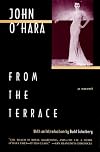
From the Terrace
by John O'Hara
On This Page
Description
Chronicles the events of Alfred Eaton's life against his successful career in MacHardie and Company and the Department of the Navy--Novelist.Tags
Recommendations


















Member Reviews
From the Terrace is a massive novel. Covering a period from the protagonist’s birth in 1897 to the postwar 1940’s. it presents power struggles at the highest levels of business and government against a background of sexual intrigue and violent death.
Raymond Alfred Eaton, called Alfred, is born into the upper economic and social stratum of a small Pennsylvania town, Port Johnson. His father, Samuel Eaton, owns the local steel mill. Alfred is deeply suspicious of himself, largely because of an occurrence during his boyhood over which he had no control. His elder brother, William, was the favorite son and was destined to succeed his father as the first citizen of Port Johnson until he died of meningitis at fourteen. Alfred’s father show more never is able to show his surviving son the same attention he lavished upon William. Two additional events reinforce Alfred’s sense of himself as a sort of jinx to others. He quarrels with his first love, sixteen-year-old Victoria Dockwiler, forbidding her to go riding in a borrowed Stutz Bearcat. She defies him and is killed in a car crash. Alfred then begins an affair with a family friend, Norma Budd, seven years older than he. Norma is later the victim of a married lover, who kills first her and then himself. Although it is irrational for Alfred to think that he corrupted Norma, he feels vaguely responsible later for her death.
Alfred attends Princeton University until the United States enters World War I. He serves with distinction as a naval officer but does not return to Princeton after the war. Declining his father’s offer of a job at the mill he and Lex Thornton, his best friend , start an aircraft company together. Alfred meets eighteen-year-old Mary St. John at a party, and here begins the sort of sexual triangle typically found in O’Hara’s later novels.
Mary is engaged to Jim Roper, a pre-medical student. Alfred is strongly attracted to Mary, more sexually than romantically, and he succeeds in winning her away from Roper. Their marriage in the spring of 1920 corresponds exactly with the death of Alfred’s father. The marriage is not a happy one. Meanwhile, Alfred has happened upon a young boy who has fallen through the ice into a pond. Alfred saves the child from drowning, thus earning the gratitude of the boy’s grandfather, James MacHardie. MacHardie is a rich and powerful Wall Street banker. He offers Alfred a job in New York, which he takes becoming an immediate success in banking, but he soon learns that he has relinquished his freedom of action. The image of MacHardie and Company is not to be tarnished by the divorce of any of its executives, so Alfred must stay married to Mary. At this point Alfred's life slowly declines through troubles with a mistress and at his job. The story would be a tragedy if Alfred had any heroic qualities. He never learns how to live with himself or others and gradually is isolated.
As the novel ends, Alfred is recovering from an illness brought on by the travails of his public and private life. He is unable to find another position, having cut himself off from the business and government arenas in which he previously thrived. He is financially secure, but he is not yet fifty and has no prospects in business or social relationships. This novel is an excellent example of naturalism demonstrating the dissoluteness of the upper class. As usual in O’Hara’s fiction, the physical details are flawless. The clothing, architecture, technology, and language of the novel’s succeeding decades are authentic down to the minutest point. Yet, perhaps due to the myriad details, it ultimately was a bit of a slog to finish. John O'Hara is at his best in his short stories and short novels like the classic, Appointment in Samarra. show less
Raymond Alfred Eaton, called Alfred, is born into the upper economic and social stratum of a small Pennsylvania town, Port Johnson. His father, Samuel Eaton, owns the local steel mill. Alfred is deeply suspicious of himself, largely because of an occurrence during his boyhood over which he had no control. His elder brother, William, was the favorite son and was destined to succeed his father as the first citizen of Port Johnson until he died of meningitis at fourteen. Alfred’s father show more never is able to show his surviving son the same attention he lavished upon William. Two additional events reinforce Alfred’s sense of himself as a sort of jinx to others. He quarrels with his first love, sixteen-year-old Victoria Dockwiler, forbidding her to go riding in a borrowed Stutz Bearcat. She defies him and is killed in a car crash. Alfred then begins an affair with a family friend, Norma Budd, seven years older than he. Norma is later the victim of a married lover, who kills first her and then himself. Although it is irrational for Alfred to think that he corrupted Norma, he feels vaguely responsible later for her death.
Alfred attends Princeton University until the United States enters World War I. He serves with distinction as a naval officer but does not return to Princeton after the war. Declining his father’s offer of a job at the mill he and Lex Thornton, his best friend , start an aircraft company together. Alfred meets eighteen-year-old Mary St. John at a party, and here begins the sort of sexual triangle typically found in O’Hara’s later novels.
Mary is engaged to Jim Roper, a pre-medical student. Alfred is strongly attracted to Mary, more sexually than romantically, and he succeeds in winning her away from Roper. Their marriage in the spring of 1920 corresponds exactly with the death of Alfred’s father. The marriage is not a happy one. Meanwhile, Alfred has happened upon a young boy who has fallen through the ice into a pond. Alfred saves the child from drowning, thus earning the gratitude of the boy’s grandfather, James MacHardie. MacHardie is a rich and powerful Wall Street banker. He offers Alfred a job in New York, which he takes becoming an immediate success in banking, but he soon learns that he has relinquished his freedom of action. The image of MacHardie and Company is not to be tarnished by the divorce of any of its executives, so Alfred must stay married to Mary. At this point Alfred's life slowly declines through troubles with a mistress and at his job. The story would be a tragedy if Alfred had any heroic qualities. He never learns how to live with himself or others and gradually is isolated.
As the novel ends, Alfred is recovering from an illness brought on by the travails of his public and private life. He is unable to find another position, having cut himself off from the business and government arenas in which he previously thrived. He is financially secure, but he is not yet fifty and has no prospects in business or social relationships. This novel is an excellent example of naturalism demonstrating the dissoluteness of the upper class. As usual in O’Hara’s fiction, the physical details are flawless. The clothing, architecture, technology, and language of the novel’s succeeding decades are authentic down to the minutest point. Yet, perhaps due to the myriad details, it ultimately was a bit of a slog to finish. John O'Hara is at his best in his short stories and short novels like the classic, Appointment in Samarra. show less
This is a huge book....which does not always work well with my busy life.....and i have been slogging through for nearly 4 months to complete it, and today i finally succeeded! This was somewhat epic in scope, and although i really enjoy O'Hara and his keen insight, the topic, characters and overall story did not match in intensity and interest. I grew up in PA, where this all starts, and enjoyed the PA family names and the very real feel of the settings, both familiar and unfamiliar. The nagging thought that kept cropping up over this long reading period of mine is: where is this going? Honestly, I cannot really say. It is an in-depth study of one soul, and those very few people close to him, from birth til 50......a hard-working show more chaser of success, coupled with duty and a basic good heart, but completely human in his failings on all fronts....business, personal, family, etc. I'm left feeling slightly sad. No overall regrets, other than i wish my life allowed it to happen in less than 4 months....maybe i'd see it slightly differently.....oh, and there are hardly any chapter breaks at all.....my copy was 981 pages!!! Sometimes i just need a sensible stopping point - to relieve the overwhelming task at hand. It says on my copy that it was about to become a miniseries.....I'll be looking into whether or not that came to pass. Proceed, but with caution. show less
Ratings
Members
- Recently Added By
Lists

National Book Award Finalists - Fiction
377 works; 12 members
TML 200 Best Books 1950-1999
202 works; 10 members

Publisher's Weekly Bestsellers - Part II - 1940 - 1979
355 works; 6 members

The Modern Library (The Two Hundred Best Novels....
202 works; 1 member
Author Information

132+ Works 6,769 Members
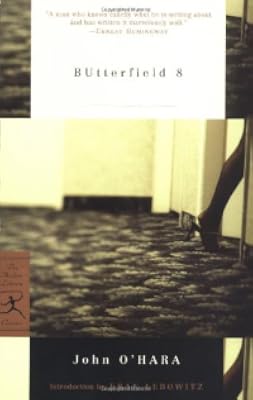
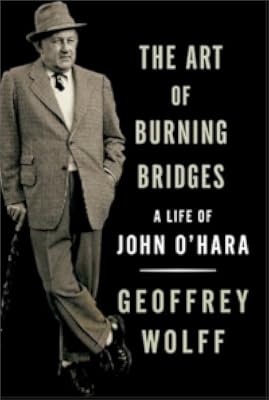
John Henry O'Hara was born in Pottsville, Pennsylvania on January 31, 1905. Many of his novels and short stories were set in fictionally named Pennsylvania towns with the main themes centering on class conflict and status. He began writing for the New Yorker in 1928; and during his life, sold 225 stories to the magazine. His first collection, The show more Doctor's Son and Other Stories (1935) was followed by twelve more. Pal Joey (1940) was made into a Broadway musical by Richard Rodgers and Lorenz Hart and later was adapted into a film starring Frank Sinatra and Rita Hayworth. Some of his published novels include Appointment in Samarra (1934), A Rage to Live (1949), The Lockwood Concern (1965), and The Good Samaritan and Other Stories (published posthumously in 1974). Ten North Frederick (1955) won the National Book Award and Butterfield 8 (1935) and From the Terrace (1958) were adapted into movies in 1960. He died from cardiovascular disease on April 11, 1970. (Bowker Author Biography) show less
Awards and Honors
Awards
Distinctions
Notable Lists
Common Knowledge
- Original publication date
- 1958
- People/Characters
- Alfred Eaton; Lex Porter
- Important places
- Pennsylvania, USA
- Dedication
- To: MISS KATIE CARPENTER
God bless her - First words
- There are alive today hundreds of men who saw Samuel Eaton, who accepted wages from him, envied him, hated him, laughed at him behind his back, worked hard for him, cheated him, and never addressed him except as Mr. Eaton ... (show all)or Mr. Samuel.
- Last words
- (Click to show. Warning: May contain spoilers.)"Well, all right. It's something to do."
Classifications
Statistics
- Members
- 235
- Popularity
- 139,307
- Reviews
- 2
- Rating
- (3.46)
- Languages
- English, German
- Media
- Paper
- ISBNs
- 6
- ASINs
- 11