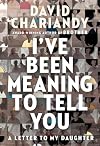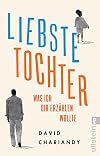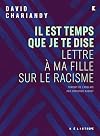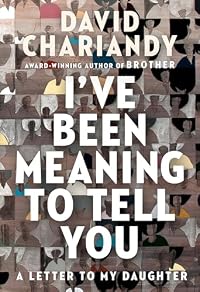
I've Been Meaning to Tell You: A Letter to My Daughter
by David Chariandy
On This Page
Description
Canadian author David Chariandy writes a letter to his daughter to share with her the story of his life and to talk to her about the politics of race in her world.Tags
Recommendations




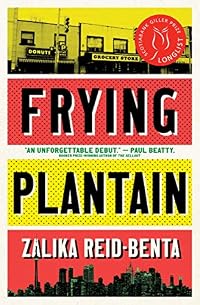

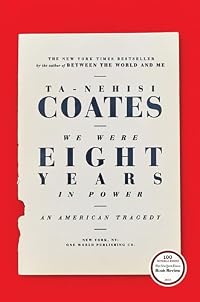
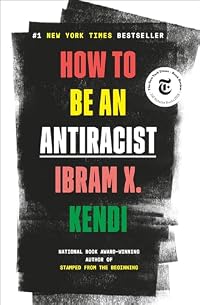

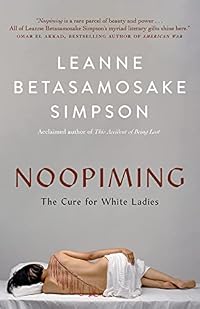




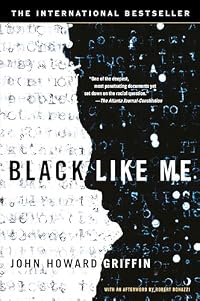
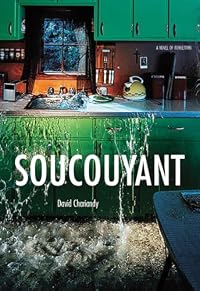
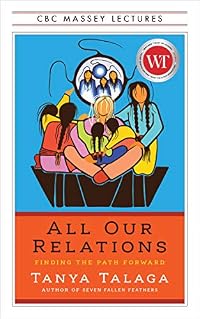
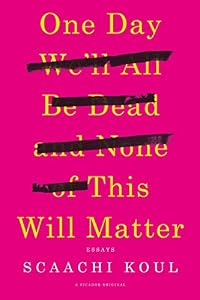


Member Recommendations
Member Reviews
This novella-length collection of gentle essays about race and belonging is written in epistolary style by novelist Chariandy to his 13-year-old daughter. In the opening essay, he recounts being in a café with her at age three, where a woman tells him he doesn’t belong there, in Canada, the country of his birth. And though his daughter doesn’t hear the words, she notices the effect they have on her father.
In the remaining essays, Chariandy, still disheartened ten years later by the state of race relations, delves into history -- world history itself; and the history of his African and South Asian ancestors; and his own experience, including the family he has created with his European-ancestry wife.
The future I yearn for is not one show more in which we will all be clothed in sameness, but one in which we will finally learn to both read and respectfully discuss our differences.
My parents wrote a history of their lives and our family, and I treasure it, as I’m sure Chariandy’s daughter will treasure hers. Yet Chariandy's has relevance beyond his family, and I'm grateful he opened it for me and the world to treasure and learn from, too.
(Review based on an advance reading copy provided by the publisher.) show less
In the remaining essays, Chariandy, still disheartened ten years later by the state of race relations, delves into history -- world history itself; and the history of his African and South Asian ancestors; and his own experience, including the family he has created with his European-ancestry wife.
The future I yearn for is not one show more in which we will all be clothed in sameness, but one in which we will finally learn to both read and respectfully discuss our differences.
My parents wrote a history of their lives and our family, and I treasure it, as I’m sure Chariandy’s daughter will treasure hers. Yet Chariandy's has relevance beyond his family, and I'm grateful he opened it for me and the world to treasure and learn from, too.
(Review based on an advance reading copy provided by the publisher.) show less
David Chariandy is known as a fiction writer but in this book he delves into the nonfiction realm to write a letter to his daughter. She was thirteen years old at the time so just entering those difficult teenage years. It's not so much advice for his daughter as an explanation of his own background and what he has learned growing up. Chariandy's parents are from Trinidad; his father is East Indian and his mother of black ancestry. David was born in and grew up in Scarborough and experienced his fair share of racism. He tells one instance of being out with his daughter when she was three. Going to get her a glass of water from a dispenser a white woman shoved in front of him justifying her action by saying "I was born here. I belong show more here." David really hopes his daughter never has to experience that kind of insult but figures she probably will. The mother probably can't explain these situations to her daughter since she is white and from a privileged background.
This short book (although a long letter) is worth taking time over. I'll bet David's daughter already treasures it. show less
This short book (although a long letter) is worth taking time over. I'll bet David's daughter already treasures it. show less
David Chariandy is an eloquent and thoughtful writer and this book was easily read in practically one sitting. Although the incident that precipitated his thinking about writing it happened a decade earlier, it has taken him all these years to formulate what he wanted to say, when talking to his daughter about growing up and living in our world as a person of mixed heritage. He does so by relating some of his own experiences, while acknowledging that hers will, on many levels, be very different. There is the matter of gender, the fact that his parents were immigrants and hers are not, and the country and even the world she is growing up in is in many ways, not the one he grew up in.
Without ever mentioning her name (she is always show more *dearest daughter*), or the names of others, for that matter, Chariandy fleshes out the book with stories, anecdotes and insights from his own life, the lives of his parents, his son and daughter, his wife and her family, and history in general. A lot is packed into 120 pages but it never felt heavy-handed or forced. I really enjoyed getting to know this wonderful author and look forward to reading his 2 previous books (novels). show less
Without ever mentioning her name (she is always show more *dearest daughter*), or the names of others, for that matter, Chariandy fleshes out the book with stories, anecdotes and insights from his own life, the lives of his parents, his son and daughter, his wife and her family, and history in general. A lot is packed into 120 pages but it never felt heavy-handed or forced. I really enjoyed getting to know this wonderful author and look forward to reading his 2 previous books (novels). show less
A DNA test can tell you beyond a doubt where your ancestors came from, but the story of your ancestry is something else entirely. The story Chariandy shares with his 13year old daughter is one of struggle and resilience. It includes all the injustices the African/South Asian side of her family has endured as a result of more often being on the “them” side of “us and them.” To be proud of who you are you need to know who you are. Just you - not the whole world, unfortunately, some people seem unable to quell the need to ask: “What are you?” Where are you from? (Even Ellen, this week, asked actor Constance Wu where she was from “originally.”)
This book makes me want to be even more vigilant about calling out racism and show more racist acts. I wish I had been there ten years ago at the scene of the salad bar incident, I like to think I would have thrown shade at that woman. Next time, and sadly there will be a next time, I will be a “Bawse” and let her have it. show less
This book makes me want to be even more vigilant about calling out racism and show more racist acts. I wish I had been there ten years ago at the scene of the salad bar incident, I like to think I would have thrown shade at that woman. Next time, and sadly there will be a next time, I will be a “Bawse” and let her have it. show less
Lately there seems to be quite a few books out by authors writing to their children. Chariandy writes here to his daughter, a daughter who is of mixed race, African Asian and white. They live in Canada and an unexpected act of bigotry prompts him to try to explain to his daughter what she might face in this world. Also explains his own background and how his life was shaped by similiarities acts.
He is in awe of his daughter, the way she goes through life, handling things, in one case protecting her younger brother. His love for her is apparent on every page of this poignant and beautifully written book. It is a book of truth, of experiences learned, of an uncertain future, and a look at how people judge others just by what's on the show more surface. Never bothering to look beneath, and see what is hidden. It is a timely read, with so many injustices once again or should I say always rearing their ugly head.
"You did not create the inequalities and injustices of the world, daughter. You are neither solely nor uniquely responsible to fix them. If their is anything to learn about the story of our ancestry, it is that you should respect and protect yourself; that you should demand not only justice but joy; that you should see, truly see, the vulnerability and the creativity and the enduring beauty of others."
"Being named, he found his own voice. Being sighted, he learned, nevertheless, to see."
ARC from Netgalley. show less
He is in awe of his daughter, the way she goes through life, handling things, in one case protecting her younger brother. His love for her is apparent on every page of this poignant and beautifully written book. It is a book of truth, of experiences learned, of an uncertain future, and a look at how people judge others just by what's on the show more surface. Never bothering to look beneath, and see what is hidden. It is a timely read, with so many injustices once again or should I say always rearing their ugly head.
"You did not create the inequalities and injustices of the world, daughter. You are neither solely nor uniquely responsible to fix them. If their is anything to learn about the story of our ancestry, it is that you should respect and protect yourself; that you should demand not only justice but joy; that you should see, truly see, the vulnerability and the creativity and the enduring beauty of others."
"Being named, he found his own voice. Being sighted, he learned, nevertheless, to see."
ARC from Netgalley. show less
David Chariandy tells a story in this letter to his daughter of his life, being named and the effects it had on him, his heritage, his hopes and dreams. It was a quick read but told a full story.
Started to read, got a few pages in when Professor Chariandy started fussing about American politics. Why would I care? Closed the book.
Members
- Recently Added By
Lists

Books Read in 2018
4,360 works; 110 members
Author Information

5+ Works 723 Members
Common Knowledge
- Canonical title*
- Il est temps que je te dise
- Original title
- I've been meaning to tell you : a letter to my daughter
- Alternate titles*
- Lettre à ma fille sur le racisme
*Some information comes from Common Knowledge in other languages. Click "Edit" for more information.
Classifications
Statistics
- Members
- 114
- Popularity
- 284,508
- Reviews
- 7
- Rating
- (3.79)
- Languages
- English, French, German
- Media
- Paper, Audiobook, Ebook
- ISBNs
- 13
- ASINs
- 5