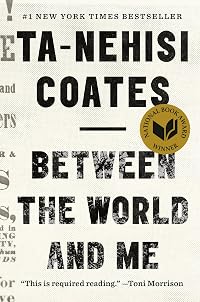
Between the World and Me
by Ta-Nehisi Coates
On This Page
Description
"For Ta-Nehisi Coates, history has always been personal. At every stage of his life, he's sought in his explorations of history answers to the mysteries that surrounded him -- most urgently, why he, and other black people he knew, seemed to live in fear. What were they afraid of? In Tremble for My Country, Coates takes readers along on his journey through America's history of race and its contemporary resonances through a series of awakenings -- moments when he discovered some new truth show more about our long, tangled history of race, whether through his myth-busting professors at Howard University, a trip to a Civil War battlefield with a rogue historian, a journey to Chicago's South Side to visit aging survivors of 20th century America's 'long war on black people,' or a visit with the mother of a beloved friend who was shot down by the police. In his trademark style -- a mix of lyrical personal narrative, reimagined history, essayistic argument, and reportage -- Coates provides readers a thrillingly illuminating new framework for understanding race: its history, our contemporary dilemma, and where we go from here"-- show lessTags
Recommendations
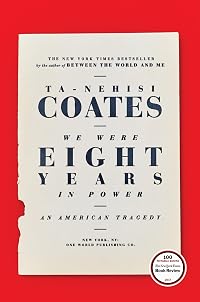
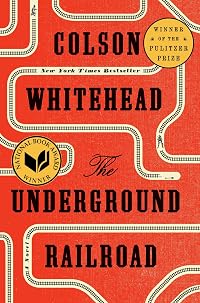
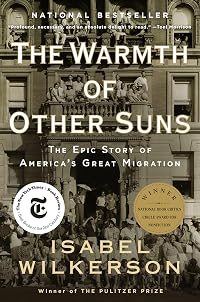
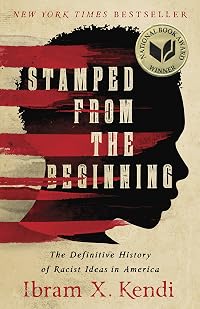

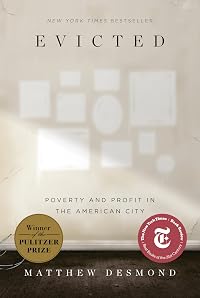
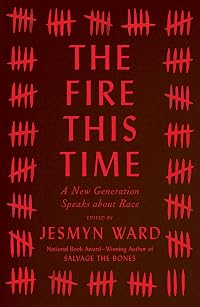
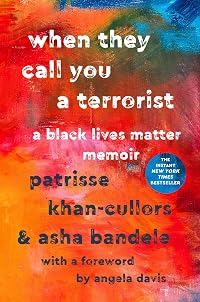
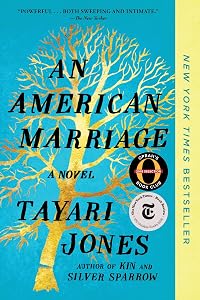
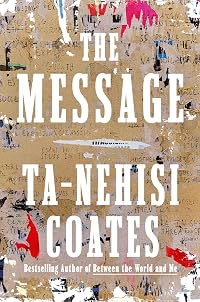
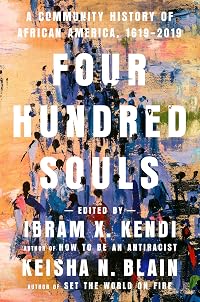
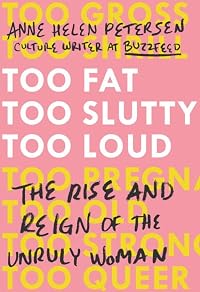

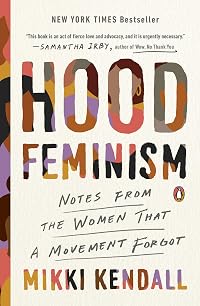
Member Recommendations
Member Reviews
I am sorry that I cannot make it okay. I am sorry that I cannot save you—but not that sorry. Part of me thinks that your very vulnerability brings you closer to the meaning of life...
My wish for you is that you feel no need to constrict yourself to make other people comfortable. None of that can change the math anyway. I never wanted you to be twice as good as them, so much as I have always wanted you to attack every day of your brief bright life in struggle... I would have you be a conscious citizen of this terrible and beautiful world.
My wish for you is that you feel no need to constrict yourself to make other people comfortable. None of that can change the math anyway. I never wanted you to be twice as good as them, so much as I have always wanted you to attack every day of your brief bright life in struggle... I would have you be a conscious citizen of this terrible and beautiful world.
I don't know what I can say about this book that has not already been said by many others. This is an epistolary memoir in which Coates tries to explain the realities of race, history, and society in the U.S. to his fifteen-year-old son. Those who "believe themselves to be white", Coates says, inhabit a very different world to that of black people, whose lives and whose bodies have been repeatedly and consistently abused and commodified. Coates is not a thinker who seeks refuge in sentimentality or generalisations; he doesn't see uplift in past trauma. Between the World and Me offers little hope and few answers—but it does posit some uncomfortable, necessary, urgent questions.
This book, written as a love letter to his son Samori Coates, is profoundly stunning, especially where the author defines "The Dream" as everything that Americans strive for and only the very few ever live in, and also stating magnificently the lifelong impact of fear of a broken body in all black communities. Coates also uses so effectively a phrase from James Baldwin: "The people who need to be white".
Most powerfully told are Coates's thrilling immersion time at Howard University ("The Mecca"), and the meaningless death of a fellow student of great promise, Prince Jones, whose mother's great striving and their successful efforts to achieve "The Dream" are smashed and murdered by a Prince George county policeman.
Quotes:
""Racism is show more rendered as the innocent daughter of Mother Nature, and one is left to deplore the Middle passage or the Trail of Tears the way one deplores an earthquake, a tornado, or any other natural phenomenon that can be cast as beyond the handiwork of men. "
"When I was your age the only people I knew were black, and all of them were powerfully, adamantly, dangerously afraid."
"That is the best of what the old heads meant when they spoke of being "politically conscious" - as much a series of actions as a state of being, a constant questioning, questioning as ritual, questioning as exploration rather than the search for certainty."
"The truth is that I owe you everything I have. Before you, I had my questions but nothing beyond my own skin in the game."
(all caps, mine) "ALL MY LIFE I'D HEARD PEOPLE TELL THEIR BLACK BOYS AND BLACK GIRLS TO BE "TWICE AS GOOD" WHICH IS TO SAY "ACCEPT HALF AS MUCH".
"The story of a black body's destruction must always start with his or her error, real or imagined - with Eric Garner's anger, with Trevyon Martin's mythical words ("You are gonna die tonight"), with Sean Bell's mistake of running with the wrong crowd."
"There are no racists in America, or at least none that the people who need to be white know personally."
"In America, the injury is not in being born with darker skin, with fuller lips, with a broader nose, but with everything that happens after."
This book is so essential for everyone to read that when you are done, you'll see the time before you read it as "before" and then you will hopefully live your life and act in the gained wisdom and insight of the "after". It is a master work. show less
Most powerfully told are Coates's thrilling immersion time at Howard University ("The Mecca"), and the meaningless death of a fellow student of great promise, Prince Jones, whose mother's great striving and their successful efforts to achieve "The Dream" are smashed and murdered by a Prince George county policeman.
Quotes:
""Racism is show more rendered as the innocent daughter of Mother Nature, and one is left to deplore the Middle passage or the Trail of Tears the way one deplores an earthquake, a tornado, or any other natural phenomenon that can be cast as beyond the handiwork of men. "
"When I was your age the only people I knew were black, and all of them were powerfully, adamantly, dangerously afraid."
"That is the best of what the old heads meant when they spoke of being "politically conscious" - as much a series of actions as a state of being, a constant questioning, questioning as ritual, questioning as exploration rather than the search for certainty."
"The truth is that I owe you everything I have. Before you, I had my questions but nothing beyond my own skin in the game."
(all caps, mine) "ALL MY LIFE I'D HEARD PEOPLE TELL THEIR BLACK BOYS AND BLACK GIRLS TO BE "TWICE AS GOOD" WHICH IS TO SAY "ACCEPT HALF AS MUCH".
"The story of a black body's destruction must always start with his or her error, real or imagined - with Eric Garner's anger, with Trevyon Martin's mythical words ("You are gonna die tonight"), with Sean Bell's mistake of running with the wrong crowd."
"There are no racists in America, or at least none that the people who need to be white know personally."
"In America, the injury is not in being born with darker skin, with fuller lips, with a broader nose, but with everything that happens after."
This book is so essential for everyone to read that when you are done, you'll see the time before you read it as "before" and then you will hopefully live your life and act in the gained wisdom and insight of the "after". It is a master work. show less
In the form of a letter to his son, Ta-Nehisi Coates tells of his own experiences as a black man dealing with institutionalized racism in the United States and "those who call themselves white."
Coates, a journalist who writes for the Atlantic is in-your-face and unapologetic in describing his experiences growing up in Baltimore, going to Howard College, and ultimately having a family. His experiences are so very different from my own growing up as a white middle-class woman in the suburbs of New England. I struggled with the book: struggled to find something to relate to, and struggled with how I felt Coates himself would see me. Perhaps my frustration was that, in some fundamental way, he was not writing to me. My experience is so far show more from his that I grasped at what I could relate to - his love of reading, and how he relates to the world through reading, writing, and asking questions, for example - and had to accept what I didn't get. One thing I finally did relate to was his feeling that his body was under assault and he needed to protect it. I don't have the same feeling of betrayal towards those in power such as policeman and juries. But I have experienced walking down the street and having guys whistle, and fairly recently learned not to make eye contact with people walking down the street in a city if I didn't want to be hit on, asked my name, asked where I was going.
I felt my toes stepped on many times, and had to remind myself that his purpose, I think, was neither to offend me or not offend me, just to tell his story to a generation of black people growing up in a world different and the same from his own. I am not his audience. But I do think that reading about it and thinking about it is important. Though a short book, it's a challenging read and one that I'm glad I read. show less
Coates, a journalist who writes for the Atlantic is in-your-face and unapologetic in describing his experiences growing up in Baltimore, going to Howard College, and ultimately having a family. His experiences are so very different from my own growing up as a white middle-class woman in the suburbs of New England. I struggled with the book: struggled to find something to relate to, and struggled with how I felt Coates himself would see me. Perhaps my frustration was that, in some fundamental way, he was not writing to me. My experience is so far show more from his that I grasped at what I could relate to - his love of reading, and how he relates to the world through reading, writing, and asking questions, for example - and had to accept what I didn't get. One thing I finally did relate to was his feeling that his body was under assault and he needed to protect it. I don't have the same feeling of betrayal towards those in power such as policeman and juries. But I have experienced walking down the street and having guys whistle, and fairly recently learned not to make eye contact with people walking down the street in a city if I didn't want to be hit on, asked my name, asked where I was going.
I felt my toes stepped on many times, and had to remind myself that his purpose, I think, was neither to offend me or not offend me, just to tell his story to a generation of black people growing up in a world different and the same from his own. I am not his audience. But I do think that reading about it and thinking about it is important. Though a short book, it's a challenging read and one that I'm glad I read. show less
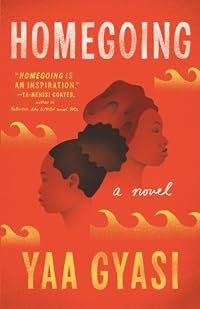
Difficult, disturbing, full of hard truths about living in a black body in the U.S. I don't feel at all qualified to comment on Coates's perceptions as a black man who grew up in Baltimore's inner city in the '70's. Although ostensibly written as a "letter" to his adolescent son, I think it's important reading for every American, probably most especially for those who, as he says repeatedly (quoting James Baldwin) "think they are white". A worthy non-fiction companion to Homegoing, to the writings of Baldwin and other potent black voices.
Review written July 2016
Review written July 2016
I have listened to this book, recited by the author's own voice, and am still thinking about it.
To truly respect an author, I think, is to hear their words and respond to them, perhaps even be changed by them. No work stands without context, and to ignore that context and respond to the work alone would be naive, but I think that responding to the context and ignoring the work itself goes beyond naivete into the realm of insult.
Coates brings up an anecdote involving a reporter, early on, in which something of a similar nature happens. I am certain that this has happened many times, and will keep happening...
I have read some Baldwin, that oft-made contextual comparison that is meant to delineate and classify Coates' work, and I think show more those who make the comparison are missing the point. The essay responds to that comparison well enough- to paraphrase, Coates is not the Baldwin of our generation, Baldwin is the Baldwin of our generation. Duh.
Even still, this felt more personal than Baldwin, perhaps because Coates writes of now, or perhaps for some other reason.
I don't know. There is a lot about the world I don't know, and will never know, and this is why I read.
I know I need to sit and think, and keep thinking, and try to do the work required to become human, the work that does not end and has no finish.
I know I'll be thinking about this essay for a long time to come. show less
To truly respect an author, I think, is to hear their words and respond to them, perhaps even be changed by them. No work stands without context, and to ignore that context and respond to the work alone would be naive, but I think that responding to the context and ignoring the work itself goes beyond naivete into the realm of insult.
Coates brings up an anecdote involving a reporter, early on, in which something of a similar nature happens. I am certain that this has happened many times, and will keep happening...
I have read some Baldwin, that oft-made contextual comparison that is meant to delineate and classify Coates' work, and I think show more those who make the comparison are missing the point. The essay responds to that comparison well enough- to paraphrase, Coates is not the Baldwin of our generation, Baldwin is the Baldwin of our generation. Duh.
Even still, this felt more personal than Baldwin, perhaps because Coates writes of now, or perhaps for some other reason.
I don't know. There is a lot about the world I don't know, and will never know, and this is why I read.
I know I need to sit and think, and keep thinking, and try to do the work required to become human, the work that does not end and has no finish.
I know I'll be thinking about this essay for a long time to come. show less
Beautiful and biting insights written as a letter to the author's son, Coates writes with lyricism and authority on his experiences and his education on the matters of life and race and literature and love. Leaves one with plenty of food for thought, and one I'll be thinking of for a long time.
Members
- Recently Added By
Published Reviews
ThingScore 100
Between the World and Me is, in important ways, a book written toward white Americans, and I say this as one them. White Americans may need to read this book more urgently and carefully than anyone, and their own sons and daughters need to read it as well. This is not to say this is a book about white people, but rather that it is a terrible mistake for anyone to assume that this is just a show more book about nonwhite people. In the broadest terms Between the World and Me is about the cautious, tortured, but finally optimistic belief that something beyond these categories persists. Implicit in this book’s existence is a conviction that people are fundamentally reachable, perhaps not all of them but enough, that recognition and empathy are within grasp, that words and language are capable of changing people, even if—especially if—those words are not ones people prefer to hear. show less
added by elenchus
In the scant space of barely 160 pages, Atlantic national correspondent Coates (The Beautiful Struggle) has composed an immense, multifaceted work. This is a poet's book, revealing the sensibility of a writer to whom words—exact words—matter....It's also a journalist's book, not only because it speaks so forcefully to issues of grave interest today, but because of its close attention to show more fact...As a meditation on race in America, haunted by the bodies of black men, women, and children, Coates's compelling, indeed stunning, work is rare in its power to make you want to slow down and read every word. This is a book that will be hailed as a classic of our time. show less
added by theaelizabet
Lists

Must-Read Books by Black Authors
114 works; 92 members

Best Biographies, Autobiographies and Memoirs
465 works; 160 members

The Guardian's 100 best books of the 21st century
100 works; 21 members

Top Five Books of 2020
982 works; 350 members

Best Autobiographies and Memoirs
370 works; 67 members

Top Five Books of 2015
811 works; 241 members

Recommend the 20 best books you've read in the last five years
2,168 works; 608 members

Top Five Books of 2016
795 works; 228 members

2016 Notable Books for Adults
26 works; 7 members

Top Five Books of 2018
802 works; 264 members

Top Five Books of 2022
736 works; 272 members

Books recommended by Barack Obama
295 works; 29 members

Phi Beta Kappa reading list
260 works; 8 members

Black Authors
386 works; 32 members
Top Five Books of 2017
757 works; 230 members

The Black Archives: All Power To the People! Reading List
79 works; 10 members
Reiny
17 works; 2 members

My Stop Tr*mp Reading List
4 works; 1 member

Books about Gun Violence
54 works; 1 member

Obama Reads
181 works; 3 members
wish list
61 works; 3 members

Book Club 2022
6 works; 1 member

Top Book of the Year - 2010s
10 works; 1 member

Books Read in 2020
4,379 works; 123 members

Schomburg Centennial Reading List
100 works; 4 members

Books by Black Men
49 works; 2 members

Books Read in 2024
4,727 works; 128 members

.
184 works; 1 member

Books That Changed Our Perspective
423 works; 168 members

Widely acclaimed, one book per year
105 works; 3 members

Biggest Disappointments
606 works; 163 members

Banned or Challenged Books
402 works; 43 members
Vlogbrothers Book Recommendations
307 works; 4 members

Non-Fiction
68 works; 1 member

NYT 100 best books of 21st C
100 works; 31 members

NYT Readers best of 21st C
100 works; 8 members

Nov. 2015 new books
38 works; 1 member

Best Audiobooks
240 works; 114 members

Five star books
1,767 works; 109 members

Books Read in 2016
4,666 works; 199 members
Books Read in 2015
3,299 works; 129 members
Books I've Read More Than Once
602 works; 49 members

Silent Scream
20 works; 2 members

Penguin Random House
458 works; 4 members
Books Read in 2017
4,249 works; 129 members
Books Set in Maryland
14 works; 4 members

Top Five Books of 2023
767 works; 317 members
Contemporary Fiction
109 works; 7 members
National Book Award winners
65 works; 11 members

Books Read in 2021
5,361 works; 114 members

School library books removed after TX state legislator inquiry
429 works; 6 members

Books Read in 2022
5,226 works; 115 members

Mustich's 1000 Books to Read Before You Die: A Life Changing List
1,001 works; 20 members

United States
35 works; 1 member
Author Information

139+ Works 22,720 Members
Ta-Nehisi Coates was born in Baltimore, Maryland on September 30, 1975. He attended Howard University. He is a correspondent at The Atlantic, where he writes about culture, politics, and social issues. He is the author of The Beautiful Struggle and Between the World and Me, which won a National Book Award for nonfiction in 2015 and the 2016 show more PEN/Diamonstein-Spielvogel Award for the Art of the Essay. He was included on Time magazine's annual list of the 100 most influential people in the world. (Bowker Author Biography) show less
Some Editions
Awards and Honors
Awards
Distinctions
Notable Lists
Series
Belongs to Publisher Series
Work Relationships
Is replied to in
Was inspired by
Has as a reference guide/companion
Has as a student's study guide
Common Knowledge
- Canonical title*
- Tussen de wereld en mij
- Original title
- Between the World and Me
- Original publication date
- 2015-07-14
- People/Characters
- Malcolm X; Prince Jones; Mike Brown; Saul Bellow; Trayvon Martin; Gary Hopkins, Jr.
- Important places
- New York, New York, USA; Paris, France; Baltimore County, Maryland, USA; Uman, Ukraine; Berlin, Germany; Stockholm, Sweden (show all 9); Dushanbe, Tajikistan; Chicago, Illinois, USA; Howard University, Washington, D.C., USA
- Epigraph
- And one morning while in the woods I stumbled suddenly upon the thing,
Stumbled upon it in a grassy clearing guarded by scaly oaks and elms
And the sooty details of the scene rose, thrusting themselves betwee... (show all)n the world and me...
—Richard Wright - Dedication
- For David and Kenyatta,
who believed - First words
- Son,
Last Sunday the host of a popular news show asked me what it meant to lose my body. - Quotations
- Never forget that for 250 years black people were born into chains—whole generations followed by more generations who knew nothing but chains.
At that point in American history, no police department fired its guns more than that of Prince George's County.
Shortly before you were born, I was pulled over by the PG County cops...I sat there in terror...He handed back my license. He gave no explanation for the stop.
The need to forgive the officer would not have moved me, back because even then, in some inchoate form, I knew that Prince was not killed by a single officer so much as he was murdered by his country and all the fears that ha... (show all)ve marked it from birth.
The plunder of black life was drilled into this country in its infancy and reinforced across its history, so that plunder has become an heirloom, an intelligence, a sentience, a default setting to which, likely to the end of ... (show all)our days, we must invariably return.
Then the mother of the murdered boy rose, turned to you and said, “You exist. You matter. You have value. You have every right to wear your hoodie, to play your music as loud as you want. You have every right to be you. And... (show all) no one should deter you from being you. You have to be you. And you can never be afraid to be you.
She appeared to be somewhere in that range between forty and seventy years, when it becomes difficult to precisely ascertain a black person’s precise age.
I thought back on the sit-ins, the protestors with their stoic faces...Perhaps they so willingly parted with the security and sanctity of the black body because neither security nor sanctity existed in the first place. - Last words
- (Click to show. Warning: May contain spoilers.)Through the windshield I saw the rain coming down in sheets.
- Blurbers
- Morrison, Toni
- Original language
- English US; English
- Canonical DDC/MDS
- 305.800973
- Canonical LCC
- E185.615 .C6335
*Some information comes from Common Knowledge in other languages. Click "Edit" for more information.
Classifications
- Genres
- General Nonfiction, Biography & Memoir, Nonfiction, History
- DDC/MDS
- 305.800973 — Society, government, & culture Social sciences, sociology & anthropology Social group - Age, Gender, Ethnicity Ethnic and national groups standard subdivisions / Ethnic and national groups with ethnic origins from more than one continent, of European descent standard subdivisions Biography And History North America United States
- LCC
- E185.615 .C6335 — History of the United States United States
- BISAC
Statistics
- Members
- 9,908
- Popularity
- 1,020
- Reviews
- 402
- Rating
- (4.37)
- Languages
- 11 — Danish, Dutch, English, French, German, Italian, Polish, Spanish, Swedish, Turkish, Portuguese (Portugal)
- Media
- Paper, Audiobook, Ebook
- ISBNs
- 42
- UPCs
- 1
- ASINs
- 14