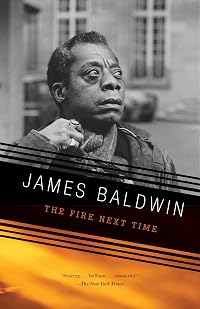
The Fire Next Time
by James Baldwin
On This Page
Description
At once a powerful evocation of his early life in Harlem and a disturbing examination of the consequences of racial injustice to both the individual and the body politic, James Baldwin galvanized the nation in the early days of the civil rights movement with his eloquent manifesto. The Fire Next Time stands as one of the essential works of our literature..
Tags
Recommendations







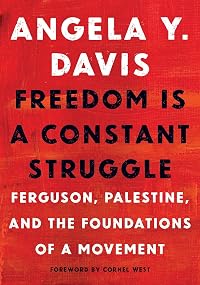
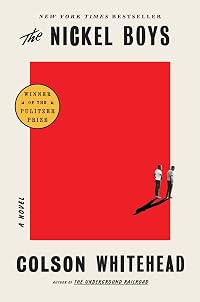


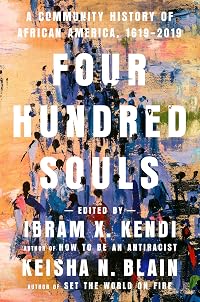
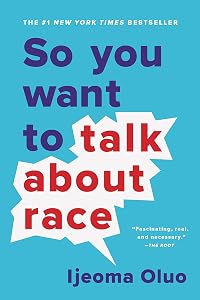


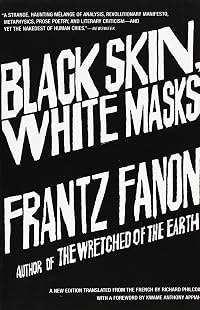

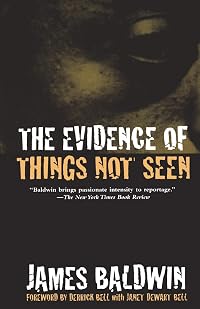

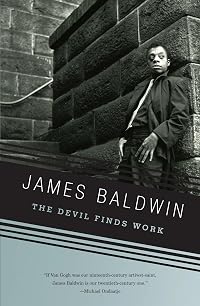



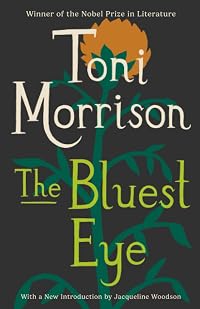

Member Recommendations


Member Reviews
I first read this when I was a kid. I'd taken the bus to the library on a Saturday as usual, but got bored with the kids' room offerings and started browsing books in the adult section, non-fiction. Found this and sat down among the shelves and read the whole thing. Reading it a second time almost fifty years later, it resonates as much as it did then, when it set up my own framework for thinking about race and history. Baldwin's thoughts and ideas are expressed as if you were listening to him over coffee, mulling over the differences between his beliefs and those of Malcolm X. His expression of the burden of being black in America is just brilliant.
Published in 1962, Baldwin was well ahead of his time in speaking the truth about America, and this is a work that is still searing in its relevance today. It’s fascinating to read of his life, his bouts with racist policemen as a kid, becoming a preacher as an adolescent, and the conflicted feelings he had about having dinner with Elijah Muhammed of the Nation of Islam. He was perceptive in that he saw behind the obvious racism of Jim Crow into deeper, more insidious forms of racism in liberal areas, and in how history was so white-washed that the majority of Americans were blissfully ignorant about the country’s historical sins. He also saw truths about humanity and its tendency towards incredible cruelty, and yet, the book is show more uplifting in its hope to evoke change.
Quotes:
“From my own point of view, the fact of the Third Reich alone makes obsolete forever any question of Christian superiority, except in technological terms. White people were, and are, astounded by the holocaust in Germany. They did not know that they could act that way. But I very much doubt whether black people were astounded – at least, in the same way.”
“The treatment accorded the Negro during the Second World War, marks, for me, a turning point in the Negro’s relation to America. To put it briefly, and somewhat too simply, a certain hope died, a certain respect for white Americans faded. One began to pity them, or to hate them. You must put yourself in the skin of a man who is wearing the uniform of his country, is a candidate for death in its defense, and who is called a ‘nigger’ by his comrade-in-arms and his officers; who is almost always given the hardest, ugliest, most menial work to do; who knows that the white G.I. has informed Europeans that he is subhuman…”
“…a civilization is not destroyed by wicked people; it is not necessary that people be wicked but only that they be spineless.”
“When Malcolm X, who is considered the movement’s second-in-command, and heir apparent, points out that the cry of ‘violence’ was not raised, for example, when the Israelis fought to regain Israel, and, indeed, is raised only when black men indicate that they will fight for their rights, he is speaking the truth.”
“The real reason that non-violence is considered to be a virtue in Negroes – I am not speaking now of its racial value, another matter altogether – is that white men do not want their lives, their self-image, or their property threatened.”
I thought this was an interesting observation about Brown vs. Board of Education, particularly as I just watched the PBS American Experience show ‘The Blinding of Isaac Woodard,’ which describe the outrage of what happened to that returning African-America solider, how it shook Truman and led him to action, despite a very conservative background, and the tireless work of South Carolina Judge J. Waties Waring and his wife – all leading up to Brown v. Board of Education. This may be cynical from Baldwin, but I thought it was fascinating to consider:
“White Americans have contented themselves with gestures that are now described as ‘tokenism.’ For hard example, white Americans congratulate themselves on the 1954 Supreme Court decision outlawing segregation in schools; they suppose, in spite of the mountain of evidence that has since accumulated to the contrary, that this was proof of a change of heart – or, as they like to say, progress. Perhaps. It all depends on how one reads the word ‘progress.’ Most of the Negroes I know do not believe that this immense concession would ever have been made if it had not been for the competition of the Cold War, and the fact that Africa was clearly liberating herself and therefore had, for political reasons, to be wooed by the descendants of her former masters. Had it been a matter of love or justice, the 1954 decision surely would have occurred sooner; were it not for the realities of power in this difficult era, it might very well not have occurred yet.” show less
Quotes:
“From my own point of view, the fact of the Third Reich alone makes obsolete forever any question of Christian superiority, except in technological terms. White people were, and are, astounded by the holocaust in Germany. They did not know that they could act that way. But I very much doubt whether black people were astounded – at least, in the same way.”
“The treatment accorded the Negro during the Second World War, marks, for me, a turning point in the Negro’s relation to America. To put it briefly, and somewhat too simply, a certain hope died, a certain respect for white Americans faded. One began to pity them, or to hate them. You must put yourself in the skin of a man who is wearing the uniform of his country, is a candidate for death in its defense, and who is called a ‘nigger’ by his comrade-in-arms and his officers; who is almost always given the hardest, ugliest, most menial work to do; who knows that the white G.I. has informed Europeans that he is subhuman…”
“…a civilization is not destroyed by wicked people; it is not necessary that people be wicked but only that they be spineless.”
“When Malcolm X, who is considered the movement’s second-in-command, and heir apparent, points out that the cry of ‘violence’ was not raised, for example, when the Israelis fought to regain Israel, and, indeed, is raised only when black men indicate that they will fight for their rights, he is speaking the truth.”
“The real reason that non-violence is considered to be a virtue in Negroes – I am not speaking now of its racial value, another matter altogether – is that white men do not want their lives, their self-image, or their property threatened.”
I thought this was an interesting observation about Brown vs. Board of Education, particularly as I just watched the PBS American Experience show ‘The Blinding of Isaac Woodard,’ which describe the outrage of what happened to that returning African-America solider, how it shook Truman and led him to action, despite a very conservative background, and the tireless work of South Carolina Judge J. Waties Waring and his wife – all leading up to Brown v. Board of Education. This may be cynical from Baldwin, but I thought it was fascinating to consider:
“White Americans have contented themselves with gestures that are now described as ‘tokenism.’ For hard example, white Americans congratulate themselves on the 1954 Supreme Court decision outlawing segregation in schools; they suppose, in spite of the mountain of evidence that has since accumulated to the contrary, that this was proof of a change of heart – or, as they like to say, progress. Perhaps. It all depends on how one reads the word ‘progress.’ Most of the Negroes I know do not believe that this immense concession would ever have been made if it had not been for the competition of the Cold War, and the fact that Africa was clearly liberating herself and therefore had, for political reasons, to be wooed by the descendants of her former masters. Had it been a matter of love or justice, the 1954 decision surely would have occurred sooner; were it not for the realities of power in this difficult era, it might very well not have occurred yet.” show less
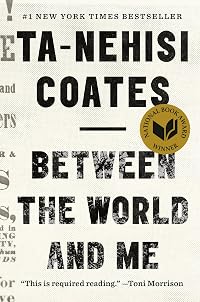
Decided this was worth going back and givng a re-read, particularly in light of current events. Have read and loved Ta-Nehisi Coates' literary letter to his son in "Between the World and Me." Coates work has a direct lineage back to James Baldwin and especially, his letter to his nephew in the first part of "The Fire Next Time." Both seek to school their young charges in what is required to grow up as a black man in the US. Baldwin's is the more lyrical of the two. One can easily pick up the oratorical flourishes Baldwin picked up preaching from the pulpits of his youth. I heartily recommend seeking out an audio version of this book (or perhaps the Youtube version), if only to get the full glorious force of Baldwin's cadence and show more strength of prose. Interesting is Baldwin's recitation of his dinner meeting with Elijah Muhammad, leader of the Nation of Islam. A candid view we rarely see. Baldwin's perspective has fully stood the judgement and passage of time. His indictment of racism and its insidious and malevolent force in our society is as important and relevant as ever. show less
This pair of essays published in 1963 discusses racial relations in the United States at the time and remains depressingly relevant in the present day. Baldwin, in a letter to his 14-year-old nephew, describes what it means to be black in America with unrestrained anger and compassion. The essays also examine the ineffectiveness of religion in dealing with these problems and his disillusionment with Christianity. Baldwin's analysis of America's problems - among both white and black people - is unrelenting, but he does offers some hope that people can eschew their narrow beliefs.
Favorite Passages:
Favorite Passages:
“You were born where you were born and faced the future that you faced because you were black and for no other reason. The limits of yourshow more
ambition were, thus, expected to be set forever. You were born into a society which spelled out with brutal clarity, and in as many ways as possible, that you were a worthless human being. You were not expected to aspire to excellence: you were expected to make peace with mediocrity. Wherever you have turned, James, in your short time on this earth, you have been told where you could go and what you could do (and how you could do it) and where you could live and whom you could marry. I know your countrymen do not agree with me about this, and I hear them saying "You exaggerate." They do not know Harlem, and I do. So do you. Take no one's word for anything, including mine- but trust your experience. Know whence you came.”
"I do not know many Negroes who are eager to be "accepted" by white people, still less to be loved by them; they, the blacks, simply don't wish to be beaten over the head by the whites every instant of our brief passage on this planet. White people will have quite enough to do in learning how to accept and love themselves and each other, and when they have achieved this — which will not be tomorrow and may very well be never — the Negro problem will no longer exist, for it will no longer be needed."show less
“I know that what I am asking is impossible. But in our time, as in every time, the impossible is the least that one can demand — and one is, after all, emboldened by the spectacle of human history in general, and American Negro history in particular, for it testifies to nothing less than the perpetual achievement of the impossible.”
Baldwin's seminal treatise on the state of racism in the United States in the 1960s both sears and soars. The slim masterpiece is made up of a letter from Baldwin to his nephew and an essay about his young religious life and a later experience with Nation of Islam. Reading it was a fevered task, gliding on his perfectly timed and weighed prose.
On the latter, the scales fell from Baldwin's eyes quite early about the nature of American Christianity, and the lack of Christ-like behavior among its practitioners. And there are few places to go, beyond Malcolm X's biography to learn about the beliefs as well as the rise of the Nation of Islam. Baldwin does it in a much more concise and quickening way than Malcolm.
I picked this one up because show more Eddie Glaude, Jr. quotes from and discusses it in [Democracy in Black], and I wanted to read the source. What's surprising to me is that Baldwin's conclusion is to fall for more love and understanding between the races. He calls for a more clear eyed evaluation of racist systems, and calls for people to oppose them, but he always comes back to love. It's the most and, yet, the least radical thing for which he could ask. Sadly, too many of those to whom he would call for love would never consider it because of an ingrained bigotry.
5 bones!!!!!
Highly recommended. show less
On the latter, the scales fell from Baldwin's eyes quite early about the nature of American Christianity, and the lack of Christ-like behavior among its practitioners. And there are few places to go, beyond Malcolm X's biography to learn about the beliefs as well as the rise of the Nation of Islam. Baldwin does it in a much more concise and quickening way than Malcolm.
I picked this one up because show more Eddie Glaude, Jr. quotes from and discusses it in [Democracy in Black], and I wanted to read the source. What's surprising to me is that Baldwin's conclusion is to fall for more love and understanding between the races. He calls for a more clear eyed evaluation of racist systems, and calls for people to oppose them, but he always comes back to love. It's the most and, yet, the least radical thing for which he could ask. Sadly, too many of those to whom he would call for love would never consider it because of an ingrained bigotry.
5 bones!!!!!
Highly recommended. show less
Baldwin’s slim book about race problems in America provides a powerful picture of the tumultuous time period he was living in. It begins with a line from an old slave song, “God gave Noah the rainbow sign, no more water, the fire next time.” He goes on to talk about how black and white people in America are picking each other apart and destroying themselves in the process.
Baldwin wrote this in 1963, while the nation was embroiled in the Civil Rights movement. His thoughts on the matter are both universal and deeply personal. He manages capture the feelings of many African Americans at that time, frustration and anger at a world filled with injustice, and blend them with his own cry for a peaceful persistence as they fight for show more equality.
He wrote much of this book to encourage his nephew and convince him that he shouldn’t see himself as unworthy because white people may treat him that way. This is my first taste of Baldwin and while I was impressed by his writing style, I’ve heard his fiction is even better.
“It demands great spiritual resilience not to hate the hater whose foot is on your neck and an even greater miracle of perception and charity not to teach your child to hate.” show less
Baldwin wrote this in 1963, while the nation was embroiled in the Civil Rights movement. His thoughts on the matter are both universal and deeply personal. He manages capture the feelings of many African Americans at that time, frustration and anger at a world filled with injustice, and blend them with his own cry for a peaceful persistence as they fight for show more equality.
He wrote much of this book to encourage his nephew and convince him that he shouldn’t see himself as unworthy because white people may treat him that way. This is my first taste of Baldwin and while I was impressed by his writing style, I’ve heard his fiction is even better.
“It demands great spiritual resilience not to hate the hater whose foot is on your neck and an even greater miracle of perception and charity not to teach your child to hate.” show less
Baldwin shows much wisdom about human nature and perspicacity about race relations in America. Baldwin describes a very specific moment in time, but the tools he uses to analyze it and the conclusions he reaches are universal. Sadly, I feel that American society as Baldwin describes it, benighted as it was, was so much more progressive than it is today. I feel that we’re regressing, that the hopeful changes Baldwin could envision are slipping out of reach.
Baldwin describes a dinner with Elijah Muhammad, the leader of the Nation of Islam, a movement with which he sympathizes but about which he also has reservations. He writes, “And if I were a Muslim, I would not hesitate to utilize—or, indeed, to exacerbate—the social and show more spiritual discontent that reigns here, for, at the very worst, I would merely have contributed to the destruction of a house I hated, and it would not matter if I perished, too. One has been perishing here so long!” For “Muslim,” one could substitute “poor, alienated white person” to better understand how Trump has won not one but two elections. It’s difficult not to see those present-day Trump voters in Baldwin’s description of “a people from whom everything has been taken away, including, most crucially, their sense of their own worth. People cannot live without this sense; they will do anything whatever to regain it. This is why the most dangerous creation of any society is that man who has nothing to lose.”
But one mustn’t let these universal observations about disenfranchised people distract one from the specific tribulations of African Americans that Baldwin also writes about:
I wish I could share Baldwin’s hope that the better angels of our nature might one day prevail. Nevertheless, I’m glad I read this wise book in these dark times. show less
Baldwin describes a dinner with Elijah Muhammad, the leader of the Nation of Islam, a movement with which he sympathizes but about which he also has reservations. He writes, “And if I were a Muslim, I would not hesitate to utilize—or, indeed, to exacerbate—the social and show more spiritual discontent that reigns here, for, at the very worst, I would merely have contributed to the destruction of a house I hated, and it would not matter if I perished, too. One has been perishing here so long!” For “Muslim,” one could substitute “poor, alienated white person” to better understand how Trump has won not one but two elections. It’s difficult not to see those present-day Trump voters in Baldwin’s description of “a people from whom everything has been taken away, including, most crucially, their sense of their own worth. People cannot live without this sense; they will do anything whatever to regain it. This is why the most dangerous creation of any society is that man who has nothing to lose.”
But one mustn’t let these universal observations about disenfranchised people distract one from the specific tribulations of African Americans that Baldwin also writes about:
“White people were, and are, astounded by the holocaust in Germany. They did not know that they could act that way. But I very much doubt whether black people were astounded—at least, in the same way. For my part, the fate of the Jews, and the world’s indifference to it, frightened me very much. I could not but feel, in those sorrowful years, that this human indifference, concerning which I knew so much already, would be my portion on the day that the United States decided to murder its Negroes systematically instead of little by little and catch-as-catch-can.”
“If one is continually surviving the worst that life can bring, one eventually ceases to be controlled by a fear of what life can bring; whatever it brings must be borne. And at this level of experience one’s bitterness begins to be palatable, and hatred becomes too heavy a sack to carry. The apprehension of life here so briefly and inadequately sketched has been the experience of generations of Negroes, and it helps to explain how they have endured and how they have been able to produce children of kindergarten age who can walk through mobs to get to school.”
I wish I could share Baldwin’s hope that the better angels of our nature might one day prevail. Nevertheless, I’m glad I read this wise book in these dark times. show less
Members
- Recently Added By
Lists

Must-Read Books by Black Authors
114 works; 92 members

New York Public Library's Books of the Century
120 works; 20 members
David Bowie's Top 100
97 works; 23 members

Books That Changed Me
158 works; 47 members

Books recommended by Barack Obama
295 works; 28 members

New York Public Library's Books of the Century - All
170 works; 14 members

The Black Archives: All Power To the People! Reading List
79 works; 10 members

Black Authors
384 works; 32 members

2021
26 works; 1 member

Ten Books That Have Stayed With Me
160 works; 30 members

Obama Reads
181 works; 3 members

Recommended Reading : 600 Classics Reviewed, Editors of Salem Press, 2015
634 works; 6 members

Books That Changed Our Perspective
423 works; 168 members

1960s
281 works; 16 members
David Bowie’s Top 100 Favourite Reads
100 works; 3 members

Books by Black Men
49 works; 2 members

Books mentioned in bell hooks' All About Love
70 works; 1 member

Books We Want To Read Again For The First Time
384 works; 160 members
Reading LIst
648 works; 1 member

Mo's Reading List
218 works; 1 member

Epistolary Non-Fiction (Letters and Correspondence)
99 works; 5 members

Top Five Books of 2023
767 works; 317 members

Books for Birute
39 works; 1 member

Mustich's 1000 Books to Read Before You Die: A Life Changing List
1,001 works; 19 members
Five star books
1,767 works; 110 members
David Bowie's List of Top 100 Books
94 works; 6 members
1960s, Best books published therein
254 works; 22 members

1964 College Preparatory Reading List
202 works; 8 members

African American History Month
99 works; 2 members

20th Century Literature
1,161 works; 55 members

Changamire's Bookshelf
19 works; 1 member

Books Read in 2018
4,360 works; 110 members

Silent Scream
20 works; 2 members

Charleston Syllabus (waitingtoderail)
143 works; 2 members

United States
35 works; 1 member
Author Information

120+ Works 41,816 Members
James Baldwin was born on August 2, 1924, in New York. Baldwin's father was a pastor who subjected his children to poverty, abuse, and religious fanaticism. As a result, many of Baldwin's recurring themes, such as alienation and rejection, are attributable to his upbringing. Living the life of a starving artist, Baldwin went through numerous jobs, show more including dishwasher, office boy, factory worker, and waiter. In 1948, he moved to France, where much work originated. Baldwin published Go Tell It on the Mountain in 1953. A largely autobiographical work, it tells of the religious awakening of a fourteen-year-old. In addition to his childhood experiences, his experiences as a black man and a homosexual provided inspiration for such works as Giovanni's Room, Nobody Knows My Name, and Another Country. Baldwin holds a distinguished place in American history as one of the foremost writers of both black and gay literature. He was an active participant in the Civil Rights movement. Baldwin succumbed to cancer on December 1, 1987. (Bowker Author Biography) show less
Some Editions
Awards and Honors
Awards
Distinctions
Notable Lists
Series
Belongs to Publisher Series
Work Relationships
Is contained in
Is abridged in
Is replied to in
Inspired
Common Knowledge
- Canonical title*
- La prossima volta il fuoco: due lettere
- Original title
- The fire next time
- Original publication date
- 1963-01-31
- People/Characters
- Elijah Muhammad; James Baldwin
- Important places
- Harlem, New York, New York, USA; New York, New York, USA; New York, USA; Chicago, Illinois, USA
- Important events
- African-American Civil Rights Movement
- Epigraph
- "God gave Noah the rainbow sign,
No more water, the fire next time!" - Dedication
- for James
James
Luc James - First words
- Dear James:
I have begun this letter five times and torn it up five times. - Quotations
- Whoever debases others is debasing himself.
- Last words
- (Click to show. Warning: May contain spoilers.)If we do not now dare everything, the fulfillment of that prophecy, re-created from the Bible in song by a slave, is upon us: God gave Noah the rainbow sign, No more water, the fire next time!
- Original language
- English
- Canonical DDC/MDS
- 305.896073
- Canonical LCC
- E185.61
*Some information comes from Common Knowledge in other languages. Click "Edit" for more information.
Classifications
- Genres
- Nonfiction, General Nonfiction, Biography & Memoir
- DDC/MDS
- 305.896073 — Society, government, & culture Social sciences, sociology & anthropology Social group - Age, Gender, Ethnicity Ethnic and national groups Other ethnic and national groups Africans and people of African descent; Blacks of African origin standard subdivisions / located in North America African Americans {United States Blacks}
- LCC
- E185.61 — History of the United States United States Elements in the population Afro-Americans Status and development since emancipation
- BISAC
Statistics
- Members
- 6,144
- Popularity
- 2,031
- Reviews
- 165
- Rating
- (4.39)
- Languages
- 11 — Catalan, Danish, Dutch, English, Finnish, French, German, Italian, Portuguese, Spanish, Swedish
- Media
- Paper, Audiobook, Ebook
- ISBNs
- 56
- ASINs
- 56