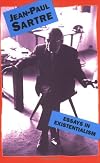
Essays In Existentialism
by Jean-Paul Sartre
On This Page
Description
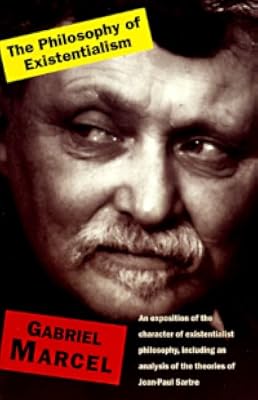
A collection of essays by Jean-Paul Sartre that touch upon the subject of existentialism by looking at aesthetics, emotions, writing, phenomenology, and perception The Philosophy of Existentialism collects representative essays on Jean-Paul Sartre's pioneering subject: existentialism. Beginning with a thoughtful introduction by fellow French philosopher Jean Wahl, this worklooks at existentialism through several lenses, exploring topics such as the emotions, imagination, nothingness, show more freedom, responsibility, and the desire to be God. By providing exposition on a variety of subjects, The Philosophy of Existentialism is a valuable introduction to Sartre's ideas.. show less
Tags
Recommendations
























Member Reviews
I’m all for exploring the feeling of existential angst – the absurdity of life, alienation, solitude, etc (heck aren’t these all just SO wonderful?-) – but I find it far more effective and meaningful to do this in the form of fiction, not philosophy.
I do love Sartre and others for helping to take the blinders off of mankind – while it’s terrifying to live in a world without absolute meaning, it’s reality – and I love how Sartre understands that meaninglessness does not translate to anarchy or “anything goes”, on the contrary, as Baskin says in the introduction, his most significant tenet was that we “must be conscious of our freedom to choose and concerned with the effect our choice will have on all men”. show more
However, if you are going to pick this book up, for most I would suggest just reading Part 1, “The Humanism of Existentialism”, as from Part 2 (“the Problem of Nothingness”) on it is dense and quite dry, better suited for those who truly love the study of philosophy.
Quotes:
“Man is nothing else but what he makes of himself.
…
Thus, existentialism’s first move is to make every man aware of what he is and to make the full responsibility of his existence rest on him. And when we say that a man is responsible for himself, we do not only mean that he is responsible for his own individuality, but that he is responsible for all men.”
“The existentialist, on the contrary, thinks it very distressing that God does not exist, because all possibility of finding values in a heaven of ideas disappears along with Him; there can no longer be an a priori Good, since there is no infinite and perfect consciousness to think it. Nowhere is it written that the Good exists, that we must be honest, that we must not lie; because the fact is we are on a plane where there are only men. Dostoievsky said, ‘If God didn’t exist, everything would be possible.’ That is the very starting point of existentialism.”
“…but if I’ve discarded God the Father, there has to be someone to invent values. You’ve got to take things as they are. Moreover, to say that we invent values means nothing else but this: life has no meaning a priori. Before you come alive, life is nothing; it’s up to you to give it a meaning, and value is nothing else but the meaning that you choose.” show less
I do love Sartre and others for helping to take the blinders off of mankind – while it’s terrifying to live in a world without absolute meaning, it’s reality – and I love how Sartre understands that meaninglessness does not translate to anarchy or “anything goes”, on the contrary, as Baskin says in the introduction, his most significant tenet was that we “must be conscious of our freedom to choose and concerned with the effect our choice will have on all men”. show more
However, if you are going to pick this book up, for most I would suggest just reading Part 1, “The Humanism of Existentialism”, as from Part 2 (“the Problem of Nothingness”) on it is dense and quite dry, better suited for those who truly love the study of philosophy.
Quotes:
“Man is nothing else but what he makes of himself.
…
Thus, existentialism’s first move is to make every man aware of what he is and to make the full responsibility of his existence rest on him. And when we say that a man is responsible for himself, we do not only mean that he is responsible for his own individuality, but that he is responsible for all men.”
“The existentialist, on the contrary, thinks it very distressing that God does not exist, because all possibility of finding values in a heaven of ideas disappears along with Him; there can no longer be an a priori Good, since there is no infinite and perfect consciousness to think it. Nowhere is it written that the Good exists, that we must be honest, that we must not lie; because the fact is we are on a plane where there are only men. Dostoievsky said, ‘If God didn’t exist, everything would be possible.’ That is the very starting point of existentialism.”
“…but if I’ve discarded God the Father, there has to be someone to invent values. You’ve got to take things as they are. Moreover, to say that we invent values means nothing else but this: life has no meaning a priori. Before you come alive, life is nothing; it’s up to you to give it a meaning, and value is nothing else but the meaning that you choose.” show less
The rare book I could not finish. Once in a while its good to read a difficult book. But I woke up yesterday morning thinking, life is just too short to spend a couple of weeks on this. The first chapter on Humanism and Existentialism was very good. (You are what you do and you're responsible for it). But I got very lost in being and nothingness.
Essays In Existentialism By Jean -Paul Sartre
French, Existentialism
Ratings
Members
- Recently Added By
Lists

Books That Changed Me
158 works; 47 members

Existentialism
90 works; 9 members
Author Information

719+ Works 57,584 Members
Sartre is the dominant figure in post-war French intellectual life. A graduate of the prestigious Ecole Normale Superieure with an agregation in philosophy, Sartre has been a major figure on the literary and philosophical scenes since the late 1930s. Widely known as an atheistic proponent of existentialism, he emphasized the priority of existence show more over preconceived essences and the importance of human freedom. In his first and best novel, Nausea (1938), Sartre contrasted the fluidity of human consciousness with the apparent solidity of external reality and satirized the hypocrisies and pretensions of bourgeois idealism. Sartre's theater is also highly ideological, emphasizing the importance of personal freedom and the commitment of the individual to social and political goals. His first play, The Flies (1943), was produced during the German occupation, despite its underlying message of defiance. One of his most popular plays is the one-act No Exit (1944), in which the traditional theological concept of hell is redefined in existentialist terms. In Red Gloves (Les Mains Sales) (1948), Sartre examines the pragmatic implications of the individual involved in political action through the mechanism of the Communist party and a changing historical situation. His highly readable autobiography, The Words (1964), tells of his childhood in an idealistic bourgeois Protestant family and of his subsequent rejection of his upbringing. Sartre has also made significant contributions to literary criticism in his 10-volume Situations (1947--72) and in works on Baudelaire, Genet, and Flaubert. In 1964 he was awarded the Nobel Prize in Literature and refused it, saying that he always declined official honors. (Bowker Author Biography) show less
All Editions
Some Editions
Common Knowledge
- Original title
- The Philosophy of Existentialism
- Original publication date
- 1974
Classifications
Statistics
- Members
- 593
- Popularity
- 49,534
- Reviews
- 4
- Rating
- (3.50)
- Languages
- English
- Media
- Paper, Ebook
- ISBNs
- 3
- ASINs
- 5