
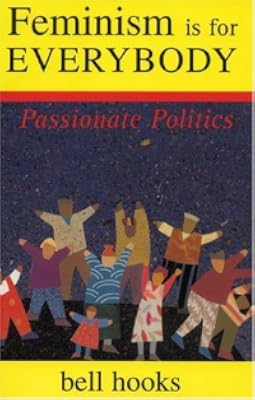
Feminism Is for Everybody: Passionate Politics
by bell hooks
On This Page
Description
In this engaging and provocative volume, Bell Hooks introduces a popular theory of feminism rooted in common sense and the wisdom of experience. Hers is a vision of a beloved community that appeals to all those committed to equality, mutual respect, and justice. hooks applies her critical analysis to the most contentious and challenging issues facing feminists today, including reproductive rights, violence, race, class, and work. With her customary insight and unsparing honesty, Hooks calls show more for a feminism free from divisive barriers but rich with rigorous debate. In language both eye-opening and optimistic, Hooks encourages us to demand alternatives to patriarchal, racist, and homophobic culture, and to imagine a different future. hooks speaks to all those in search of true liberation, asking readers to take look at feminism in a new light, to see that it touches all lives. Issuing an invitation to participate fully in feminist movement and to benefit fully from it, hooks shows that feminism-far from being an outdated concept or one limited to an intellectual elite-is indeed for everybody. show lessTags
Recommendations



Member Reviews
Really enjoyed reading this book. Expected a primer on Feminism and actually got a bit of a critique and history of the movement which turned out to be exactly what I wanted. While hooks may sometimes (actually rarely) stray into assertions I am uncomfortable accepting, a little contemplation on my part often reveals a core of truth in each. And for the most part, I find her to be a very convincing, erudite, and interesting writer. I'd recommend this book to just about anybody because its material addresses forces which affect everybody brought up in capitalist patriarchal society.
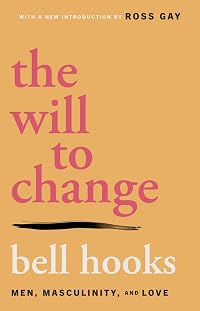
I heard of bell hooks years ago, but have put off reading her for some time. I recently began to work alongside a mostly female team at my job, so I’m reading several feminist texts to appreciate their life and work experiences better. After reading this short work, I wish I would have read her sooner because her perspective was so healing! I liked it so much that I immediately purchased another book of hers, specifically discussing and addressing men (The Will to Change: Men, Masculinity, and Love).
It’s no secret that American society has been undertaking a huge discussion about gender in the past 65 or so years. “Discussion” might not be the right word; “argument” might be better. Anyways, I’ve become concerned that our show more conversations tend to branch off from each other too much and never unite again. Fortunately, hooks’ words unite without losing feminism’s salty essence. Indeed, she seems to argue that feminism’s essence should unite. As a longstanding voice in feminism who grew to fame by bringing racial issues to light, her dual identity – or intersectionality – allows her to come to a bigger picture of human togetherness than a lot of white feminists can. Which is just another way to show how black women rock.
The book’s only drawback for me was the chapter on feminism and spirituality. I’m about as passionate about Christian history as hooks is about feminism, so history’s depths root my words. She suggests swapping masculine religious symbols out for feminist ones because of Christianity’s “patriarchal norms.”
I wholeheartedly agree that fundamentalist/evangelical Christianity in America maintains these norms and that they should be overcome. I disagree that this has always been the case in Christianity. Look at the long, positive history of dealing with the “Virgin Mary” which expresses the value of women choosing God. (Yes, Mary’s role is so strong that negative gender norms have fixated on her, too.) Or how the medieval church declared that God transcended gender. Or how Jesus invited women into his circle when no one else in Judaism gave them access. Or how the Second Great Awakening empowered women and enslaved persons. Etc. I support her argument for feminist inclusion in contemporary religion, but it needs to be made by someone with deeper theological roots.
Overall, though, I love this book. It brought healing and unity in places it was lacking. More people should consider hooks’ insights. The word “feminism” in the title might scare some people off – particularly men – but considering her thoughts can only make us better people. And better people include men like me that want to be rock starts at work, in our families… and even trash talking with each other about sports. I’m grateful that hooks enlightened me a bit, and I’m looking forward to her next book. show less
It’s no secret that American society has been undertaking a huge discussion about gender in the past 65 or so years. “Discussion” might not be the right word; “argument” might be better. Anyways, I’ve become concerned that our show more conversations tend to branch off from each other too much and never unite again. Fortunately, hooks’ words unite without losing feminism’s salty essence. Indeed, she seems to argue that feminism’s essence should unite. As a longstanding voice in feminism who grew to fame by bringing racial issues to light, her dual identity – or intersectionality – allows her to come to a bigger picture of human togetherness than a lot of white feminists can. Which is just another way to show how black women rock.
The book’s only drawback for me was the chapter on feminism and spirituality. I’m about as passionate about Christian history as hooks is about feminism, so history’s depths root my words. She suggests swapping masculine religious symbols out for feminist ones because of Christianity’s “patriarchal norms.”
I wholeheartedly agree that fundamentalist/evangelical Christianity in America maintains these norms and that they should be overcome. I disagree that this has always been the case in Christianity. Look at the long, positive history of dealing with the “Virgin Mary” which expresses the value of women choosing God. (Yes, Mary’s role is so strong that negative gender norms have fixated on her, too.) Or how the medieval church declared that God transcended gender. Or how Jesus invited women into his circle when no one else in Judaism gave them access. Or how the Second Great Awakening empowered women and enslaved persons. Etc. I support her argument for feminist inclusion in contemporary religion, but it needs to be made by someone with deeper theological roots.
Overall, though, I love this book. It brought healing and unity in places it was lacking. More people should consider hooks’ insights. The word “feminism” in the title might scare some people off – particularly men – but considering her thoughts can only make us better people. And better people include men like me that want to be rock starts at work, in our families… and even trash talking with each other about sports. I’m grateful that hooks enlightened me a bit, and I’m looking forward to her next book. show less
I both loved and (not hated but) really disliked this book.
Enthusiastic about:
* the idea of a very brief and accessible introduction to feminism from a positive, loving perspective
* the inclusion of some less-obvious topics alongside the usual suspects (I especially appreciated the discussion of spirituality, religion, and feminism)
* the book's repeated acknowledgement of children's difficult position within a sexist and hierarchical society, and of parenting as a feminist issue
* the desire for feminist children's literature, media, and education
* the general approach of remembering feminist contributions to contemporary life while also looking forward to how we can do more together
Super unhappy and/or uncomfortable with:
* (and this is show more the big one) the book's representation of hooks's particular version of feminism as Feminism writ large--I get that some oversimplification is going to occur in a book this short (118 pages!), but that does not require presenting opinion as fact, overgeneralizing so much, or basically only citing one's own work
* relatedly, the self-satisfied tone in parts: can get grating
* I'm just not that into "sisterhood." This is, I'm sure, partly generational. But the parts of the book that call for reaching out to men, paying attention to masculinities, etc. seem in tension with the insistence that sisterhood, women's consciousness-raising meetings, and being "woman-identified" in loyalties are all central to feminism. (And why should consciousness-raising groups be run like Alcoholics Anonymous? Random.)
* the apparently arbitrary order of the chapters and a lot of the stuff within them
Basically, I found this book very thought-provoking and worthwhile as a snapshot of bell hooks's feminist project, BUT I think it would be a misleading and potentially off-putting primer for a brand-new feminist or a curious non-feminist--which is the whole purpose of the book, so ... hmm. show less
Enthusiastic about:
* the idea of a very brief and accessible introduction to feminism from a positive, loving perspective
* the inclusion of some less-obvious topics alongside the usual suspects (I especially appreciated the discussion of spirituality, religion, and feminism)
* the book's repeated acknowledgement of children's difficult position within a sexist and hierarchical society, and of parenting as a feminist issue
* the desire for feminist children's literature, media, and education
* the general approach of remembering feminist contributions to contemporary life while also looking forward to how we can do more together
Super unhappy and/or uncomfortable with:
* (and this is show more the big one) the book's representation of hooks's particular version of feminism as Feminism writ large--I get that some oversimplification is going to occur in a book this short (118 pages!), but that does not require presenting opinion as fact, overgeneralizing so much, or basically only citing one's own work
* relatedly, the self-satisfied tone in parts: can get grating
* I'm just not that into "sisterhood." This is, I'm sure, partly generational. But the parts of the book that call for reaching out to men, paying attention to masculinities, etc. seem in tension with the insistence that sisterhood, women's consciousness-raising meetings, and being "woman-identified" in loyalties are all central to feminism. (And why should consciousness-raising groups be run like Alcoholics Anonymous? Random.)
* the apparently arbitrary order of the chapters and a lot of the stuff within them
Basically, I found this book very thought-provoking and worthwhile as a snapshot of bell hooks's feminist project, BUT I think it would be a misleading and potentially off-putting primer for a brand-new feminist or a curious non-feminist--which is the whole purpose of the book, so ... hmm. show less
Feminism is for Everybody: Passionate Politics by Bell Hooks approaches feminism from a perspective of inclusiveness as indicated by the title. Hooks explores the idea that everyone benefits from the pursuit of equal rights for women. Interspersed in her essays is the idea that feminist leaders are sometimes guilty of playing into the patriarchy's hands by pitting those who should be joining together against one another. She explores the use of racism and classism, sometimes unconscious, as instrumental in keeping feminism from making the strides it could make. Hooks points out that when equality comes to our society everyone benefits in a stronger community filled with productive citizens working together for the betterment of all. She show more goes on to explore how the upper and even middle classes use inequality to exploit others for their own benefit often while not even seeing how the very lives they live are built on the services of other people. Hooks explores inequality and its relationship to feminism with passion, intelligence, and integrity to the point of making me examine how I live my life in relationship to those around me. show less
Uma das melhores coisas que fiz esse ano foi me juntar a um clube do livro organizado por psicólogas feministas, não tanto para ler e reler livros fundamentais, mas principalmente pelas suculentas reuniões que estão rendendo.
O livro do mês que estamos discutindo semanalmente é o sempre necessário O feminismo é para todo mundo da grande bell hooks. Não tem como não amar hooks com sua linguagem simples, mas jamais simplista, e sua visão operada pelo amor matriarcal que acolhe e jamais afasta, contrariando o discurso patriarcal encrustados nas falas que ouvimos diariamente, seja oriundas de homens ou reverberadas até por mulheres inconscientes que o fazem.
Acho que não poderia indicar um livro melhor para se conhecer o básico show more do pensamento feminista interseccional (que é o único possível), mesmo achando que hooks poderia ter estendido por mais dois capítulos para falar especificamente sobre etarismo e gordofobia, mesmo assim acho um livro fundamental para presentear todos os adolescentes do mundo para se iniciarem nessa jornada de amor proposta por hooks. show less
O livro do mês que estamos discutindo semanalmente é o sempre necessário O feminismo é para todo mundo da grande bell hooks. Não tem como não amar hooks com sua linguagem simples, mas jamais simplista, e sua visão operada pelo amor matriarcal que acolhe e jamais afasta, contrariando o discurso patriarcal encrustados nas falas que ouvimos diariamente, seja oriundas de homens ou reverberadas até por mulheres inconscientes que o fazem.
Acho que não poderia indicar um livro melhor para se conhecer o básico show more do pensamento feminista interseccional (que é o único possível), mesmo achando que hooks poderia ter estendido por mais dois capítulos para falar especificamente sobre etarismo e gordofobia, mesmo assim acho um livro fundamental para presentear todos os adolescentes do mundo para se iniciarem nessa jornada de amor proposta por hooks. show less
This book is a short primer on feminism that bell hooks always wanted but had to write it since it didn't exist. hooks lays down the basic concepts and theory on feminism and how it intersects with race, class, and lesbianism, among other things. It's a book that at times is also very critical of some ways in which feminism is practiced. hooks makes an interesting distinction between feminism that seeks to advance individual women in careers, education, and politics without challenging the system within which they exist - what hooks defines as "reform feminism" and notes is beneficial mostly to privileged white women - and a "revolutionary feminism" which seeks to overturn patriarchal systems and create feminist alternatives. It's also show more a personal book as hooks recalls her own feminist journey from the earliest consciousness raising through various conflicts. It's a great introduction to feminism if you're interested in learning more about the theory and practice, especially since feminism is all too often defined by its opponents.
Favorite Passages:
Favorite Passages:
From the outset, reformist white women with class privilege were well aware that the power and freedom they wanted was the freedom they perceived men of their class enjoying. Their resistance to patriarchal male domination in the domestic household provided them with a connection they could use to unite across class with other women who were weary of male domination. But only privileged women had the luxury to imagine working outside the home would actually provide them with an income which would entitle them to be economically self-sufficient. Working-class women already knew the wages the received would not liberate them. - p. 38show less
While visionary feminist thinkers have understood our need for a broad-based feminist movement, one that addresses the needs of girls and boys, women and men, across class, we have not produced a body of visionary feminist theory written in an accessible language or shared through oral communication. Today in academic circles much of the most celebrated feminist theory is written in a sophisticated jargon that only the well-educated can read. Most people in our society do not have a basic understanding of feminism; they cannot acquire that understanding from a wealth of diverse material, grade school-level primers, and so on, because this material does not exist. We must create it if we are to rebuild feminist movement that is truly for everyone.
Feminist advocates have not organized resources to ensure that we have television stations or consistent spots on existing stations. There is no feminist news hour on any television or radio show. One of the difficulties we faced spreading the word about feminism is that anything having to do with the female gender is seen as covering feminist ground even if it does not contain a feminist perspective. We do have radio shows and a few television shows that highlight gender issues, but that is not that same as highlighting feminism. Ironically one of the achievements of contemporary feminism is that everyone is more open to discussing gender and the concerns of women, but again, not necessarily from a feminist perspective. - p. 112
I think bell hooks had an accessible style that made her writing more appealing to people who are just getting into her subject matter. Many of the points she makes about issues related to gender, race, and class hold up all these years later because of her intuition and perceptiveness. She is a legendary scholar and feminist speaker for a reason.
That said, I wish hooks could’ve learned how to condense her writing into clear, concise essays instead of writing what essentially amounts to thought spirals that only end when she decides to reference herself or complain about other activists she’s met in the past.
That said, I wish hooks could’ve learned how to condense her writing into clear, concise essays instead of writing what essentially amounts to thought spirals that only end when she decides to reference herself or complain about other activists she’s met in the past.
Members
- Recently Added By
Lists

LT picks: Blue Books
197 works; 40 members

Best Feminist Literature
188 works; 26 members

South End Press Favorites
26 works; 2 members

South End Press
35 works; 1 member

Books Read in 2011
684 works; 20 members

Biblioteca de não ficção
41 works; 1 member

important
24 works; 1 member

feminism & gender studies
17 works; 1 member

Books by Black Women
108 works; 2 members
Author Information

80+ Works 22,966 Members
A cultural critic, an intellectual, and a feminist writer, bell hooks best known for classic books including Ain't I a Woman, Bone Black, All About Love, Rock My Soul, Belonging, We Real Cool, Where We Stand, Teaching to Transgress, Teaching Community, Outlaw Culture, and Reel to Real, hooks is Distinguished Professor in Residence in Appalachian show more Studies at Berea College, and resides in her home state of Kentucky. show less
Some Editions
Awards and Honors
Notable Lists
Common Knowledge
- Original publication date
- 2000
Classifications
- Genres
- Sexuality and Gender Studies, General Nonfiction, Nonfiction
- DDC/MDS
- 305.4201 — Society, government, & culture Social sciences, sociology & anthropology Social group - Age, Gender, Ethnicity Women Social role and status of women Standard subdivisions
- LCC
- HQ1190 .H67 — Social sciences The family. Marriage, Women and Sexuality The Family. Marriage. Women Women. Feminism
- BISAC
Statistics
- Members
- 2,039
- Popularity
- 10,219
- Reviews
- 42
- Rating
- (3.93)
- Languages
- 9 — Catalan, English, French, German, Italian, Japanese, Russian, Spanish, Portuguese (Portugal)
- Media
- Paper, Audiobook, Ebook
- ISBNs
- 26
- ASINs
- 12