On This Page
Description
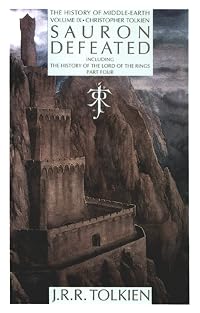
In the first part of Sauron Defeated, Christopher Tolkien completes his account of the writing of The Lord of the Rings, beginning with Sam's rescue of Frodo from the Tower of Kirith Ungol, and giving a very different account of the Scouring of the Shire. This part ends with versions of the previously unpublished Epilogue, an alternate ending to the masterpiece in which Sam attempts to answer his children's questions years after the departure of Bilbo and Frodo from the Grey Havens. The show more second part introduces The Notion Club Papers, now published for the first time. Written by J.R.R. Tolkien in the interval between The Two Towers and The Return of the King (1945-1946), these mysterious Papers, discovered in the early years of the twenty-first century, report the discussions of a literary club in Oxford in the years 1986-1987. Those familiar with the Inklings will see a parallel with the group whose members included J.R.R. Tolkien and C.S. Lewis. After a discussion of the possiblities of travel through space and time through the medium of 'true dream," the story turns to the legend of Atlantis, the strange communications received by members of the club out of remote past, and the violent irruption of the legend into northwestern Europe. Closely associated with the Papers is a new version of the Numenorean legend, The Drowning of Anadune, which constitutes the third part of the book. At this time the language of the Men of the West, Adunaic, was first devised - Tolkien's fifteenth invented language. The book concludes with an elaborate account of the structure of this language by Arundel Lowdham, a member of the Notion Club, who learned it in his dreams. Sauron Defeated is illustrated with the changing conceptions of the fortress of Kirith Ungol and Mount Doom, previously unpublished drawings of Orthanc and Dunharrow, and fragments of manuscript written in Numenorean script. show lessTags
Recommendations






Member Reviews
http://nwhyte.livejournal.com/1956859.html
The end of the story of the writing of The Lord of the Rings, including Tolkien's attempts to plot out the very end of the story - Gollum always had a role in the destruction of the Ring, but exactly what that was took some time to work out; but Saruman only gradually emerged as the villain in The Scouring of the Shire, and a postscript of Sam and Rose and their children twenty years on was dropped on the advice of Tolkien's beta readers (I wonder if whether J.K. Rowling was given the same advice about the end of the Harry Potter series; if so, she ignored it).
The book also includes drafts of an unpublished novel called The Notion Club Papers, written in the mid-1940s, in which a club of show more academics - in 1987! - listens to one of their number who has uncovered, through his dreams, another variation on the story of Eärendil and the fall of Númenor which was one of the earliest elements of Tolkien's mythos and which he never quite got right. What's interesting about The Notion Club Papers is that it clarifies the reason for part of the failure: the characterisation is all in the framing narrative, and the epic mythos all in the Númenor bits without really much in the way of interesting personal glimpses. What Tolkine managed in The Hobbit and particularly in The Lord of the Rings was to unite the epic and the personal, but it was only after long years of effort and rewriting, and I don't think either half of The Notion Papers was really salvageable. Still, it's interesting to map the roads not travelled. show less
The end of the story of the writing of The Lord of the Rings, including Tolkien's attempts to plot out the very end of the story - Gollum always had a role in the destruction of the Ring, but exactly what that was took some time to work out; but Saruman only gradually emerged as the villain in The Scouring of the Shire, and a postscript of Sam and Rose and their children twenty years on was dropped on the advice of Tolkien's beta readers (I wonder if whether J.K. Rowling was given the same advice about the end of the Harry Potter series; if so, she ignored it).
The book also includes drafts of an unpublished novel called The Notion Club Papers, written in the mid-1940s, in which a club of show more academics - in 1987! - listens to one of their number who has uncovered, through his dreams, another variation on the story of Eärendil and the fall of Númenor which was one of the earliest elements of Tolkien's mythos and which he never quite got right. What's interesting about The Notion Club Papers is that it clarifies the reason for part of the failure: the characterisation is all in the framing narrative, and the epic mythos all in the Númenor bits without really much in the way of interesting personal glimpses. What Tolkine managed in The Hobbit and particularly in The Lord of the Rings was to unite the epic and the personal, but it was only after long years of effort and rewriting, and I don't think either half of The Notion Papers was really salvageable. Still, it's interesting to map the roads not travelled. show less
Want to know why Rosie told Sam she had been expecting him since the Spring? The answer is here, in the Epilogue, which was not published in RotK because Tolkien's friends all yelled at him until he agreed to drop it.
SPOILER FOLLOWS:
Because on March 25, she sensed the fall of Sauron as it happened! At the same time that the people of Minas Tirith "sang for the joy that welled up in their hearts from what source they could not tell."
That should convince you, if you are the right kind of Tolkienist, that you have to have this book.
SPOILER FOLLOWS:
Because on March 25, she sensed the fall of Sauron as it happened! At the same time that the people of Minas Tirith "sang for the joy that welled up in their hearts from what source they could not tell."
That should convince you, if you are the right kind of Tolkienist, that you have to have this book.
9th volume in Christopher's books on the History of the Writing of Middle Earth. This being the last of the 4 that are about The Lord of the Rings. The material within combines the notes on book 6 of LotR, from the Tower of Cirith Ungol to an appendice Tolkien wrote of a conversation between Sam and a 15yr old Elanor, concerning the fates of the other members of the Fellowship. Added to this are the Notion Club papers, a fanciful deviation of Tolkien's that imagined members of Oxford discussing visions of the fall of Numenor and the Adunaic language. The last third concerns itself with what there can be known of the Adunaic language, especially considering that Tolkien abruptly stopped work on it when he got back to Sam and Frodo in show more Mordor. Worth the read, if you've read the others. There can be found some interesting Anglo-Saxon style storytelling which I found intense and poetic, near the end of the Notion Club section. And I did enjoy reading the Scouring of the Shire where Frodo is the champion, even though it totally doesn't fit the actual book.
3 stars oc show less
3 stars oc show less
Didn't read the whole thing in detail, but this volume is worth it for the Notion Club Papers alone. A linguistic problem solving novella? Sign me up!
Didn't read the whole thing in detail, but this volume is worth it for the Notion Club Papers alone. A linguistic problem solving novella? Sign me up!
Vol 9. Christopher Tolkien systematizes his father's papers.
Não lido
Members
- Recently Added By
Lists

LOTR wishlist
9 works; 1 member
Author Information

600+ Works 516,575 Members
A writer of fantasies, Tolkien, a professor of language and literature at Oxford University, was always intrigued by early English and the imaginative use of language. In his greatest story, the trilogy The Lord of the Rings (1954--56), Tolkien invented a language with vocabulary, grammar, syntax, even poetry of its own. Though readers have show more created various possible allegorical interpretations, Tolkien has said: "It is not about anything but itself. (Certainly it has no allegorical intentions, general, particular or topical, moral, religious or political.)" In The Adventures of Tom Bombadil (1962), Tolkien tells the story of the "master of wood, water, and hill," a jolly teller of tales and singer of songs, one of the multitude of characters in his romance, saga, epic, or fairy tales about his country of the Hobbits. Tolkien was also a formidable medieval scholar, as evidenced by his work, Beowulf: The Monster and the Critics (1936) and his edition of Anciene Wisse: English Text of the Anciene Riwle. Among his works published posthumously, are The Legend of Sigurd and Gudrún and The Fall of Arthur, which was edited by his son, Christopher. In 2013, his title, TheHobbit (Movie Tie-In) made The New York Times Best Seller List. (Bowker Author Biography) show less
All Editions
Series

Work Relationships
Is contained in
Common Knowledge
- Canonical title
- Sauron Defeated
- Original publication date
- 1992-01-06
- People/Characters
- Samwise Gamgee; Frodo Baggins; Amandil; Amroth
- Important places
- Middle-earth; Cirith Ungol; The Shire; Grey Havens; Orodruin; Anduin (show all 8); Bag End, Hobbiton, The Shire; Barad-dûr
- Important events
- End of the Third Age
- Original language
- English
- Disambiguation notice
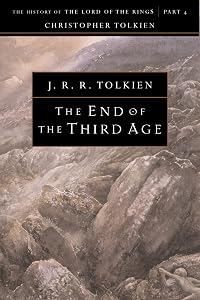
- Sauron Defeated also includes The Notion Club Papers (a time-travel story related to Númenor), a draft of the Drowning of Anadûnê and the only extant account of the Adûnaic language. However, some paperback editions, enti... (show all)tled in this case The End of the Third Age, include only The Lord of the Rings material, being only a third of the original edition.
Classifications
Statistics
- Members
- 1,211
- Popularity
- 20,464
- Reviews
- 7
- Rating
- (3.93)
- Languages
- English
- Media
- Paper, Ebook
- ISBNs
- 9
- UPCs
- 2
- ASINs
- 10