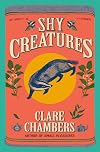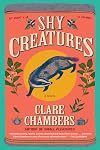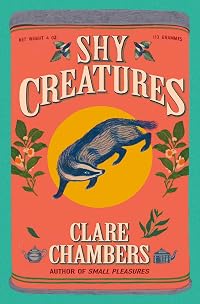
Shy Creatures
by Clare Chambers
On This Page
Description
"A beautiful story of unfolding secrets and unforeseen consequences, filled with moments that are somehow restrained and astute and gorgeously written all at the same time."—Holly Gramazio, bestselling author of The Husbands"Infinitely moving, quirky, acutely observed and beautifully written...Confirms Clare Chambers as one of our most talented writers."—The Guardian
An alluring literary mystery full of secrets and lies, when an art teacher at a psychiatric hospital in 1960s England show more finds her life turned upside down by the arrival of a mysterious patient who has spent decades living in complete isolation with his elderly aunts in a decrepit Victorian house. Perfect for fans of Ann Patchett, Barbara Kingsolver, and Tessa Hadley.
In all failed relationships there is a tipping point. It goes unnoticed at the time but can later be identified as the beginning of the decline. For Helen it was the weekend that the Hidden Man came to Westbury Park...
The London suburb of Croydon,1964: Helen Hansford is unmarried and in her thirties. Something of a disappointment to her middle-class parents, she's an art therapist at the Westbury Park psychiatric hospital, where she has been having a rebellious love affair with her colleague Gil, a dashing but married doctor.
One spring afternoon they receive a call about a disturbance at a derelict, vine-covered Victorian house a few miles up the road. There the police find a mute, thirty-seven-year-old man called William Tapping, his hair and beard down to his waist. It appears he lives in the old house with his elderly, frail aunt, who expires as soon as she's admitted to the hospital. No one knows why William has been shut away for decades, unseen by neighbors, with only his two now-deceased aunts for company. Westbury Park becomes his refuge.
When it emerges that William is not only sane but a talented artist, Helen comes to see him as something of a personal project. But as she tries to solve the puzzle of the Hidden Man's past, Helen's own carefully constructed life of secrets begins to unravel...
A gorgeously written and life-affirming novel about life's delicate layers of experience and connection, Shy Creatures reveals all the different ways we can be confined...and liberated.
. show less
Tags
Recommendations
















Member Recommendations
by Ciruelo
Member Reviews
I am not often a historical fiction fan, but I was a fan of this one. Working along two timelines Chambers presents William, a boy whose life is put into a sort of suspended animation when his well-intentioned but batty nervous guardian aunts react, well, battily and nervously, to an event and disappear him. This occurs immediately after WWII. For nearly 20 years William is locked inside a crumbling house, devoid of interaction with anyone other than the aforementioned batty nervous elderly aunts where food, light, and heat are strictly limited and he is treated as a child. In the second timeline, we meet Helen, an art therapist at a progressive psychiatric hospital with secrets of her own. When William comes to stay at the hospital show more their lives converge. I don't want to get into specifics, but we learn a good deal about the ways in which women's lives were constrained in both time frames and the way psychiatric care was provided. We learn a lot too about how those things can lead us to look for saviors, and how often we mistake hubris for authority and stability. Chambers allows us to see humanity even in the shadiest characters, and those who do the most damage. The book does tie things up conveniently and in ways that soothe the reader. Sometimes that doesn't work for me, but either she does it particularly well or I am just in a moment where I will take all the soothing I can get. Maybe both. In any event, I think it is a beautiful book that manages to inform and entertain and pulls off being hopeful without being hokey. show less
Shy Creatures is an absolute gem of a book best read super slowly to savour every beautifully written word.
The narrative shifts seamlessly forwards, from the weekend in 1964 when William Tapping is admitted to Westbury Park, a psychiatric hospital in Croydon where Helen Hansford has recently started work as an art therapist, and backwards in reverse chronology to 1938 when William’s world’s turned upside down.
I liked the countdown to ground zero chapters, William’s story, the best. I found the highly evocative descriptions of the disintegrating family home, the quirks and foibles of its inhabitants, rationing, Boswell the cat, the massacred chickens and William’s fairground adventure incredibly moving. Subtle details take on show more monumental meaning – a silver badger napkin holder, moth-eaten undergarments snagged on tree branches, a headily scented rose bush, a special fountain pen.
The characters, relationships, situations and slow burn revelations are extremely credible; the perception of mental health and its treatment in the revolutionary Sixties really interesting. Green Shield stamp books and Brooke Bond tea cards brought back lovely memories and there’s a lot to smile about, too.
Like the gentle lapping of waves with a surprisingly brutal undertow, Shy Creatures is a rollercoaster ride. Loved it. show less
The narrative shifts seamlessly forwards, from the weekend in 1964 when William Tapping is admitted to Westbury Park, a psychiatric hospital in Croydon where Helen Hansford has recently started work as an art therapist, and backwards in reverse chronology to 1938 when William’s world’s turned upside down.
I liked the countdown to ground zero chapters, William’s story, the best. I found the highly evocative descriptions of the disintegrating family home, the quirks and foibles of its inhabitants, rationing, Boswell the cat, the massacred chickens and William’s fairground adventure incredibly moving. Subtle details take on show more monumental meaning – a silver badger napkin holder, moth-eaten undergarments snagged on tree branches, a headily scented rose bush, a special fountain pen.
The characters, relationships, situations and slow burn revelations are extremely credible; the perception of mental health and its treatment in the revolutionary Sixties really interesting. Green Shield stamp books and Brooke Bond tea cards brought back lovely memories and there’s a lot to smile about, too.
Like the gentle lapping of waves with a surprisingly brutal undertow, Shy Creatures is a rollercoaster ride. Loved it. show less
Oh I loved this book so much!! It is heartbreaking and heartwarming at the same time.
Helen is an art therapist in a mental institute. She is having a torrid affair with a doctor there, and all is going relatively well until a new patient comes along. His name is William and he has been a recluse for nearly 20 years.
As their stories unfold, you are taken on a memorable journey that ends in the most satisfying way.
Beautiful story told magnificently. A fave.
Helen is an art therapist in a mental institute. She is having a torrid affair with a doctor there, and all is going relatively well until a new patient comes along. His name is William and he has been a recluse for nearly 20 years.
As their stories unfold, you are taken on a memorable journey that ends in the most satisfying way.
Beautiful story told magnificently. A fave.
A gentle exploration of psychiatric treatment in the 1960s and the ways in which people become trapped in a world that eventually, like all things, ends. Based on a true story, the police are called to a house where no one was thought to live. In it were found a man with long hair and a very long beard and his elderly aunt. They had been shut away for decades with little presence outside the house - if anyone did call they were 'busybodies'.
William Tapping and his Aunt Louisa lived shut up in a large house that is falling down around them. An argument between the two ends in William throwing clothes out of the upstairs window and the police being called along with Dr Rudden, a psychiatrist and the woman he is having an affair with, show more Helen, who is an art therapist in Westbury Park.
Helen's interest is piqued by William and she sets off to find out more about him, uncovering what the man himself, who is mute, does not or can not reveal. And so the secrets come tumbling out - everyones, not just William's and the axis changes.
Told through two timelines - one in the 60s and one in the 30s when William was a boy, Chambers slowly reveals what happened to William and his friend Francis but offers hope of a life worth living though Francis's mother, Marion. Her guilt over not following-up on what she knew to be a situation that wouldn't bear scrutiny when William was a child ensured that she was offered him a safe place to live and a life that he was able to make for himself as an adult.
The book is tender and compassionate but also shows how we trap ourselves, particularly if we care too much about what others think. It is a world slowly built up by Chambers, loaded with period detail that screams poverty.
Gil met her at the front door and ushered her inside a long dark hallway with bulging wallpaper the colour of raw liver. Even though it was bright daylight outside, the gloom within was relieved only partially by a single sallow bulb.
p42
This is a book of disappointments, sex, never explicitly mentioned but always present, and of people who do the hard thing but the right thing. A real pleasure to read. show less
William Tapping and his Aunt Louisa lived shut up in a large house that is falling down around them. An argument between the two ends in William throwing clothes out of the upstairs window and the police being called along with Dr Rudden, a psychiatrist and the woman he is having an affair with, show more Helen, who is an art therapist in Westbury Park.
Helen's interest is piqued by William and she sets off to find out more about him, uncovering what the man himself, who is mute, does not or can not reveal. And so the secrets come tumbling out - everyones, not just William's and the axis changes.
Told through two timelines - one in the 60s and one in the 30s when William was a boy, Chambers slowly reveals what happened to William and his friend Francis but offers hope of a life worth living though Francis's mother, Marion. Her guilt over not following-up on what she knew to be a situation that wouldn't bear scrutiny when William was a child ensured that she was offered him a safe place to live and a life that he was able to make for himself as an adult.
The book is tender and compassionate but also shows how we trap ourselves, particularly if we care too much about what others think. It is a world slowly built up by Chambers, loaded with period detail that screams poverty.
Gil met her at the front door and ushered her inside a long dark hallway with bulging wallpaper the colour of raw liver. Even though it was bright daylight outside, the gloom within was relieved only partially by a single sallow bulb.
p42
This is a book of disappointments, sex, never explicitly mentioned but always present, and of people who do the hard thing but the right thing. A real pleasure to read. show less
This book takes place in a lost world: the England of the early 1960s. Helen is the new art therapist at Westbury Park, a psychiatric hospital where the patients are allowed the freedom to roam the grounds and the doctors are divided between the believers in medication and the believers in newfangled psychiatric theories of freedom and identity. One of the younger doctors, Gil, begins an affair with Helen, despite being married to her cousin and a father of two young children. Conventional Helen is determined to wait for him to be free of his obligations. Then a new patient arrives. William, an elective mute, has been found in a dilapidated home with his dying aunt. He's apparently had no contact with the outside world for decades. When show more Helen sees his artistic talents, she becomes determined to discover the secrets in his past.
Perhaps to match her subject, Claire Chambers takes a relatively old-fashioned path in telling this story, loosely based on a true-life event. She concentrates on richly drawing her characters and making them believable in their actions rather than rushing through her plot, and this leisurely style is sometimes to her detriment. The beginning of the book spends a lot of time on the development of Gil and Helen's relationship, but since it's obvious where that plot is going to end up, it's a little difficult to get invested in them. But once William enters the narrative, things pick up considerably and the flashbacks in reverse order through William's experiences build the story well. This book is not groundbreaking in any way, but a nice old-style story with characters a reader can care about is always a good thing. show less
Perhaps to match her subject, Claire Chambers takes a relatively old-fashioned path in telling this story, loosely based on a true-life event. She concentrates on richly drawing her characters and making them believable in their actions rather than rushing through her plot, and this leisurely style is sometimes to her detriment. The beginning of the book spends a lot of time on the development of Gil and Helen's relationship, but since it's obvious where that plot is going to end up, it's a little difficult to get invested in them. But once William enters the narrative, things pick up considerably and the flashbacks in reverse order through William's experiences build the story well. This book is not groundbreaking in any way, but a nice old-style story with characters a reader can care about is always a good thing. show less
This is cozy mystery with little in the way of graphic violence or fast paced action, but with an intriguing puzzle to be solved by an amateur investigator. This is not necessarily a shortcoming as Chambers tackles some interesting themes and takes us back to a simpler time and place. She explores control disguised as caring along with repression masquerading as respectability. The action takes place in mid-century British suburbia where sex, drugs and rock and roll have yet to arrive, and the people are still locked in a post-war mentality characterized by stuffy propriety.
Helen Hunsford is a middle-aged art therapist working in a psychiatric hospital in Croyden. She is a flawed character who is romantically involved with a married show more psychiatrist and still struggling to be emancipated from a controlling mother. She is intelligent, attractive and empathetic, but also lonely and excessively tolerant.
The plot is based on an actual incident where a recluse was discovered living alone under squalled conditions for decades and unknown to his neighbors. In this novel, William Tapping plays the part of the recluse. He is alone, mute, shy and fearful. These things qualify him for commitment to Westbury Park Psychiatric Hospital. Notwithstanding his problems, William is also a talented artist. This talent serves as the hook to pique Helen’s curiosity about his background.
Chambers follows two plotlines that never really satisfactorily merge. One is Helen’s current interactions with her lover and extended family. The other is her investigation into William’s backstory. The narrative moves smoothly between the present (1964), the recent past where William is cloistered by his somewhat Gothic aunt, and the pre-war period when William was a friendless schoolboy living in poverty with his three spinster aunts.
Although the mystery develops too slowly, Chambers writing is never rushed and evokes the period with multiple exquisite details while not overlooking the emotions of her various characters. The tone is lowkey, but Chambers precisely captures the mood of the times. The puzzle pieces fit neatly together in the end to provide a satisfying conclusion to the mystery. show less
Helen Hunsford is a middle-aged art therapist working in a psychiatric hospital in Croyden. She is a flawed character who is romantically involved with a married show more psychiatrist and still struggling to be emancipated from a controlling mother. She is intelligent, attractive and empathetic, but also lonely and excessively tolerant.
The plot is based on an actual incident where a recluse was discovered living alone under squalled conditions for decades and unknown to his neighbors. In this novel, William Tapping plays the part of the recluse. He is alone, mute, shy and fearful. These things qualify him for commitment to Westbury Park Psychiatric Hospital. Notwithstanding his problems, William is also a talented artist. This talent serves as the hook to pique Helen’s curiosity about his background.
Chambers follows two plotlines that never really satisfactorily merge. One is Helen’s current interactions with her lover and extended family. The other is her investigation into William’s backstory. The narrative moves smoothly between the present (1964), the recent past where William is cloistered by his somewhat Gothic aunt, and the pre-war period when William was a friendless schoolboy living in poverty with his three spinster aunts.
Although the mystery develops too slowly, Chambers writing is never rushed and evokes the period with multiple exquisite details while not overlooking the emotions of her various characters. The tone is lowkey, but Chambers precisely captures the mood of the times. The puzzle pieces fit neatly together in the end to provide a satisfying conclusion to the mystery. show less
This slow-paced novel was perfect for listening to on my morning walks.
Thirty-four-year-old Helen Hansford is an art therapist at Westbury Park, a psychiatric hospital. She has been in a long-term romantic relationship with a psychiatrist at the facility, Dr. Gil Rudden, who is married to a distant relative of Helen’s. Thirty-seven-year-old William Tapping is admitted as a patient. He has spent 25 years as a virtual recluse; living with three elderly and eccentric aunts, he has had almost no contact with the world outside his home. Though he does not speak, Helen discovers he has artistic talent and so takes a special interest in him. She sets out to learn about his past and finds people, Francis and Marion Kenley in particular, who show more knew William as a young boy. Eventually the reason for William’s trauma and subsequent paranoia, isolation, and silence is uncovered.
The novel alternates between the present (1964) and the past (1938). Both Helen and William’s perspectives are provided so the two emerge as fully developed characters whose motivations the reader comes to understand. It is impossible not to like William. Because of his upbringing, he lacks social skills, but he is intelligent, kind, and loyal. Likewise, Helen is intelligent and dedicated to work and her clients and dutiful to her family. Gil is her blind spot.
I disliked Gil from the beginning. He’s handsome and charismatic and he knows it; he uses charm to manipulate people to give him what he wants. What he usually wants is to have his ego stroked. His treatment of Lorraine, Helen’s teenaged niece who is briefly admitted to Westbury Park, is despicable. He tends to be patronizing which betrays his feelings of superiority. It is not difficult to predict how his and Helen’s relationship will develop.
My favourite character is Marion Kenley. She is open-minded and kind-hearted, not just in words but in actions. Her efforts to make amends for past missteps are commendable and even inspiring. She is the one who most clearly shows the transformative power of kindness. The name William gives her at the end is most appropriate.
The book is described as examining “all the different ways we can be confined” and that is an apt statement. William was confined in his home, Helen is bound to an unsuitable man, and Lorraine’s life is constrained by her mother. In the end, all come to experience the joy of freedom. Of course, the happy ending may strike some readers as somewhat sentimental.
The portrayal of British society in the time periods of the novel is excellent. People are so repressed; even horrifying and traumatic events are spoken of in an emotionally muted way using euphemisms. The discussions of the treatment of people with mental illness are informative.
This is my first book by Clare Chambers. Because I enjoyed it so much, I’m going to download her Small Pleasures, an earlier novel which was longlisted for the Women’s Prize for Fiction.
Note: Please check out my reader's blog (https://schatjesshelves.blogspot.com/) or substack (https://doreenyakabuski.substack.com/) for over 1,200 of my book reviews. show less
Thirty-four-year-old Helen Hansford is an art therapist at Westbury Park, a psychiatric hospital. She has been in a long-term romantic relationship with a psychiatrist at the facility, Dr. Gil Rudden, who is married to a distant relative of Helen’s. Thirty-seven-year-old William Tapping is admitted as a patient. He has spent 25 years as a virtual recluse; living with three elderly and eccentric aunts, he has had almost no contact with the world outside his home. Though he does not speak, Helen discovers he has artistic talent and so takes a special interest in him. She sets out to learn about his past and finds people, Francis and Marion Kenley in particular, who show more knew William as a young boy. Eventually the reason for William’s trauma and subsequent paranoia, isolation, and silence is uncovered.
The novel alternates between the present (1964) and the past (1938). Both Helen and William’s perspectives are provided so the two emerge as fully developed characters whose motivations the reader comes to understand. It is impossible not to like William. Because of his upbringing, he lacks social skills, but he is intelligent, kind, and loyal. Likewise, Helen is intelligent and dedicated to work and her clients and dutiful to her family. Gil is her blind spot.
I disliked Gil from the beginning. He’s handsome and charismatic and he knows it; he uses charm to manipulate people to give him what he wants. What he usually wants is to have his ego stroked. His treatment of Lorraine, Helen’s teenaged niece who is briefly admitted to Westbury Park, is despicable. He tends to be patronizing which betrays his feelings of superiority. It is not difficult to predict how his and Helen’s relationship will develop.
My favourite character is Marion Kenley. She is open-minded and kind-hearted, not just in words but in actions. Her efforts to make amends for past missteps are commendable and even inspiring. She is the one who most clearly shows the transformative power of kindness. The name William gives her at the end is most appropriate.
The book is described as examining “all the different ways we can be confined” and that is an apt statement. William was confined in his home, Helen is bound to an unsuitable man, and Lorraine’s life is constrained by her mother. In the end, all come to experience the joy of freedom. Of course, the happy ending may strike some readers as somewhat sentimental.
The portrayal of British society in the time periods of the novel is excellent. People are so repressed; even horrifying and traumatic events are spoken of in an emotionally muted way using euphemisms. The discussions of the treatment of people with mental illness are informative.
This is my first book by Clare Chambers. Because I enjoyed it so much, I’m going to download her Small Pleasures, an earlier novel which was longlisted for the Women’s Prize for Fiction.
Note: Please check out my reader's blog (https://schatjesshelves.blogspot.com/) or substack (https://doreenyakabuski.substack.com/) for over 1,200 of my book reviews. show less
Members
- Recently Added By
Published Reviews
ThingScore 100
Her 10th novel, Shy Creatures, confirms her as one of our most talented writers, inhabiting something of the territory of Barbara Pym and Elizabeth Taylor.... Dark humour rumbles beneath even her most melancholy evocations; irony and compassion weave through her portraits of repressed lives that finally glimmer with some hope of liberation. The novel’s ending is subtle but complete, and show more infinitely moving. show less
added by vancouverdeb
Lists

Books Read in 2024
4,727 works; 128 members
Author Information

12+ Works 1,536 Members
Awards and Honors
Awards
Distinctions
The Guardian Book of the Day (2024-08-24)
Common Knowledge
- Canonical title
- Shy Creatures
- Original publication date
- 2024
- People/Characters
- Helen Hansford; William Tapping; Gilbert Rudden; Kathleen Rudden; Louisa Tapping; Clive Hansford (show all 18); June Hansford; Lorraine Sheila Hansford; Lionel Frant; Alistair Duggan; Francis Kenley; Mrs. Hansford; Mr. Hansford; Marion Kenley; Morley Holt; Rose Tapping; Elsie Tapping; Basil Kenley
- Important places
- Croydon, London, England, UK; Westbury Park Hospital; Brock Cottage
- Dedication
- To Peter
- First words
- In all failed relationships there is a point that passes unnoticed at the time, which can later be identified as the beginning of the decline.
- Quotations
- Already there was between them that invisible thread that joins two people who have noticed each other for the first time.
Dirt is never destroyed, only transferred, he thought, dispirited by this experience of housework.
“But surely it's the unconventional kinds of imprisonment that are the hardest to escape,” said Marion.
Truth or safety, William thought. Must it always be one or the other. - Last words
- (Click to show. Warning: May contain spoilers.)There was something luxurious in revisiting an old sorrow from the safe haven of present happiness, but tonight he was tired and his mind was already crowded with anticipation of the important jobs that awaited him in the morning.
- Blurbers
- Stonex, Emma; Gale, Patrick; Evans, Lissa; Hogan, Ruth; Knight, India
Classifications
Statistics
- Members
- 281
- Popularity
- 114,974
- Reviews
- 15
- Rating
- (3.89)
- Languages
- Dutch, English, German
- Media
- Paper, Audiobook, Ebook
- ISBNs
- 20
- ASINs
- 6