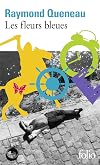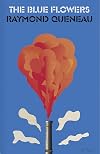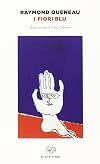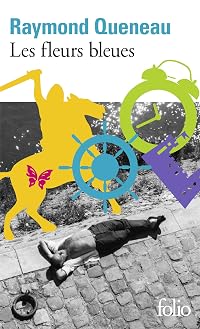
The Blue Flowers
by Raymond Queneau
On This Page
Description
The Blue Flowers follows two unlikely characters: Cidrolin, who alternates between drinking and napping on a barge parked along the Seine in the 1960s, and the Duke d'Auge as he rages through history--about 700 years of it--refusing to crusade, clobbering his king with a cannon, and dabbling in alchemy. But is it just a coincidence that the Duke appears only when Cidrolin is dozing? And vice versa? As Raymond Queneau explains: "There is an old Chinese saying: 'I dream that I am a butterfly show more and praythere is a butterfly dreaming he is me.' The same can be said of the characters in this novel--those who live in the past dream of those who live in the modern era--and those who live in the modern era dream of those who live in the past." Channeling Villon and Céline, Queneau attempts to bring the language of the French streets into common literary usage, and his mad wordplays, puns, bawdy jokes, and anachronistic wackiness have been kept amazingly and glitteringly intact by the incomparable translator Barbara Wright. show lessTags
Recommendations

















Member Reviews
Apparently (from the little article at the end), this is one of Queneau's favorites of his own work. I found it a little bland compared to his other stuff. However, it was quite funny with lots of wordplay (as usual), though I think I might have missed a lot of the puns and jokes due to translation. Probably much more entertaining in French (the title, for example, is some idiom in France). Nevertheless, this is probably a good introduction to Queneau, and is quite entertaining.
Apparently (from the little article at the end), this is one of Queneau's favorites of his own work. I found it a little bland compared to his other stuff. However, it was quite funny with lots of wordplay (as usual), though I think I might have missed a lot of the puns and jokes due to translation. Probably much more entertaining in French (the title, for example, is some idiom in France). Nevertheless, this is probably a good introduction to Queneau, and is quite entertaining.
Il mio giudizio complessivo sul romanzo e su Queneau in generale è senz’altro positivo! Sono rimasta invischiata nella staffetta onirica tra Auge e Cidrolin, e sono stata conquistata dalla genialità dello stile.
Grazie anche ovviamente alla splendida traduzione di Calvino.
http://www.naufragio.it/iltempodileggere/12901
Grazie anche ovviamente alla splendida traduzione di Calvino.
http://www.naufragio.it/iltempodileggere/12901
Totally hilarious romp into the past the present the future dreams and wordplay! (not to mention ourselves...)
I found it very Calvinoesque, but not sure whether that's because the original is Calvinoesque or because Calvino put a lot of himself into the translation, or both.
I found it very Calvinoesque, but not sure whether that's because the original is Calvinoesque or because Calvino put a lot of himself into the translation, or both.
On connaît le célèbre apologue chinois : Tchouang-tseu rêve qu'il est un papillon, mais n'est-ce point le papillon qui rêve qu'il est Tchouang-tseu ? De même dans ce roman, est-ce le duc d'Auge qui rêve qu'il est Cidrolin ou Cidrolin qui rêve qu'il est le duc d'Auge ?
unfinished
Cidrolin vit sur une péniche avec sa fille. Il regarde la vie de manière un peu amusée, distanciée et désabusée, semblable à bien d'autres personnages de Raymond Queneau : il repeint sa clôture, tente avec difficultés de se faire servir un repas satisfaisant, s'enfile des verres d'essence de fenouil et rêve. Il rêve du Duc D'Auge, sorte de double parcourant l'Histoire depuis le Moyen Âge jusqu'à rejoindre Cidrolin dans les derniers chapitres.
Le Duc ne fait pas dans les sentiments. Accompagné de ses chevaux Sthène et Stèphe - dotés de parole, il castagne à tour de bras, sans omettre les quelques religieux qui l'entourent. Il traverse la révolution Française comme un événement secondaire, fréquente un alchimiste, show more pratique la peinture rupestre. .. Tout ça semble brouillon, on ne saisit pas vraiment les motivations du Duc D'Auge, ni la finalité d'une telle débauche d'activité.
Issu de ces temps sans modernité technique, il pourrait se rapprocher du fantasme de la nature brute de l'homme, de la simplicité directe du subconscient, celui de Cidrolin en l’occurrence. La rencontre du Duc et de Cidrolin permettront d'ailleurs d'élucider quelques énigmes dans le comportement de ce dernier.
Les calembours m'ont parfois amusé ; certains passages furent sources de déambulations sur Wikipédia ; mais au final je ne garde rien d'essentiel de la lecture de ce livre au programme prometteur mais dont le patchwork de saynètes décousues reste trop sibyllin. show less
Le Duc ne fait pas dans les sentiments. Accompagné de ses chevaux Sthène et Stèphe - dotés de parole, il castagne à tour de bras, sans omettre les quelques religieux qui l'entourent. Il traverse la révolution Française comme un événement secondaire, fréquente un alchimiste, show more pratique la peinture rupestre. .. Tout ça semble brouillon, on ne saisit pas vraiment les motivations du Duc D'Auge, ni la finalité d'une telle débauche d'activité.
Issu de ces temps sans modernité technique, il pourrait se rapprocher du fantasme de la nature brute de l'homme, de la simplicité directe du subconscient, celui de Cidrolin en l’occurrence. La rencontre du Duc et de Cidrolin permettront d'ailleurs d'élucider quelques énigmes dans le comportement de ce dernier.
Les calembours m'ont parfois amusé ; certains passages furent sources de déambulations sur Wikipédia ; mais au final je ne garde rien d'essentiel de la lecture de ce livre au programme prometteur mais dont le patchwork de saynètes décousues reste trop sibyllin. show less
Apr 27, 2013French
Members
- Recently Added By
Lists

Books I've Read More Than Once
602 works; 49 members

French Books
102 works; 15 members

Literary Works Read in College
316 works; 15 members

Books and authors mentioned by Le Clézio in his Nobel Prize speech
87 works; 3 members
Author Information

175+ Works 9,860 Members
This French author of treatises on mathematics and other scholarly works has made his reputation writing comic novels. Raymond Queneau (through one of his characters) once defined humor as "an attempt to purge lofty feelings of all the baloney." Roger Shattuck interprets his philosophy: "Life is of course absurd and it is ludicrous to take it show more seriously; only the comic is serious." Life is so serious to Queneau that only laughter makes it bearable. He has written a play, screenplays, poetry, numerous articles, and many novels, the first of which, Le Chiendent (The Bark Tree), was published in 1933. In Exercises in Style (1947) he tells a simple anecdote 99 different ways. According to some critics, The Blue Flowers (1965) represents Queneau at his best. Its jokes, puns, double-entendres, deceptions, wild events, tricky correspondences, and bawdy language make it a feast of comic riches. The influence of Charlie Chaplin, as well as James Joyce is detectable in Queneau's fiction. (Bowker Author Biography) show less
Some Editions
Series
Belongs to Publisher Series
Common Knowledge
- Canonical title
- The Blue Flowers
- Original title
- Les fleurs bleues
- Original publication date
- 1965
- People/Characters*
- Cidrolin; Joachim duc d'Auge; Monseigneur Onésiphore Biroton; Abbé Riphinte; Lalix; Mouscaillot (show all 7); Pouscaillou
- Important places
- Paris, France; France
- First words*
- Le vingt-cinq septembre douze cent soixante-quatre, au petit jour, le duc d'Auge se pointa sur le sommet du donjon de son château pour y considérer, un tantinet soit peu, la situation historique.
- Last words*
- (Click to show. Warning: May contain spoilers.)Une couche de vase couvrait encore la terre, mais, ici et là, s'épanouissaient déjà de petites fleurs bleues.
- Original language
- French
*Some information comes from Common Knowledge in other languages. Click "Edit" for more information.
Classifications
Statistics
- Members
- 844
- Popularity
- 32,472
- Reviews
- 13
- Rating
- (3.89)
- Languages
- 10 — Czech, Dutch, English, French, German, Greek, Italian, Japanese, Spanish, Swedish
- Media
- Paper, Ebook
- ISBNs
- 33
- ASINs
- 7