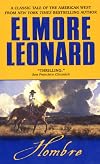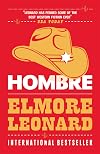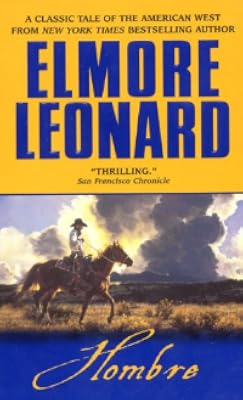
Hombre
by Elmore Leonard
On This Page
Description
Grand Master Elmore Leonard is justifiably acknowledged as the best writer of crime fiction alive" (Newsweek)-and, in fact, one of the very best ever, alongside other all-time greats like John D. MacDonald, Dashiell Hammett, James M. Cain, and Robert Parker. But he has also many acclaimed masterworks of American western fiction to his credit-including Hombre, the basis for the classic Hollywood motion picture starring Paul Newman. Set in Arizona mining country, Hombre is the tale of a white show more man raised by Indians, who must come to the aid of people who hate him when their stagecoach is attacked by outlaws. As thrilling as his contemporary novels of crime, double-cross, and murder in Detroit and Miami, Hombre is Elmore Leonard at his riveting best-no less than one would expect from the creator of U.S. Marshal Raylan Givens (Justified). show lessTags
Recommendations









Member Reviews
Rightfully so, Elmore Leonard is best known for his crime fiction, but Leonard was not always a mystery writer. He began his career, in fact, as a writer of western novels and short stories, and he made significant contributions to that genre. And, just as with his crime novels, several of Leonard’s westerns were chosen by Hollywood producers to become major movies of the day. Hombre, written in 1961, was one of those so chosen, and in 1967 it became a feature film starring Paul Newman as “Hombre,” a white man who had been raised by his Apache kidnappers.
“Maybe he let us think a lot of things about him that weren’t true. But as Russell would say, that was up to us. He let people do or think what they wanted while he smoked a show more cigarette and thought it out calmly, without his feelings getting mixed up in it. Russell never changed the whole time, though I think everyone else did in some way. He did what he felt had to be done. Even if it meant dying. So maybe you don’t have to understand him. You just know him.”
As a boy, John Russell was taken from his family by Apaches who made him one of their own. Now, Russell so easily passes for Apache that the light color of his eyes is the only startling thing about his physical appearance. Russell continued to live with the tribe even when it was eventually forced onto the reservation, so for all practical purposes he considers himself to be Apache - not white. But now, John Russell, sporting a fresh haircut and dressed as a white man, is on a personal mission of his own, and he finds himself on a small stagecoach making its final run across that part of Arizona.
When the other passengers realize who John Russell really is, they want nothing to do with him — even to forcing him to ride atop the coach with its driver. The passengers include a young woman who has just been recaptured from the Apaches who had held and abused her for several weeks, another woman and her Indian Agent husband who has a secret of his own, and an intimidating cowboy who bullied his way into the stage at the last minute. Russell, who has little other choice, tolerates the abuse, but he’s listening to their words — and he’s taking notes.
But then everything changes.
Suddenly, the passengers are begrudgingly depending on John Russell to keep them alive. And John Russell is probably just as surprised as they are to find himself defending a bunch of people who hate him so much.
Bottom Line: Hombre is significant in the degree to which it exposes the exploitation and deadly abuse suffered by the Indian tribes at the hands of those who continually invaded their lands, and it is highly sympathetic to that point of view. It is also a novel about the foolishness and hypocrisy of any kind of racism that happens to have been written in the midst of America’s civil rights movement of the fifties and sixties — and the timing was no accident. This is a reminder of just how good and impactful a western novel can be, and I highly recommend it. show less
“Maybe he let us think a lot of things about him that weren’t true. But as Russell would say, that was up to us. He let people do or think what they wanted while he smoked a show more cigarette and thought it out calmly, without his feelings getting mixed up in it. Russell never changed the whole time, though I think everyone else did in some way. He did what he felt had to be done. Even if it meant dying. So maybe you don’t have to understand him. You just know him.”
As a boy, John Russell was taken from his family by Apaches who made him one of their own. Now, Russell so easily passes for Apache that the light color of his eyes is the only startling thing about his physical appearance. Russell continued to live with the tribe even when it was eventually forced onto the reservation, so for all practical purposes he considers himself to be Apache - not white. But now, John Russell, sporting a fresh haircut and dressed as a white man, is on a personal mission of his own, and he finds himself on a small stagecoach making its final run across that part of Arizona.
When the other passengers realize who John Russell really is, they want nothing to do with him — even to forcing him to ride atop the coach with its driver. The passengers include a young woman who has just been recaptured from the Apaches who had held and abused her for several weeks, another woman and her Indian Agent husband who has a secret of his own, and an intimidating cowboy who bullied his way into the stage at the last minute. Russell, who has little other choice, tolerates the abuse, but he’s listening to their words — and he’s taking notes.
But then everything changes.
Suddenly, the passengers are begrudgingly depending on John Russell to keep them alive. And John Russell is probably just as surprised as they are to find himself defending a bunch of people who hate him so much.
Bottom Line: Hombre is significant in the degree to which it exposes the exploitation and deadly abuse suffered by the Indian tribes at the hands of those who continually invaded their lands, and it is highly sympathetic to that point of view. It is also a novel about the foolishness and hypocrisy of any kind of racism that happens to have been written in the midst of America’s civil rights movement of the fifties and sixties — and the timing was no accident. This is a reminder of just how good and impactful a western novel can be, and I highly recommend it. show less
Published in 1961, [Hombre] was Elmore Leonard's fifth western novel. During the following half-century, up until his death in 2013, Leonard would produce 40 additional novels (a few of them westerns, but most crime and thriller works), several film scripts, and countless short stories. Hombre was the first Leonard novel adapted for the big screen, directed by Martin Ritt and starring Paul Newman, Richard Boone, Fredric March, and Martin Balsam.
The title's "Hombre" is John Russell, a remote, laconic figure who arouses suspicion simply by existing. Raised by Apaches, he was adopted by a white man, James Russell, who named him and, upon his death, left him his ranch property. He and several others are anxious to leave Sweetmary and show more quickly hitch rides on a coach chartered by an Indian Agent and his wife. Passengers are forbidden to ride on top, beside the driver. But at the first rest stop, he's banished to the top by the other five passengers because they've decided he's a "half-breed", and he therefore can't ride inside with them.
Before the next stop is reached, the coach is held up by three thugs who work for one of the passengers. The four disarm the passengers (not knowing that Russell has a rifle in the center of his bedroll), relieve the Indian Agent of thousands of dollars, take or kill all the horses, take most of the water, grab the Agent's wife as a hostage, and ride off. It falls to Russell to extricate the passengers and driver from this pickle. All are unwilling participants, all expecting someone else to face the danger and lead them to safety.
This book read differently to me than other Leonard books. I think that's a result of its being an early work. Leonard's famous rules for writing are on display, but his application of them hasn't fully matured. I read a couple of reviews by readers who wanted character development, but didn't see it because of Leonard's subtlety. Actions speak louder than words, and the actions, and inactions, of the characters exposes them.
Both thumbs up. show less
The title's "Hombre" is John Russell, a remote, laconic figure who arouses suspicion simply by existing. Raised by Apaches, he was adopted by a white man, James Russell, who named him and, upon his death, left him his ranch property. He and several others are anxious to leave Sweetmary and show more quickly hitch rides on a coach chartered by an Indian Agent and his wife. Passengers are forbidden to ride on top, beside the driver. But at the first rest stop, he's banished to the top by the other five passengers because they've decided he's a "half-breed", and he therefore can't ride inside with them.
Before the next stop is reached, the coach is held up by three thugs who work for one of the passengers. The four disarm the passengers (not knowing that Russell has a rifle in the center of his bedroll), relieve the Indian Agent of thousands of dollars, take or kill all the horses, take most of the water, grab the Agent's wife as a hostage, and ride off. It falls to Russell to extricate the passengers and driver from this pickle. All are unwilling participants, all expecting someone else to face the danger and lead them to safety.
This book read differently to me than other Leonard books. I think that's a result of its being an early work. Leonard's famous rules for writing are on display, but his application of them hasn't fully matured. I read a couple of reviews by readers who wanted character development, but didn't see it because of Leonard's subtlety. Actions speak louder than words, and the actions, and inactions, of the characters exposes them.
Both thumbs up. show less
I never read mysteries, I never read Westerns, I never read thrillers. I read this in order to think about something that would contrast against the books I usually read. It was an interesting exercise. It's a "classic Western" (although it's not at all clear what that expression means), written, distantly, in emulation of Hemingway.
Leonard wants to demonstrate the simplest form of moral judgment, one that depends on avoiding passions and complexities, and minimizing communication. His protagonist, Russell, says very little, and emerges as a hero. That's a common trope in Westerns; it reminds me of Gary Cooper, Clint Eastwood, and many others. But why would such a character be interesting? The kind of reader who would be satisfied by a show more book like this would have to feel a need to simplify character: to such a reader, people would appear unhelpfully or uninterestingly complex in real life, or in other novels, and so it would be desirable to find the most basic types of people. The intricacies of psychology, morals, and ethics would have to appear as deceptive, irrelevant, or even dangerously ill-conceived. There would be a fear of ambiguity and weakness, of moral and social entanglement, and of relationships. All those apparent problems are easily solved by a characters so unavailable to society that they can only appear as heroes or a villains.
In terms of writing, Leonard has a special interest in brief moments of decisive action. He expands them, in slow motion, and that produces a characteristic effect of drama: but why is he interested in them to begin with? Maybe he feels, somehow, that real human interaction takes places in those compressed moments. But of course it doesn't: it takes place slowly, painfully, incrementally, over lifetimes. Life would be simple if it happened mainly in an instant. show less
Leonard wants to demonstrate the simplest form of moral judgment, one that depends on avoiding passions and complexities, and minimizing communication. His protagonist, Russell, says very little, and emerges as a hero. That's a common trope in Westerns; it reminds me of Gary Cooper, Clint Eastwood, and many others. But why would such a character be interesting? The kind of reader who would be satisfied by a show more book like this would have to feel a need to simplify character: to such a reader, people would appear unhelpfully or uninterestingly complex in real life, or in other novels, and so it would be desirable to find the most basic types of people. The intricacies of psychology, morals, and ethics would have to appear as deceptive, irrelevant, or even dangerously ill-conceived. There would be a fear of ambiguity and weakness, of moral and social entanglement, and of relationships. All those apparent problems are easily solved by a characters so unavailable to society that they can only appear as heroes or a villains.
In terms of writing, Leonard has a special interest in brief moments of decisive action. He expands them, in slow motion, and that produces a characteristic effect of drama: but why is he interested in them to begin with? Maybe he feels, somehow, that real human interaction takes places in those compressed moments. But of course it doesn't: it takes place slowly, painfully, incrementally, over lifetimes. Life would be simple if it happened mainly in an instant. show less
The celebrated lean prose of Elmore Leonard is perfect for Hombre, the epitome of a good Western. It has enough of the usual Western tropes to keep you oriented, but with enough of a new spin to keep you interested. It tells a crowd-pleasing story that also has the whisperings of a deeper theme in the form of the enigmatic John Russell. There is good dialogue and pace, and the finale on the slope is perfect dramatic staging. No wonder this led to such a good film adaptation, and as reading it is effortless.
Hombre - Elmore Leonard *****
I love books like this. A relatively simple storyline, straight to the point dialect and plenty of action. The plot isn’t slowed down with daft love interests and the men are proper men who wouldn’t hesitate to put a bullet between your eyes...
John Russel was raised by the Apache but has now decided that he wants to return to civilisation and live as white man, he boards a stagecoach hoping this will be the next step in his chosen path. He becomes embroiled in a bitter fight that leaves him and the other passengers marooned in the desert. He must make a decision whether to stay and help or look out for himself. Coupled with racial tensions and the obvious prejudices of the time, every character has his show more or her flaws. This book really is a nailbiter until the last bullet is fired.
Would I recommend? Definitely. Leonard reminds me very much of James M Cain, the same sort of blunt writing that just reaches out and grabs your attention. It is surprising that a novel with so few pages can have such an impression. This may have been my first by the author, but I can guarantee it won’t be my last. show less
I love books like this. A relatively simple storyline, straight to the point dialect and plenty of action. The plot isn’t slowed down with daft love interests and the men are proper men who wouldn’t hesitate to put a bullet between your eyes...
John Russel was raised by the Apache but has now decided that he wants to return to civilisation and live as white man, he boards a stagecoach hoping this will be the next step in his chosen path. He becomes embroiled in a bitter fight that leaves him and the other passengers marooned in the desert. He must make a decision whether to stay and help or look out for himself. Coupled with racial tensions and the obvious prejudices of the time, every character has his show more or her flaws. This book really is a nailbiter until the last bullet is fired.
Would I recommend? Definitely. Leonard reminds me very much of James M Cain, the same sort of blunt writing that just reaches out and grabs your attention. It is surprising that a novel with so few pages can have such an impression. This may have been my first by the author, but I can guarantee it won’t be my last. show less
Hombre by Elmore Leonard is a classic gem of a western tale. This author, known for his thrillers, has also written some of the best westerns around. This is a simple story of a loner who helps the survivors of a stagecoach robbery, but in Leonard’s capable hands a story of prejudice, survival and moral honesty emerges.
Hombre is John Russell, a man who was raised by Apaches but lives in a white world that doesn’t accept him. Told he is not “white” enough to ride in the stagecoach, he is banished to ride upon the roof. After being robbed and left in the desert with no transportation or water, these same people turn to him and expect him to save them.
Once can’t help but picture Paul Newman as Hombre, a role he made famous in the show more movies. Every time the character’s piercing blue eyes are mentioned, I saw Newman’s face. This is a quick read, but though short in page numbers, there is a powerful story here and one that I really enjoyed. show less
Hombre is John Russell, a man who was raised by Apaches but lives in a white world that doesn’t accept him. Told he is not “white” enough to ride in the stagecoach, he is banished to ride upon the roof. After being robbed and left in the desert with no transportation or water, these same people turn to him and expect him to save them.
Once can’t help but picture Paul Newman as Hombre, a role he made famous in the show more movies. Every time the character’s piercing blue eyes are mentioned, I saw Newman’s face. This is a quick read, but though short in page numbers, there is a powerful story here and one that I really enjoyed. show less
John Russell was raised as an Apache and is generally treated as such by the townsfolk near where he lives and works as a horse wrangler. He has a business matter to settle a few towns over and so joins the passengers on the last stagecoach due out before the station closes down. The passengers are an eclectic bunch consisting of the former clerk of the station who’s off to look for a job elsewhere, the Indian Agent from a nearby reservation along with his wife, a young girl recently rescued who just wants to get back home and a thug of a man who bullied his way into the final place for the trip. When the others find out who Russell is they don’t want him riding inside the coach with them but this is a decision they may come to show more regret when they are held up by a bunch of outlaws who leave them in the middle of nowhere without horses or much water. After the way they treated him will he help them or leave them to the mercy of the outlaws who are about to return to finish them off?
With themes of survival and prejudice this is a fairly simple tale of the old west where the rule of the gun was the only law. It’s the first of the author’s westerns that I’ve read being more familiar with his thrillers but this still retains the snappy dialogue and fast pace that is synonymous with his work. While there are some very good action sequences that’s not all there is to this book as we get to examine the characters and ethical decisions they make through the eyes of the clerk as our narrator for this tale. A quick and enjoyable read. show less
With themes of survival and prejudice this is a fairly simple tale of the old west where the rule of the gun was the only law. It’s the first of the author’s westerns that I’ve read being more familiar with his thrillers but this still retains the snappy dialogue and fast pace that is synonymous with his work. While there are some very good action sequences that’s not all there is to this book as we get to examine the characters and ethical decisions they make through the eyes of the clerk as our narrator for this tale. A quick and enjoyable read. show less
Members
- Recently Added By
Lists

25 Best Western Novels (Western Writers of America)
25 works; 1 member
Author Information

181+ Works 40,889 Members
Elmore John Leonard, Jr. 10/11/25 -- 8/20/13 Elmore John Leonard, Jr., popularly known as mystery and western writer Elmore Leonard, was born in New Orleans, Louisiana on October 11, 1925. He served in the United States Naval Reserve from 1943 to 1946. He received a Ph.D. in English from the University of Detroit in 1950. After graduating, he show more wrote short stories and western novels as well as advertising and education film scripts. In 1967, he began to write full-time and received several awards including the 1977 Western Writers of America award and the 1984 Writers of America Edgar Allan Poe award. His other works include Get Shorty, Out of Sight, Hombre, Mr. Majestyk, 3:10 to Yuma, and Rum Punch. Many of his works were adapted into movies. Library of America recently announced plans to publish the first of a three-volume collection of his books beginning in the Fall of 2014. Leonard died on August 20, 2013 from complications of a stroke he had earlier. He was 87 years old. (Bowker Author Biography) show less
Some Editions
Work Relationships
Common Knowledge
Classifications
Statistics
- Members
- 531
- Popularity
- 56,295
- Reviews
- 26
- Rating
- (3.80)
- Languages
- English, French
- Media
- Paper, Audiobook, Ebook
- ISBNs
- 28
- ASINs
- 9