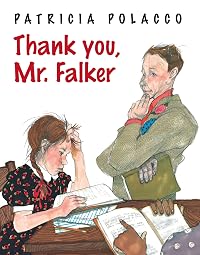
Thank You, Mr. Falker
by Patricia Polacco
On This Page
Description
At first, Trisha loves school, but her difficulty learning to read makes her feel dumb, until, in the fifth grade, a new teacher helps her understand and overcome her problem.Tags
Recommendations

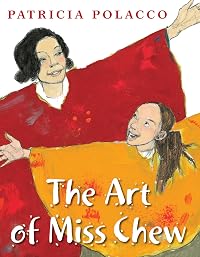
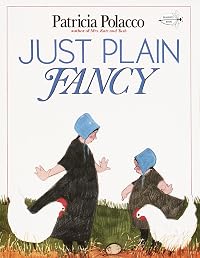
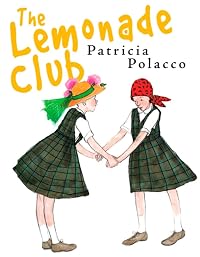
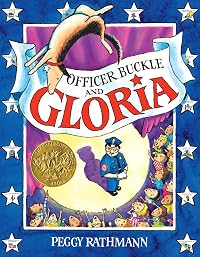
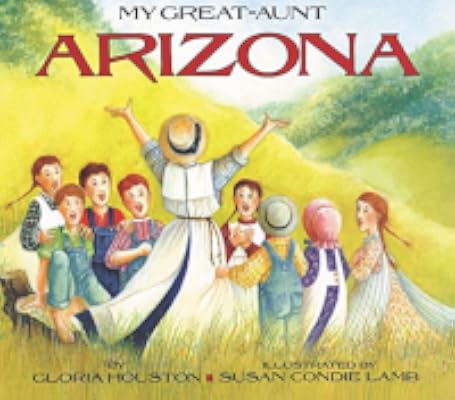
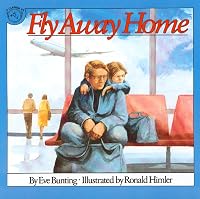
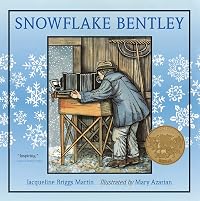
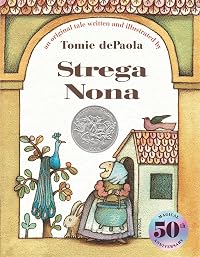
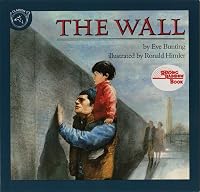
Member Recommendations
Member Reviews
Acclaimed children's author and artist Patricia Polacco draws on her own youthful experience with dyslexia in this autobiographical picture-book, perfectly capturing both the anguish of a young person who wants to learn, and is made to feel stupid because of her disability, and the incredible difference an understanding teacher can make to a struggling student. Taught to revere books, and the stories they contain, young Trisha looks forward to the day when she too learns to read. But when she finally gets the chance, she discovers that the letters move before her eyes, "wiggling" in such a way that she cannot make them out. Soon, she has fallen far behind her peers, and starts to believe their taunting claims that she is dumb. It is show more only after many years, when fifth-grade teacher Mr. Falker comes into her life, that Trisha finally gets the help she needs...
Polacco has done it again with Thank You, Mr. Falker, creating an incredibly moving book, with visual and textual narratives that complement one another perfectly. The illustrations here really capture Trisha's embarrassment, frustration and shame, drawing the reader into her experience. I found myself choking up while reading this, and given the number of times this happens with Polacco's books, I'm starting to wonder if I should stop reading her books on the commuter train! In any case, this is one that I highly recommend to all young children who have a learning disability, and to the adults and children in their lives. Truly, an outstanding book! show less
Polacco has done it again with Thank You, Mr. Falker, creating an incredibly moving book, with visual and textual narratives that complement one another perfectly. The illustrations here really capture Trisha's embarrassment, frustration and shame, drawing the reader into her experience. I found myself choking up while reading this, and given the number of times this happens with Polacco's books, I'm starting to wonder if I should stop reading her books on the commuter train! In any case, this is one that I highly recommend to all young children who have a learning disability, and to the adults and children in their lives. Truly, an outstanding book! show less
This book was an effective story because it displays reading in a positive light. In the beginning, the grandparents poured honey on the cover of a book and recited a saying about the importance of knowledge and reading. This imagery reappeared at the conclusion of the story. The recurring imagery of reading and honey served as a reminder of how powerful the message was. Trisha developed the skills throughout the story to read and her life was altered as a result, reinforcing the belief that knowledge and reading are essential. The fact that Trisha repeated the saying and poured the honey on her own book shows that the message stuck with her and guided her in the pursuit of education.
I liked how the book dealt with the issue of show more dyslexia. While dyslexia was never outwardly announced as the problem Trisha encountered, it can be assumed that this was the issue because she was mixing up letters and had a reading specialist work with training her eyes to respond to stimuli. Dyslexia is a learning disability that occasionally goes untreated for many years because it is not an obvious disability. I think it was beneficial that this story featured many teachers that overlooked the disability because that is a common problem. Children who are having trouble reading could connect to this story and change their self image from a bad student to someone who just struggles a little. Dyslexia is not typically addressed in children’s books so the fact that Polacco touched on the issue makes this story an important read.
The main idea of this story is that teachers can make a large impact on a child’s life and students are worth putting extra time into helping. While Trisha could have been easily written off and sent through school without ever getting help, Mr. Falker knew that his assistance was greatly needed and made a large impact. Teachers are essential in shaping student success and helping children achieve their maximum potential. Thank you, Mr. Falker not only showed a teacher helping a student learn to read but also how they handled bullies. The two major issues that were overcome with the help of a teacher, dyslexia and bullies, bolstered the main concept of teachers as life changing influences in the lives of children. show less
I liked how the book dealt with the issue of show more dyslexia. While dyslexia was never outwardly announced as the problem Trisha encountered, it can be assumed that this was the issue because she was mixing up letters and had a reading specialist work with training her eyes to respond to stimuli. Dyslexia is a learning disability that occasionally goes untreated for many years because it is not an obvious disability. I think it was beneficial that this story featured many teachers that overlooked the disability because that is a common problem. Children who are having trouble reading could connect to this story and change their self image from a bad student to someone who just struggles a little. Dyslexia is not typically addressed in children’s books so the fact that Polacco touched on the issue makes this story an important read.
The main idea of this story is that teachers can make a large impact on a child’s life and students are worth putting extra time into helping. While Trisha could have been easily written off and sent through school without ever getting help, Mr. Falker knew that his assistance was greatly needed and made a large impact. Teachers are essential in shaping student success and helping children achieve their maximum potential. Thank you, Mr. Falker not only showed a teacher helping a student learn to read but also how they handled bullies. The two major issues that were overcome with the help of a teacher, dyslexia and bullies, bolstered the main concept of teachers as life changing influences in the lives of children. show less
As someone with dyslexia, this book made me feel seen. So often students that are high functioning get overlooks. No one sees their struggle because they work hard to hide it. Patricia Polacco shows us that it takes just one person to really see those students and change their lives. My hope is that this book is also a reminder to students that are struggling that they are normal and safe sharing their struggles.
This is a widely known and beloved children’s book, and it is so for a reason. This book describes so well what many children who struggle with reading go through- they feel stupid and worthless, like their entire sense self is judged on their ability to read. The fact that the main character, Tricia, is so easy to identify with is one of the main things that makes this such a wonderful book. Another thing I love about this book is the fact that it is a personal story of the author. This makes the entire thing that much more realistic. My favorite thing about the book however, is the ending, where Patricia Polacco writes about meeting Mr. Falker again many years later. She tells him how inspirational he was to her and how he inspired show more her, and that she is now a children’s author. This gives the reader a sense of validation. I think the main idea of the book is that a good teacher can make all the difference. This is especially important to me as a future teacher. I look to Mr. Falker as a role model of the kind of teacher I hope to be someday. show less
Thank You, Mr. Falker, a popular work by Patricia Polacco, is commonly known as an inspirational book for children with disabilities. The story centers around a young girl, named Trisha, who is great at drawing, but not so great at reading or writing. She is constantly teased until she comes across a teacher who is dedicated and determined to help her overcome her disability. I loved this book because of its realistic plot and appreciation for teachers’ dedication to students. The story shows how large of an impact a teacher can have on a student. For example, Mr. Falker explains to Trisha that if she wants to acquire knowledge, that she is going to have to chase it, sort of like a bee making honey. After this, she is motivated to show more overcome her disability and keep learning. Not only is this book inspirational, but it is also autobiographical. Patricia Polacco even admits on her website that this book is about her own experiences learning how to read and having dyslexia as a child. I assume the girl’s name ‘Trisha’ came from the name ‘Patricia.’ This fact makes the book even more special because the girl who couldn’t read or write in the story ends up writing the actual book! show less
This book is such a great example of the impact a teacher can have on a student's life. Patricia had Dyslexia and Dysnumeria and was unable to read or write numbers and letters. Well, not until she met Mr. Falker.
I would use this book with fellow teachers, or with students. Teachers can discover how much impact they can have on the students within their classroom, while students can realize they aren't dumb. Even if they cannot read or write, students need to realize that they are amazingly created and that even if their friends cannot read, it's no place to make fun of them. It could be used to address bullying as well.
I sought this book as a mentor text, however I think what I found is a text that mentors. By that, I mean I wouldn't show more use it to mentor writing, but I would use it to mentor a persons character. show less
I would use this book with fellow teachers, or with students. Teachers can discover how much impact they can have on the students within their classroom, while students can realize they aren't dumb. Even if they cannot read or write, students need to realize that they are amazingly created and that even if their friends cannot read, it's no place to make fun of them. It could be used to address bullying as well.
I sought this book as a mentor text, however I think what I found is a text that mentors. By that, I mean I wouldn't show more use it to mentor writing, but I would use it to mentor a persons character. show less
This book is one of my all time favorites. It tells the story of a young girl who wants to learn how to read, but struggles. She makes in many grades faking it, getting bullied and frustrated until a teacher takes notice and helps her get her learning disability diagnosed. This book beautifully portrays Trisha's story, not shying away from telling of the cruelty she endured or of the death of her grandmother, an important figure. The plot is so well developed- weaving in the family values of Trisha, her relationship with her grandmother and her death, and her struggles reading all together seamlessly. The part where Trisha's grandmother talks about holding onto the grass or else youd go to the stars was a beautiful set up for explaining show more that she let go of the grass (passed on.) The author also drew the illustrations, watercolor, darker colored, and detailed. The emotion on her character's faces is so well depicted. The metaphor, like the letting go of the grass and the knowledge being sweet like honey are lovely. Love this book! show less
Members
- Recently Added By
Published Reviews
ThingScore 88
CCBC (Cooperative Children's Book Center Choices, 1998)
Before she started school, Trisha looked forward to learning how to read more than anything else. But in first grade, when all her classmates are learning to read, she finds that she can't. Each year her problem gets worse and worse and, although she struggles to keep it a secret, she begins to think of herself as stupid and ugly. It isn't show more until Trisha is in fifth grade that she has a teacher who discovers her secret and helps her learn to read. An autobiographical story shows the frustration and determination of child who's different, and offers a tender portrait of the real-life teacher who made a difference in her life. CCBC categories: Picture Books for Older Children. 1998, Philomel, 40 pages, $16.99. Ages 6-10. show less
Before she started school, Trisha looked forward to learning how to read more than anything else. But in first grade, when all her classmates are learning to read, she finds that she can't. Each year her problem gets worse and worse and, although she struggles to keep it a secret, she begins to think of herself as stupid and ugly. It isn't show more until Trisha is in fifth grade that she has a teacher who discovers her secret and helps her learn to read. An autobiographical story shows the frustration and determination of child who's different, and offers a tender portrait of the real-life teacher who made a difference in her life. CCBC categories: Picture Books for Older Children. 1998, Philomel, 40 pages, $16.99. Ages 6-10. show less
added by kthomp25
Hazel Rochman (Booklist, May 1, 1998 (Vol. 94, No. 17))
Like many of Polacco's picture-book stories, this one is autobiographical. Who would believe that this gifted storyteller had started off with a serious learning disability? From kindergarten on, Trisha gets attention because she can draw; but she hides the fact that she can't read--all she sees on the page are "wiggling shapes" --until show more her fifth-grade teacher discovers Trisha's problem, gets her special help, and sets her free. "That little girl was me," Polacco says in a final note. As always she tells the story with intense emotion: no understatement here; reading is "torture." The big line-and-watercolor illustrations are bright with color and theatrical gesture, expressing the child's happiness with her grandparents in a family of readers, her fear and loneliness in the classroom ("she hated hated hated school"), her anguish when the kids jeer at her in the schoolyard, and her joy when finally she reads the words on the page ("she was happy, so very happy"). Trisha isn't idealized: we see her messy and desperate, poring over her books. This will encourage the child who feels like a failure and the teacher who cares. Category: For the Young. 1998, Putnam/Philomel, $15.99. Ages 5-9. show less
Like many of Polacco's picture-book stories, this one is autobiographical. Who would believe that this gifted storyteller had started off with a serious learning disability? From kindergarten on, Trisha gets attention because she can draw; but she hides the fact that she can't read--all she sees on the page are "wiggling shapes" --until show more her fifth-grade teacher discovers Trisha's problem, gets her special help, and sets her free. "That little girl was me," Polacco says in a final note. As always she tells the story with intense emotion: no understatement here; reading is "torture." The big line-and-watercolor illustrations are bright with color and theatrical gesture, expressing the child's happiness with her grandparents in a family of readers, her fear and loneliness in the classroom ("she hated hated hated school"), her anguish when the kids jeer at her in the schoolyard, and her joy when finally she reads the words on the page ("she was happy, so very happy"). Trisha isn't idealized: we see her messy and desperate, poring over her books. This will encourage the child who feels like a failure and the teacher who cares. Category: For the Young. 1998, Putnam/Philomel, $15.99. Ages 5-9. show less
added by kthomp25
Lists

Honey For a Child's Heart
1,152 works; 25 members

75 Books for Literacy Block: Fall 2016
17 works; 2 members

4th Grade Books
312 works; 5 members

75 Books for Fall Literacy Block - Dr. Reed
67 works; 2 members

Youth: DEI
296 works; 2 members

Picture books about books
110 works; 6 members

Book Review Roundup
254 works; 2 members
Written and Illustrated By
805 works; 1 member
Author Information

81+ Works 57,111 Members
Patricia Polacco was born in Lansing, Michigan on July 11, 1944. She attended Oakland Tech High School in Oakland, California before heading off to the California College of Arts and Crafts in Oakland, then Laney Community College in Oakland. She then set off for Monash University, Mulgrave, Australia and the Royal Melbourne Institute of show more Technology, Melbourne, Australia where she received a Ph.D in Art History, Emphasis on Iconography. After college, she restored ancient pieces of art for museums. She didn't start writing children's books until she was 41 years old. She began writing down the stories that were in her head, and was then encouraged to join the Society of Children's Book Writers and Illustrators. There she learned how to put together a dummy and get a story into the form of a children's picture book. Her mother paid for a trip to New York, where the two visited 16 publishers in one week. She submitted everything she had to more than one house. By the time she returned home the following week, she had sold just about everything. Polacco has won the 1988 Sydney Taylor Book Award for The Keeping Quilt, and the 1989 International Reading Association Award for Rechenka's Eggs. She was inducted into the Author's Hall of Fame by the Santa Clara Reading Council in 1990, and received the Commonwealth Club of California's Recognition of Excellence that same year for Babushka's Doll, and again in 1992 for Chicken Sunday. She also won the Golden Kite Award for Illustration from the Society of Children's Book Writers and Illustrators for Chicken Sunday in 1992, as well as the Boston Area Educators for Social Responsibility Children's Literature and Social Responsibility Award. In 1993, she won the Jane Adams Peace Assoc. and Women's Intl. League for Peace and Freedom Honor award for Mrs. Katz and Tush for its effective contribution to peace and social justice. She has won Parent's Choice Honors for Some Birthday in 1991, the video Dream Keeper in 1997 and Thank You Mr. Falker in 1998. In 1996, she won the Jo Osborne Award for Humor in Children's Literature. Her titles The Art of Miss. Chew and The Blessing Cup made The New York Times Best Seller List. (Bowker Author Biography) show less
Some Editions
Awards and Honors
Awards
Notable Lists
Common Knowledge
- Original publication date
- 1998 (copyright) (copyright)
- People/Characters
- Patricia Polacco; George Felker (Falker)
- Important places
- School
- Dedication
- To George Felker, the real Mr. Falker.
You will forever be my hero. - First words
- The grandpa held the jar of honey so that all the family could see, then dipped a ladle into it and drizzled honey on the cover of a small book.
- Quotations*
- The honey is sweet, and so is knowledge, but knowledge is like the bee who made the honey, it has to be chased through the pages of a book!
- Last words
- (Click to show. Warning: May contain spoilers.)She could feel tears roll down her cheeks, but they weren't tears of sadness -- she was happy, so very happy.
- Publisher's editor
- Gauch, Patricia Lee
*Some information comes from Common Knowledge in other languages. Click "Edit" for more information.
Classifications
Statistics
- Members
- 4,575
- Popularity
- 3,205
- Reviews
- 439
- Rating
- (4.67)
- Languages
- English, Korean, Spanish
- Media
- Paper, Audiobook, Ebook
- ISBNs
- 24
- ASINs
- 12