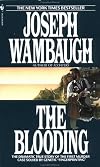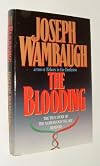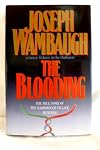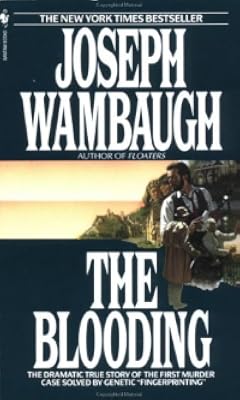
The Blooding
by Joseph Wambaugh
On This Page
Description
This is the suspenseful and powerful true story of the discovery of DNA identification by a university geneticist in the Midlands of England—which changed the world of forensic science and police work forever—and of its very first use in the hunt for a serial killer who terrorized a quiet English village. Playboy said, this book holds the tension and excitement of an imaginative police novel. Yet every word of it is true..
Tags
Recommendations

























Member Reviews
Interesting true-crime story about an early use of genetic testing to find a killer. The title promises that the case was solved by DNA testing but that isn't quite true. The testing does provide the ultimate proof, however.
A fifteen-year-old is raped and strangled in 1983, in a small village in England. Three years later another teen is raped and strangled nearby. The police realize they have a dangerous killer in their midst and he may well strike again.
A scientist had just developed a way of testing body fluids for DNA that was reliable, and as the test was proven, the detectives on the case heard about it and had an idea. The department decided to test every man in the right age range who had been in the area during the time of show more the two killings. The testing was voluntary but pressure was put on by friends and family. Ultimately they tested over 4000 men, a remarkable effort, but it still took some additional detective work to close in on the killer. Because the testing was of the men's blood, the author chose to use the term "blooding", even though the term does not technically fit the use.
A nicely detailed story, full of information for Americans not familiar with British slang and customs as well as the history of genetic testing both in England and the U.S. Much better than most true crime books because of the research and details, as well as because Wambough writes well. show less
A fifteen-year-old is raped and strangled in 1983, in a small village in England. Three years later another teen is raped and strangled nearby. The police realize they have a dangerous killer in their midst and he may well strike again.
A scientist had just developed a way of testing body fluids for DNA that was reliable, and as the test was proven, the detectives on the case heard about it and had an idea. The department decided to test every man in the right age range who had been in the area during the time of show more the two killings. The testing was voluntary but pressure was put on by friends and family. Ultimately they tested over 4000 men, a remarkable effort, but it still took some additional detective work to close in on the killer. Because the testing was of the men's blood, the author chose to use the term "blooding", even though the term does not technically fit the use.
A nicely detailed story, full of information for Americans not familiar with British slang and customs as well as the history of genetic testing both in England and the U.S. Much better than most true crime books because of the research and details, as well as because Wambough writes well. show less
Intriguing true-crime tale of two murders in a small English village, eventually solved by the development of DNA "fingerprinting".
Wambaugh juggles two distinct plot threads here -- the advances in forensic science, and the search for the killer of two young girls. There's a plot twist of the must-be-true-because-no-one-would-believe-it-in-fiction variety, and a thoughtful study of what became of the victims' families, as well as a professional cop's take on the investigation itself.
Wambaugh juggles two distinct plot threads here -- the advances in forensic science, and the search for the killer of two young girls. There's a plot twist of the must-be-true-because-no-one-would-believe-it-in-fiction variety, and a thoughtful study of what became of the victims' families, as well as a professional cop's take on the investigation itself.
Wambaugh writes well and this book is no exception. I gave it a 3.5-star rating because I think he could have left out about 100 pages of detail and made this a better book. It seems like he wanted to get in every single fact that he gathered in his research, and I found the level of detail tedious at times. Otherwise, this was a fascinating true crime story that read like a novel. An excellent example of the true crime genre.
Absolutely chilling, suspenseful, intriguing and heartbreaking all at once.
An insightful look at the process of identifying the victims and their attackers and seeing the story unfold from the eyes of each person involved. It's most amazing how certain events lead to the missing yet eventual capture of the real killer.
An insightful look at the process of identifying the victims and their attackers and seeing the story unfold from the eyes of each person involved. It's most amazing how certain events lead to the missing yet eventual capture of the real killer.
Very gruesome, yet true account of the first murder case solved by genetic fingerprinting in England.
First use of human DNA (AKA genetic fingerprinting) solution of and conviction of psychosexual psychopathic serial (2 only) murderer
1st Edition
Members
- Recently Added By
Lists

True Crime Books
62 works; 15 members

England
19 works; 1 member
Author Information

28+ Works 10,851 Members
Writer Joseph Wambaugh was born in East Pittsburgh, Pennsylvania on January 22, 1937. He joined the Marines right out of high school, but later earned both a B. A. and M. A. from California State College in Los Angeles. He worked for the Los Angeles Police Department from 1960 to 1974. His first novel was The New Centurions (1971) and several show more subsequent novels have been award winners. The Onion Field won an Edgar Award (1984), and Lines and Shadows won the Rodolfo Walsh Prize from the International Association of Crime Writers (1989). He has worked creatively on several film and television projects, including Police Story, The Black Marble, The Choirboys and The Blue Knight. (Bowker Author Biography) show less
Awards and Honors
Awards
Distinctions
Common Knowledge
- Canonical title
- The Blooding
- Original title
- The Blooding
- Original publication date
- 1989
- Epigraph
- Author's Note:
This is the true story of the Narborough Murder Enquiry, the world's first murder case to be resolved by "genetic fingerprinting," a stunning scientific discovery that may well revolutionize forensic sci... (show all)ence as dramatically as fingerprinting did in the 19th century.
As always I have re-created events only when my information comes from a reliable witness or can be independently corroborated. - Dedication
- For
my father
with appreciation for the genetic fingerprint - First words
- They say that in remote little English villages a new-comer can be accepted by the locals provided he buys property, pays his bills, and stays in continuous residence for about ninety-five years.
- Last words
- (Click to show. Warning: May contain spoilers.)"It is ever so grand," he said, "to raise a glass of port and toast the queen."
Classifications
- DDC/MDS
- 364.1 — Society, government, & culture Social problems and social services Crime Criminal offenses
- LCC
- HV8079 .R35 .W36 — Social sciences Social pathology. Social and public welfare. Criminology Social pathology. Social and public welfare. Criminal justice administration Police. Detectves. Constabulary Police duty. Methods of protection Investigation of crimes. Examination Police social work
- BISAC
Statistics
- Members
- 642
- Popularity
- 45,453
- Reviews
- 8
- Rating
- (3.85)
- Languages
- 6 — Danish, Dutch, English, German, Italian, Swedish
- Media
- Paper, Audiobook, Ebook
- ISBNs
- 19
- ASINs
- 16