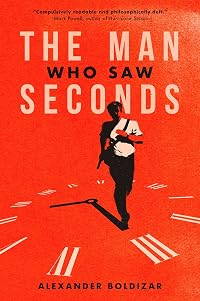
The Man Who Saw Seconds
by Alexander Boldizar
On This Page
Description
Winner, 2025 Locus Award for best science fiction novel of 2024Winner, CIBA Mark Twain grand prize winner for best satire of 2024
Finalist, Foreword Reviews for best thriller of 2024
Finalist, Eric Hoffer Award
"10 for 2024" Year-End Best Books List
Preble Jefferson can see five seconds into the future.
Otherwise, he lives an ordinary life. But when a confrontation with a cop on a New York City subway goes tragically wrong, those seconds give Preble the chance to dodge a show more bullet—causing another man to die in his place.
Government agencies become aware of Preble's gift, a manhunt ensues, and their ambitions shift from law enforcement to military. Preble will do whatever it takes to protect his family, but as events spiral out of control, he must weigh the cost of his gift against the loss of his humanity.
A breathless thriller that will keep you on the edge of your seat until the very last page, The Man Who Saw Seconds explores the nature of time, the brain as a prediction machine, and the tension between the individual and the systems we create. Alexander Boldizar provides an adrenaline-pumping read that will leave you contemplating love, fear and the abyss.
. Science Fiction. Thriller. Fiction. Mystery. show less
Tags
Recommendations
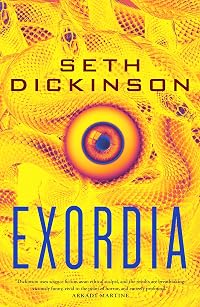
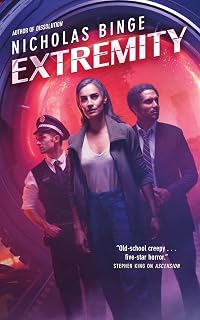
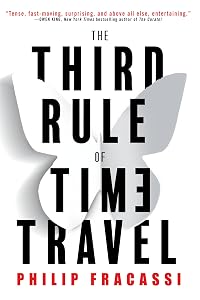
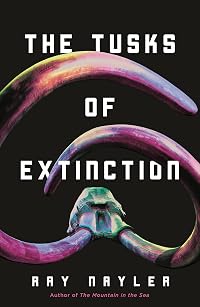











Member Recommendations

Member Reviews
Rating: 4* of five
The Publisher Says: Preble Jefferson can see five seconds into the future. Otherwise, he lives an ordinary life. But when a confrontation with a cop on a New York City subway goes tragically wrong, those seconds give Preble the chance to dodge a bullet—causing another man to die in his place. Government agencies become aware of Preble's gift, a manhunt ensues, and their ambitions shift from law enforcement to military R&D.
Preble will do whatever it takes to protect his family, but as events spiral out of control, he must weigh the cost of his gift against the loss of his humanity.
A breathless thriller that will keep you on the edge of your seat until the very last page, The Man Who Saw Seconds explores the nature of show more time, the brain as a prediction machine, and the tension between the individual and the systems we create. Alexander Boldizar provides an adrenaline-pumping read that will leave you contemplating love, fear and the abyss.
I RECEIVED A DRC FROM THE PUBLISHER VIA EDELWEISS+. THANK YOU.
My Review: Aptly marketed as a thriller...unusually richly endowed with the more interesting musings on the nature of freedom, the cost of being different, the responsibility to use one's gifts but the acceptance that the gifts have limitations...you get the idea.
The oddest sensation for me as I read this novel was the way it seemed to me to use the form of "thriller novel" to describe the very story he was telling; that is to say, his thrilling idea for a chase story has a core of examining what makes a story thrilling with its use of precognition. Author Boldizar, a Slovak national, knows the apparatus of oppression from the inside. He brings his idea of the abuse of the individual at the hands of government apparatus to the fore here. I myownself see it as a lot more likely that it would be Goldman Sachs or that fuck Zuck's Meta pursuing this dude to use his abilities to make them more money, but we are all as History has made us. (Paraphrasing Judge Dee, from Dee Goong An, feels...weirdly apt in this book's review.)
The other fascinating quality this predictive thriller has is that it plays with a known bit of science that's been studied for a long time: Our brains are pattern-spotting prediction machines. Evolution has made them that way so we can extrapolate from facts...red fruits are sweeter; fruits are red when it's cold; it's going to be cold soon so better get back to those trees before THEY get there...to take actions that help us survive. We've blown past that helpful stage long since. Now we're using that extrapolation /prediction feature to create horrors of exploitive and extractive excesses.
I digress, but only slightly.
What happens as a result of an ill-timed, badly handled cop confrontation is simple: Preble Jefferson lands on the radar of people he's spent his adult life avoiding being noticed by. He's made solid, profitable use of his limited gift of "precognition" (in quotes because it's not actually presented as paranormal in origin so isn't within classic definitions of the term) and now it's time to get exploited. Not if he can help it, he thinks, and the chase is on.
The chase is well constructed, the stakes clear and relatable. I am a fan of thrillers, starting back with The Thirty-Nine Steps, because they utilize the fight-or-flight response to create engagement and investment in their chosen story. Who among us, if pursued, doesn't immediately want to run? And one would think a guy who can see a few seconds into the future would have a huge edge on pursuers. Only of the pursuers don't know about his ability...or its funny little quirk of not working when he gets worked up. So now we're triggering the fight part of the response. Does Our Hero have a fight response? Not really. But threaten a father's belovèd child and see how that goes....
It's a really well-made story that uses the factual human brain predictive skill we see in the elite athletes of the exploitive "sports" industry, only turned up to eleven.
Why only four stars? Because I do not for one second buy that this guy's power would enable him to do the things he's shown doing. It's like my response to superhero stuff (see my joyous warble for the excellent Hench for that): Did you really think this through, Author Boldizar? Do you think this is really what would happen? Starting from the wrong villains (the NSA is a lot less scary than Google/Sundar Pichai or Meta/That Fuck Zuck) I wasn't ever likely to get to a fifth star. I was amused by Our Hero's name, "Jefferson," as evoking that least decent of the Founders gets my quirked eyebrow. (Also the Jeffersonian vision of an agrarian republic repels me.) The funny sidekick Fish the lawyer, evoking my favorite lawyer character Douglas Wambaugh from Picket Fences days, so points added there; and Our Hero being such a solidly loving, involved dad got my approving smiles. Pacing, actual science used albeit unrealistically, guaranteed four stars, but no more could be added.
A four-star entertaining story, with meaty thoughts behind it, is still a big win in my book.
NB links to definitions in blogged review show less
The Publisher Says: Preble Jefferson can see five seconds into the future. Otherwise, he lives an ordinary life. But when a confrontation with a cop on a New York City subway goes tragically wrong, those seconds give Preble the chance to dodge a bullet—causing another man to die in his place. Government agencies become aware of Preble's gift, a manhunt ensues, and their ambitions shift from law enforcement to military R&D.
Preble will do whatever it takes to protect his family, but as events spiral out of control, he must weigh the cost of his gift against the loss of his humanity.
A breathless thriller that will keep you on the edge of your seat until the very last page, The Man Who Saw Seconds explores the nature of show more time, the brain as a prediction machine, and the tension between the individual and the systems we create. Alexander Boldizar provides an adrenaline-pumping read that will leave you contemplating love, fear and the abyss.
I RECEIVED A DRC FROM THE PUBLISHER VIA EDELWEISS+. THANK YOU.
My Review: Aptly marketed as a thriller...unusually richly endowed with the more interesting musings on the nature of freedom, the cost of being different, the responsibility to use one's gifts but the acceptance that the gifts have limitations...you get the idea.
The oddest sensation for me as I read this novel was the way it seemed to me to use the form of "thriller novel" to describe the very story he was telling; that is to say, his thrilling idea for a chase story has a core of examining what makes a story thrilling with its use of precognition. Author Boldizar, a Slovak national, knows the apparatus of oppression from the inside. He brings his idea of the abuse of the individual at the hands of government apparatus to the fore here. I myownself see it as a lot more likely that it would be Goldman Sachs or that fuck Zuck's Meta pursuing this dude to use his abilities to make them more money, but we are all as History has made us. (Paraphrasing Judge Dee, from Dee Goong An, feels...weirdly apt in this book's review.)
The other fascinating quality this predictive thriller has is that it plays with a known bit of science that's been studied for a long time: Our brains are pattern-spotting prediction machines. Evolution has made them that way so we can extrapolate from facts...red fruits are sweeter; fruits are red when it's cold; it's going to be cold soon so better get back to those trees before THEY get there...to take actions that help us survive. We've blown past that helpful stage long since. Now we're using that extrapolation /prediction feature to create horrors of exploitive and extractive excesses.
I digress, but only slightly.
What happens as a result of an ill-timed, badly handled cop confrontation is simple: Preble Jefferson lands on the radar of people he's spent his adult life avoiding being noticed by. He's made solid, profitable use of his limited gift of "precognition" (in quotes because it's not actually presented as paranormal in origin so isn't within classic definitions of the term) and now it's time to get exploited. Not if he can help it, he thinks, and the chase is on.
The chase is well constructed, the stakes clear and relatable. I am a fan of thrillers, starting back with The Thirty-Nine Steps, because they utilize the fight-or-flight response to create engagement and investment in their chosen story. Who among us, if pursued, doesn't immediately want to run? And one would think a guy who can see a few seconds into the future would have a huge edge on pursuers. Only of the pursuers don't know about his ability...or its funny little quirk of not working when he gets worked up. So now we're triggering the fight part of the response. Does Our Hero have a fight response? Not really. But threaten a father's belovèd child and see how that goes....
It's a really well-made story that uses the factual human brain predictive skill we see in the elite athletes of the exploitive "sports" industry, only turned up to eleven.
Why only four stars? Because I do not for one second buy that this guy's power would enable him to do the things he's shown doing. It's like my response to superhero stuff (see my joyous warble for the excellent Hench for that): Did you really think this through, Author Boldizar? Do you think this is really what would happen? Starting from the wrong villains (the NSA is a lot less scary than Google/Sundar Pichai or Meta/That Fuck Zuck) I wasn't ever likely to get to a fifth star. I was amused by Our Hero's name, "Jefferson," as evoking that least decent of the Founders gets my quirked eyebrow. (Also the Jeffersonian vision of an agrarian republic repels me.) The funny sidekick Fish the lawyer, evoking my favorite lawyer character Douglas Wambaugh from Picket Fences days, so points added there; and Our Hero being such a solidly loving, involved dad got my approving smiles. Pacing, actual science used albeit unrealistically, guaranteed four stars, but no more could be added.
A four-star entertaining story, with meaty thoughts behind it, is still a big win in my book.
NB links to definitions in blogged review show less
I found this compelling despite a murky plot device. The protagonist's pre-cognition was so loosely defined that it allowed any knowledge and action needed to keep him alive and safe from pursuers. I took it to mean that he could see all possible (immediate) futures and then select the one best for him. This is close to omniscience with a side of omnipotence. For example, if he needs a secret code, maybe to crack a safe, he can see the results of trying all possible codes and then actually use the one that worked.
It's a clever stretch on precog. Boldizar ties it to the neurosicience framework called predictive processing, which says that we are always anticipating, calculating the immediate future and then correcting it when sensory show more data come in. It's like we make a sketch of what we will perceive in the next instant, and then fill in the details when the new sensations hit. Despite this scientific gloss, it felt more like comic-book super power than a science fiction extrapolation. The frantic escalation of the stakes involved also was very comic-like.
What worked so well were the descriptions of how an implacable foe and a near invincible fugitive manipulated the mechanisms of power surrounding them. I really wanted to see what would happen next (because my predictive processng insisted). The ending disappointed, so that I would probably not want to read a sequel. But Boldizar has a lot of talent, so I would keep an eye out for his new work.
The closest comparison to him might be the masterful sci-fi author Peter Watts. Grim and brilliant. show less
It's a clever stretch on precog. Boldizar ties it to the neurosicience framework called predictive processing, which says that we are always anticipating, calculating the immediate future and then correcting it when sensory show more data come in. It's like we make a sketch of what we will perceive in the next instant, and then fill in the details when the new sensations hit. Despite this scientific gloss, it felt more like comic-book super power than a science fiction extrapolation. The frantic escalation of the stakes involved also was very comic-like.
What worked so well were the descriptions of how an implacable foe and a near invincible fugitive manipulated the mechanisms of power surrounding them. I really wanted to see what would happen next (because my predictive processng insisted). The ending disappointed, so that I would probably not want to read a sequel. But Boldizar has a lot of talent, so I would keep an eye out for his new work.
The closest comparison to him might be the masterful sci-fi author Peter Watts. Grim and brilliant. show less
The Man Who Saw Seconds by Alexander Boldizar is a high-octane sci-fi thriller that blends relentless action with a sharp ethical dilemma: what happens when an ordinary man can see five seconds into the future? Preble Jefferson’s gift turns into both a weapon and a curse, and Boldizar explores its consequences with intelligence and urgency.
The opening is fast, clever, and gripping, pulling the reader straight into a world of subway disasters, government hunters, and moral choices. The middle section slows down slightly and can feel a bit dense, and at times it stretches believability that a mere five-second advantage could achieve so much.
However, the climax is powerful and emotionally satisfying, tying together the action and show more philosophy with a sense of real closure. While the plot largely revolves around Preble, Kasper and Jane are also well-crafted, adding depth and heart to this explosive sci-fi adventure. show less
The opening is fast, clever, and gripping, pulling the reader straight into a world of subway disasters, government hunters, and moral choices. The middle section slows down slightly and can feel a bit dense, and at times it stretches believability that a mere five-second advantage could achieve so much.
However, the climax is powerful and emotionally satisfying, tying together the action and show more philosophy with a sense of real closure. While the plot largely revolves around Preble, Kasper and Jane are also well-crafted, adding depth and heart to this explosive sci-fi adventure. show less
A book club pick
A satirical thriller that goes unhinged
Preble Jefferson can see five seconds into the future. He is using this amazing ability to provide a very comfortable life for his wife and son by going to a casino now and then. He plays chess. Good for him. Then one night Preble is on the subway, and he and a cop happen to look at each other “wrong”. Note to self: don’t be a smart ass with an ego on the subway in New York while cops are talking to you. Preble Jefferson, you are in so much trouble! Nefarious government agencies are after you and your family now, because a guy with your abilities is obviously a threat to the US government. Because what if. Note to self: don’t scare governments.
This book takes the trope of a show more guy who just wants to be left alone and wants his family back (a thriller trope so worn there are more holes than fabric in it nowadays) to its limit and then says “what the heck, let’s take it even further, let the body count go up, up, up”. Unhinged indeed.
The thriller writing kept me turning the pages and reminded me why I am not a thriller reader – I get bored by too much adrenaline. Every time the book slowed down, I was relieved and felt as if something meaningful was finally happening. This is a personal preference, of course, and not the book’s fault.
This is a very clever book, and the satire mostly worked for me, as in when you are nodding, laughing (as in gallows humour) and facepalming all at once. Yet I couldn’t help wondering what John Scalzi or Stephen King would have done with the same plot. Unfair, but it is still not a good sign. Don’t click on the spoiler unless you want to know exactly how unhinged this gets:I also kept thinking that when it comes to nuclear apocalypse satire I much prefer “Dr Strangelove”. Humanity as a whole makes it here, in case you are wondering.
I am not sure how to rate this one. Seasoned thriller readers might like it more? I am really looking forward to the book club discussion, though. show less
A satirical thriller that goes unhinged
Preble Jefferson can see five seconds into the future. He is using this amazing ability to provide a very comfortable life for his wife and son by going to a casino now and then. He plays chess. Good for him. Then one night Preble is on the subway, and he and a cop happen to look at each other “wrong”. Note to self: don’t be a smart ass with an ego on the subway in New York while cops are talking to you. Preble Jefferson, you are in so much trouble! Nefarious government agencies are after you and your family now, because a guy with your abilities is obviously a threat to the US government. Because what if. Note to self: don’t scare governments.
This book takes the trope of a show more guy who just wants to be left alone and wants his family back (a thriller trope so worn there are more holes than fabric in it nowadays) to its limit and then says “what the heck, let’s take it even further, let the body count go up, up, up”. Unhinged indeed.
The thriller writing kept me turning the pages and reminded me why I am not a thriller reader – I get bored by too much adrenaline. Every time the book slowed down, I was relieved and felt as if something meaningful was finally happening. This is a personal preference, of course, and not the book’s fault.
This is a very clever book, and the satire mostly worked for me, as in when you are nodding, laughing (as in gallows humour) and facepalming all at once. Yet I couldn’t help wondering what John Scalzi or Stephen King would have done with the same plot. Unfair, but it is still not a good sign. Don’t click on the spoiler unless you want to know exactly how unhinged this gets:
I am not sure how to rate this one. Seasoned thriller readers might like it more? I am really looking forward to the book club discussion, though. show less
Make It Make Sense
Review of the CLASH Books eBook (May 21, 2024) released simultaneously with the paperback & audiobook.
This is a postcard from Outlier Island 🏝️📨📬.
I took a chance on this one from indie publisher CLASH Books as the premise did seem intriguing. It sounded like it took inspiration from both Philip K. Dick and Stephen King. From the former's novella The Minority Report (1956) & the short story The Golden Man* (1954). From the latter's novel The Dead Zone (1979). In other words, it is about someone unique and who can see the future and is hunted by other humans / governments in order to be either destroyed or utilized.
From show more one foolish encounter on a New York City subway, the lead character has to go on the run with his family. His nemesis in the American National Security Agency (NSA) has realized his future seeing power and is determined to hunt him down. It all leads up to a crazed apocalyptic conclusion.
All this from a guy who can only see 5 seconds into the future? Somehow from what seems to me to be a relatively minor power, the character is somehow able to access any phone number, hack any computer, determine any password later on in the book. The 5-second window lets him dodge bullets because he can "see" where the bullets will be when they arrive. Somehow this allows him to cause various cops and soldiers to shoot each other? It just doesn't make any sense.
In between the frenetic action scenes there are long respites of discussions about morality and space-time. Those did bring up some concepts and words which I had never previously heard of such as Laplace's Demon, sesquipedalian, chresmomancy and cephaleonomancy. So there was that.
Unfortunately it all ends in a scenario requiring an Unsatisfactory Ending Alert™.
Footnote, Trivia and Link
* I realize that the link to the book doesn't explain the short story, so you can find that at its Wikipedia entry here (Spoilers obviously). show less
Review of the CLASH Books eBook (May 21, 2024) released simultaneously with the paperback & audiobook.
She’d once asked him, “How can a man who can see the future make so many mistakes?”
This is a postcard from Outlier Island 🏝️📨📬.
I took a chance on this one from indie publisher CLASH Books as the premise did seem intriguing. It sounded like it took inspiration from both Philip K. Dick and Stephen King. From the former's novella The Minority Report (1956) & the short story The Golden Man* (1954). From the latter's novel The Dead Zone (1979). In other words, it is about someone unique and who can see the future and is hunted by other humans / governments in order to be either destroyed or utilized.
From show more one foolish encounter on a New York City subway, the lead character has to go on the run with his family. His nemesis in the American National Security Agency (NSA) has realized his future seeing power and is determined to hunt him down. It all leads up to a crazed apocalyptic conclusion.
All this from a guy who can only see 5 seconds into the future? Somehow from what seems to me to be a relatively minor power, the character is somehow able to access any phone number, hack any computer, determine any password later on in the book. The 5-second window lets him dodge bullets because he can "see" where the bullets will be when they arrive. Somehow this allows him to cause various cops and soldiers to shoot each other? It just doesn't make any sense.
In between the frenetic action scenes there are long respites of discussions about morality and space-time. Those did bring up some concepts and words which I had never previously heard of such as Laplace's Demon, sesquipedalian, chresmomancy and cephaleonomancy. So there was that.
Unfortunately it all ends in a scenario requiring an Unsatisfactory Ending Alert™.
Footnote, Trivia and Link
* I realize that the link to the book doesn't explain the short story, so you can find that at its Wikipedia entry here (Spoilers obviously). show less
This is a tricky book to write a review for. Parts of it read like an over-the-top season of 24, while at other points it gets very philosophical.
The pacing definitely felt uneven. It starts with such a high intensity ramp up that the middle and ending had difficulty matching. There are several weirdly slow interludes getting into the weeds on military trivia, neuroscience etc. I guess these could have been attempts to make the sci fi elements "harder", but felt unnecessary to me.
The one slow bit that I got really into was when one of the characters waxes poetic on his vision of a system of anarchist checks and balances built into a capitalist system. Would be interested to find some non-fiction exploring those ideas further.
By far the show more strongest writing in this book was anything to do with the kid. As the parent of a toddler, these parts were sometimes hilarious, sometimes painful, but always exactly spot-on.
Can we get a sequel where everyone in the world suddenly gets this ability? show less
The pacing definitely felt uneven. It starts with such a high intensity ramp up that the middle and ending had difficulty matching. There are several weirdly slow interludes getting into the weeds on military trivia, neuroscience etc. I guess these could have been attempts to make the sci fi elements "harder", but felt unnecessary to me.
The one slow bit that I got really into was when one of the characters waxes poetic on his vision of a system of anarchist checks and balances built into a capitalist system. Would be interested to find some non-fiction exploring those ideas further.
By far the show more strongest writing in this book was anything to do with the kid. As the parent of a toddler, these parts were sometimes hilarious, sometimes painful, but always exactly spot-on.
Can we get a sequel where everyone in the world suddenly gets this ability? show less
I approached this book with the wrong idea of what it is. I would have appreciated it more had I understood it as being in large part satirical
Members
- Recently Added By
Author Information
2 Works 130 Members
Awards and Honors
Awards
Distinctions
Classifications
Statistics
- Members
- 104
- Popularity
- 311,294
- Reviews
- 8
- Rating
- (3.55)
- Languages
- English
- Media
- Paper, Audiobook, Ebook
- ISBNs
- 3
- ASINs
- 2