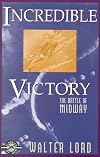
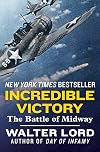
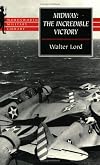
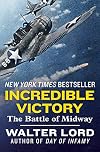
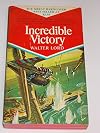
Incredible Victory: The Battle of Midway (Classics of War)
by Walter Lord
On This Page
Description
New York Times Bestseller: Outgunned and outmanned on the Pacific Ocean, a small American fleet defied the odds and turned the tide of World War II. On the morning of June 4, 1942, doom sailed on Midway. Hoping to put itself within striking distance of Hawaii and California, the Japanese navy planned an ambush that would obliterate the remnants of the American Pacific fleet. On paper, the Americans had no chance of winning. They had fewer ships, slower fighters, and almost no battle show more experience. But because their codebreakers knew what was coming, the American navy was able to prepare an ambush of its own. Over two days of savage battle, American sailors and pilots broke the spine of the Japanese war machine. The United States prevailed against momentous odds; never again did Japan advance. In stunning detail, Walter Lord, the #1 New York Times bestselling author of Day of Infamy and A Night to Remember, tells the story of one of the greatest upsets in naval history. show lessTags
Recommendations


















Member Recommendations

Member Reviews
This is my fourth book on this topic and as always, I find the topic engrossing and fresh. While the battle was fought over a relatively small area of the Pacific 1000 miles from Hawaii elements of it stretched to the Aleutians, Sydney, and the west coast of Africa. I really enjoyed this version as, while accurate and related to in-depth aspects, it read like an adventure novel and really I couldn't put it down. The most readable and enjoyable work I've read in ages. If you want to learn something about this most important of battles - a key WWII turning point like El Alamein or Kursk or Stalingrad - a just enjoy a ripping read then go for it!
A stunning combination of research and extremely skillful writing. In a thrilling multi-faceted account Walter Lord details the events leading up to the Battle of Midway, the many aspects of the battle itself, and the aftermath. Switching between many points of view – including the Japanese side – Lord pieces it all together in a way that reads more like a thriller than the meticulously researched classic of naval war history that this is.
Of course I'd seen the Charleton Heston movie about the Midway battle, but that excluded so much detail that this book ably filled in. It was fascinating to see what was done with the scant amount of intelligence information they had in order to prepare for the battle to come. They had some very ancient air power and nothing as quick as the Japanese had, but they made the best use they could of it. They beefed up Midway island with everything they could think that would help in the case of a Japanese landing and quickly repaired and gathered as many carriers and support craft as possible, allowing the US at least some ability to give the Japanese a good battle. The crux of the matter, though, was that the Japanese were so sure that they show more could win and that the US had only one possible carrier in the area that the Japanese psyched themselves out of the game. I also thought that the battle was over after the second air strike again the Yorktown, which badly crippled it, but did not sink it. I don't think I ever knew about the submarine attack 2 days later that sank both the Yorktown and one of the battleships. Nor did I know about the attacks on the other Japanese battleships after the main battle was over. A very educational read. show less
I first read this well over 30 years ago. It was an amazing read then and it has not lost any of its power.
Walter Lord was a great historical writer. He took information from a large number of sources and pulled it all together into an account that encompasses the full breadth of the story. A large part of the book's power comes from his ability to tell the story. However, it is an incredible story, and his opening sums this up well - this was a turning point in history.
If you like naval history this is something you should definitely have on your bookshelf.
Walter Lord was a great historical writer. He took information from a large number of sources and pulled it all together into an account that encompasses the full breadth of the story. A large part of the book's power comes from his ability to tell the story. However, it is an incredible story, and his opening sums this up well - this was a turning point in history.
If you like naval history this is something you should definitely have on your bookshelf.
A fine story detailing a turning point in WWII. The narrative skills are so well done by Walter Lord that it's as if Walter Cronkite had returned to TV for another episode of You Are There.
The history is told from both the U.S. and Japanese sides with the author giving a meaning of what the struggle means to the people of the United States and Japan. It also reveals the heroism of so many young fighter pilots who attacked the Japanese fleet with outdated airoplanes wile the superior Japanese zeros outmanuvered and shot so many down. However the drive and determination of the U.S. fliers resulted in the final victory.
The history is told from both the U.S. and Japanese sides with the author giving a meaning of what the struggle means to the people of the United States and Japan. It also reveals the heroism of so many young fighter pilots who attacked the Japanese fleet with outdated airoplanes wile the superior Japanese zeros outmanuvered and shot so many down. However the drive and determination of the U.S. fliers resulted in the final victory.
'Shattered Sword' and 'Miracle at Midway' are better books and more worthy of your attention but it is recommended that you read all three.
popularization of the story of the Battle of Midway -- lots of human interest, good introduction to the battle, very clear if not very deep
Members
- Recently Added By
Lists

Books Read in 2014
2,344 works; 89 members

THE WAR ROOM
813 works; 24 members
Author Information

20+ Works 7,922 Members
Walter Lord is the author of several best-selling works of history, including "A Night to Remember", the recreation of the sinking of the Titanic. He lives in New York City. (Publisher Provided) John Walter Lord, Jr. (October 8, 1917- May 19, 2002), was an American author, best known for his documentary-style non-fiction account A Night to show more Remember, about the sinking of the RMS Titanic. He was born in Baltimore, Maryland; he attended Princeton University and alo earned a law degree from Yale Law School. Lord wrote 11 bestselling books on such subjects as Pearl Harbor (Day of Infamy, 1957), the Battle of Midway (Incredible Victory, 1967), the Battle of the Alamo (A Time to Stand, 1961). He is perhaps best known for his classic work about the crash of the Titanic, A Night to Remember (1955). Lord died at age 84 after a long battle with Parkinson's disease. He resided in Manhattan, New York. (Bowker Author Biography) show less
Awards and Honors
Distinctions
Series
Belongs to Publisher Series
Work Relationships
Common Knowledge
- Original publication date
- 1967
- People/Characters
- Raymond A. Spruance; Joseph J. Rochefort, Jr.; John C. Waldron (Lt. Commander, VT-8); Isoroku Yamamoto; Heijiro Abe (Lieutenant, IJN); Hiroaki Abe (Rear Admiral, IJN) (show all 313); Chief Petty Officer Abe (Chief Petty Officer, IJN); Toshio Abe (Captain, IJN); William W. Abercrombie (Ensign, USN, VT-8); Joseph H. Adams (Yeoman, USN); Sam Adams (Lieutenant, USN); William Adams (Lieutenant, USN); Floyd D. Adkins (A. Machinist's Mate, 2c); A. E. Ady (Lieutenant Commander); Howard P. Ady (Lieutenant); Kunizo Aiso (Commander, IJN); Frank Akers (Commander, USN); Ensign Akiyama (IJN); Clarence E. Aldrich (Commander); Brooke E. Allen (Lt. Colonel); Takahisa Amagai (Commander); Bernard L. Amman (Ensign); J. T. Andrews (Ensign); Robert B. Andrews (1st Lieutenant); Taijiro Aoki; Kosaku Ariga (as Captain Ariga); Kirk Armistead (Captain); Dora E. Arnold (Gunner, "Deacon"); Murray E. Arnold (Commander); Ralph J. Arnold (Commander); William H. Ashford (Lt. Commander); Earl D. Ashley (as Private 1st Class Ashley); F. C. Auman (Ensign, "AO"); A. M. Bagley (Seaman); George E. Bateman (Machinist's Mate 1st Class); Robert J. Bear (Lieutenant); Walter Beckham (Ensign); W. M. Bell (Captain, USMC, I Battery); Patrick Bellinger (Rear Admiral); Vane M. Bennett (Radio Elec.); William Bennett (Navy yard boss, Pearl Harbor); Roy Benson (Lieutenant); William W. Benson (Major); Richard H. Best (Lieutenant); Richard L. Blain (Captain); George A. Blakey (Major); Frank W. Boo (Yeoman 1st Class); Walter F. Boone (Commander); Harold S. Bottomley, Jr. (Lieutenant); Matthew Bouterse (Chaplain); James C. Boyden (Ensign); Norman Brady (LIeutenant); Charles E. Brannon (Ensign); R. B. Brazier ("Mike", ARM 2nd Class); Chester E. Briggs, Jr. (Boatswain); Burdick H. Brittin (Lieutenant); Robert Brixner (Lt. Commander); William H. Brockman (Lt. Commander); William Brooks (Lieutenant); Miles R. Browning (as Captain Miles Browning); Elliott Buckmaster (Captain); Jean H. Buckner (Captain); William P. Burford (Lt. Commander); Robert R. Burns (Captain); John C. Butler (Ensign); Norwood A. Campbell (Lieutenant); Clayton Canfield (2nd Lieutenant); Eugene T. Card (Corporal); John F. Carey (Captain); Marion Cart (Captain); Evans Carlson (Major); John Chase (Ensign); William A. Chase (as Lieutenant William Chase); Chihaya (LIeutenant); Lloyd F. Childers (ARM 3rd Class); Cho (Navigator, Hiryu); W. G. Chochalousek (ARM 1st class); Ellis Clanton; Philip Clark (Private 1st class); Philip W. Cobb (Ensign); S. O. Cole (Lieutenant "Pappy"); James Collins (Captain); J. Reddell Collins, Jr. (Steward, Enterprise, as Steward Collins); Donald Cooksey (Lieutenant, 6th Battalion dental officer); B. R. Cooner (Ensign); Harry L. Corl (Machinist); Jack Cosley (2nd Lieutenant); Edward P. Creehan (Commander); Edward Creighton (Fireman); William Crenshaw (Lieutenant); Charles Crowell (Lieutenant); Daniel Cummings (2nd Lieutenant); Charles R. Cundiff (Lieutenant | j.g.); Osa Currie (Corporal); A. C. Davis (Captain); Douglas C. Davis (Lieutenant | j.g.); Ernest J. Davis (Lt. Commander); W. Dalton Davis (Captain); John F. Delaney, jr. (Lt. Commander); Ram Dibb (Ensign); Clarence E. Dickinson, jr. (Lieutenant); Dobashi (Commander); Horace F. Dobbs (Radioman, VT-8); Cleo J. Dobson (Lieutenant | j.g.); Malcolm O. Donohoo (Captain, USMC); Leonard Dow (Commander, "Ham"); Thomas H. Dyer (Lt. Commander, Combat Intelligence Unit, Pearl Harbor); A. K. Earnest (Ensign); Roger Eaton (Private 1st Class); Takashige Egusa (Lieutenant); Ralph W. Elden (Lieutenant); Robert M. Elder (Ensign); Harold J. Ellison (Ensign); Arthur Ely (as Lieutenant Art Ely); A. C. Emerson (Lieutenant); Delos Emmons (Major General); Stanley Engels (BMC); Wilhelm G. Esders (CAP); W. R. Evans (Ensign); Thomas Eversole (Lieutenant | j.g.); Evitts (Sergeant, D Battery); Carl Fadick (Sergeant); Cecil L. Faulkner (Captain); V. J. Feigenbutz (Leading Chief); Harold H. Ferrier (RM3c); Langdon K. Fieberling (Lieutenant); Clayton E. Fisher (Ensign); Francis Fisler (Lieutenant); Raymond Fitzgibbon (BTC); Richard Fleming (Captain); Frank Jack Fletcher (Rear Admiral); George Flinn (Lieutenant); Edward T. Forbes (Seaman); John Ford, film director (filming during battle); Howell Forgy (Chaplain); J. I. Foster (Navigator); Charles W. Fox (Commander); Melvin Frantz (Seaman); George E. Fraser (Ensign); A. M. French (Lt. Commander); Mitsuo Fuchida (Commander); Noboru Fukusaki (Commander | Admiral Yamamoto's flag secretary); William E. Gallagher (Radioman, "Bill"); W. Earl Gallaher (Lieutenant); George Gay (Ensign); Minoru Genda (Commander); Harry B. Gibbs (Ensign); Claude Sexton Gillette (Ensign); Robert W. Gillette (Ensign); Elmer G. Glidden (Captain); Joseph V. Godfrey (ARM3c); Gogoj (Tech. Sergeant); George H. Goldsmith (Ensign); Arimoto Goto (Vice Admiral); Leon Grabowsky (Ensign); James S. Gray, jr. (Lieutenant); Richard Gray (Lieutenant | j.g.); John E. Greenbacker (Lieutenant | j.g.); Grew (as Chief Radioman Grew); Troy T. Guillory (Ensign); Willis Hale (Brigadier General); J. A. Halford (Ensign); William F. Halsey Jr.; Alden W. Hanson (Ensign); Hardeman (Ensign); Worth E. Hare (Machinist's Mate); Edward B. Harp, jr. (Chaplain); G. Roy Hartwig (Lt. Commander); Toshio Hashimoto (Lieutenant); John D. Hayes (Lt. Commander); Lofton Henderson (as Major Lofton R. Henderson, "Joe"); Charles Hibberd (Lieutenant | j.g.); Leslie Hicks (president of the Hawaiian Electric Company); David P. Hightower (Captain); Hideo Hiraide (Captain); Hirohito, Emperor of Japan; Thomas W. Logan (Lieutenant); Paul A. Holmberg (Lieutenant | j.g.); W. J. Holmes (Lt. Commander, "Jasper", Combat Intelligence Unit, Pearl Harbor); Robert Hommel (Major); Jinjiro Honda (Captain); Moshiro Hosogaya (Vice Admiral); Donat Houle (Seaman); E. E. Howell (RM2c); J. E. Hoy (Machinist's Mate); Charles Huber (Private 1st class); Charles Hughes (Lieutenant); Massie Hughes (Commander); William Humberd (Captain); Robert Huntington (Radioman); Kiyonao Ichiki (Colonel); Takeo Ikemoto (Seaman); Darrell Irwin (2nd Lieutenant); Kenichi Ishikawa (Fireman); Seiroku Ito (Commander); Masanori Ito; Daniel Iverson (1st Lieutenant); Sanji Iwabuchi (Captain); Richard A. Jaccard (Ensign); Edmond Jacoby (Ensign); Russ Johnson (Lieutenant); Robert R. Johnson (Lt. Commander, "Ruff"); Hiroharu Kadano (Lieutenant); Tomeo Kaku (Captain); Kakuji Kakuta (Rear Admiral); Takashi Kanoe (Commander); Peter Karetka (Signalman); J. J. Karrol (Radioman); Motomi Katsumi (Commander); Susumu Kawaguchi (Lt. Commander); Sandanori Kawakami (Ensign); Dixie Kiefer (Commander); Rokuro Kikuchi (Lieutenant); Berlyn Kimbrell (Ch. Torpedoman); Ira E. Kimes (Lt. Colonel); T. E. Kimmel (Machinist's Mate); Susumu Kimura (Rear Admiral); Ernest J. King (Admiral); Joseph Kisela (CPO); Norman J. Kleiss (Lieutenant | j.g.); Charles Kliensmith (WT1c); Michio Kobayashi (Lieutenant); Jay Koch (Sergeant); Magotaro Koga (Commander); Keizo Komura (Rear Admiral); Nobutake Kondo (Vice Admiral); Takenori Kondo (Lieutenant); Nasao Koyama (Lieutenant); Don Kundinger (Captain); Yoshio Kunisada (Lt. Commander); Takeo Kurita (Rear Admiral); Stan Kurka (Seaman); Kamato Kuroshima (Captain); Ryunosuke Kusaka (Rear Admiral); Michael B. Laing (Commander); William W. Lancaster (Y2c); Charles Lane (Ensign); John Udell Lane (RM2c); G. A. LaPlant (AMM2c); Robert E. Laub (Lieutenant | j.g.); Edwin T. Layton (Lt. Commander); Max Leslie (as Lt. Commander Maxwell F. Leslie); Seaman Lewis; Eugene E. Lindsey (Lt. Commander); Robin M. Lindsey (Lieutenant | j.g.); John d'Arc Lorenz (Ensign); Joseph E. Love (Private); Donald A. Lovelace (Lt. Commander, executive officer of Fighting 3, USS Yorktown); William R. Lucius (WO); Forest E. Lunsford (BM2c); J. P. O. Lyle (Lieutenant | j.g.); Richard B. Lynch (Lieutenant); John B. Lyon (Captain); J. J. Lyon (Ensign); Seaman Lytells; John R. McCarthy (Ensign); L. D. McCormick (Captain); Wade McClusky (as Lt. Commander C. Wade McClusky); Morris McCoy (Pfc); Scott McCuskey (Lieutenant | j.g.); Gordon R. McFeeley (Corporal); Robert C. McGlashan (Captain); Clinton McKellar (Lieutenant); Teiichi Makishima; Hisao Mandai (Ensign); James D. Manning (AMM3c); William Martin (Signalman); Charles Perry Mason (Captain, observer on Hornet); Lance E. Massey (Lt. Commander, "Lem"); Shogo Masuda (Commander); Herbert Mayes (Lieutenant); Roger W. Mehle (Lieutenant); Frank L. Mello (as Corporal Mello); Herbert Merrill (Captain); Milford A. Merrill (Ensign); E. B. Miller (Pharmacist's Mate); Ronald K. Miller (Captain); S. G. Mitchell (Lt. Commander, "Pat"); Marc Mitscher (as Captain Marc A. Mitscher); Gishiro Miura (Commander); Pete Moore (Lieutenant); Thomas F. Moore, jr. (2nd Lieutenant); Ulbert M. Moore (Ensign, "Whitey"); Juzo Mori (CPO); Shigeru Mori (Lieutenant); Takayoshi Morinaga (CWO); Elias B. Mott (Lieutenant); James Muri (1st Lieutenant); George D. Murray (Captain); John W. Murphy (Lt. Commander); F. Z. Muzejka (Seaman); Osami Nagano (Admiral); Chuichi Nagumo; Bromfield Nichol (Lt. Commander, Spruance's operations officer); Chester W. Nimitz; Nishibayashi (Lt. Commander, Nagumo's Flag Secretary); Benjamin Norris (Major, USMC); Raita Ogawa (Lieutenant); Shoichi Ogawa (Lieutenant, Assistant Air Officer, Kaga); James O'Halloran (Major, E Battery); Hirashi Ohara (Commander); Tamotsu Oishi (as Captain Oishi, Nagumo's senior staff officer); Jisaku Okada (Captain, Kaga); Robert J. Oliver (Spruance's flag lieutenant); Heijiro Omi (Petty Officer); Kenjiro Ono (as Commander Ono, Intelligence officer); Erwin H. Osterloh (Commander, "Sam"); Tatsuya Otawa (CWO); Floyd B. Parks (Major, "Red"); James W. Patterson, jr. (ARM3c); Paul Payne (Captain, B-17 Yankee Doodle); Oscar Pederson (Commander, USS Yorktown Air Group commander); Joe Penland (Lieutenant, leader of 2nd division, Bombing 6)
- Important places
- Australia; Melbourne, Victoria, Australia; Midway Atoll; North Pacific Ocean; Pacific Ocean; Victoria, Australia
- Important events
- World War II (1939 | 1945); World War II, Pacific Theater (1941-12-07 | 1945-09-02); World War II, Magic (1942-03-13); Battle of the Coral Sea (1942-05-04 | 1942-05-08); Battle of Midway (1942-06-04 | 1942-06-07)
- Dedication
- To William Rushton Calfee
- First words
- Foreword
By any ordinary standard, they were hopelessly outclassed.
Chapter 1
A Single Stroke
Petty Officer Heijiro Omi didn't have a word to say in excuse. - Quotations
- "Don't let this carrier escape" Dick Best called over the radio as his squadron prepared to take on a Japanese carrier.
"After 24 years, I can still feel like weeping with pride, admiration, and humility when I recall the courage those men displayed." Daniel Grace, then a Marine Pfc stationed on Midway. - Last words
- (Click to show. Warning: May contain spoilers.)[There, high above the Sand Island command post, still flew the American flag.]
Classifications
Statistics
- Members
- 451
- Popularity
- 67,971
- Reviews
- 10
- Rating
- (4.14)
- Languages
- English, French, German, Hungarian
- Media
- Paper, Audiobook, Ebook
- ISBNs
- 19
- ASINs
- 13