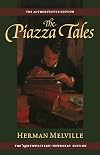
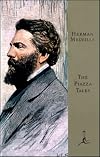
The Piazza Tales
by Herman Melville 
On This Page
Description
The critically acclaimed author of that behemoth of nineteenth-century fiction, Moby-Dick, Herman Melville was also an accomplished short story writer whom critics say did much to advance the form. The Piazza Tales collects many of Melville's best-known short works, including Bartleby the Scrivener and Benito Cereno..
Tags
Recommendations




























Member Reviews
Piazza Tales is a collection of six stories of varying length, which are the only collection of short pieces published during Melville's lifetime. These stories present a good cross-section of Melville's writing and the themes he addressed, particularly in his later work.
The title story "The Piazza" is a small masterpiece, which is about as direct a representation as one will find of Melville's unique combination of Romanticism, Stoicism and situational irony. To read this story and see these elements at work informs one's understanding of each of the stories that follow. The story opens with several pages of the "isn't nature sublime" type of writing which had been out of fashion for at least two generations before Melville's time. show more However, there is a point to this, because it sets the reader up for what eventually takes place.
The narrator's house is situated in a valley that is surrounded by mountains, but the house is lacking a porch or veranda — Melville's term is "piazza." As he says, "The house was wide — my fortune narrow; so that to build a panoramic piazza, one round and round, it could not be." He could only afford to build on one side.
After considering the vistas from each side, he settles upon the northern prospect, which provides a view of Greylock, a veritable "Charlemagne" among mountains. By and by, as he sits on his new porch gazing off into the distance, he gradually becomes aware of a construction high up the mountainside, which he finally decides must be a house rather than a barn because of the chance reflection in a glass window, which spoke of human habitation.
As he recovers from a long illness, the "golden mountain-window" puts him in mind of the fairy queen Titania in A Midsummer Night's Dream, which he had just been reading, and he fancies "the queen of fairies at her fairy window; at any rate, some glad mountain-girl." He decides it will do him good, "it will cure this weariness to look on her." So he prepares to "push away for fairy-land — for rainbow's end, in fairy land."
After a long journey by horseback and by foot, he reaches the lone cottage, and there he finds — not a fairy queen or even a fairy princess, but a tired and lonely girl at her sewing who, come to find out, had been gazing longingly across the valley and wondering who lived in a house she had spotted.
The narrator neglects to tell her that it is his house, for he has seen the futility of idle dreams of idealized faraway places. He returns home a wiser man. "Enough. Launching my yawl [figuratively] no more for fairy-land, I stick to the piazza. It is my box royal. . . . Yes, the scenery is magical — the illusion so complete."
"The Bell Tower," which concludes the book, also ties its philosophical lesson up in a neat little bow: "And so pride went before the fall." This story is also a haunting tale, not so much by the events related, but in the poetic language Melville employs:
"As all along where the pine tree falls, its dissolution leaves a mossy mount—last-flung shadow of the perished trunk; never lengthening, never lessening; unsubject to the fleet falsities of the sun; shade immutable, and true gauge which cometh by prostration — so westward from what seems the stump, one steadfast spear of lichened ruin veins the plain."
No speed-reading is possible here. The very language forces the reader to take it slow and drink in the deepest meaning.
The other stories include "Bartleby the Scrivener," a perennial favorite, "Benito Cereno," which draws on Melville's years at sea, "The Lightning-Rod Man," an amusing vignette, and "The Encantadas; or Enchanted Isles" — such an ironic title — which presents the Galapagos Islands in ten sketches. This latter has more in common with a long travel piece from The New Yorker than a short story. Melville's descriptions of the islands and various characters who dwelled there temporarily, seem more fact-based than imaginative. Two of the sketches have all the elements of good storytelling, but it is unclear whether the events portrayed actually occurred or were a seaman's tales. Regardless, "The Encantadas" is fascinating reading.
The whole collection, in fact, is very much worth reading, and "The Piazza" seems to set a tone which gives a kind of unity to these otherwise very individual stories. show less
The title story "The Piazza" is a small masterpiece, which is about as direct a representation as one will find of Melville's unique combination of Romanticism, Stoicism and situational irony. To read this story and see these elements at work informs one's understanding of each of the stories that follow. The story opens with several pages of the "isn't nature sublime" type of writing which had been out of fashion for at least two generations before Melville's time. show more However, there is a point to this, because it sets the reader up for what eventually takes place.
The narrator's house is situated in a valley that is surrounded by mountains, but the house is lacking a porch or veranda — Melville's term is "piazza." As he says, "The house was wide — my fortune narrow; so that to build a panoramic piazza, one round and round, it could not be." He could only afford to build on one side.
After considering the vistas from each side, he settles upon the northern prospect, which provides a view of Greylock, a veritable "Charlemagne" among mountains. By and by, as he sits on his new porch gazing off into the distance, he gradually becomes aware of a construction high up the mountainside, which he finally decides must be a house rather than a barn because of the chance reflection in a glass window, which spoke of human habitation.
As he recovers from a long illness, the "golden mountain-window" puts him in mind of the fairy queen Titania in A Midsummer Night's Dream, which he had just been reading, and he fancies "the queen of fairies at her fairy window; at any rate, some glad mountain-girl." He decides it will do him good, "it will cure this weariness to look on her." So he prepares to "push away for fairy-land — for rainbow's end, in fairy land."
After a long journey by horseback and by foot, he reaches the lone cottage, and there he finds — not a fairy queen or even a fairy princess, but a tired and lonely girl at her sewing who, come to find out, had been gazing longingly across the valley and wondering who lived in a house she had spotted.
The narrator neglects to tell her that it is his house, for he has seen the futility of idle dreams of idealized faraway places. He returns home a wiser man. "Enough. Launching my yawl [figuratively] no more for fairy-land, I stick to the piazza. It is my box royal. . . . Yes, the scenery is magical — the illusion so complete."
"The Bell Tower," which concludes the book, also ties its philosophical lesson up in a neat little bow: "And so pride went before the fall." This story is also a haunting tale, not so much by the events related, but in the poetic language Melville employs:
"As all along where the pine tree falls, its dissolution leaves a mossy mount—last-flung shadow of the perished trunk; never lengthening, never lessening; unsubject to the fleet falsities of the sun; shade immutable, and true gauge which cometh by prostration — so westward from what seems the stump, one steadfast spear of lichened ruin veins the plain."
No speed-reading is possible here. The very language forces the reader to take it slow and drink in the deepest meaning.
The other stories include "Bartleby the Scrivener," a perennial favorite, "Benito Cereno," which draws on Melville's years at sea, "The Lightning-Rod Man," an amusing vignette, and "The Encantadas; or Enchanted Isles" — such an ironic title — which presents the Galapagos Islands in ten sketches. This latter has more in common with a long travel piece from The New Yorker than a short story. Melville's descriptions of the islands and various characters who dwelled there temporarily, seem more fact-based than imaginative. Two of the sketches have all the elements of good storytelling, but it is unclear whether the events portrayed actually occurred or were a seaman's tales. Regardless, "The Encantadas" is fascinating reading.
The whole collection, in fact, is very much worth reading, and "The Piazza" seems to set a tone which gives a kind of unity to these otherwise very individual stories. show less
This is a collection of 6 shorter pieces, not a novel, published in 1856. As a whole I far prefer them to Moby Dick or Billy Budd. I don't care for "The Piazza" (although it does boast the rarity of a female character in Melville) or "The Encantadas or Enchanted Isles" (10 sketches about the Galapagos Islands that are far more "tell" than "show.") "The Lightening-Rod Man" about a pushy door-to-door salesman is mildly amusing and "The Bell-Tower" is a rather traditional story reminiscent of Poe or Hawthorne. But the prizes of this collection are the two novellas: Benito Cereno and Barteby, the Scrivener. Benito Cereno is a brilliant example of the "unreliable narrator" and the way that subverts the racist assumptions of the day (and the show more point of view character) is masterful. Barteby I've heard described as Kafkaesque. It's black humor, but it is funny. show less
I liked the stories in this compilation of Herman Melville's short stories/novellas, overall. One thing that bothered, though, me was the unconscious racism in this and other books of this time. I know this set of stories was a product of its time and views have changed since, but many parts in this made me cringe as I was reading, which stopped me from enjoying the stories as much as I would otherwise. Recommended to those who enjoy classics, just be warned of the racist overtones that could be triggering for some.
A pretty middling collection of tales, though nothing too inaccessible for Melville. The two novellas - Benito Cereno and Barteby - are definitely the stand outs here, though even suffer from requiring Melville to explain to you constantly why main characters behave in such ridiculous ways (why a lawyer would keep on paying a man who doesn't do his work or obey orders; why a captain sees so many signs of treachery but is repeatedly distracted by a sneeze or a swoon). The other tales aren't bad, but they're neither here nor there.
This collection consists of the following short stories of Herman Melville:
✨ Piazza - Really enjoyed this tale about the contrast between imagination and reality. Perhaps the old adage "the grass is always greener on the other side" would apply here. Melville writes with beautiful, flowing descriptions. 4-stars
✨ Bartleby - The infamous scrivener who would "prefer not to". I have posted a separate review for this story. 5-stars
✨ Benito Cereno - Uncomfortable read about mutiny on a slave ship. I have posted a separate review for this story. 4-stars
✨ The Lightning-Rod Man - Just a strange little short story. 2.5-stars
✨ The Encantadas - Sketches of the Galapagos Islands. Melville plays to his strength here, which is the power of show more description. However, I felt these sketches went on far too long and became somewhat boring. 3-stars
✨ The Bell-Tower - A strange, macabre tale of artist, creation, and overstepping the bounds. 3.5-stars
I give the overall collection 4-stars because it includes two of Melville's very best shorts. show less
✨ Piazza - Really enjoyed this tale about the contrast between imagination and reality. Perhaps the old adage "the grass is always greener on the other side" would apply here. Melville writes with beautiful, flowing descriptions. 4-stars
✨ Bartleby - The infamous scrivener who would "prefer not to". I have posted a separate review for this story. 5-stars
✨ Benito Cereno - Uncomfortable read about mutiny on a slave ship. I have posted a separate review for this story. 4-stars
✨ The Lightning-Rod Man - Just a strange little short story. 2.5-stars
✨ The Encantadas - Sketches of the Galapagos Islands. Melville plays to his strength here, which is the power of show more description. However, I felt these sketches went on far too long and became somewhat boring. 3-stars
✨ The Bell-Tower - A strange, macabre tale of artist, creation, and overstepping the bounds. 3.5-stars
I give the overall collection 4-stars because it includes two of Melville's very best shorts. show less
Ratings
Members
- Recently Added By
Lists

Harold Bloom - The Western Canon: C. The Democratic Age
336 works; 15 members

Jones & Newman: Best Horror Books Further Recommended Reading
577 works; 4 members

Mustich's 1000 Books to Read Before You Die: A Life Changing List
1,001 works; 20 members
Author Information

658+ Works 78,621 Members
Herman Melville (August 1, 1819 - September 28, 1891) was born into a seemingly secure, prosperous world, a descendant of prominent Dutch and English families long established in New York State. That security vanished when first, the family business failed, and then, two years later, in young Melville's thirteenth year, his father died. Without show more enough money to gain the formal education that professions required, Melville was thrown on his own resources and in 1841 sailed off on a whaling ship bound for the South Seas. His experiences at sea during the next four years were to form in part the basis of his best fiction. Melville's first two books, Typee (1846) and Omoo (1847), were partly romance and partly autobiographical travel books set in the South Seas. Both were popular successes, particularly Typee, which included a stay among cannibals and a romance with a South Sea maiden. During the next several years, Melville published three more romances that drew upon his experiences at sea: Redburn (1849) and White-Jacket (1850), both fairly realistic accounts of the sailor's life and depicting the loss of innocence of central characters; and Mardi (1849), which, like the other two books, began as a romance of adventure but turned into an allegorical critique of contemporary American civilization. Moby Dick (1851) also began as an adventure story, based on Melville's experiences aboard the whaling ship. However, in the writing of it inspired in part by conversations with his friend and neighbor Hawthorne and partly by his own irrepressible imagination and reading of Shakespeare and other Renaissance dramatists Melville turned the book into something so strange that, when it appeared in print, many of his readers and critics were dumbfounded, even outraged. By the mid-1850s, Melville's literary reputation was all but destroyed, and he was obliged to live the rest of his life taking whatever jobs he could find and borrowing money from relatives, who fortunately were always in a position to help him. He continued to write, however, and published some marvelous short fiction pieces Benito Cereno" (1855) and "Bartleby, the Scrivener" (1853) are the best. He also published several volumes of poetry, the most important of which was Battle Pieces and Aspects of the War (1866), poems of occasionally great power that were written in response to the moral challenge of the Civil War. His posthumously published work, Billy Budd (1924), on which he worked up until the time of his death, became Melville's last significant literary work, a brilliant short novel that movingly describes a young sailor's imprisonment and death. Melville's reputation, however, rests most solidly on his great epic romance, Moby Dick. It is a difficult as well as a brilliant book, and many critics have offered interpretations of its complicated ambiguous symbolism. Darrel Abel briefly summed up Moby Dick as "the story of an attempt to search the unsearchable ways of God," although the book has historical, political, and moral implications as well. Melville died at his home in New York City early on the morning of September 28, 1891, at age 72. The doctor listed "cardiac dilation" on the death certificate. He was interred in the Woodlawn Cemetery in The Bronx, New York, along with his wife, Elizabeth Shaw Melville. (Bowker Author Biography) show less
Herman Melville has a Legacy Library. Legacy libraries are the personal libraries of famous readers, entered by LibraryThing members from the Legacy Libraries group.
Awards and Honors
Work Relationships
Common Knowledge
- Canonical title
- The Piazza Tales
- Original title
- The Piazza Tales
- Original publication date
- 1856
Classifications
Statistics
- Members
- 240
- Popularity
- 135,773
- Reviews
- 5
- Rating
- (3.80)
- Languages
- 5 — English, French, German, Italian, Turkish
- Media
- Paper, Audiobook, Ebook
- ISBNs
- 91
- ASINs
- 12