Soldiers of God: With Islamic Warriors in Afghanistan and Pakistan
by Robert D. Kaplan
On This Page
Description
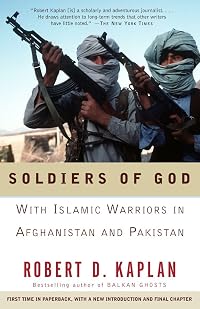
First time in paperback, with a new Introduction and final chapterWorld affairs expert and intrepid travel journalist Robert D. Kaplan braved the dangers of war-ravaged Afghanistan in the 1980s, living among the mujahidin-the "soldiers of god"-whose unwavering devotion to Islam fueled their mission to oust the formidable Soviet invaders. In Soldiers of God we follow Kaplan's extraordinary journey and learn how the thwarted Soviet invasion gave rise to the ruthless Taliban and the defining show more international conflagration of the twenty-first century.Kaplan returns a decade later and brings to life a lawless frontier. What he reveals is astonishing- teeming refugee camps on the deeply contentious Pakistan-Afghanistan border; a war front that combines primitive fighters with the most technologically advanced weapons known to man; rigorous Islamic indoctrination academies; a land of minefields plagued by drought, fierce tribalism, insurmountable ethnic and religious divisions, an abysmal literacy rate, and legions of war orphans who seek stability in military brotherhood. Traveling alongside Islamic guerrilla fighters, sharing their food, observing their piety in the face of deprivation, and witnessing their determination, Kaplan offers a unique opportunity to increase our understanding of a people and a country that are at the center of world events. show lessTags
Recommendations
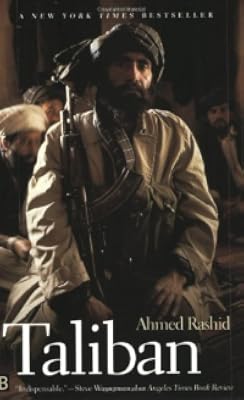
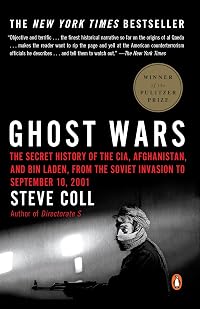
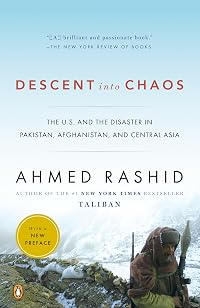
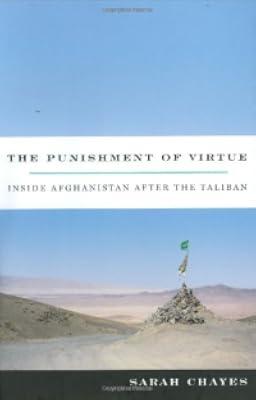































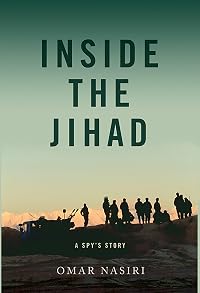
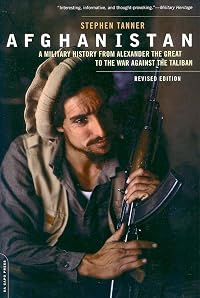



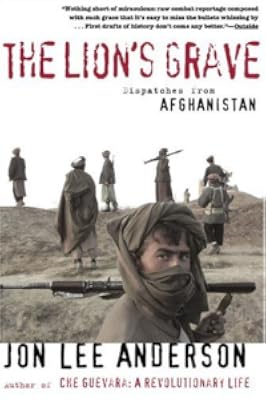
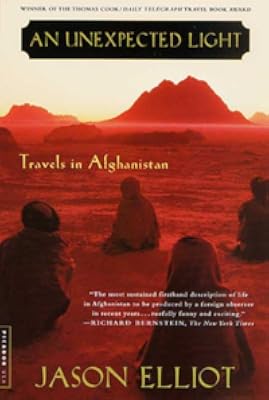
Member Recommendations
Member Reviews
Kaplan's examination of the cultures, climates, and histories of Afghanistan and Pakistan is both engaging and telling. More than any other work I've come across, Soldiers of God works to not only uncover the current situation (as of 1990), but to clearly and carefully trace how it developed. Written before most of the Western World knew anything of Afghanistan, when the warriors he spoke to were dealing with Soviet missiles, the passages and conversations in this work do more to illuminate the contemporary conflicts, wars and situations than can be briefly described here.
With each chapter, a contemporary reader can glimpse how we got here, to the situation we face in Afghanistan in the second decade of the 21st century, with show more frightening clarity. Kaplan's care in documenting not only events, but motivations and conflicts, allows readers to understand not just the geography of the country and the incredible difficulties faced by any military involved on the terrain, but also the motivations involved, from then until now. His discussion of the Taliban as an organization that was gaining ground in the late 20th century is difficult to read, but his care with explanation and objective reporting also means that each level of motivation and hope is clear. From apathy, to radicalization, to sexism and violence and education (or, more pointedly, a lack thereof), the issues are discussed with clarity and detail.
For readers who feel like they're not quite sure how we got to where we are now, from small moment to small moment, long before 9/11, this is important and worthwhile reading. For others, who already know the history well, I believe there's probably still worthwhile insight to be gained from the work. Kaplan is a smart and engaging writer, and I'll be seeking out more of his work. show less
With each chapter, a contemporary reader can glimpse how we got here, to the situation we face in Afghanistan in the second decade of the 21st century, with show more frightening clarity. Kaplan's care in documenting not only events, but motivations and conflicts, allows readers to understand not just the geography of the country and the incredible difficulties faced by any military involved on the terrain, but also the motivations involved, from then until now. His discussion of the Taliban as an organization that was gaining ground in the late 20th century is difficult to read, but his care with explanation and objective reporting also means that each level of motivation and hope is clear. From apathy, to radicalization, to sexism and violence and education (or, more pointedly, a lack thereof), the issues are discussed with clarity and detail.
For readers who feel like they're not quite sure how we got to where we are now, from small moment to small moment, long before 9/11, this is important and worthwhile reading. For others, who already know the history well, I believe there's probably still worthwhile insight to be gained from the work. Kaplan is a smart and engaging writer, and I'll be seeking out more of his work. show less
I developed quite a dislike for Kaplan as I read this book, but the subject matter was sufficiently fascinating to help me forgive his not-entirely-subtle dislike of Asians. This book provides an on the ground view of the Soviet Invasion and subsequent chaos. The glimpses of Afghani society, although mostly confined to men involved in war, and the physical descriptions of Afghanistan’s landscape were captivating. Kaplan seems quite enamored of the Pashtun culture, especially in comparison to Pakistan, which is portrayed unflatteringly but not entirely unfairly as a potential terrorist breeding ground. He seems to see himself as a brave, hugely suffering war reporter, although the most extreme suffering he appears to undergo is show more occasional separation from soft drinks. Obviously my disinclination for the author colored my view of the book, but I feel it was worthwhile reading as it increased my knowledge of the Soviet-Afghan war and my conviction that terrorism has its roots in poverty and desperation rather than pure ideology. show less
Soldiers of God provides the historical context for the emergence of the Taliban and Osama Bin Laden's terrorist network. Given the devastation of September 11th, 2001 the republishing of this book was timely and smart on Kaplan's part. Robert Kaplan first traveled to Afghanistan and lived among the mujahidin (soldiers of God) back in the mid 1980s. It was on this journey that Kaplan came to witness the rise of the Taliban. More than that, he acquired the colors to paint a vivid picture of a society few Americans see: refugee camps, harsh drought, pervasive illiteracy, militant indoctrination, fierce piety, and ethnic battle lines. In the unity of prayer was practically the only form of democracy; all whispering the name of God one show more hundred times.
Kaplan digs deep to uncover the hidden side effects of the Soviet invasion - malaria outbreaks, for example. Thanks to stagnant pools of mosquito infested water caused by pervasive destruction of irrigation systems. show less
Kaplan digs deep to uncover the hidden side effects of the Soviet invasion - malaria outbreaks, for example. Thanks to stagnant pools of mosquito infested water caused by pervasive destruction of irrigation systems. show less
Very good book on the Mujahideen during the Soviet invasion of Afghanistan. The author admits to not being objective at the time in the new introduction as he looked back on his work. The new epilogue involves his revisiting some of the places he visited in the 80's in the modern time and how they have changed. All in all a very good book by someone who took the physical risk to go into Afghanistan multiple times to meet with Muj leaders during the Soviet-Afghan War.
This was a good background on Afghanistan before we really got involved in the country. He also points out lost opportunities for the US in the war against Russia.
A reporters account of the Soviet-Afghan War in the 1980's.
Ratings
Members
- Recently Added By
Lists

Radical Islam/Islamism
75 works; 6 members

LtGen James Mattis' Reading List
58 works; 2 members
Author Information

36+ Works 10,088 Members
Journalist Robert D. Kaplan is a contributing editor The Atlantic Monthly. He has traveled extensively, and his journeys through Yugoslavia and America have produced, respectively, Balkan Ghosts (which was nominated for a Pulitzer Prize) and An Empire Wilderness. Kapan is also the author of Monsoon: The Indian Ocean and the Future of American show more Power (Random House, 2010) and The Revenge of Geography (Random House, 2012) Kaplan has lectured at the FBI, the National Security Agency, the Pentagon's Joint Staff, major universities, the CIA, and business forums. (Bowker Author Biography) show less
Common Knowledge
- Original title
- Soldiers of God
- Important places
- Afghanistan; Pakistan
- First words
- Amputations were the most common form of surgery in Afghanistan in the 1980s.
- Last words
- (Click to show. Warning: May contain spoilers.)Do not expect Pakistan to pass quietly from history.
- Original language
- English
Classifications
- Genres
- Nonfiction, General Nonfiction, Travel, Religion & Spirituality, History, Biography & Memoir
- DDC/MDS
- 958.1045092 — History & geography History of Asia Central Asia: Afghanistan, Pakistan, Uzebekistan Afghanistan 1919-
- LCC
- DS371.2 .K366 — History of Europe, Asia, Africa and Oceania Asia History of Asia Afghanistan History
- BISAC
Statistics
- Members
- 344
- Popularity
- 92,154
- Reviews
- 6
- Rating
- (3.95)
- Languages
- Dutch, English, Spanish
- Media
- Paper, Audiobook, Ebook
- ISBNs
- 7
- ASINs
- 3