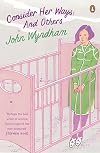
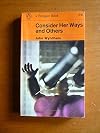
Consider Her Ways and Others
by John Wyndham
On This Page
Description
The six stories in Consider Her Ways- And Others,the second collecton of John Wyndham's short tales, continue his exploration of the science fiction staple - what if? In the title story we are introduced to a world where all the men have been killed by a virus and women continue to survive in a strict caste system - bottom of the heap are the mothers. In others we meet the man who accidentally summons a devil and then has to find a way of getting rid of him without losing his immortal soul, show more as well as the woman who, thanks to an experiment in time, discovers why her lover abandoned her. 'Wyndham writes strongly and has a gift for bizarre plots' Guardian 'One of the few authors whose compulsive readability is a compliment to the intelligence' Spectator John Wyndham Parkes Lucas Benyon Harris was born in 1903, the son of a barrister. He tried a number of careers including farming, law, commercial art and advertising, and started writing short stories, intended for sale, in 1925. From 1930 to 1939 he wrote short stories of various kinds under different names, almost exclusively for American publications, while also writing detective novels. During the war he was in the Civil Service and then the Army. In 1946 he went back to writing stories for publication in the USA and decided to try a modified form of science fiction, a form he called 'logical fantasy'. As John Wyndham he wrote The Day of the Triffids, The Kraken Wakes, The Chrysalids, The Midwich Cuckoos(filmed as Village of the Damned), The Seeds of Time, Trouble with Lichen, The Outward Urge, Consider Her Ways and Others, Web and Chocky. John Wyndham died in March 1969. show lessTags
Recommendations













Member Reviews
“Most things are possible: whether they are desirable, or worth doing, is a different matter.”
This is a 1961 collection of short(ish) stories, all but one of which (Peggy MacRafferty) involve glitches, twists, and jumps in time, place, or timelines.
It’s 2020 - where are the time travellers?
It’s only July, but 2020 is already a dramatically memorable year around the world, for multiple dreadful reasons.
Record-breaking wildfires in Australia and the Amazon, Coronavirus Covid-19 pandemic, civil unrest (though protesting against police brutality targeting people of colour is a good cause), record-breaking Arctic heat (38 Celsius = 100.4 F in Verkhoyansk), recession, trade wars, ebola in the DRC, locusts in Kenya, and bubonic show more plague in Mongolia. Plus hurricanes, floods, volcanic eruptions, earthquakes, wars, and refugees.
Still to come: an especially bitter US presidential election, and the upheaval of the end of the UK’s Brexit transition period. Plus North Korea is emboldened and who knows if this year's natural disasters will be worse than usual?
If time travel were possible, shouldn’t someone have come to “fix” 2020?
* Maybe they did, and this is the least bad version?!
* Or perhaps their adjustments accidentally made things worse? (The “murder hornets” might have given immunity to Covid and so saved the economy as well?)
* Maybe they’re avoiding the year like the plague we’re not avoiding?
* Or perhaps they fixed one version of 2020, but we’re on the dead/dying-end they didn’t fix?
Image: I just hope that when time travellers or aliens visit, they take me back with them!
Style and themes
I’ve read this collection at least twice before, but long enough ago to have forgotten all the details. There’s more humour than I remembered (especially The Long Spoon, and Peggy) and some had a strong strand of female empowerment and criticism of patriarchy (Consider Her Ways, and Peggy).
There’s little scientific explanation beyond vaguely-described experiments gone wrong. Instead, they’re about how people react when they suddenly find themselves somewhere/when impossible. Are they dreaming, dead, or mad? Realisation comes from mirrors, news, newspapers, and unfamiliar variants of familiar objects (fashion, transport, brands, prices). The only minor fault is that some are rather unsubtle in the framing or exposition: questions from a lawyer, a personal meeting with a historian, a tour of a new place.
Reviews of individual stories - no spoilers
Consider Her Ways, 5*
"Go to the ant, thou sluggard; consider her ways, and be wise." - Proverbs 6:6-8.
“Who am I? Who are you? What’s happened to me?”
How terrifying to have to ask. Not to know your own name or hair colour. To be in a place that looks somehow wrong. To look down and see a grossly distorted body that you know can’t be yours.
But the narrator is pragmatic and decides “to take an intelligent interest… [it] must be chockful of symbolic content”. She is in a supposedly a feminist utopia: a reaction against the mid 20th century obsession with romance and consumerism, where “everything had to have a ‘feminine’ angle”, finding a husband was paramount, “housewife” was reinvented as a profession, and kitchens were places of pride, glamour, and extravagance.
But Jane, “a thought-child of [her] time”, thinks it a horrifically wrong solution. While there, she’s not going to conform quietly. Most of all, she wants to escape to her own time and prevent this future happening. Can she change the past to change the future?
Odd, 3*
A man inherits valuable shares in a plastics company for helping a man he encountered only once, by chance. The lawyer disbursing the estate is intrigued. It’s very short and perfectly adequate, but nothing special or original.
Oh Where, Now, is Peggy MacRafferty? 3*
A satire on the superficiality of stardom, and unrealistic beauty standards: the pressure for women to look, speak, dress, and behave in whatever is the current, ephemeral fashion. A single timeline, set roundabout now/then.
I liked the message, but didn’t warm to the characters, and there was too much movie mogul talk used as filler. I was also discombobulated by a film director called George Floyd (only a couple of weeks after a man of the same name was murdered by a cop kneeling on his neck for more than 8 minutes, triggering protests around the world), and the potential starlet's amanuensis being called Mrs Trump!
Image: “I’m Spartacus. No, I’m Spartacus.” (This collection was published the year after Spartacus came out, so any similarities are probably coincidence.)
Stitch in Time, 4*
“Butterflies were visiting… though in a dilettante, unairworthy-looking way.”
A delightful, wistful story of an old lady, living in part of the home she grew up in. She realises “she had become a stranger in another people’s world” and remembers sitting in the same spot, waiting for her first love to turn up, when she expected him to propose. She is still distressed by not knowing what happened. She nods off, and finds an answer. Maybe she’s dead, maybe it’s a dream, or maybe it’s something to do with her son’s physics experiments.
“If these things are written, they do sometimes seem to be written in a very queerly distorted way.”
Random Quest, 4*
A love story, told like a detective story, with a time twist, that raises existential questions, all crammed into 40 pages.
Colin Trafford is trying to trace a woman who may never have existed. His enquiries to those who share Ottilie’s unusual surname lead him to a retired doctor, who has made his own enquiries about Colin, and remains puzzled. Cue Colin to explain his quest, which arises from his inadvertent three weeks in another timeline.
“Some pivotal thing had happened, or failed to happen… Once that had taken place, consequences gradually accumulating would make the conditions on one plane progressively different from those on the other… Perhaps… infinite planes of the random split and re-split.”
The details of the differences are nicely revealed: trivial ones, like fashions, and huge ones, like historic events and their consequences.
To what extent is the “you” in another timeline really “you”, when your experiences have diverged and changed your circumstances and apparent character?
“It’s like continually glimpsing oneself in unexpected distorting mirrors.”
Could you successfully slip into the other one’s life, a life where you don’t even know the usual terms of endearment for your own wife? Would you want to?
Don’t focus on the sci of this sci-fi. It’s a fascinating fiction, well told, so relish the tangled questions it raises.
A Long Spoon, 4*
Image: Spoon with head of Chamberlain and the 14th century proverb, “Who sups with the devil should have a long spoon.”, which he quoted on 13 May 1898 about the threat of Russia. (Source.)
How many under 40s will understand the opening sentence?
“If I lace up the tape this way round I can hear myself talking backwards!”
Scare stories of playing rock music backwards and hearing satanic messages really only started in the late 1960s, so Wyndham was ahead of the game.
No matter. This is a clever twist on the traditional Faustian pact, updated to allow for the fact that nowadays, sudden money or titles are hard to explain, and with an extra twist.
Quotes
* “The sun was shining with a bright benignity upon the most precise countryside.”
* “I don’t see why, even in an hallucination, I’m expected to be an illiterate moron.”
* “It’s curious how real the figments of a dream can seem when one is taken unaware by them.”
* “It’s like something copied, but with all the proportions wrong.”
* “It’s all different - no, sort of half-different.”
* “It was not a dream - everything was too textured, too solid… Too sensible, too.”
Wyndham for women
“There are other things in life besides having babies.”
When I reread Midwich Cuckoos (see my review HERE), I was shocked that a story rooted in the violation of women pays scant attention to the likely depth of their trauma. And Chocky (see my review HERE), largely sidelines the female characters as decorative and domestic.
This collection was a welcome and deserved redemption.
“It must be a very strange experience to be owned… ruled by a husband.”
His only error was to assume that in a world without men there would be no romantic love or recreational sex.
I need to reread Trouble with Lichen to complete the process.
Image: xkcd Time Machine, mouseover says "We never see any time travelers because they all discover it's a huge mistake." (Source.)
Time-travel tip: Gather specific dates, as well as more general information! show less
This is a 1961 collection of short(ish) stories, all but one of which (Peggy MacRafferty) involve glitches, twists, and jumps in time, place, or timelines.
It’s 2020 - where are the time travellers?
It’s only July, but 2020 is already a dramatically memorable year around the world, for multiple dreadful reasons.
Record-breaking wildfires in Australia and the Amazon, Coronavirus Covid-19 pandemic, civil unrest (though protesting against police brutality targeting people of colour is a good cause), record-breaking Arctic heat (38 Celsius = 100.4 F in Verkhoyansk), recession, trade wars, ebola in the DRC, locusts in Kenya, and bubonic show more plague in Mongolia. Plus hurricanes, floods, volcanic eruptions, earthquakes, wars, and refugees.
Still to come: an especially bitter US presidential election, and the upheaval of the end of the UK’s Brexit transition period. Plus North Korea is emboldened and who knows if this year's natural disasters will be worse than usual?
If time travel were possible, shouldn’t someone have come to “fix” 2020?
* Maybe they did, and this is the least bad version?!
* Or perhaps their adjustments accidentally made things worse? (The “murder hornets” might have given immunity to Covid and so saved the economy as well?)
* Maybe they’re avoiding the year like the plague we’re not avoiding?
* Or perhaps they fixed one version of 2020, but we’re on the dead/dying-end they didn’t fix?
Image: I just hope that when time travellers or aliens visit, they take me back with them!
Style and themes
I’ve read this collection at least twice before, but long enough ago to have forgotten all the details. There’s more humour than I remembered (especially The Long Spoon, and Peggy) and some had a strong strand of female empowerment and criticism of patriarchy (Consider Her Ways, and Peggy).
There’s little scientific explanation beyond vaguely-described experiments gone wrong. Instead, they’re about how people react when they suddenly find themselves somewhere/when impossible. Are they dreaming, dead, or mad? Realisation comes from mirrors, news, newspapers, and unfamiliar variants of familiar objects (fashion, transport, brands, prices). The only minor fault is that some are rather unsubtle in the framing or exposition: questions from a lawyer, a personal meeting with a historian, a tour of a new place.
Reviews of individual stories - no spoilers
Consider Her Ways, 5*
"Go to the ant, thou sluggard; consider her ways, and be wise." - Proverbs 6:6-8.
“Who am I? Who are you? What’s happened to me?”
How terrifying to have to ask. Not to know your own name or hair colour. To be in a place that looks somehow wrong. To look down and see a grossly distorted body that you know can’t be yours.
But the narrator is pragmatic and decides “to take an intelligent interest… [it] must be chockful of symbolic content”. She is in a supposedly a feminist utopia: a reaction against the mid 20th century obsession with romance and consumerism, where “everything had to have a ‘feminine’ angle”, finding a husband was paramount, “housewife” was reinvented as a profession, and kitchens were places of pride, glamour, and extravagance.
But Jane, “a thought-child of [her] time”, thinks it a horrifically wrong solution. While there, she’s not going to conform quietly. Most of all, she wants to escape to her own time and prevent this future happening. Can she change the past to change the future?
Odd, 3*
A man inherits valuable shares in a plastics company for helping a man he encountered only once, by chance. The lawyer disbursing the estate is intrigued. It’s very short and perfectly adequate, but nothing special or original.
Oh Where, Now, is Peggy MacRafferty? 3*
A satire on the superficiality of stardom, and unrealistic beauty standards: the pressure for women to look, speak, dress, and behave in whatever is the current, ephemeral fashion. A single timeline, set roundabout now/then.
I liked the message, but didn’t warm to the characters, and there was too much movie mogul talk used as filler. I was also discombobulated by a film director called George Floyd (only a couple of weeks after a man of the same name was murdered by a cop kneeling on his neck for more than 8 minutes, triggering protests around the world), and the potential starlet's amanuensis being called Mrs Trump!
Image: “I’m Spartacus. No, I’m Spartacus.” (This collection was published the year after Spartacus came out, so any similarities are probably coincidence.)
Stitch in Time, 4*
“Butterflies were visiting… though in a dilettante, unairworthy-looking way.”
A delightful, wistful story of an old lady, living in part of the home she grew up in. She realises “she had become a stranger in another people’s world” and remembers sitting in the same spot, waiting for her first love to turn up, when she expected him to propose. She is still distressed by not knowing what happened. She nods off, and finds an answer. Maybe she’s dead, maybe it’s a dream, or maybe it’s something to do with her son’s physics experiments.
“If these things are written, they do sometimes seem to be written in a very queerly distorted way.”
Random Quest, 4*
A love story, told like a detective story, with a time twist, that raises existential questions, all crammed into 40 pages.
Colin Trafford is trying to trace a woman who may never have existed. His enquiries to those who share Ottilie’s unusual surname lead him to a retired doctor, who has made his own enquiries about Colin, and remains puzzled. Cue Colin to explain his quest, which arises from his inadvertent three weeks in another timeline.
“Some pivotal thing had happened, or failed to happen… Once that had taken place, consequences gradually accumulating would make the conditions on one plane progressively different from those on the other… Perhaps… infinite planes of the random split and re-split.”
The details of the differences are nicely revealed: trivial ones, like fashions, and huge ones, like historic events and their consequences.
To what extent is the “you” in another timeline really “you”, when your experiences have diverged and changed your circumstances and apparent character?
“It’s like continually glimpsing oneself in unexpected distorting mirrors.”
Could you successfully slip into the other one’s life, a life where you don’t even know the usual terms of endearment for your own wife? Would you want to?
Don’t focus on the sci of this sci-fi. It’s a fascinating fiction, well told, so relish the tangled questions it raises.
A Long Spoon, 4*
Image: Spoon with head of Chamberlain and the 14th century proverb, “Who sups with the devil should have a long spoon.”, which he quoted on 13 May 1898 about the threat of Russia. (Source.)
How many under 40s will understand the opening sentence?
“If I lace up the tape this way round I can hear myself talking backwards!”
Scare stories of playing rock music backwards and hearing satanic messages really only started in the late 1960s, so Wyndham was ahead of the game.
No matter. This is a clever twist on the traditional Faustian pact, updated to allow for the fact that nowadays, sudden money or titles are hard to explain, and with an extra twist.
Quotes
* “The sun was shining with a bright benignity upon the most precise countryside.”
* “I don’t see why, even in an hallucination, I’m expected to be an illiterate moron.”
* “It’s curious how real the figments of a dream can seem when one is taken unaware by them.”
* “It’s like something copied, but with all the proportions wrong.”
* “It’s all different - no, sort of half-different.”
* “It was not a dream - everything was too textured, too solid… Too sensible, too.”
Wyndham for women
“There are other things in life besides having babies.”
When I reread Midwich Cuckoos (see my review HERE), I was shocked that a story rooted in the violation of women pays scant attention to the likely depth of their trauma. And Chocky (see my review HERE), largely sidelines the female characters as decorative and domestic.
This collection was a welcome and deserved redemption.
“It must be a very strange experience to be owned… ruled by a husband.”
His only error was to assume that in a world without men there would be no romantic love or recreational sex.
I need to reread Trouble with Lichen to complete the process.
Image: xkcd Time Machine, mouseover says "We never see any time travelers because they all discover it's a huge mistake." (Source.)
Time-travel tip: Gather specific dates, as well as more general information! show less
A bout of Covid sent me to familiar John Wyndham books, the perfect length to read in a day when slightly brain fogged. I've not actually read these short stories in years, and didn't remember them at all. They are enjoyable, if a bit similar.
There is a very clear line from Consider Her Ways to The Handmaids Tale, a dystopia where women have very specific roles. It is through different reasoning but there is a lot in common too. Time travel, throwing of consciousness, and fate are recurring themes.
There is a very clear line from Consider Her Ways to The Handmaids Tale, a dystopia where women have very specific roles. It is through different reasoning but there is a lot in common too. Time travel, throwing of consciousness, and fate are recurring themes.
I've read a number of Wyndham's novels and looked forward to trying his short stories. This collection was reissued in 2014 by Penguin and the stories date to the late 50's. A novella (the title story) and 5 other shorter stories of varying length. Some science fiction, some not, some more like fantasy. The first stories revolve around time travel via a transference of consciousness. For example, the second story "Odd" has a man in 1906 hit by a tram while crossing the street and his consciousness is temporarily sent forward in time to his older self in 1958 with interesting results. The opening novella has an excellent reputation but I thought it was overdone and would have been better at a shorter length, and it too used a similar show more time travel idea with a woman's consciousness being thrown more than a hundred years into a dystopian future after taking an experimental drug. It is something of a subtle horror story and a little heavy on the social satire within it.
Having the first two stories play off of a similar device (time travel of the mind) was a little disappointing, but where the collection failed me was the third story, purely a satire about a would be movie starlet. After starting with a bit of promise I kept expecting the story to go somewhere and it took too much time and wandering to get to the punchline and was not at all worth the trip. A middle story, "A Stitch in Time" was I think the story I liked best here. It ponders other dimensions and time, and an experiment that occurs as an old woman reflects on her life and how decisions and events affect where your life may go.
Overall I would say I was a little disappointed with the collection. I'll give it an OK rating. I bought another Penguin edition of stories at the same time as this and I look forward to reading it and another Wyndham I have handy. show less
Having the first two stories play off of a similar device (time travel of the mind) was a little disappointing, but where the collection failed me was the third story, purely a satire about a would be movie starlet. After starting with a bit of promise I kept expecting the story to go somewhere and it took too much time and wandering to get to the punchline and was not at all worth the trip. A middle story, "A Stitch in Time" was I think the story I liked best here. It ponders other dimensions and time, and an experiment that occurs as an old woman reflects on her life and how decisions and events affect where your life may go.
Overall I would say I was a little disappointed with the collection. I'll give it an OK rating. I bought another Penguin edition of stories at the same time as this and I look forward to reading it and another Wyndham I have handy. show less
Jane Waterleigh, a modern woman, takes a drug and wakes up in a future where a virus killed all men. Society is organized like ants into a rigid, caste-based, all-female world: mothers, workers, doctors.
A dystopian "feminist utopia" where, despite lacking violence or chaos, humanity has become sterile and highly regimented. Jane, a happily married woman in her time, desperately attempts to prevent this future upon her return.
A dystopian "feminist utopia" where, despite lacking violence or chaos, humanity has become sterile and highly regimented. Jane, a happily married woman in her time, desperately attempts to prevent this future upon her return.
Fun. Better than I expected. Not creepy or horrifying as I've heard his novels are. Mostly gimmicked off some aspect or kind of time-travel. I love the bit that uses quantum physics, ... denies the possibility of determining motion absolutely and consequently leads into the four-dimensional space-time continuum." After all, most sf emphasizes Newtonian physics, what with slingshotting out of gravity-wells and so forth.
I don't want you to get the wrong impression, though - the stories here are more than their gimmicks. There are themes of sex and gender, of love and loyalty, of greed and of kindness. And there's humor, too. Well done."
I don't want you to get the wrong impression, though - the stories here are more than their gimmicks. There are themes of sex and gender, of love and loyalty, of greed and of kindness. And there's humor, too. Well done."
A collection of 6 novellas and short stories by the author of "Day of the Triffids". The title story is one of his most entertaining tales. Other stories include: "Odd", "Oh, Where, Now, is Peggy Macrafferty", "Stitch in Time", "Random Quest", and "A Long Spoon". Four of the stories concern time-travel or travel between parallel realities. The other two have a bit of O. Henry in them but are not science fiction.
The title novella (copyrighted 1956) reminded me somewhat of the premise of Atwood's A Handmaid's Tale. Wyndham's rather less-horrifying take revolves around a society in which all men have died and female humans have become specialized (think of the Biblical quote, "Go to the ant, O sluggard, and consider her ways").
The title novella (copyrighted 1956) reminded me somewhat of the premise of Atwood's A Handmaid's Tale. Wyndham's rather less-horrifying take revolves around a society in which all men have died and female humans have become specialized (think of the Biblical quote, "Go to the ant, O sluggard, and consider her ways").
fantastic. I love John Wyndham.
random quest and long spoon particularly brilliant.
random quest and long spoon particularly brilliant.
Members
- Recently Added By
Lists

Favorite Short Fiction
228 works; 99 members
Author Information

Some Editions
Work Relationships
Common Knowledge
- Original title
- Consider Her Ways and Others
- Alternate titles
- Consider Her Ways and Other Stories
- Original publication date
- 1961
- First words
- There was nothing but myself.
- Last words
- (Click to show. Warning: May contain spoilers.)“How do you think I ever managed to raise enough capital to start this place …?”
- Original language
- English
Classifications
Statistics
- Members
- 678
- Popularity
- 42,360
- Reviews
- 12
- Rating
- (3.61)
- Languages
- English
- Media
- Paper, Ebook
- ISBNs
- 5
- ASINs
- 13