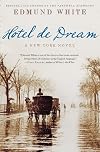
Hotel de Dream
by Edmund White
On This Page
Description
In a damp, old Sussex castle, American literary phenomenon Stephen Crane lies on his deathbed, wasting away from tuberculosis at the age of twenty-eight. The world-famous author has retreated to England with his wife, Cora, in part to avoid gossip about her ignominious past as the proprietress of an infamous Florida bordello, the Hotel de Dream. In the midst of gathering tragedy, Crane begins dictating what will surely be his final work: a strange and poignant novel of a boy prostitute in show more 1890s New York and the married man who ruins his own life to win his love. show lessTags
Recommendations









































Member Reviews
The story of Hotel de Dream: A New York Novel is one of two pairs of lovers, Stephen Crane and his wife Cora and the young prostitute Elliott and his lover Theodore the Banker, who are products of Stephen Crane's literary imagination. In this novel Crane is writing a companion piece to his earlier novel, Maggie, Girl of the Streets, and it is this novel, The Painted Boy, that occupies Crane as he slowly succumbs to the ravages of TB. What is fascinating is the seamless way that White is able to meld the stories of Crane's life and Crane's writing. Sections of The Painted Boy are interspersed throughout the novel as Crane dictates it to his wife Cora. The description of the young boy of the streets, Elliott is both moving and show more heartbreaking as he loses his childhood in an attempt to simply survive. In an inter textual delight for the reader Crane becomes a character both in White's novel, as journalist studying the boy, and in the novel he is writing within Hotel de Dream. It reminds me of a favorite novel of mine, The Counterfeiters, by Andre Gide, wherein the protagonist Edouard is writing a novel titled The Counterfeiters, thus making Gide's tale a novel within a novel. White is using a modern approach to the novel to tell a very authentic fin de siecle tale.
He succeeds; and the reader is drawn along by the atmospheric seediness of turn-of-the century Manhattan as it is contrasted with the quiet countryside of England where Stephen and Cora are passing their days. There is also the realism of visits from Henry James and Joseph Conrad that add to the book's milieu. I found White's prose elegant and his realization of Crane's novel within the novel believable. The contrasting portraits of passion help make this novel a gem. It makes me want to explore more of both writers in the near future. show less
He succeeds; and the reader is drawn along by the atmospheric seediness of turn-of-the century Manhattan as it is contrasted with the quiet countryside of England where Stephen and Cora are passing their days. There is also the realism of visits from Henry James and Joseph Conrad that add to the book's milieu. I found White's prose elegant and his realization of Crane's novel within the novel believable. The contrasting portraits of passion help make this novel a gem. It makes me want to explore more of both writers in the near future. show less
The premise of this story is intriguing, and White handles it as competently as you would expect, but I felt it didn't quite deliver everything it could have. Obviously White wanted to avoid writing a straightforward biographical historical novel about Crane, so he puts the stress on the story that Crane is supposed to be writing in the last weeks of his life. But that leaves us with a lot of tantalisingly undeveloped glimpses of Crane's life, his partner Cora, and his friendships with some of the literary giants who were infesting Sussex around the turn of the century. We get entertaining but rather predictable cameo appearances by Henry James and Joseph Conrad, but Wells, who might have been a more interesting foil to Crane, doesn't show more feature.
The story-within-a-story, with its glimpses of the New York gay scene of the late 19th century, is fun, and it's nice to see how White manages to steer Crane into plausibly writing a story that whilst following the inevitable narrative line of sin-blackmail-disgrace, still shows sympathy and understanding for the parties in the love story. But the story itself isn't particularly extraordinary: what is exciting about it is the idea that a mainstream contemporary writer could have written such a thing. Of course, there's no evidence that he did, and it's pretty implausible that he would have, but it's still an intriguing possibility, and White makes a good case for it.
White is always worth a look and this is an entertaining read, but I felt that Fanny, a fiction was much better as a historical novel. show less
The story-within-a-story, with its glimpses of the New York gay scene of the late 19th century, is fun, and it's nice to see how White manages to steer Crane into plausibly writing a story that whilst following the inevitable narrative line of sin-blackmail-disgrace, still shows sympathy and understanding for the parties in the love story. But the story itself isn't particularly extraordinary: what is exciting about it is the idea that a mainstream contemporary writer could have written such a thing. Of course, there's no evidence that he did, and it's pretty implausible that he would have, but it's still an intriguing possibility, and White makes a good case for it.
White is always worth a look and this is an entertaining read, but I felt that Fanny, a fiction was much better as a historical novel. show less
Edmund White displays his storytelling talent to impressive effect as he artfully weaves together two narratives in his latest novel, Hotel de Dream. The first story follows the American expatriate author Stephen Crane as he and his wife Cora travel from his home in England to Germany’s Black Forest on a desperate quest for a cure for his advanced case of tuberculosis. Interspersed with the account of Crane’s travels is the second story, his novel The Painted Boy, which he dictates to Cora along the way; in this narrative, the New York banker Theodore falls in love with the boy prostitute Elliott in spite of the risks to his career and family.
The Hotel de Dream, the name of the brothel Cora ran in Florida before her marriage to show more Crane, plays an insignificant role in the unfolding of both narratives. Yet as a symbol, it is important enough to give the novel its name. Cora’s establishment was both a hotel, a refuge for the traveler away from home and the routine of everyday life, and a place of dreams, an opportunity to live out longings and fantasies, if only for a night. Seen in these terms, the novel’s Stephen Crane and Theodore the banker live in their own personal Hotels de Dream. Crane, staying in a series of hotels as he travels towards Germany, is trying as his last achievement to dictate the novel that he had wanted to write for years; Theodore, visiting Elliott in the illicit love nest that the adoring banker rented for him, is attempting to find a haven for the love that he has to hide from a disapproving society.
Life being what it is, however, hotel stays are sometimes plagued with annoyances and dreams don’t always live up to their promise. The outcomes of Crane’s efforts and of Theodore’s yearning, revealed at the end of the novel, tie both narratives up neatly; interestingly, another American author-cum-fictional character, Henry James, has the last, conclusive word before White’s Postface. Yet, as with any work of literature worth a careful perusal, it is ultimately up to the readers to draw whatever conclusion they please from the outcome of White’s engrossing tale of literature, passion, and disease. show less
The Hotel de Dream, the name of the brothel Cora ran in Florida before her marriage to show more Crane, plays an insignificant role in the unfolding of both narratives. Yet as a symbol, it is important enough to give the novel its name. Cora’s establishment was both a hotel, a refuge for the traveler away from home and the routine of everyday life, and a place of dreams, an opportunity to live out longings and fantasies, if only for a night. Seen in these terms, the novel’s Stephen Crane and Theodore the banker live in their own personal Hotels de Dream. Crane, staying in a series of hotels as he travels towards Germany, is trying as his last achievement to dictate the novel that he had wanted to write for years; Theodore, visiting Elliott in the illicit love nest that the adoring banker rented for him, is attempting to find a haven for the love that he has to hide from a disapproving society.
Life being what it is, however, hotel stays are sometimes plagued with annoyances and dreams don’t always live up to their promise. The outcomes of Crane’s efforts and of Theodore’s yearning, revealed at the end of the novel, tie both narratives up neatly; interestingly, another American author-cum-fictional character, Henry James, has the last, conclusive word before White’s Postface. Yet, as with any work of literature worth a careful perusal, it is ultimately up to the readers to draw whatever conclusion they please from the outcome of White’s engrossing tale of literature, passion, and disease. show less
I picked up Hotel de Dream because I’d read that it was a great read and that it was a forerunner to the popular woman-behind-the-man novels that are so popular right now (think The Paris Wife by Paula McClain or The Aviator’s Wife by Melanie Benjamin). Plus it had an extra bonus of having a novel-within-a-novel (Margaret Atwood’s The Assassins). I just love those types of books.
Hotel de Dream’s featured couple is Stephen and Cora Crane. Stephen is twenty-eight years-old and is dying of tuberculosis. Cora want to go back to England, but fears Stephen is too weak to make the trip. In part, they are trying to escape the gossip mill that swirls around Cora…after all, she is the former owner of a bordello in Florida.
The book show more jacket says that the Cranes “live riotously, running up bills they can never pay.” Maybe it was because I read only to page 50, but they didn’t seem to be living the high life by any means.
Crane was often visited by his esteemed contemporaries, Henry James and Joseph Conrad. Author White makes a huge mistake when he brings a people like James and Conrad by only using their last names. I had a hard time following when the characters first showed up, trying to figure out who they were. By the time I reached page 50, I had the style figured out, but it still annoyed me.
Then there is the problem of the novel-within-the-novel. It seems that the Cranes are desperate for money, Stephen, in a rather delirious state, begins to dictate a novel to Cora.
And this is where White really lost me. I read the first excerpt, then the second, but by the time I finished, I was just grossed out. The “new” novel is about a very young male prostitute and his homosexuality. The graphic descriptions are what turned me off.
As a reader, I give Hotel de Dream, one star. The early pages of the story are confusing. As a writer, I give the novel four stars (out of five). Aside from the previously mentioned confusion, once I got past it, the book is well written; it’s just not kind of story though. White’s book has an audience, I’m sure, it’s just not me. show less
Hotel de Dream’s featured couple is Stephen and Cora Crane. Stephen is twenty-eight years-old and is dying of tuberculosis. Cora want to go back to England, but fears Stephen is too weak to make the trip. In part, they are trying to escape the gossip mill that swirls around Cora…after all, she is the former owner of a bordello in Florida.
The book show more jacket says that the Cranes “live riotously, running up bills they can never pay.” Maybe it was because I read only to page 50, but they didn’t seem to be living the high life by any means.
Crane was often visited by his esteemed contemporaries, Henry James and Joseph Conrad. Author White makes a huge mistake when he brings a people like James and Conrad by only using their last names. I had a hard time following when the characters first showed up, trying to figure out who they were. By the time I reached page 50, I had the style figured out, but it still annoyed me.
Then there is the problem of the novel-within-the-novel. It seems that the Cranes are desperate for money, Stephen, in a rather delirious state, begins to dictate a novel to Cora.
And this is where White really lost me. I read the first excerpt, then the second, but by the time I finished, I was just grossed out. The “new” novel is about a very young male prostitute and his homosexuality. The graphic descriptions are what turned me off.
As a reader, I give Hotel de Dream, one star. The early pages of the story are confusing. As a writer, I give the novel four stars (out of five). Aside from the previously mentioned confusion, once I got past it, the book is well written; it’s just not kind of story though. White’s book has an audience, I’m sure, it’s just not me. show less
The segments where White is re-creating Stephen Crane's "lost" novel are intriguing. It is a story of obsessive love that rings true with other gay fiction of the time. It is sometimes glorious, but more often, excruciatingly painful.
White doesn't keep the same momentum going with the primary story of Crane on his death-bed, dictating the story to his wife, Cora. Their interaction is stilted and contrived. She is constantly reminding the reader that Crane is America's great writer, and he name drops so often that the one begins to get that feeling of being trapped with the worst guest at a cocktail party.
White doesn't keep the same momentum going with the primary story of Crane on his death-bed, dictating the story to his wife, Cora. Their interaction is stilted and contrived. She is constantly reminding the reader that Crane is America's great writer, and he name drops so often that the one begins to get that feeling of being trapped with the worst guest at a cocktail party.
This is only a couple of hundred pages, yet it felt like I was slogging through it. I don’t think I would have finished it if it were longer.
The writing is awkward and clumsy, there is no flow to it. The prose makes hard turns that made go back and re-read things way too often, and yet it seems simplistic in style. Sentences and paragraphs just come out of nowhere, having nothing to do with what’s around them.
The book is a story within a story and neither one of them is all that interesting and nothing much happens. If you’ve read the synopsis you’ve heard the whole story. The framing story is just that, really just a frame for soft core gay porn (more like a romance novel) about an underage boy and a married man. Maybe show more that’s all it was supposed to be and I’m judging it wrong.
You don’t learn anything about Stephen Crane, it could be any author. It’s subtitled "A New York Novel" but only the fiction story takes place there, the Crane story is in various parts of Europe, and you’d barely know any of it was in NYC except that it’s mentioned a couple of times. The title? Cranes wife used to work run a place called Hotel de Dream, that’s it. It’s mentioned a couple of times in passing and and as far as I could tell had nothing to do with the story, and neither did her former life there.
What was good about it? I liked the ending. And it was short. show less
The writing is awkward and clumsy, there is no flow to it. The prose makes hard turns that made go back and re-read things way too often, and yet it seems simplistic in style. Sentences and paragraphs just come out of nowhere, having nothing to do with what’s around them.
The book is a story within a story and neither one of them is all that interesting and nothing much happens. If you’ve read the synopsis you’ve heard the whole story. The framing story is just that, really just a frame for soft core gay porn (more like a romance novel) about an underage boy and a married man. Maybe show more that’s all it was supposed to be and I’m judging it wrong.
You don’t learn anything about Stephen Crane, it could be any author. It’s subtitled "A New York Novel" but only the fiction story takes place there, the Crane story is in various parts of Europe, and you’d barely know any of it was in NYC except that it’s mentioned a couple of times. The title? Cranes wife used to work run a place called Hotel de Dream, that’s it. It’s mentioned a couple of times in passing and and as far as I could tell had nothing to do with the story, and neither did her former life there.
What was good about it? I liked the ending. And it was short. show less
An OK read, with some neat historical details but...I don't know, it didn't really do it for me. I mean, it was all right, but...meh.
Members
- Recently Added By
Author Information

68+ Works 13,121 Members
Author Edmund White was born in Cincinnati, Ohio on January 13, 1940. He majored in Chinese at the University of Michigan. Before spending a year in Rome, he worked for Time-Life Books from 1962 until 1970. Upon his return, he became an editor for The Saturday Review and Horizon. He lived in France from 1983 until 1990. His works have chronicled show more gay life with such books as A Boy's Own Story, The Beautiful Room Is Empty, and The Farewell Symphony. (Bowker Author Biography) show less
Awards and Honors
Awards
Common Knowledge
- Canonical title
- Hotel de Dream
- Original publication date
- 2007
- People/Characters
- Stephen Crane; Theodore Koch; Elliot Coolan; Cora Taylor
- Dedication
- To Patrick Ryan
- First words
- Cora never thought for a moment that her young husband could die.
- Blurbers
- Eggers, Dave; Patchett, Ann; Shteyngart, Gary; Sorrentino, Paul; Andersen, Kurt; Moore, Lorrie
Classifications
- Genres
- Fiction and Literature, LGBTQ+, General Fiction, Historical Fiction
- DDC/MDS
- 813.54 — Literature & rhetoric American literature in English American fiction in English 1900-1999 1945-1999
- LCC
- PS3573 .H463 .H68 — Language and Literature American literature American literature Individual authors 1961-
- BISAC
Statistics
- Members
- 428
- Popularity
- 72,365
- Reviews
- 9
- Rating
- (3.63)
- Languages
- 7 — English, French, German, Greek, Italian, Polish, Spanish
- Media
- Paper, Ebook
- ISBNs
- 14
- ASINs
- 4