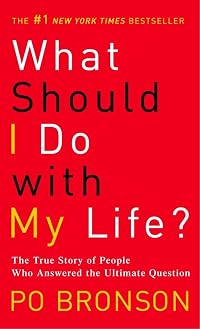
What Should I Do with My Life?: The True Story of People Who Answered the Ultimate Question
by Po Bronson
On This Page
Description
“Brimming with stories of sacrifice, courage, commitment and, sometimes, failure, the book will support anyone pondering a major life choice or risk without force-feeding them pat solutions.”—Publishers WeeklyIn What Should I Do with My Life? Po Bronson tells the inspirational true stories of people who have found the most meaningful answers to that great question. With humor, empathy, and insight, Bronson writes of remarkable individuals—from young to old, from those just show more starting out to those in a second career—who have overcome fear and confusion to find a larger truth about their lives and, in doing so, have been transformed by the experience.
What Should I Do with My Life? struck a powerful, resonant chord on publication, causing a multitude of people to rethink their vocations and priorities and start on the path to finding their true place in the world. For this edition, Bronson has... show less
Tags
Recommendations



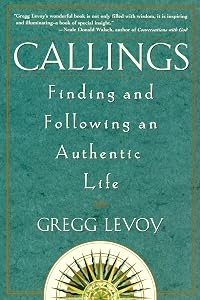
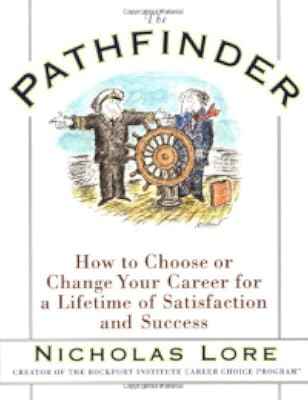
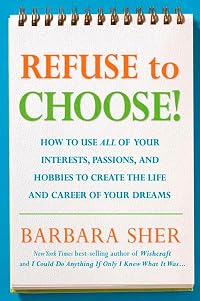
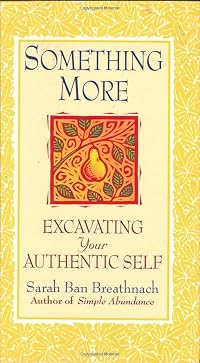
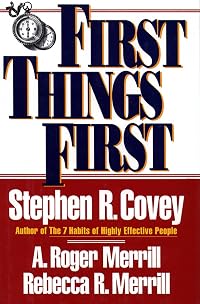
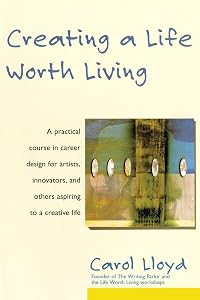
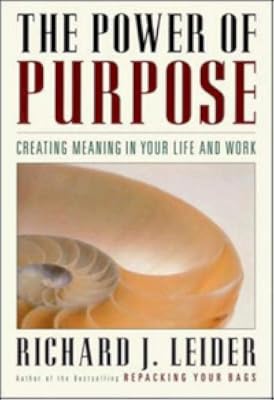
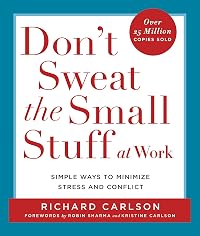
Member Recommendations
Member Reviews
Most people, most Americans anyway, of my generation can't expect to spend their entire lives with one company, or even in one industry. The best thing about "What Should I Do With My Life," then, is that it provides a clear, honest picture of how complex and chaotic career paths can be these days. The people who are the subjects of Bronson's stories one thing and then another, they fall into jobs as if by accident, they abandon careers they've spent decades training for and even turn hobbies into whole new careers. For better or for worse, "What Should I Do With My Life" could be called "The Way We Work Now."
The problem with Bronson's book, and the reason I didn't finish reading it, is that, despite its relatively simple mission and show more Bronson's more-or-less unadorned prose style, it contains a well-hidden but unmistakable current of what might be termed Bullshit Business Spirituality. You know, the sort hawked by management consultants who've trademarked a raft of touchy-feely buzzwords and self-absorbed MBA-wielding jackasses who think they're so interesting that they need to publish their memoirs. I've only read a few excerpts of John Bowe's "Gig: Americans Talk About Their Jobs," but it seemed a more honest and direct piece of work. Let's face it: only a twenty-first century American would title a book about the workplace "What Should I Do With My Life," and call that "the ultimate question." While some people are lucky enough to find fulfillment in the workplace, there's also a pretty good argument for remembering that what moist people call real life takes place elsewhere. Heck, in this economy, most people feel lucky if they can cover both the rent and the electric bill each month. While Bronson makes a serious and sincere attempt to understand his subjects' stories and usefully interpret their career trajectories, his book, like most attempts to fuse capitalism and spiritual contentment, comes off as naive at best and foolish and hollow at worst. Funnily enough, this isn't to say that some people won't find it useful or inspiring; at the very least, it'll let people who didn't find their life's vocation the first few times out that they're not alone. Still, I'd rather get my inspiration elsewhere.
p.s.: This review was written during a lull in the workday on an office computer. What do you say to that, Po? show less
The problem with Bronson's book, and the reason I didn't finish reading it, is that, despite its relatively simple mission and show more Bronson's more-or-less unadorned prose style, it contains a well-hidden but unmistakable current of what might be termed Bullshit Business Spirituality. You know, the sort hawked by management consultants who've trademarked a raft of touchy-feely buzzwords and self-absorbed MBA-wielding jackasses who think they're so interesting that they need to publish their memoirs. I've only read a few excerpts of John Bowe's "Gig: Americans Talk About Their Jobs," but it seemed a more honest and direct piece of work. Let's face it: only a twenty-first century American would title a book about the workplace "What Should I Do With My Life," and call that "the ultimate question." While some people are lucky enough to find fulfillment in the workplace, there's also a pretty good argument for remembering that what moist people call real life takes place elsewhere. Heck, in this economy, most people feel lucky if they can cover both the rent and the electric bill each month. While Bronson makes a serious and sincere attempt to understand his subjects' stories and usefully interpret their career trajectories, his book, like most attempts to fuse capitalism and spiritual contentment, comes off as naive at best and foolish and hollow at worst. Funnily enough, this isn't to say that some people won't find it useful or inspiring; at the very least, it'll let people who didn't find their life's vocation the first few times out that they're not alone. Still, I'd rather get my inspiration elsewhere.
p.s.: This review was written during a lull in the workday on an office computer. What do you say to that, Po? show less
Something about Po's philosophies really resonates with me. He views vocations in much the way I've always viewed relationships. I've always believed that there is absolutely no point in maintaining a relationship with someone you don't think that highly of. You're not doing anyone any favors. Sure, maybe her feelings will be hurt when you break up with her, but in the long run, everyone deserves to be really loved by someone. So be honest and give her the chance to find someone who really loves her, and give yourself the chance to find someone you really love. In affairs of the heart, nothing is gained by settling.
Po seems to say that your job should be the same way, and that makes a lot of sense to me. I'm not doing anyone a favor by show more staying in a job I hate, even if they tell me they don't want me to leave. Because somewhere out there, as inconceivable as it is to me, someone would really enjoy this job, or at least where it could lead them. And that person will put in much more effort than I currently am. And by the same token, when I find something that really feels right to me, I'll be so much more committed to it than I am here, and that will make me a better person.
The analogy breaks down eventually, though. It's only mildly socially unacceptable to be single, but much worse to be unemployed. And single people can still pay their bills.
http://donutgirl.livejournal.com/55614.html
http://donutgirl.livejournal.com/60422.html
http://donutgirl.livejournal.com/118185.html show less
Po seems to say that your job should be the same way, and that makes a lot of sense to me. I'm not doing anyone a favor by show more staying in a job I hate, even if they tell me they don't want me to leave. Because somewhere out there, as inconceivable as it is to me, someone would really enjoy this job, or at least where it could lead them. And that person will put in much more effort than I currently am. And by the same token, when I find something that really feels right to me, I'll be so much more committed to it than I am here, and that will make me a better person.
The analogy breaks down eventually, though. It's only mildly socially unacceptable to be single, but much worse to be unemployed. And single people can still pay their bills.
http://donutgirl.livejournal.com/55614.html
http://donutgirl.livejournal.com/60422.html
http://donutgirl.livejournal.com/118185.html show less
Despite the title ‘What Should I Do with my Life?’ is not a workbook or guide on how to decide on the right career for you in the grain of ‘What Colour is my Parachute’ and such. Therefore, if you are looking for a checklist to show you what direction to take, this is not that type of book.
What it is, however, is perhaps something more useful. Bronson has conducted a range of interviews with people who have realised that they want more out of life, and need to make the decision on how to change. Some of the subjects have made that change successfully. Some have not. Some are not even at the point where they know what they want to do. Through the different examples he gives, and discussion of his own life, Bronson gets the reader show more to ask the big questions of their own lives – what do I want? Do I really want that, or is it just what society/my family/my friends have lead me to believe? How do I find what I want to do with my life? How do I make it happen?
These are big questions that so many people don’t ask themselves, for a myriad of reasons. And as the essays in this book show, it sometimes takes a cataclysmic event for us to question our comfortable lives. And while this is not a workbook, it is helpful for those searching for their own paths, as common themes and strategies emerge.
It would be easy to criticise this book – as the author himself recognises, most of the examples are from the same socio-economic group, with advantages that some people could only dream of. The author himself states “I don’t think of the people in this book as the best stories out there. Rather, they’re the ones that came into my life.�? And there is as much inspiration to be found in these stories as biographies of the disadvantaged who overcame great odds to do great things. The people in this book are not exceptional – often they are quite ordinary. And that is the inspirational thing – you don’t have to be special, or exceptional to achieve momentous change. You just have to decide to do it. show less
What it is, however, is perhaps something more useful. Bronson has conducted a range of interviews with people who have realised that they want more out of life, and need to make the decision on how to change. Some of the subjects have made that change successfully. Some have not. Some are not even at the point where they know what they want to do. Through the different examples he gives, and discussion of his own life, Bronson gets the reader show more to ask the big questions of their own lives – what do I want? Do I really want that, or is it just what society/my family/my friends have lead me to believe? How do I find what I want to do with my life? How do I make it happen?
These are big questions that so many people don’t ask themselves, for a myriad of reasons. And as the essays in this book show, it sometimes takes a cataclysmic event for us to question our comfortable lives. And while this is not a workbook, it is helpful for those searching for their own paths, as common themes and strategies emerge.
It would be easy to criticise this book – as the author himself recognises, most of the examples are from the same socio-economic group, with advantages that some people could only dream of. The author himself states “I don’t think of the people in this book as the best stories out there. Rather, they’re the ones that came into my life.�? And there is as much inspiration to be found in these stories as biographies of the disadvantaged who overcame great odds to do great things. The people in this book are not exceptional – often they are quite ordinary. And that is the inspirational thing – you don’t have to be special, or exceptional to achieve momentous change. You just have to decide to do it. show less
I read this book "for a friend" since this question has never crossed my mind! ;) Overall a good read with interesting stories from people he's interviewed and anecdotes from Bronson's own life and career decisions. I liked how stories were organized by uncertainties that are widely held (e.g. beholden to money, family obligations, etc.). I didn't find any of the stories to have "the answer" but that is the point. Life's major decisions can't be distilled into a step 1-2-3 formula. Every journey is different. And this book gives you license to ask the question and explore the answer.
Questions really don’t come any bigger than “What Should I do With My Life?âÂ? but most of us probably back off from answering it too directly as we get on with the day to day business of making a living. Author Po Bronson found himself confronting the question when he found himself at a crossroads in his own life, about to become a father for the first time and not sure where his writing career was taking him. He looked around for other people who were brave enough to follow their hearts and search for deeper meaning in their lives, and travelled the length and breadth of the United States (with short trips to Britain and Hong Kong) to interview more than 900 of them. Fifty of the interviews appear in the show more book.
âÂÂSuccessâÂ? in career tends to be measured in terms of money, possessions and respect, , but real âÂÂsuccessâÂ? says Bronson brings a person closer and closer âÂÂto finding that spot where heâÂÂs no longer held back by his heart, and he explodes with talent, and his character blossoms, and the gift he has to offer the world is apparentâÂ?. The people in the book are concerned with succeeding in these terms and most of them have made considerable sacrifices to find the place where they most belong in life. Among the people we meet in the book are: a businessman who left a privileged life to become a cop on the graveyard shift; a lawyer who made the switch to truck driver so that he could spend more time with his son; a chemist who turned to law only after his retirement; a PhD Literature student who became a chef; and an investment banker who found satisfaction in becoming a catfish farmer.
It is a tribute to BronsonâÂÂs skill as an interviewer that he is able to get these folks to bare their souls to him, and in every case, they come across as real individuals that we can identify with. The result is a highly readable book rather than dry social document. Bronson, it has to be said, is a much more intrusive interviewer than most, often pushing his subjects to think through difficult and painful issues when they seemed stalled. He also weaves bits of his personal story into the narrative: heâÂÂs learning from everyone he meets, finding new ways to approach his own life story, and this book represents his journey every bit as much as theirs.
Although the stories are all so different, patterns do emerge. For a start, thereâÂÂs probably some comfort to be gained from the fact that most peopleâÂÂs lives are as messy and complicated as ours. Most people made mistakes before summoning the courage to get it right and often the hardest lessons need to be learned more than once. Almost no-one knew what they wanted at the beginning of their working lives (and if they thought they did, they were likely to be wrong about it) and many of the people in the book are very late starters, finding their true calling after many years of being in the wrong place. And more people stumbled by accident into a better life than those who arrived there by reasoned planning. Misfortune, whether in the form of illness, divorce or redundancy turns out to be the biggest catalyst for change, giving folks the courage to take risks and to reach out for what theyâÂÂve always wanted from life.
The book does not offer any kind of a step-by-step plan for changing our lives because each one of us must tread our own path. It does, however, provide plenty of food for thought, and is an excellent starting point for reflecting about what you want out of your own life, and how you might get there. show less
âÂÂSuccessâÂ? in career tends to be measured in terms of money, possessions and respect, , but real âÂÂsuccessâÂ? says Bronson brings a person closer and closer âÂÂto finding that spot where heâÂÂs no longer held back by his heart, and he explodes with talent, and his character blossoms, and the gift he has to offer the world is apparentâÂ?. The people in the book are concerned with succeeding in these terms and most of them have made considerable sacrifices to find the place where they most belong in life. Among the people we meet in the book are: a businessman who left a privileged life to become a cop on the graveyard shift; a lawyer who made the switch to truck driver so that he could spend more time with his son; a chemist who turned to law only after his retirement; a PhD Literature student who became a chef; and an investment banker who found satisfaction in becoming a catfish farmer.
It is a tribute to BronsonâÂÂs skill as an interviewer that he is able to get these folks to bare their souls to him, and in every case, they come across as real individuals that we can identify with. The result is a highly readable book rather than dry social document. Bronson, it has to be said, is a much more intrusive interviewer than most, often pushing his subjects to think through difficult and painful issues when they seemed stalled. He also weaves bits of his personal story into the narrative: heâÂÂs learning from everyone he meets, finding new ways to approach his own life story, and this book represents his journey every bit as much as theirs.
Although the stories are all so different, patterns do emerge. For a start, thereâÂÂs probably some comfort to be gained from the fact that most peopleâÂÂs lives are as messy and complicated as ours. Most people made mistakes before summoning the courage to get it right and often the hardest lessons need to be learned more than once. Almost no-one knew what they wanted at the beginning of their working lives (and if they thought they did, they were likely to be wrong about it) and many of the people in the book are very late starters, finding their true calling after many years of being in the wrong place. And more people stumbled by accident into a better life than those who arrived there by reasoned planning. Misfortune, whether in the form of illness, divorce or redundancy turns out to be the biggest catalyst for change, giving folks the courage to take risks and to reach out for what theyâÂÂve always wanted from life.
The book does not offer any kind of a step-by-step plan for changing our lives because each one of us must tread our own path. It does, however, provide plenty of food for thought, and is an excellent starting point for reflecting about what you want out of your own life, and how you might get there. show less
The book is interesting as a collection of life-stories, but I got more and more annoyed with the author's implied worldview as I went on. The idea of financial/"conventional" success is so deeply ingrained in his thinking that it shines through as a touchstone, as what the dialogue is all about, even when he tries to say that this is not what really matters. Which makes it alien, and irritating, if you're someone who genuinely doesn't have this as their implied measure of self-worth and never had it.
Also (and he recognizes this himself in the afterword), the life-stories are overwhelmingly of people in that kind of world, corporate/financial and the commercial arts -- whether people who spent their whole life in it, or who left it, or show more who got into it after an unlikely start.
A book by an alien about aliens can be ethnographically fascinating, but it's not much use as a self-help book. And when it implies more universality than it is entitled to, it gets really annoying. show less
Also (and he recognizes this himself in the afterword), the life-stories are overwhelmingly of people in that kind of world, corporate/financial and the commercial arts -- whether people who spent their whole life in it, or who left it, or show more who got into it after an unlikely start.
A book by an alien about aliens can be ethnographically fascinating, but it's not much use as a self-help book. And when it implies more universality than it is entitled to, it gets really annoying. show less
Po Bronson's What Should I Do With My Life is a collection of stories from people who are at various stages of evaluating what their purpose in life is. This is not a how-to book or a guidebook about choosing a career. Rather, it's a bunch of stories that the reader can use (or not) to examine his or her life. Bronson has a few guiding principals - examine who sits at your inner table (who you seem to justify your actions to), and look deeply for what you most value rather than what seems to be the most exciting.
Bronson is an informal writer, which suits this topic well. I've read this once before, and for some reason I remembered it as full of "inspirational" stories. The second time through, though, I realize that at least 70% of the show more stories are really unresolved. Bronson really highlights that it's a process that not everyone goes through smoothly, or even finishes. It's easy to get derailed and to get sucked into what's easy. Overall, I think I appreciated this book more the second time. show less
Bronson is an informal writer, which suits this topic well. I've read this once before, and for some reason I remembered it as full of "inspirational" stories. The second time through, though, I realize that at least 70% of the show more stories are really unresolved. Bronson really highlights that it's a process that not everyone goes through smoothly, or even finishes. It's easy to get derailed and to get sucked into what's easy. Overall, I think I appreciated this book more the second time. show less
Members
- Recently Added By
Published Reviews
ThingScore 100
Novelist and business writer Bronson spent two years interviewing more than 900 people who had weighed or were weighing that question. From his research came the book, What Should I Do With My Life? The True Story of People Who Answered the Ultimate Question.
added by mikeg2
Author Information

18+ Works 5,385 Members
Po Bronson is an American journalist and author who lives in San Francisco, California. (Bowker Author Biography)
Awards and Honors
Distinctions
Common Knowledge
- Canonical title
- What Should I Do with My Life?: The True Story of People Who Answered the Ultimate Question
- Original publication date
- 2002
Classifications
Statistics
- Members
- 1,823
- Popularity
- 12,006
- Reviews
- 27
- Rating
- (3.52)
- Languages
- English, French, Portuguese, Spanish
- Media
- Paper, Audiobook, Ebook
- ISBNs
- 20
- ASINs
- 8