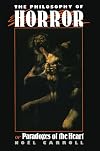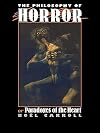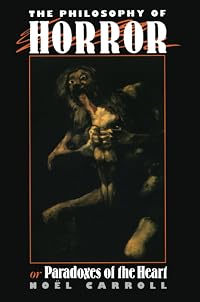
The Philosophy of Horror: Or, Paradoxes of the Heart
by Noel Carroll
On This Page
Description
Noel Carroll, film scholar and philosopher, offers the first serious look at the aesthetics of horror. In this book he discusses the nature and narrative structures of the genre, dealing with horror as a ""transmedia"" phenomenon. A fan and serious student of the horror genre, Carroll brings to bear his comprehensive knowledge of obscure and forgotten works, as well as of the horror masterpieces. Working from a philosophical perspective, he tries to account for how people can find pleasure show more in having their wits scared out of them. What, after all, are those ""paradoxes of the heart"" that mak show lessTags
Recommendations



Member Reviews
Noël Carroll tem um conhecimento extenso, de otaku de filmes de terror, e com essa base empírica caracteriza as obras de horror pela emoção que causam no espectador, de arte-horror, ligando o gênero à aparição de monstros (do dejeto, repugnante, intersticial, entre-categorias) além de uma explicação naturalista (não se trata de obras do fantástico, em que fica ambíguo se há o sobrenatural) e além da normalização do monstruoso em obras de fantasia (onde o próprio mundo fictício torna aquela entidade não anômala dentro dele). Essa emoção é teorizada dentro de uma esfera cognitiva, contra a noção de fazer-de-contas emocional e a de ilusão de medo e repugnância. Arte-horror é uma emoção genuína, advinda dos show more pensamentos entretidos, e que tem como modelo de resposta/comportamento emocional, aquele que personagens têm em relação aos monstros, dentro da narrativa ficcional, sem que seja necessário com isso uma problemática ideia de identificação com o personagem.
Carroll também caracteriza muito convincentemente os tipos de narrativa de horror em um principal, "o enredo complexo de descoberta", formado pelos momentos início, descoberta, confirmação e confrontação, em relação ao monstro, e com 14 combinações possíveis a partir desse quadro geral; adiciona também a ideia do enredo de extrapolador, em que um limite é ultrapassado, provocando o cenário de horror. Em ambas há um drama racional, de suspense sobre o encontro com o desconhecido, o que não se encaixa em nossas categorias existênciais cognitivas existentes. Essas narrativas são ditas eroteticas, porque articulam e costuram perguntas e respostas, e envolvem situações em que duas soluções possíveis, uma moralmente desejável e improvável, e outra malévola e provável, se confrontam, e a indecisão entre ambras deve contribuir ao nosso interesse. De modo que apesar do caráter negativo da emoção de arte-horror (que pelo seu lado de náusea, não poderia ser aproximado do sublime kantiano e muito provavelmente tampouco do burkeano), teríamos interesse nessa fascinação pelo desconhecido e desdobramento de enredos. E mesmo quando não há enredos: há toda uma esfera de elocubração onde co-existem arte-horror e fascinação, e a imaginação compensa a eventual repulsa que sentimos. show less
Carroll também caracteriza muito convincentemente os tipos de narrativa de horror em um principal, "o enredo complexo de descoberta", formado pelos momentos início, descoberta, confirmação e confrontação, em relação ao monstro, e com 14 combinações possíveis a partir desse quadro geral; adiciona também a ideia do enredo de extrapolador, em que um limite é ultrapassado, provocando o cenário de horror. Em ambas há um drama racional, de suspense sobre o encontro com o desconhecido, o que não se encaixa em nossas categorias existênciais cognitivas existentes. Essas narrativas são ditas eroteticas, porque articulam e costuram perguntas e respostas, e envolvem situações em que duas soluções possíveis, uma moralmente desejável e improvável, e outra malévola e provável, se confrontam, e a indecisão entre ambras deve contribuir ao nosso interesse. De modo que apesar do caráter negativo da emoção de arte-horror (que pelo seu lado de náusea, não poderia ser aproximado do sublime kantiano e muito provavelmente tampouco do burkeano), teríamos interesse nessa fascinação pelo desconhecido e desdobramento de enredos. E mesmo quando não há enredos: há toda uma esfera de elocubração onde co-existem arte-horror e fascinação, e a imaginação compensa a eventual repulsa que sentimos. show less
I finished this just prove to myself I could still force myself through a poorly written book that I didn’t like. The early chapters feel particularly bloated, obviously stretching an article to book length. This being said, Carroll makes good arguments as to why he, an analytic philosopher, finds horror so appealing. His analysis of plot structure is common enough and can be found in a lot other books dealing with genre narrative. His explanation of why horror is appealing is a psychoanalytic explanation though he rejects some specific psychoanalytic interpretations before giving his more general one. A horror text that doesn’t address gender is incomplete, but I’m sure would he say this lacuna a strength. The best thing he does show more is weave representative sample of horror classics regardless of format throughout his text so by default you get a primer on genre. show less
The subject of the book is interesting to me, however, the author's style is difficult to read. It does feel like a scientific monograph that does not have any reader in mind sometimes.
Also, the author is keen to push his own understanding of what counts as "horror", to define it as something that a) features monsters b) those monsters are repulsive, which leaves quite a lot of fiction typically understood as "horror" unaccounted for. He does notice that, and delegates such fiction to "thriller" or "doom" category, but I still think that it should have been seen as an integral part of horror, as it elicits pretty much the same reaction in people, usually placed on the same place in stores, and people seek it out for the same reasons.
Yet show more the whole thesis of the author hinges on defining horror as featuring "repulsive monsters", which allows him to use Purity and Danger-inspired framework for analysis. show less
Also, the author is keen to push his own understanding of what counts as "horror", to define it as something that a) features monsters b) those monsters are repulsive, which leaves quite a lot of fiction typically understood as "horror" unaccounted for. He does notice that, and delegates such fiction to "thriller" or "doom" category, but I still think that it should have been seen as an integral part of horror, as it elicits pretty much the same reaction in people, usually placed on the same place in stores, and people seek it out for the same reasons.
Yet show more the whole thesis of the author hinges on defining horror as featuring "repulsive monsters", which allows him to use Purity and Danger-inspired framework for analysis. show less
Ratings
Members
- Recently Added By
Lists

Academic Books
28 works; 1 member
Author Information

38+ Works 944 Members
Common Knowledge
Classifications
- Genres
- Literature Studies and Criticism, Philosophy, Fiction and Literature
- DDC/MDS
- 809.916 — Literature & rhetoric Literature, rhetoric & criticism History, description, critical appraisal of more than two literatures Literature displaying specific features, miscellaneous writings Literature displaying specific qualities of style, mood, viewpoint Horror And Tragedy
- LCC
- PN56 .H6 — Language and Literature Literature (General) Literature (General) Theory. Philosophy. Esthetics
- BISAC
Statistics
- Members
- 282
- Popularity
- 114,604
- Reviews
- 3
- Rating
- (3.57)
- Languages
- English, Polish, Portuguese, Spanish
- Media
- Paper, Ebook
- ISBNs
- 10
- ASINs
- 3