On This Page
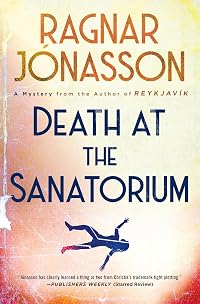
Description
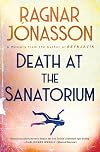
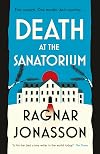
"Fresh off his career-changing standalone co-written with Icelandic PM, Reykjavík, #1 Icelandic bestseller Jonasson presents a riveting new thriller spinoff from The Darkness, soon to be a TV series. 1983 At a former sanatorium in the north of Iceland, now a hospital ward, an old nurse, Yrsa, is found murdered. Detective Hulda Hermannsdottir and her boss, Sverrir, are sent to investigate her death. There, they discover five suspects: the chief physician, two junior nurses, a young doctor, show more and the caretaker, who is arrested following false testimony from one of the nurses, but subsequently released. Less than a week after the murder, the chief physician, is also found dead, having apparently fallen from a balcony. Sverrir, rules his death as suicide and assumes that he was guilty of the murder as well. The case is closed. 2012 Almost thirty years later, Helgi Reykdal, a young police officer, has been studying criminology in the UK, but decides to return to Iceland when he is offered a job at the Reykjavik police department-the job which detective Hulda Hermannsdottir is about to retire from. He is also a collector of golden age detective stories, and is writing his thesis on the 1983 murders in the north. As Helgi delves deeper into the past, and starts his new job, he decides to try to meet with the original suspects. But soon he finds silence and suspicion at every turn, as he tries to finally solve the mystery from years before"-- show lessTags
Recommendations






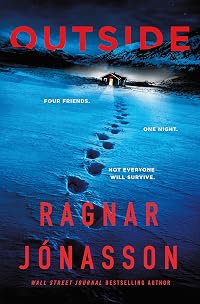





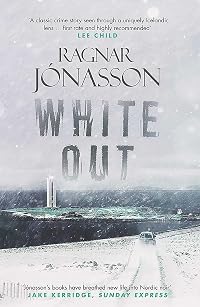











Member Reviews
Rating: 4* of five
The Publisher Says: 1983
At a former sanatorium in the north of Iceland, now a hospital ward, an old nurse, Yrsa, is found murdered. Detective Hulda Hermannsdottir and her boss, Sverrir, are sent to investigate her death. There, they discover five suspects: the chief physician, two junior nurses, a young doctor, and the caretaker, who is arrested following false testimony from one of the nurses, but subsequently released.
Less than a week after the murder, the chief physician, is also found dead, having apparently fallen from a balcony. Sverrir, rules his death as suicide and assumes that he was guilty of the murder as well. The case is closed.
2012
Almost thirty years later, Helgi Reykdal, a young police officer, has been show more studying criminology in the UK, but decides to return to Iceland when he is offered a job at the Reykjavik police department—the job which detective Hulda Hermannsdottir is about to retire from.
He is also a collector of golden age detective stories, and is writing his thesis on the 1983 murders in the north. As Helgi delves deeper into the past, and starts his new job, he decides to try to meet with the original suspects. But soon he finds silence and suspicion at every turn, as he tries to finally solve the mystery from years before.
I RECEIVED A DRC FROM THE PUBLISHER VIA NETGALLEY. THANK YOU.
My Review: At last we really *meet* Helgi. He does appear in Whiteout, though not very prominently. I say this with all the love in my heart...I like Helgi more than Ari Thór as a lead character. He's still got the bookishness, the clear love of puzzle-solving; he is a bit more of a distinctive character to me because he's explicitly an Agathan. It comes through in this resolution to an unresolved murder ("cold case" just feels on the nose for Icelandic crimes somehow) previously worked by Hulda Hermannsdottir, whose retirement he is enjoying by being brought home to Iceland from the UK to replace her.
One of humanity's great achievements, largely undersung about, is the reduction of TB from pandemic to chronic disease. As John Green reports in his Everything is Tuberculosis, an excellent book and a must-read for those in need of heartening, it's been a partial victory but still a very significant one. This murder took place in a TB asylum in 1983 as its use case was disappearing. In the novel's present day, 2012, the asylum is empty of patients and used as a research facility. As Helgi assumes his duties, he uses retired Hulda's involvement in the unsolved murder as the topic of his dissertation; so now he is in the same country as the scene of the crime, he determines to find out what really happened in 1983. This does mean we spend more time with Hulda. That's not a bad thing for Helgi or we-the-reader. Old wounds are not healed, it would seem, and another murder occurs that needs solving as Helgi's poking around picks up steam.
Vintage Ragnar-style, the setting is spooky and cold and full of bad energy or haunted by ghosts or something like that...it's never really explicit just what it is, which leaves room for we-the-reader to decide what works best. The limited pool of suspects for the original killing is still alive, so no problems of needing a medium to conduct interviews. It might've been safer that way. Helgi goes about studying the crime, the building a case for the new crime, with the same calm, assured demeanor. His doubts, like his very murky personal life...I hate his partner Bergthora a LOT!...are present in the story but not very foregrounded. I appreciate Ragnar offering us a sleuth-centered procedural that does not feel the need to make it indistinguishable from a domestic novel.
It was, if anything, a bit gothic in its TB ward in snowy conditions, an unknown killer stalking the place, whose identity I genuinely never expected to know...I thought this would remain an unsolved case...but when revealed became inevitable and so very sad. There is a brief excursion from 1983 back to 1950, that while necessary is definitely a pacing-killer. Ragnar's books aren't tearaway action plots. In this dual-timeline story, the pace is of necessity slower as there is much to relearn about the old killing. Helgi is a character who listens more than he talks. That won't work well for all readers but does for me.
Why I'm missing a star from the review is simple. There's a kind of coda on the ending that...annoyed me. You'll see, but maybe won't agree with me that it was an unnecessary add-on to a really absorbing, involving read. show less
The Publisher Says: 1983
At a former sanatorium in the north of Iceland, now a hospital ward, an old nurse, Yrsa, is found murdered. Detective Hulda Hermannsdottir and her boss, Sverrir, are sent to investigate her death. There, they discover five suspects: the chief physician, two junior nurses, a young doctor, and the caretaker, who is arrested following false testimony from one of the nurses, but subsequently released.
Less than a week after the murder, the chief physician, is also found dead, having apparently fallen from a balcony. Sverrir, rules his death as suicide and assumes that he was guilty of the murder as well. The case is closed.
2012
Almost thirty years later, Helgi Reykdal, a young police officer, has been show more studying criminology in the UK, but decides to return to Iceland when he is offered a job at the Reykjavik police department—the job which detective Hulda Hermannsdottir is about to retire from.
He is also a collector of golden age detective stories, and is writing his thesis on the 1983 murders in the north. As Helgi delves deeper into the past, and starts his new job, he decides to try to meet with the original suspects. But soon he finds silence and suspicion at every turn, as he tries to finally solve the mystery from years before.
I RECEIVED A DRC FROM THE PUBLISHER VIA NETGALLEY. THANK YOU.
My Review: At last we really *meet* Helgi. He does appear in Whiteout, though not very prominently. I say this with all the love in my heart...I like Helgi more than Ari Thór as a lead character. He's still got the bookishness, the clear love of puzzle-solving; he is a bit more of a distinctive character to me because he's explicitly an Agathan. It comes through in this resolution to an unresolved murder ("cold case" just feels on the nose for Icelandic crimes somehow) previously worked by Hulda Hermannsdottir, whose retirement he is enjoying by being brought home to Iceland from the UK to replace her.
One of humanity's great achievements, largely undersung about, is the reduction of TB from pandemic to chronic disease. As John Green reports in his Everything is Tuberculosis, an excellent book and a must-read for those in need of heartening, it's been a partial victory but still a very significant one. This murder took place in a TB asylum in 1983 as its use case was disappearing. In the novel's present day, 2012, the asylum is empty of patients and used as a research facility. As Helgi assumes his duties, he uses retired Hulda's involvement in the unsolved murder as the topic of his dissertation; so now he is in the same country as the scene of the crime, he determines to find out what really happened in 1983. This does mean we spend more time with Hulda. That's not a bad thing for Helgi or we-the-reader. Old wounds are not healed, it would seem, and another murder occurs that needs solving as Helgi's poking around picks up steam.
Vintage Ragnar-style, the setting is spooky and cold and full of bad energy or haunted by ghosts or something like that...it's never really explicit just what it is, which leaves room for we-the-reader to decide what works best. The limited pool of suspects for the original killing is still alive, so no problems of needing a medium to conduct interviews. It might've been safer that way. Helgi goes about studying the crime, the building a case for the new crime, with the same calm, assured demeanor. His doubts, like his very murky personal life...I hate his partner Bergthora a LOT!...are present in the story but not very foregrounded. I appreciate Ragnar offering us a sleuth-centered procedural that does not feel the need to make it indistinguishable from a domestic novel.
It was, if anything, a bit gothic in its TB ward in snowy conditions, an unknown killer stalking the place, whose identity I genuinely never expected to know...I thought this would remain an unsolved case...but when revealed became inevitable and so very sad. There is a brief excursion from 1983 back to 1950, that while necessary is definitely a pacing-killer. Ragnar's books aren't tearaway action plots. In this dual-timeline story, the pace is of necessity slower as there is much to relearn about the old killing. Helgi is a character who listens more than he talks. That won't work well for all readers but does for me.
Why I'm missing a star from the review is simple. There's a kind of coda on the ending that...annoyed me. You'll see, but maybe won't agree with me that it was an unnecessary add-on to a really absorbing, involving read. show less
This was a slightly odd novel. According to the Author's note at the end, Ragnar Jónasson sees it as being heavily influenced by Agatha Christie, whose work he has been reading and translating since childhood. I see some similarities: a remote setting, a limited suspect pool, and closely held secrets that don't necessarily point towards the killer. To my mind though, this story is too bleak to be a Golden Age Mystery. The harm done cuts deeper than polite, almost bloodless murders in the library. The almost abandoned sanatorium with the pain-soaked history was more like something from a Gothic horror story. Although, I found it more chilling than most horror stories because it was so firmly rooted in reality.
I found the writing a show more little dry. It felt as though the characters were being displayed behind glass, like butterflies pinned to a board for me to examine.
The two timelines the story was told on worked well. The 1983 murder investigation seemed convincingly slapdash. The 2012 story seemed to me a bloodless thing. I couldn’t connect with Helgi, the main character. I found it hard to believe that the police would see him as a star candidate to hire as a senior detective investigating serious crimes. He struck me as one of those eternal students who plods through academia by never fully engaging with real life. I found I didn't trust any of his observations Which may, of course, have been the point.
Puzzling out how the two timelines would eventually connect carried me through most of the story. The plot was both dark and twisty. I again failed to work out who the murderer was.
The ending was abrupt and strange. I don’t think either the abruptness or the strangeness improved the book.
I enjoyed the inclusion of Detective Inspector Hulda Hermannsdóttir from the Dark Iceland series in both timelines. I liked seeing her when she was at the start of her career as a detective. The way her retirement was handled was sad but not surprising.
Sam Woolf's narration was easy on the ear. Although this worked fine as an audiobook, it wasn't improved by being one. Click on the YouTube link to hear a sample.
https://www.youtube.com/watch?v=FoQ56ZsoHhQ show less
I found the writing a show more little dry. It felt as though the characters were being displayed behind glass, like butterflies pinned to a board for me to examine.
The two timelines the story was told on worked well. The 1983 murder investigation seemed convincingly slapdash. The 2012 story seemed to me a bloodless thing. I couldn’t connect with Helgi, the main character. I found it hard to believe that the police would see him as a star candidate to hire as a senior detective investigating serious crimes. He struck me as one of those eternal students who plods through academia by never fully engaging with real life. I found I didn't trust any of his observations Which may, of course, have been the point.
Puzzling out how the two timelines would eventually connect carried me through most of the story. The plot was both dark and twisty. I again failed to work out who the murderer was.
The ending was abrupt and strange. I don’t think either the abruptness or the strangeness improved the book.
I enjoyed the inclusion of Detective Inspector Hulda Hermannsdóttir from the Dark Iceland series in both timelines. I liked seeing her when she was at the start of her career as a detective. The way her retirement was handled was sad but not surprising.
Sam Woolf's narration was easy on the ear. Although this worked fine as an audiobook, it wasn't improved by being one. Click on the YouTube link to hear a sample.
https://www.youtube.com/watch?v=FoQ56ZsoHhQ show less
Ragnar Jónasson's Hidden Iceland trilogy (The Darkness, The Island, The Mist) featuring Hulda Hermannsdóttir is one of my all-time favorites, so I was pleased to see that Hulda would make an appearance in Death at the Sanatorium. Granted, it's more of a cameo, but she does make an impact, and her appearance is bittersweet for those readers who have read the Hidden Iceland trilogy. (Do you need to read that trilogy before reading this book? Absolutely not.)
Jónasson has translated Agatha Christie into Icelandic, and his familiarity with her work is obvious in his meticulous plotting. When it comes to plots, this man is a master weaver. But Death at the Sanatorium isn't all about the story. Jónasson is also a master at atmospheric show more settings, and you can't get much better than setting a murder mystery in an old tuberculosis sanatorium. I have a special sympathy for this setting because my mother was a patient in one when I was a baby. I'm very familiar with the photographs taken there-- especially the one of my grandfather holding me up to the window, me reaching futilely for my mother, and the look on my mother's face on the other side of the glass.
Plot? Check. Setting? Check. What about the characters?
It didn't take me long to want to throttle the young nurse, Linna. She enjoyed being an important witness, and she wasn't above stretching the truth. "The truth was that life was easier if you tweaked the facts a little in your favor." See what I mean?
Helgi is the star here. His father was an antiquarian bookseller, and Helgi has a fantastic library of detective fiction, in particular translated detective fiction, that was lovingly collected by both his grandfather and father. Those books-- as well as his investigation into the 1983 deaths at the sanatorium-- are his escape, and he does need one, as readers soon learn.
The ending of Death at the Sanatorium made me smile in appreciation of the author's skill. It also made me want to see Helgi again because I hope that he can solve yet another murder.
(Review copy courtesy of the publisher and Net Galley) show less
Jónasson has translated Agatha Christie into Icelandic, and his familiarity with her work is obvious in his meticulous plotting. When it comes to plots, this man is a master weaver. But Death at the Sanatorium isn't all about the story. Jónasson is also a master at atmospheric show more settings, and you can't get much better than setting a murder mystery in an old tuberculosis sanatorium. I have a special sympathy for this setting because my mother was a patient in one when I was a baby. I'm very familiar with the photographs taken there-- especially the one of my grandfather holding me up to the window, me reaching futilely for my mother, and the look on my mother's face on the other side of the glass.
Plot? Check. Setting? Check. What about the characters?
It didn't take me long to want to throttle the young nurse, Linna. She enjoyed being an important witness, and she wasn't above stretching the truth. "The truth was that life was easier if you tweaked the facts a little in your favor." See what I mean?
Helgi is the star here. His father was an antiquarian bookseller, and Helgi has a fantastic library of detective fiction, in particular translated detective fiction, that was lovingly collected by both his grandfather and father. Those books-- as well as his investigation into the 1983 deaths at the sanatorium-- are his escape, and he does need one, as readers soon learn.
The ending of Death at the Sanatorium made me smile in appreciation of the author's skill. It also made me want to see Helgi again because I hope that he can solve yet another murder.
(Review copy courtesy of the publisher and Net Galley) show less
It’s 2012 and Helgi Reykdahl, who had been studying criminology in the UK, has returned to Rekjavik to write his dissertation on the gruesome murder of a nurse at a tuberculosis sanatorium in 1983. A doctor had fallen from a balcony at the sanatorium a week later. It was declared a suicide at the time, assumed by most that he had been the murderer and the suicide had been the result of later guilt. But, even at the time, there were questions about the case having been closed too soon. As Helgi looks into it and questions people involved at the time, he also begins to have his own doubts but his purpose isn’t to try to reopen the case and besides he has personal problems to deal with. But then one of the witnesses of the events at show more the sanatorium is murdered, he accepts a job with the Rekjavik police, so he can be part of the investigation.
Ragnar Jonasson, the author of Death at the Sanatorium was a fan of Agatha Christie, had even translated many of her novels into Icelandic in his youth and this novel is definitely a homage to her as shown by the atmospheric setting and the untrustworthiness of the suspects. Not to say this is just a copy of an Agatha Christie book because Jonasson definitely has his own style and knows how to ramp up the suspense in one compelling, twisty tale with a tight plot, some very untrustworthy suspects, and a complex, smart and likeable main protagonist. The mystery kept me guessing throughout. But the ending - I was kinda anticipating something like it but when it finally came…damn!
I received and read an eARc of the book from St Martin’s Press while listening to an advance audiobook from Macmillan Audio narrated by Sam Woolfe who does a pitch perfect job of bringing the novel to life and I would like to thank both publishers as well as Netgalley. All opinions are my own. show less
Ragnar Jonasson, the author of Death at the Sanatorium was a fan of Agatha Christie, had even translated many of her novels into Icelandic in his youth and this novel is definitely a homage to her as shown by the atmospheric setting and the untrustworthiness of the suspects. Not to say this is just a copy of an Agatha Christie book because Jonasson definitely has his own style and knows how to ramp up the suspense in one compelling, twisty tale with a tight plot, some very untrustworthy suspects, and a complex, smart and likeable main protagonist. The mystery kept me guessing throughout. But the ending - I was kinda anticipating something like it but when it finally came…damn!
I received and read an eARc of the book from St Martin’s Press while listening to an advance audiobook from Macmillan Audio narrated by Sam Woolfe who does a pitch perfect job of bringing the novel to life and I would like to thank both publishers as well as Netgalley. All opinions are my own. show less
In 1983, two people die in an old sanatorium building - one murdered, the other by an apparent suicide. In 2012, Helgi Reykdal takes a fresh look at the case as the base for his MA dissertation in criminology. That's the bare bones summary of the novel - and what you get is exactly what you expect. Old secrets coming to life, a 3-timelines story (2012, 1983 and a few chapters in the 1950s which only make sense when all the dots get connected towards the end), multiple viewpoints (more than one per year) and a few twists with different levels of predictability make that a solid read if you are in the mood for this kind of story.
While technically a standalone novel, a few characters you may have met before show up (Hulda and her last show more boss from the Hidden Iceland series). You do not need to have read the series although it would help understanding some of the dynamics that led both to the 1983 resolution and to the events of this novel. In addition to the multiple timelines Jónasson added a subplot about domestic violence (possibly to set the stage for more novels with Helgi?) and gave the budding criminologist a hobby that is close to his own heart - Golden Age mysteries (which can be seen as a nod to the Pronzini's Nameless Detective series - or I am just reading too much into it - Jónasson had made it clear more than once, including at the afterword of this book, that he likes the old stories).
What I was missing in this novel was the Icelandic setting. Yes, the novel is set in Iceland but it could have been set almost anywhere. And this is surprising for Jónasson's writing - usually Iceland and its nature are a big part of his novels. show less
While technically a standalone novel, a few characters you may have met before show up (Hulda and her last show more boss from the Hidden Iceland series). You do not need to have read the series although it would help understanding some of the dynamics that led both to the 1983 resolution and to the events of this novel. In addition to the multiple timelines Jónasson added a subplot about domestic violence (possibly to set the stage for more novels with Helgi?) and gave the budding criminologist a hobby that is close to his own heart - Golden Age mysteries (which can be seen as a nod to the Pronzini's Nameless Detective series - or I am just reading too much into it - Jónasson had made it clear more than once, including at the afterword of this book, that he likes the old stories).
What I was missing in this novel was the Icelandic setting. Yes, the novel is set in Iceland but it could have been set almost anywhere. And this is surprising for Jónasson's writing - usually Iceland and its nature are a big part of his novels. show less
“Death at the Sanatorium,” by Ragnar Jónasson, is a thriller that was translated from the Icelandic by Victoria Cribb. The sanatorium in the title refers to a facility in the north of Iceland that once housed patients with tuberculosis. In 1983, it is being used as an office for a small number of employees who are conducting research and tackling administrative tasks. One day, a member of the staff is found murdered after having been tortured by her attacker. Shortly thereafter, a colleague of the first victim either jumped or was pushed from a balcony. Investigators Sverrir Eggertsson and Hulda Hermannsdóttir are assigned to find out exactly what happened and why.
Approximately thirty years later, Helgi Reykdal—a young man who show more is trying to complete his criminology dissertation centering on the aforementioned case—plans to interview a handful of men and women who might have information to share. When he comes to suspect that the killer may still be at large, Helgi decides to look into the matter more closely. The story moves back and forth in time, and each chapter focuses on a particular character’s thoughts, emotions, and actions.
This novel is fast-paced, intriguing, and laced with irony. Jónasson uses flashbacks effectively, and he draws us into the book’s dark and claustrophobic world of bitterness, deceit, and retribution. Like so many other works of psychological suspense by Nordic writers, “Death at the Sanatorium” is intense and powerful. Its intricate plot is filled with red herrings and ambiguous clues that keep us guessing, and the author stuns us with an abrupt and chilling conclusion. show less
Approximately thirty years later, Helgi Reykdal—a young man who show more is trying to complete his criminology dissertation centering on the aforementioned case—plans to interview a handful of men and women who might have information to share. When he comes to suspect that the killer may still be at large, Helgi decides to look into the matter more closely. The story moves back and forth in time, and each chapter focuses on a particular character’s thoughts, emotions, and actions.
This novel is fast-paced, intriguing, and laced with irony. Jónasson uses flashbacks effectively, and he draws us into the book’s dark and claustrophobic world of bitterness, deceit, and retribution. Like so many other works of psychological suspense by Nordic writers, “Death at the Sanatorium” is intense and powerful. Its intricate plot is filled with red herrings and ambiguous clues that keep us guessing, and the author stuns us with an abrupt and chilling conclusion. show less
Skemmtilegur krimmi þar sem Ragnar kynnir til sögunnar Helga, ungan glæpafræðing sem kemst á snoðir um nýjar upplýsingar við ritgerðarvinnu um gamalt óleyst morðmál. Breyskar heimilisaðstæður gefa fyrirheit um áhugavert framhald í næstu sögum um Helga. Skemmtileg flétta við Huldu úr fyrri sögum Ragnars.
Members
- Recently Added By
Author Information

29+ Works 5,875 Members
Some Editions
Awards and Honors
Distinctions
Notable Lists
Series


Common Knowledge
- Canonical title
- Death at the Sanatorium
- Original title
- Hvítidauði
- Original publication date
- 2019
- People/Characters
- Helgi Reykdal; Hulda Hermannsdóttir; Tinna Einarsdóttir; Sverrir Eggertsson
- Important places
- Akureyri, Iceland
- Epigraph
- 'Behind my shoulder death awaits.' --Jóhann Sigurjónsson (1880-1919), from the poem 'The Cup'
- Dedication
- To Dr Helgi Johannsson--who lent Helgi his name
- First words
- The despairing silence was broken.
- Last words
- (Click to show. Warning: May contain spoilers.)The world went black.
- Original language
- Icelandic
Classifications
- Genres
- Fiction and Literature, Mystery
- DDC/MDS
- 839.6934 — Literature & rhetoric German & related literatures Other Germanic literatures Old Norse, Old Icelandic, Icelandic, Faroese literatures Modern West Scandinavian; Modern Icelandic Modern Icelandic fiction 1900-1999
- LCC
- PT7511 .R285 .H8513 — Language and Literature German, Dutch and Scandinavian literatures Modern Icelandic literature Individual authors or works 19th-20th centuries
- BISAC
Statistics
- Members
- 257
- Popularity
- 125,823
- Reviews
- 16
- Rating
- (3.66)
- Languages
- 6 — Dutch, English, French, German, Icelandic, Swedish
- Media
- Paper, Audiobook, Ebook
- ISBNs
- 14
- ASINs
- 8