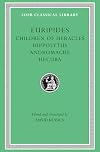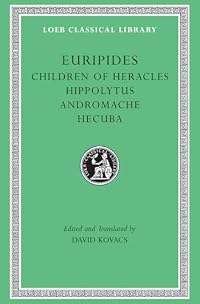
4 Plays: Andromache / Children of Heracles / Hecuba / Hippolytus
by Euripides
On This Page
Description
Euripides (c. 485-406 BCE) has been prized in every age for his emotional and intellectual drama. Eighteen of his ninety or so plays survive complete, including Medea, Hippolytus, and Bacchae, one of the great masterpieces of the tragic genre. Fragments of his lost plays also survive.Tags
Recommendations
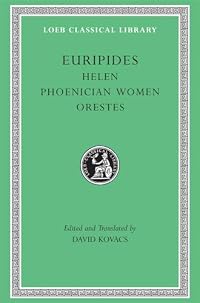
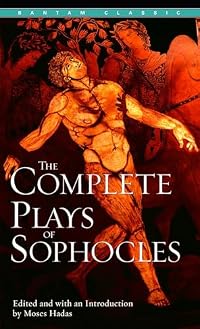
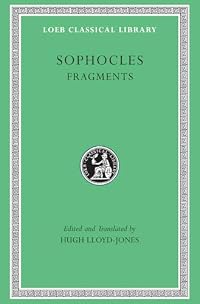









Member Reviews
Herakles' Children (Ancient Greek: Ἡρακλεῖδαι, Hērakleidai; also translated as Children of Herakles and Heracleidae) is an Athenian tragedy by Euripides that was first performed c. 430 BC. It follows the children of Herakles (known as the Heracleidae) as they seek protection from Eurystheus. It is the first of two surviving tragedies by Euripides where the children of Herakles are suppliants (the second being Herakles).
Hippolytus (Ancient Greek: Ἱππόλυτος, Hippolytos) is an Ancient Greek tragedy by Euripides, based on the myth of Hippolytus, son of Theseus. The play was first produced for the City Dionysia of Athens in 428 BC and won first prize as part of a trilogy.
Euripides first treated the myth in Hippolytos show more Kalyptomenos (Ἱππόλυτος καλυπτόμενος – Hippolytus Veiled), now lost. Scholars are virtually unanimous in believing that the contents to the missing Kalyptomenos portrayed a shamelessly lustful Phaedra who directly propositions Hippolytus, to the displeasure of the audience.
This failure prompted Euripides to revisit the myth in Hippolytos Stephanophoros (Ἱππόλυτος στεφανοφόρος – "Hippolytus who wears a crown"), in reference to the crown of garlands Hippolytus wears as a worshipper of Artemis, this time with a modest Phaedra who fights her sexual appetites. The surviving play offers a much more even-handed and psychologically complex treatment of the characters than is commonly found in traditional retelling of myths.
Andromache (Ancient Greek: Ανδρομάχη) is an Athenian tragedy by Euripides. It dramatises Andromache's life as a slave, years after the events of the Trojan War, and her conflict with her master's new wife, Hermione. The date of its first performance is unknown, although scholars place it sometime between 428 and 425 BC. A Byzantine scholion to the play suggests that its first production was staged outside of Athens, though modern scholarship regards this claim as dubious.
Hecuba (Ancient Greek: Ἑκάβη, Hēkabē) is a tragedy by Euripides written c. 424 BC. It takes place after the Trojan War, but before the Greeks have departed Troy (roughly the same time as The Trojan Women, another play by Euripides). The central figure is Hecuba, wife of King Priam, formerly Queen of the now-fallen city. It depicts Hecuba's grief over the death of her daughter Polyxena, and the revenge she takes for the murder of her youngest son Polydorus. show less
Hippolytus (Ancient Greek: Ἱππόλυτος, Hippolytos) is an Ancient Greek tragedy by Euripides, based on the myth of Hippolytus, son of Theseus. The play was first produced for the City Dionysia of Athens in 428 BC and won first prize as part of a trilogy.
Euripides first treated the myth in Hippolytos show more Kalyptomenos (Ἱππόλυτος καλυπτόμενος – Hippolytus Veiled), now lost. Scholars are virtually unanimous in believing that the contents to the missing Kalyptomenos portrayed a shamelessly lustful Phaedra who directly propositions Hippolytus, to the displeasure of the audience.
This failure prompted Euripides to revisit the myth in Hippolytos Stephanophoros (Ἱππόλυτος στεφανοφόρος – "Hippolytus who wears a crown"), in reference to the crown of garlands Hippolytus wears as a worshipper of Artemis, this time with a modest Phaedra who fights her sexual appetites. The surviving play offers a much more even-handed and psychologically complex treatment of the characters than is commonly found in traditional retelling of myths.
Andromache (Ancient Greek: Ανδρομάχη) is an Athenian tragedy by Euripides. It dramatises Andromache's life as a slave, years after the events of the Trojan War, and her conflict with her master's new wife, Hermione. The date of its first performance is unknown, although scholars place it sometime between 428 and 425 BC. A Byzantine scholion to the play suggests that its first production was staged outside of Athens, though modern scholarship regards this claim as dubious.
Hecuba (Ancient Greek: Ἑκάβη, Hēkabē) is a tragedy by Euripides written c. 424 BC. It takes place after the Trojan War, but before the Greeks have departed Troy (roughly the same time as The Trojan Women, another play by Euripides). The central figure is Hecuba, wife of King Priam, formerly Queen of the now-fallen city. It depicts Hecuba's grief over the death of her daughter Polyxena, and the revenge she takes for the murder of her youngest son Polydorus. show less
Ratings
Members
- Recently Added By
Author Information

1,337+ Works 33,998 Members
Euripides was born in Attica, Greece probably in 480 B.C. He was the youngest of the three principal fifth-century tragic poets. In his youth he cultivated gymnastic pursuits and studied philosophy and rhetoric. Soon after he received recognition for a play that he had written, Euripides left Athens for the court of Archelaus, king of Macedonia. show more Fragments of about fifty-five plays survive. Among his best-known plays are Alcestis, Medea and Philoctetes, Electra, Iphigenia in Tauris, The Trojan Women, and Iphigenia in Aulis Iphigenia. He died in Athens in 406 B.C. (Bowker Author Biography) show less
Some Editions
Series
Belongs to Publisher Series
Loeb Classical Library (484)
Work Relationships
Common Knowledge
- Canonical title
- 4 Plays: Andromache / Children of Heracles / Hecuba / Hippolytus
Classifications
- Genre
- Fiction and Literature
- DDC/MDS
- 882.01 — Literature & rhetoric Classical & modern Greek literatures Classical Greek dramatic poetry and drama standard subdivisions; collections; history, description, critical appraisal; Specific periods Ancient period to ca. 499
- LCC
- PA3975 .A2 — Language and Literature Greek language and literature. Latin language and literature Greek literature Individual authors Euripedes
- BISAC
Statistics
- Members
- 103
- Popularity
- 312,532
- Reviews
- 1
- Rating
- (3.42)
- Languages
- English, Greek (Ancient)
- Media
- Paper
- ISBNs
- 1
- ASINs
- 1