
Plautus
Author of The Pot of Gold and Other Plays
About the Author
Plautus and Terence used stock characters (the young lovers, the clever slave, the irate father) and devices (mistaken identity), but each handled these conventions in his own distinct manner. Plautus was the son of a poor Umbrian farmer who may have fought in the Second Punic War. The playwright show more Plautus is said to have been a popular actor, true comedian, jovial, tolerant, rough of humor. He not only modeled his plays on the Greek New Comedy, but unhesitatingly inserted long passages translated from the Greek originals. He was the master of comic irony and, as its originator, copied by Moliere, Corneille, Jonson, Dryden and Fielding. Shakespeare based his Comedy of Errors on Plautus's Menaechmi. Of more than 100 plays, 21 survive. (Bowker Author Biography) show less
Disambiguation Notice:
(N.b.: There was no "Roman Empire" in Plautus's day.)
Series
Works by Plautus
Four Comedies: The Braggart Soldier, The Brothers Menaechmus, The Haunted House, The Pot of Gold (1996) 387 copies, 1 review
Plautus: Amphitryon. The Comedy of Asses. The Pot of Gold. The Two Bacchises. The Captives (Loeb Classical Library) (Volume I) (English and Latin Edition) (1916) 124 copies, 1 review
Five Comedies: Miles Gloriosus, Menaechmi, Bacchides, Hecyra and Adelphoe (Hackett Publishing Co.) (1999) 119 copies, 2 reviews
Casina. The Casket Comedy. Curculio. Epidicus. The Two Menaechmuses (Loeb Classical Library) (1917) 102 copies
Plautus: The Little Carthaginian.Pseudolus. The Rope. (Loeb Classical Library No. 260) (1932) 86 copies
Plautus: The Merchant. The Braggart Warrior. The Haunted House. The Persian. (Loeb Classical Library No. 163) (1924) 61 copies
The Merchant. The Braggart Soldier. The Ghost. The Persian (Loeb Classical Library) (2011) 45 copies
Plautus: Stichus. Trinummus (Three Bob Day). Truculentus. The Tale of a Travelling Bag. Fragments (Loeb Classical Library No. 328) (1938) 42 copies, 1 review
Three Comedies: Miles Gloriosus/Pseudolus/Rudens (Masters of Latin Literature) (1991) 30 copies, 1 review
Plautus: Stichus. Three-Dollar Day. Truculentus. The Tale of a Traveling-Bag. Fragments (Loeb Classical Library) (2013) 18 copies
Roman Comedy: Five Plays by Plautus and Terence: Menaechmi, Rudens and Truculentus by Plautus; Adelphoe and Eunuchus by Terence (Focus Classical Library) (2010) 14 copies
Tre komedier 13 copies
Persa (Latin) 12 copies
Plautus, Three Comedies: The Braggart soldier, The Brothers Menaechmus, The Haunted House (1969) 10 copies
Comedias: Anfitrion, La Comedia de la Olla, Los Mellizos, El Gorgojo, Las Cautivas.. (Plauto) (Paperback) (Spanish Edition) (2005) 8 copies
The Pot of Gold and Other Plays 8 copies
Comedias / Comedy: El Cartagines (Biblioteca Clasica Gredos) (Spanish Edition) (2002) 8 copies, 1 review
Poenulus (Latin) 7 copies
Six plays 7 copies
Plautus in Five Volumes with an English Translation by Paul Nixon, Volume Two [Vol. II] (Loeb Classical Library) (1921) 5 copies
Poenulus 4 copies
O Fulaninho de Cartago 3 copies
De Carthager/De vrek 3 copies
Comedias II Gorgojo - Edípico - Los dos menecmos - El mercader - El militar fanfarrón - La comedia del fantasma - El persa (2016) 3 copies
Tutte le commedie 3 copies
{Le commedie} 2 2 copies
Världslitteraturen : de stora mästerverken. [7], Det antika dramat, II — Author — 2 copies
De bluffer ; De leugenaar 2 copies
Comédies: Tome V : Mostellaria. - Persa. - Poenulus. (Collection Des Universites De France Serie Latine) (French Edition) (1938) 2 copies
Le grandi commedie: Miles Gloriosus-Aulularia-Asinaria-Mostellaria. Testo latino a fronte (2022) 2 copies
Komödien lat. u. dt. 2 copies
Tutte le commedie: 1 2 copies
Comedias 2 copies
Comoediae (v. 1): Ad praestantium librorum fidem recensuit, versus ordinavit, difficiliora interpretatus est Carolus Herm. Weise (Latin Edition) (2010) 2 copies
Il militare borioso - la pignatta 2 copies
Plautus for production : Captivi, Curculio, Mostellaria, with five scenes from other comedies 2 copies
[The Little Carthaginian. Pseudolus. The Rope: Volume IV] (By: Titus Maccius Plautus) [published: May, 2012] (2012) 2 copies
Cistellaria 2 copies
A Comédia da Marmita 2 copies
Persa (Latin) 2 copies
Antīkā komēdija — Author — 2 copies
Tutte le commedie - vol. I 1 copy
Trinummus 1 copy
Commedie Vol 3 1 copy
Tutte le commedie: 2 1 copy
La fune 1 copy
פסאודולוס : קומדיה 1 copy
T. Macci Plavti Menaechmi 1 copy
La farce de la marmite 1 copy
Aulularia 1 copy
Curculio 1 copy
Bacchides (Latin) 1 copy
Menecmi 1 copy
Poenulus Truculentus 1 copy
A hetvenkedő katona 1 copy
El militar fanfarrón 1 copy
The Rope and Other Plays 1 copy
Tutte le commedie **** 1 copy
Tutte le commedie 4. 1 copy
Bacchides 1 copy
Captivi (Latin) 1 copy
Stichus (Latin) 1 copy
El Persa ; El Cartaginès 1 copy
Amphitruo-Asinaria-Aulularia-Bacchides. Testo latino a fronte. Ediz. integrale (Grandi tascabili economici) (2011) 1 copy
Comoediae: I and II 1 copy
Baechides- Captivi 1 copy
Casina (Latin) 1 copy
Cistellaria (Latin) 1 copy
Curculio (Latin) 1 copy
Miles Gloriosus (Latin) 1 copy
Menaechmi (Latin) 1 copy
Ausgewählte Komödien des T. Maccius Plautus für den Schulgebrauch erklärt : 3. Bändchen : Menaechmi 1 copy
Tutte le commedie 5. 1 copy
Amphitruo-Menaechmi 1 copy
Comoediae Vol. 1 1 copy
Cásina 1 copy
O Gorgulho 1 copy
PLA Mostelaria 1 copy
[Tutte le commedie] 3 1 copy
Comedias (El gorgojo, Los cautivos, Anfitrion, Los mellizos, La olla y El militar fanfarron) 1 copy, 1 review
Plauto. Teatro completo 1 copy
Truculentus (El bestiajo) 1 copy
Commedie / Volume secondo: Miles gloriosus; Mostellaria; Persa; Pseudolus; Rudens; Trinunnus, 1 copy
Tutte le Commedie 3¦ 1 copy
Stichus (Stico) 1 copy
Pseudolus (Pseudolo) 1 copy
Pseudolus; Trinummus, 1 copy
Báquides 1 copy
Truculentus (El Bestiajo) 1 copy
Aulularia e Miles Gloriosus. Con Testo Latino a Fronte (Graphyco Classici Italiani) (Italian Edition) (2021) 1 copy
Tutte le commedie. Vol. I 1 copy
IL Miles "gloriosus" 1 copy
IL Trinummo 1 copy
I due menecmi 1 copy
Comoediae Vol. 2 1 copy
[Tutte le commedie] 5 1 copy
Comédia 1 copy
El soldado fanfarrón. 1 copy
LA COMEDIA DE LOS ASNOS 1 copy
Le commedie 1 copy
Càsina 1 copy
Théâtre 1 copy
Comèdies, vol. 12 1 copy
Two classical comedies 1 copy
Тhéâtre de Plaute 1 copy
Plautus: five of his plays 1 copy
Miles Gloriosus. Pseudolus 1 copy
Plaute : Comédies - Tome IV 1 copy
Plaute : Comédies - Tome II 1 copy
Antike Komödien in drei Bänden - Aristophanes / Plautus / Terenz (Winkler Dünndruck Ausgabe) (1991) — Author — 1 copy
Plautus Komedies VII 1 copy
Plautus. Comedies III 1 copy
Der Dreigoschentag 1 copy
... Captivi 1 copy
Plautus's comedies 1 copy
Plauti Comoedia viginti nuper recognitae et acri iudicio Nicolai Angelii diligentissime excussae 1 copy
Marci Accii Plauti comoediae 1 copy
T. Macci Plauti Asinaria. From the text of Goetz and Schoell. With an introduction and notes by J. H. Gray (1894) 1 copy
Római vígjátékok 1 copy
The pot of gold : Aulularia 1 copy
Plaute, tome IV 1 copy
Translation key for Plautus for reading and production : Captivi, Curculio, Mostellaria with five scenes from other comedies 1 copy, 1 review
Plauti comoediae quae extant 1 copy
Plaute, tome III 1 copy
Plaute, tome VI 1 copy
Plaute, tome VII 1 copy
Ti an tasmant 1 copy
Plaurus: The Haunted House 1 copy
five roman comedies 1 copy
Cistellaria 1 copy
de krijgsgevangenen 1 copy
çömlek ve diğer oyunlar 1 copy
Comedies de Plaute 1 copy
De pers; De koopman 1 copy
Comoediae 1 copy
M. Accius Plautus 1 copy
Amfitryon a jiné komedie 1 copy
Complete Works of Plautus 1 copy
Comèdies, vol. 11 1 copy
Comèdies Volum V 1 copy
Comèdies Volum VI 1 copy
Comèdies Volum VII 1 copy
Comèdies Volum VIII 1 copy
Comèdies Volum IX 1 copy
Rudens 1 copy
La comèdia de l'olla 1 copy
M. Actii Plauti Comoediae viginti. [Praecedit Plauti vita ex Petro Crinito de poetis latinis.] 1 copy
Comèdies Volum II 1 copy
Esticus ; Les Tres monedes 1 copy
El Malcarat ; La Maleta 1 copy
Comèdies, vol X (Rudens) 1 copy
Comèdies Volum IV 1 copy
Comèdies Volum I 1 copy
Comèdies, vol. 10 1 copy
Comèdies, vol. 9 1 copy
Comèdies, vol. 8 1 copy
Comèdies, vol. 7 1 copy
Comèdies, vol. 6 1 copy
Comèdies, vol. 5 1 copy
Comèdies, vol. 4 1 copy
Comèdies, vol. 3 1 copy
Comèdies, vol. 2 1 copy
Comèdies, vol. 1 1 copy
Comèdies, IX: Psèudolus 1 copy
Plaute: Les captifs 1 copy
Comèdies, vol. X: Rudens 1 copy
Comèdies, vol. IX: Psèudolus 1 copy
Plautus, Vol. 1 1 copy
Comedias 1 copy
T. Macci Plavti Trinvmmvs 1 copy
The Captivi of Plautus, ed 1 copy
M. AccI Plauti comoediae 1 copy
T. Macci Plavti Comoediae, Vol. 3: Cistellariam Curculionem Epidicum Complectens (Classic Reprint) (Latin Edition) (2017) 1 copy
Théâtre 1 copy
Théâtre - Tome II 1 copy
Théâtre - Tome IV 1 copy
4: Tutte le commedie 1 copy
Le tre monete 1 copy
Poenulus 1 copy
HIl Ivantone 1 copy
Le commedie. Volgarizzate da Niccolò Eugenio Angelio col testo latino a dirimpetto; Volume 10 (Italian Edition) (2016) 1 copy
I captivi 1 copy
Commedie: Bacchides: Captivi 1 copy
Associated Works
A Funny Thing Happened on the Way to the Forum [1966 film] (1966) — Original play — 130 copies, 1 review
Readings and Exercises in Latin Prose Composition: From Antiquity to the Renaissance (2005) — Contributor — 47 copies
A Funny Thing Happened on the Way to the Forum: Original 1962 Broadway Cast Recording (2013) — Original play — 9 copies
Van Homerus tot Van Lennep : Griekse en Latijnse literatuur in Nederlandse vertaling (1992) — Author — 7 copies
Latijnse varia : bloemlezing uit de werken van een tiental Latijnse dichters en prozaschrijvers (1954) — Contributor — 4 copies
The birth of Hercules — source author — 2 copies
Tagged
Common Knowledge
- Legal name
- Plautus, Titus Maccius
- Birthdate
- 0254 BCE circa
- Date of death
- 0184 BCE circa
- Gender
- male
- Occupations
- playwright
theatre hand
manual labourer
actor - Nationality
- Roman Republic
- Birthplace
- Sarsina, Umbria
- Map Location
- Italy
- Disambiguation notice
- (N.b.: There was no "Roman Empire" in Plautus's day.)
Members
Reviews
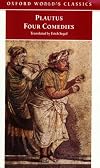
I did some research before choosing a translation. There’s a rather good essay knocking about somewhere on the internet that recommends Segal’s translations. I can’t find it now, but I took the chap’s advice. I got off to rather a rocky start.
The Braggart Soldier has puns and word-play and lively poetry, yet all this talent is in service of buffoonery and clowning about. As it happens, I read Dionysius of Halicarnassus’ history of Rome last year and what struck me was that Rome at show more this time was not the great civilisation we all know and love. At this time the Romans were a bunch of semi-literate barbarians with no native culture worth exporting. Rome was a fort in which they kept their slaves. Livius Andronicus had staged the first play in Rome in 240 BC, when Plautus was 14. It didn’t come as much of a surprise that what the Roman’s had chosen to preserve was as low-brow as you can get. Not that I have anything against low-brow. The Braggart Soldier reminded me of a Mr Bean episode. I’ve not seen a script for one but I bet you could scribble it down on a tissue. Not much fun to be had in reading it. The glory of Mr Bean is all in the physical performance. I reckon if you could get a couple of physical comedy geniuses like Rowan Atkinson and Andrew Sachs then this play would be a success on the stage. Reading the bare text isn’t much fun. Still, I figured I’d finish the book.
Next up was The Brothers Menaechmus. I understand that Shakespeare’s Comedy of Errors is a reboot, but can’t compare as I’ve not read it. Menaechmus is a pleasure to read. Simplistic perhaps, compared to what playwrights got up to during the Renaissance, but nevertheless and good, solid piece of writing. Complex enough considering that Plautus’s audience was most probably drunk. I enjoyed it.
But this is the book that keeps giving. I’m going to stick my neck out and say that The Haunted House is a masterpiece. Tranio’s speech at line 348 is a masterclass in how to write. I would wish more writers would play attention, but I’m sure I see a direct influence here on Faulty Towers. Take a look at the episode ‘The Builders’. Basil is the analogue of Tranio and Sybil is Theopropides. Just as Tranio gets up to mischief in Theopropides’ absence, so Basil does in Sybil’s. Tranio’s terrified speech on the return of Theopropides at line 348 matches Basil’s when he realises Sybil is coming back and will realise what he’s done. The whole sequence where Tranio pulls the wool over Theopropides’ eyes is mirrored in Basil doing the same to Sybil, and you’ll notice buildings and building works are involved in both instances. Finally Theopropides discovers the truth and at first Tranio doesn’t know that he knows, just as, for a few moments Basil and Mr O’Reilly don’t know Sybil knows. There’s also the farcical scene where Callidamates is carried off drunk. I realise Faulty Towers is a farce and this kind of thing is common (normally corpses), but Manuel is carried at one point. And Tranio’s joke at line 359 about crucifixion reminded me of Life of Brian: “Right, hands up if you don’t want to be crucified”.
I’ll have to switch to a different translator as there are all Segal wrote, but I’ll be dipping into Plautus again. show less
The Braggart Soldier has puns and word-play and lively poetry, yet all this talent is in service of buffoonery and clowning about. As it happens, I read Dionysius of Halicarnassus’ history of Rome last year and what struck me was that Rome at show more this time was not the great civilisation we all know and love. At this time the Romans were a bunch of semi-literate barbarians with no native culture worth exporting. Rome was a fort in which they kept their slaves. Livius Andronicus had staged the first play in Rome in 240 BC, when Plautus was 14. It didn’t come as much of a surprise that what the Roman’s had chosen to preserve was as low-brow as you can get. Not that I have anything against low-brow. The Braggart Soldier reminded me of a Mr Bean episode. I’ve not seen a script for one but I bet you could scribble it down on a tissue. Not much fun to be had in reading it. The glory of Mr Bean is all in the physical performance. I reckon if you could get a couple of physical comedy geniuses like Rowan Atkinson and Andrew Sachs then this play would be a success on the stage. Reading the bare text isn’t much fun. Still, I figured I’d finish the book.
Next up was The Brothers Menaechmus. I understand that Shakespeare’s Comedy of Errors is a reboot, but can’t compare as I’ve not read it. Menaechmus is a pleasure to read. Simplistic perhaps, compared to what playwrights got up to during the Renaissance, but nevertheless and good, solid piece of writing. Complex enough considering that Plautus’s audience was most probably drunk. I enjoyed it.
But this is the book that keeps giving. I’m going to stick my neck out and say that The Haunted House is a masterpiece. Tranio’s speech at line 348 is a masterclass in how to write. I would wish more writers would play attention, but I’m sure I see a direct influence here on Faulty Towers. Take a look at the episode ‘The Builders’. Basil is the analogue of Tranio and Sybil is Theopropides. Just as Tranio gets up to mischief in Theopropides’ absence, so Basil does in Sybil’s. Tranio’s terrified speech on the return of Theopropides at line 348 matches Basil’s when he realises Sybil is coming back and will realise what he’s done. The whole sequence where Tranio pulls the wool over Theopropides’ eyes is mirrored in Basil doing the same to Sybil, and you’ll notice buildings and building works are involved in both instances. Finally Theopropides discovers the truth and at first Tranio doesn’t know that he knows, just as, for a few moments Basil and Mr O’Reilly don’t know Sybil knows. There’s also the farcical scene where Callidamates is carried off drunk. I realise Faulty Towers is a farce and this kind of thing is common (normally corpses), but Manuel is carried at one point. And Tranio’s joke at line 359 about crucifixion reminded me of Life of Brian: “Right, hands up if you don’t want to be crucified”.
I’ll have to switch to a different translator as there are all Segal wrote, but I’ll be dipping into Plautus again. show less
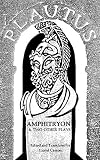
Interesting, though somewhat predictable, plays from the Roman Empire. Familiar themes from the classical period - love intrigues, gods, and sneaky servants. As with many plays of the time, the author presents the standard customs of the day with regard to male-female relationships, but in such a way you begin to suspect his sympathies lie with the women. While there are no signs of nascent feminism (I'm not going to reach that far), the author seems to have realized it wasn't particularly show more easy being a woman without any say, and presented his female characters with some sympathy. One weakness of the collection is that large chunks are missing from all three plays, in one case the ending and in another a key climactic moment. One of the plays had also suffered the indignity of having a prologue and an epilogue tacked on at some later date (possibly within only a few decades of being written), which did little to add to the play. An interesting period piece; I have enjoyed reading this author before. show less
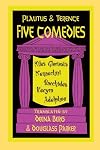
Works by two Roman playwrights, translated into English and modernized. It's difficult to tell whether the contemporary sound of these plays is in the original, or the translation, but they sound remarkably modern. The characters, of course, are stock characters common in the Roman theatre, and their names indicate who and what they are, but the situations don't seem that odd for a modern reader. Ranging from unwanted pregnancies resulting from rape to unwanted relatives who decide to move show more in on you to pimps who demand their due, the characters are not unfamiliar to a 21st century audience. The role of women is obviously not one many of us would accept in a modern setting, but we can still sympathize with women who are just pawns and are determined to improve their situation, and the hapless men (and extremely clever slaves) who finish the cast. Definitely a fun read. show less
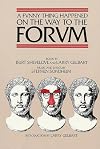
One of the best Broadway librettos ever, of course, and the only successful musical farce. One of the few scripts that repeatedly makes me laugh out loud.
This edition (Applause) includes lyrics from cut songs, a few of which have found a life outside the show: "Invocation," "Love is in the Air," "Farewell," "The House of Marcus Lycus," "Your Eyes Are Blue," "I Do Like You," "There's Something About a War," "Echo Song," "The Gaggle of Geese."
This edition (Applause) includes lyrics from cut songs, a few of which have found a life outside the show: "Invocation," "Love is in the Air," "Farewell," "The House of Marcus Lycus," "Your Eyes Are Blue," "I Do Like You," "There's Something About a War," "Echo Song," "The Gaggle of Geese."
Lists
Awards


You May Also Like


Associated Authors
Statistics
- Works
- 572
- Also by
- 15
- Members
- 6,640
- Popularity
- #3,685
- Rating
- 3.4
- Reviews
- 77
- ISBNs
- 485
- Languages
- 21
- Favorited
- 6

