On This Page
Description
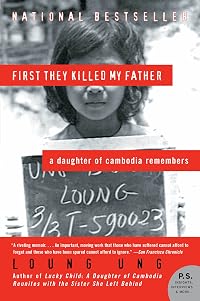
One of seven children of a high-ranking government official, Loung Ung lived a privileged life in the Cambodian capital of Phnom Penh until the age of five. Then, in April 1975, Pol Pot's Khmer Rouge army stormed into the city, forcing Ung's family to flee and, eventually, to disperse. Loung was trained as a child soldier in a work camp for orphans, her siblings were sent to labor camps, and those who survived the horrors would not be reunited until the Khmer Rouge was destroyed.Harrowing show more yet hopeful, Loung's powerful story is an unforgettable account of a family shaken and shattered, yet miraculously sustained by courage and love in the face of unspeakable brutality. show lessTags
Recommendations



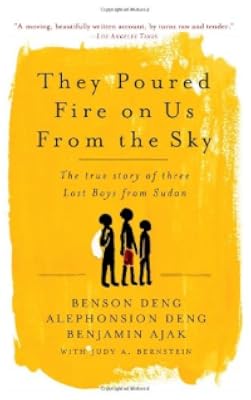
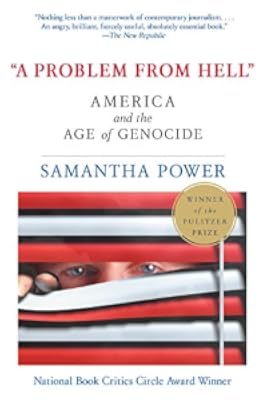
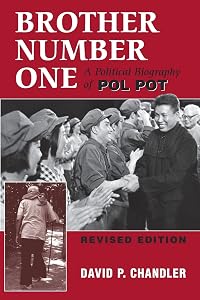
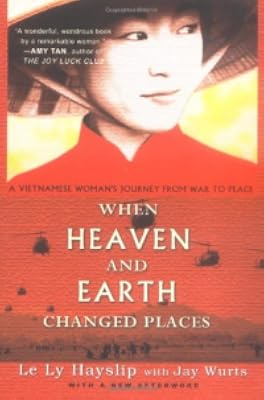




Member Reviews
I picked up [b:First They Killed My Father: A Daughter of Cambodia Remembers|4373|First They Killed My Father A Daughter of Cambodia Remembers|Loung Ung|https://images.gr-assets.com/books/1407105580s/4373.jpg|909578] for the first time in 2004. My wife, a diplomat, had just been assigned to the US embassy in Cambodia. We were living in Paris at the time, which has a sizeable Cambodian community, and immediately rushed out to Le Petit Cambodge for a delicious meal to prepare us for the adventure. Our server recommended we read First They Killed My Father: A Daughter of Cambodia Remembers. We bought Ung’s book on the way home and fought over it for the rest of the week: I simply could not put it down.
Ung’s tale greatly informed our show more experience in Cambodia and helped us begin to understand the collective trauma of the Khmer Rouge era that still affects the country in so many ways. I soon discovered that any Cambodian old enough to have lived through the seventies would begin to talk: “You see that tree over there? I was six in the Khmer Rouge days and my job was to strip it of bark to dye everything black,” or “They used to put a plastic bag over my head so I would pass out again and again.” I felt like every Cambodian I knew was retelling Ung’s moving account but from a slightly different, personal point of view.
I read First They Killed My Father: A Daughter of Cambodia Remembers a second time in 2007, just before leaving Cambodia on our way to my wife’s onward assignment in Switzerland. It was the perfect book end to our stay there. The people who perpetrated Cambodia’s genocide were never brought to justice. Pol Pot—Brother Number One—died of old age in his sleep. Yet the people of Cambodia remember, and Ung has preserved their most painful chapter in a format accessible to the rest of the world. I thank her for that. Even if the reader knows nothing of the horrors of the Cambodia’s tragic experiment with agrarian utopia, Ung’s masterful storytelling guarantees First They Killed My Father: A Daughter of Cambodia Remembers will strike a chord. I highly recommend this book. – [a:Gregory E. Buford|17145898|Gregory E. Buford|https://images.gr-assets.com/authors/1505223485p2/17145898.jpg] show less
Ung’s tale greatly informed our show more experience in Cambodia and helped us begin to understand the collective trauma of the Khmer Rouge era that still affects the country in so many ways. I soon discovered that any Cambodian old enough to have lived through the seventies would begin to talk: “You see that tree over there? I was six in the Khmer Rouge days and my job was to strip it of bark to dye everything black,” or “They used to put a plastic bag over my head so I would pass out again and again.” I felt like every Cambodian I knew was retelling Ung’s moving account but from a slightly different, personal point of view.
I read First They Killed My Father: A Daughter of Cambodia Remembers a second time in 2007, just before leaving Cambodia on our way to my wife’s onward assignment in Switzerland. It was the perfect book end to our stay there. The people who perpetrated Cambodia’s genocide were never brought to justice. Pol Pot—Brother Number One—died of old age in his sleep. Yet the people of Cambodia remember, and Ung has preserved their most painful chapter in a format accessible to the rest of the world. I thank her for that. Even if the reader knows nothing of the horrors of the Cambodia’s tragic experiment with agrarian utopia, Ung’s masterful storytelling guarantees First They Killed My Father: A Daughter of Cambodia Remembers will strike a chord. I highly recommend this book. – [a:Gregory E. Buford|17145898|Gregory E. Buford|https://images.gr-assets.com/authors/1505223485p2/17145898.jpg] show less
I wasn’t prepared for how quietly First They Killed My Father would undo me.
Loung Ung writes her memoir through the eyes of her five-year-old self — a child forced from her home in Phnom Penh and thrust into the brutality of the Khmer Rouge regime. What unfolds isn’t just a story of survival; it’s a child’s fractured understanding of a world that has suddenly turned against her.
Ung’s decision to tell this story through the lens of innocence is what makes it so haunting. There’s no politics, no historical distance — only confusion, hunger, and the desperate will to keep her family alive. The result is raw and unguarded, like truth before it’s been processed into meaning.
As a reader, you don’t just witness trauma; you show more feel its quiet persistence — the way it lingers long after the violence ends. And yet, what endures is not despair but resilience. Love, in its smallest gestures, becomes a kind of defiance.
It’s the kind of book that reminds me why stories matter — not just to document what happened, but to show what it felt like to live through it.
If you write, lead, or simply try to make sense of the world through others’ eyes, First They Killed My Father is worth your time. It’s a story that won’t leave you, and maybe it shouldn’t. show less
Loung Ung writes her memoir through the eyes of her five-year-old self — a child forced from her home in Phnom Penh and thrust into the brutality of the Khmer Rouge regime. What unfolds isn’t just a story of survival; it’s a child’s fractured understanding of a world that has suddenly turned against her.
Ung’s decision to tell this story through the lens of innocence is what makes it so haunting. There’s no politics, no historical distance — only confusion, hunger, and the desperate will to keep her family alive. The result is raw and unguarded, like truth before it’s been processed into meaning.
As a reader, you don’t just witness trauma; you show more feel its quiet persistence — the way it lingers long after the violence ends. And yet, what endures is not despair but resilience. Love, in its smallest gestures, becomes a kind of defiance.
It’s the kind of book that reminds me why stories matter — not just to document what happened, but to show what it felt like to live through it.
If you write, lead, or simply try to make sense of the world through others’ eyes, First They Killed My Father is worth your time. It’s a story that won’t leave you, and maybe it shouldn’t. show less
Loung Ung recounts her experience under the rule of the genocidal dictator Pol Pot and his Khmer Rouge regime in this harrowing memoir.
Loung Ung was just five years old when she and her family of 9 were forced to flee Phnom Penh to evade the rebel soldiers of the Khmer Rouge. Taking on new identities in order to protect themselves from the regime, the family first sought refuge with relatives in the countryside, before being compelled to move between ‘re-education’ camps every few months.
Loung is bewildered by the changes in her life, too young to understand why Pol Pot’s vision for Cambodia, or New Kampuchea as he has christened it, requires them to perform backbreaking work in exchange for meagre rations that edge them close to show more starvation.
And when her father is taken away, never to return, what remains of Loung’s fractured family is forced to separate, with little expectation of reunion and only the slimmest hope of surviving Cambodia’s Killing Fields.
I knew the bare facts of the events in Cambodia going into this book, of the 1975 civil war victory by Pol Pot and the Khmer Rouge intent on a vision of a self-sufficient country, free from the ‘corruption’ of the west. A seemingly laudable goal but one which was interpreted to require the torture and execution of professionals, intellectuals, dissenters and their families as well as the aged, the ill and disabled, resulting in the deaths of some two million Cambodians, out of a population of just seven million. Meanwhile Pol Pot amassed the power and riches he publicly condemned, as millions of Cambodian’s suffered unimaginable deprivation.
As a survivor, Ung’s narrative provides insight into the horrors of the Killing Fields, blending the immediacy of her childhood perspective with the knowledge of an adult. The trauma has been imprinted on her, as our worst memories so often are, and there is an undeniable authenticity to this unique account of her experience. It’s a heartbreaking tale of loss and brutality, resilience and courage that had me gasping in shock and sorrow for all Loung, and innocent Cambodian’s like her, endured.
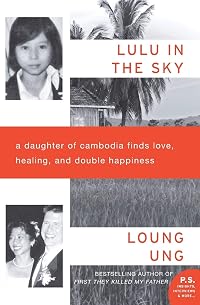
Loung survives, reunited briefly with her surviving siblings before escaping to America after a dangerous journey via Vietnam and Thailand. Today Loung is an activist who among other things dedicates herself to helping Cambodia and its people recover from the traumas of war. Further books, Lucky Child and Lulu in the Sky, share elements of her life following her arrival in America. First They Killed My Father has also been adapted into a movie and a graphic novel is forthcoming. I haven’t had the fortitude as yet to watch the former.
First They Killed My Father is not a story, it is a record of an innocent life marred by hardship and horror. It is a personal account of genocide masked by statistics, politics, and sanitised news reports. It is a must read. show less
Loung Ung was just five years old when she and her family of 9 were forced to flee Phnom Penh to evade the rebel soldiers of the Khmer Rouge. Taking on new identities in order to protect themselves from the regime, the family first sought refuge with relatives in the countryside, before being compelled to move between ‘re-education’ camps every few months.
Loung is bewildered by the changes in her life, too young to understand why Pol Pot’s vision for Cambodia, or New Kampuchea as he has christened it, requires them to perform backbreaking work in exchange for meagre rations that edge them close to show more starvation.
And when her father is taken away, never to return, what remains of Loung’s fractured family is forced to separate, with little expectation of reunion and only the slimmest hope of surviving Cambodia’s Killing Fields.
I knew the bare facts of the events in Cambodia going into this book, of the 1975 civil war victory by Pol Pot and the Khmer Rouge intent on a vision of a self-sufficient country, free from the ‘corruption’ of the west. A seemingly laudable goal but one which was interpreted to require the torture and execution of professionals, intellectuals, dissenters and their families as well as the aged, the ill and disabled, resulting in the deaths of some two million Cambodians, out of a population of just seven million. Meanwhile Pol Pot amassed the power and riches he publicly condemned, as millions of Cambodian’s suffered unimaginable deprivation.
As a survivor, Ung’s narrative provides insight into the horrors of the Killing Fields, blending the immediacy of her childhood perspective with the knowledge of an adult. The trauma has been imprinted on her, as our worst memories so often are, and there is an undeniable authenticity to this unique account of her experience. It’s a heartbreaking tale of loss and brutality, resilience and courage that had me gasping in shock and sorrow for all Loung, and innocent Cambodian’s like her, endured.
Loung survives, reunited briefly with her surviving siblings before escaping to America after a dangerous journey via Vietnam and Thailand. Today Loung is an activist who among other things dedicates herself to helping Cambodia and its people recover from the traumas of war. Further books, Lucky Child and Lulu in the Sky, share elements of her life following her arrival in America. First They Killed My Father has also been adapted into a movie and a graphic novel is forthcoming. I haven’t had the fortitude as yet to watch the former.
First They Killed My Father is not a story, it is a record of an innocent life marred by hardship and horror. It is a personal account of genocide masked by statistics, politics, and sanitised news reports. It is a must read. show less
First They Killed My Father is Loung Ung's memoir of living through the rise of the Khmer Rouge regime as a very young child—she was just five years old when the Khmer Rouge seized Phnom Penh. This gives the book both its harrowing intensity—it's appalling to think of a small child having to face such brutality—and its weakness.
Ung tries to write both as a five-year-old and with the benefit of hindsight, and the resulting narrative voice is an uneasy amalgam of these two perspectives. I have little reason to doubt the emotional truth of Ung's testimony or to deny the force of the trauma she conveys, but the historian in me is uneasy at the dialogue/recollections of internal monologues presented as if verbatim.
Equally, Ung show more presents her beloved father, Seng Im Ung, as an almost superheroic figure, full of wisdom and love—a perspective which makes perfect sense coming from a daughter who never got to know him as a grown up. Yet there is no reflection at all on the fact that Ung was born into a family which enjoyed a standard of living far above that of most Cambodians because Seng Im Ung was an officer in the corrupt authoritarian Lon Nol regime.
That fact does not of course justify what happened to the Ung family—or to the more than million people who died at the hands of the Khmer Rouge regime—but it does complicate what might otherwise be a binary story. But it does underscore the fact that, particularly for those of us in the West who may know shamefully little of the atrocities committed by the Khmer Rouge (and I count myself among that number), First They Killed My Father may be a compelling place to begin learning about this moment in Cambodian history, but not the best place to stop. show less
Ung tries to write both as a five-year-old and with the benefit of hindsight, and the resulting narrative voice is an uneasy amalgam of these two perspectives. I have little reason to doubt the emotional truth of Ung's testimony or to deny the force of the trauma she conveys, but the historian in me is uneasy at the dialogue/recollections of internal monologues presented as if verbatim.
Equally, Ung show more presents her beloved father, Seng Im Ung, as an almost superheroic figure, full of wisdom and love—a perspective which makes perfect sense coming from a daughter who never got to know him as a grown up. Yet there is no reflection at all on the fact that Ung was born into a family which enjoyed a standard of living far above that of most Cambodians because Seng Im Ung was an officer in the corrupt authoritarian Lon Nol regime.
That fact does not of course justify what happened to the Ung family—or to the more than million people who died at the hands of the Khmer Rouge regime—but it does complicate what might otherwise be a binary story. But it does underscore the fact that, particularly for those of us in the West who may know shamefully little of the atrocities committed by the Khmer Rouge (and I count myself among that number), First They Killed My Father may be a compelling place to begin learning about this moment in Cambodian history, but not the best place to stop. show less
I read this memoir of Loung Ung on the heels of A Fine Balance, and I must say, now I need to read something light and joyful to regain a little balance of my own. Of course, we all knew, secondhand, what was happening in Cambodia in the 1970s. We heard horrifying tales of the Khmer Rouge and Pol Pot’s killing fields. But, hearing such news from a reporter, and hearing the account of a victim, are entirely different experiences.
I marvel at the resilience of people who endure such atrocities; I wonder at the cruel nature of those who follow such a man and commit such acts. Loung Ung’s account is all the more poignant because her four-year trial began at the age of five. An age when we do not let our children cross the street on show more their own. Watching soldiers march her father away to his death was not even the worst thing she witnessed. The hatred she so rightfully felt toward the Khmer Rouge and the soldiers of that regime must have been beyond imagination, and must easily have influenced every day of her life since. How horrible to have so much to want revenge for and no one to hold accountable or way to render any semblance of justice.
I couldn’t help chronicling my own life alongside hers. When she was being ripped from her life in Phnom Penh and put onto a road of starvation and hard labor, I was graduating college and agonizing over making a good career choice. When she was being delivered from the refugee camps in Thailand to a future in Vermont, I was getting married and embarking on a new life of my own. Between those two events, she endured the unimaginable and I failed to fully appreciate the golden blessings of my own good fortune.
It is important that we read these kinds of accounts. They enrich our understanding of our own position in the world and they remind us why it is important that we pay attention and care about what is happening beyond our own lives and our own borders. show less
I marvel at the resilience of people who endure such atrocities; I wonder at the cruel nature of those who follow such a man and commit such acts. Loung Ung’s account is all the more poignant because her four-year trial began at the age of five. An age when we do not let our children cross the street on show more their own. Watching soldiers march her father away to his death was not even the worst thing she witnessed. The hatred she so rightfully felt toward the Khmer Rouge and the soldiers of that regime must have been beyond imagination, and must easily have influenced every day of her life since. How horrible to have so much to want revenge for and no one to hold accountable or way to render any semblance of justice.
I couldn’t help chronicling my own life alongside hers. When she was being ripped from her life in Phnom Penh and put onto a road of starvation and hard labor, I was graduating college and agonizing over making a good career choice. When she was being delivered from the refugee camps in Thailand to a future in Vermont, I was getting married and embarking on a new life of my own. Between those two events, she endured the unimaginable and I failed to fully appreciate the golden blessings of my own good fortune.
It is important that we read these kinds of accounts. They enrich our understanding of our own position in the world and they remind us why it is important that we pay attention and care about what is happening beyond our own lives and our own borders. show less
I picked up [b:First They Killed My Father: A Daughter of Cambodia Remembers|4373|First They Killed My Father A Daughter of Cambodia Remembers|Loung Ung|https://images.gr-assets.com/books/1407105580s/4373.jpg|909578] for the first time in 2004. My wife, a diplomat, had just been assigned to the US embassy in Cambodia. We were living in Paris at the time, which has a sizeable Cambodian community, and immediately rushed out to Le Petit Cambodge for a delicious meal to prepare us for the adventure. Our server recommended we read First They Killed My Father: A Daughter of Cambodia Remembers. We bought Ung’s book on the way home and fought over it for the rest of the week: I simply could not put it down.
Ung’s tale greatly informed our show more experience in Cambodia and helped us begin to understand the collective trauma of the Khmer Rouge era that still affects the country in so many ways. I soon discovered that any Cambodian old enough to have lived through the seventies would begin to talk: “You see that tree over there? I was six in the Khmer Rouge days and my job was to strip it of bark to dye everything black,” or “They used to put a plastic bag over my head so I would pass out again and again.” I felt like every Cambodian I knew was retelling Ung’s moving account but from a slightly different, personal point of view.
I read First They Killed My Father: A Daughter of Cambodia Remembers a second time in 2007, just before leaving Cambodia on our way to my wife’s onward assignment in Switzerland. It was the perfect book end to our stay there. The people who perpetrated Cambodia’s genocide were never brought to justice. Pol Pot—Brother Number One—died of old age in his sleep. Yet the people of Cambodia remember, and Ung has preserved their most painful chapter in a format accessible to the rest of the world. I thank her for that. Even if the reader knows nothing of the horrors of the Cambodia’s tragic experiment with agrarian utopia, Ung’s masterful storytelling guarantees First They Killed My Father: A Daughter of Cambodia Remembers will strike a chord. I highly recommend this book. – [a:Gregory E. Buford|17145898|Gregory E. Buford|https://images.gr-assets.com/authors/1505223485p2/17145898.jpg] show less
Ung’s tale greatly informed our show more experience in Cambodia and helped us begin to understand the collective trauma of the Khmer Rouge era that still affects the country in so many ways. I soon discovered that any Cambodian old enough to have lived through the seventies would begin to talk: “You see that tree over there? I was six in the Khmer Rouge days and my job was to strip it of bark to dye everything black,” or “They used to put a plastic bag over my head so I would pass out again and again.” I felt like every Cambodian I knew was retelling Ung’s moving account but from a slightly different, personal point of view.
I read First They Killed My Father: A Daughter of Cambodia Remembers a second time in 2007, just before leaving Cambodia on our way to my wife’s onward assignment in Switzerland. It was the perfect book end to our stay there. The people who perpetrated Cambodia’s genocide were never brought to justice. Pol Pot—Brother Number One—died of old age in his sleep. Yet the people of Cambodia remember, and Ung has preserved their most painful chapter in a format accessible to the rest of the world. I thank her for that. Even if the reader knows nothing of the horrors of the Cambodia’s tragic experiment with agrarian utopia, Ung’s masterful storytelling guarantees First They Killed My Father: A Daughter of Cambodia Remembers will strike a chord. I highly recommend this book. – [a:Gregory E. Buford|17145898|Gregory E. Buford|https://images.gr-assets.com/authors/1505223485p2/17145898.jpg] show less
The author's true account of her life as a child when her hometown of Phnom Penh falls to the Khmer Rouge. Five-year-old Loung and her family are middle class and educated but these must be hidden as the family escapes their home along with the rest of the town. They flee to escape the Khmer Rouge soldiers, first staying with uncles in the country and then moving on when things get too dangerous. Loung's father is taken away by the soldiers; the family never sees him again. Family members are separated as the children are sent to work camps; starvation, cruelty and death dog them everywhere. The war experience hardens little Loung; intense hatred for Pol Pot and his soldiers keeps her alive. After four years, the Vietnamese move into show more Cambodia and push out the Khmer. Loung is reunited with her surviving siblings at a refugee camp. At book's end, she and older brother Meng and his wife gain sponsorship to go to America. They hope to be reunited with their siblings in five years. show less
Members
- Recently Added By
Lists

Best Autobiographies and Memoirs
370 works; 67 members

1970s Narratives
40 works; 6 members

Books read in 2015
213 works; 5 members

Books Read in 2015
3,299 works; 129 members

Swinging Seventies
255 works; 18 members

Writers at Risk
106 works; 17 members

KayStJ's to-read list
1,616 works; 11 members

Around the World in 80 Books
79 works; 4 members

SHOULD Read Books!
354 works; 9 members

Read the book and saw the movie
1,170 works; 193 members

Biographies: Women
112 works; 1 member
Author Information

3+ Works 2,943 Members
Loung Ung is a national spokesperson for the Campaign for a Landmine Free World, a program of the Vietnam Veterans of America Foundation
Awards and Honors
Awards
Distinctions
Notable Lists
Series

Belongs to Publisher Series
Fischer Taschenbuch (15287)
Work Relationships
Is abridged in
Common Knowledge
- Canonical title
- First They Killed My Father: A Daughter of Cambodia Remembers
- Original title
- First They Killed My Father: A Daughter of Cambodia Remembers
- Original publication date
- 2000
- People/Characters
- Loung Ung; Sem Im Ung; Ay Choung Ung; Meng Ung; Khouy Ung; Keav Ung (show all 10); Kim Ung; Chou Ung; Geak Ung; Leang
- Important places
- Kambodscha; Cambodia; Phnom Penh, Cambodia
- Related movies
- First They Killed My Father (2017 | IMDb)
- Epigraph
- Fronm 1975-1979-through execution, starvation, disease, and forced labor-the Khmer Rouge systematically killed an estimated two million Cambodians, almost a fourth of the country's population. This is a story of survival: my... (show all) own story mirrors that of millions of Cambodians. If you had been living in Cambodia during this period, this would be your story too.
- Dedication
- In memory of the two million people who perished under the Khmer Rouge regime. This book is dedicated to my father, Ung; Seng Im, who always believed in me; my mother, Ung; Ay Choungm who always loved me. To my sisters Keav... (show all), Chou, and Geak because sisters are forever; my brother Kim, who taught me about courage; my brother Khouy, for contributing more than one hundred pages of our family history and details of our lives under the Khmer Rouge, many of which I incorporated into this book; to my brother Meng and sister-in-law Eang Muy Tan, who raised me (quite well) in America.
- First words
- Phnom Penh City erwacht früh, um die kühle Morgenbrise zu nutzen, bevor die Sonne durch den Dunst bricht und die Hitze in das Land einfällt.
Phnom Penh city wakes early to take advantage of the cool morning breeze before the sun breaks through the haze and invades the country with sweltering heat.
[Epilogue] I am almost home. - Quotations
- Phnom Penh city wakes early to take advantage of the cool morning breeze before the sun breaks through the haze and invades the country with sweltering heat.
- Last words
- (Click to show. Warning: May contain spoilers.)[Epilogue] Our fingers clasped around each other naturally as if the chain was never broken, and I allowed Chou to lead me to the car while the cousins followed with my bags.
(Click to show. Warning: May contain spoilers.)Heartened by my dream of Pa, I walk onto the aircraft. - Blurbers
- Chang, Iris
- Original language
- English
Classifications
- Genres
- Biography & Memoir, General Nonfiction, History, Nonfiction
- DDC/MDS
- 959.6042 — History & geography History of Asia Southeast Asia: Myanmar, Thailand, Laos, Cambodia, Vietnam Cambodia 1949- 1970-1993
- LCC
- DS554.8 .U54 — History of Europe, Asia, Africa and Oceania Asia History of Asia Southeast Asia French Indochina Cambodia
- BISAC
Statistics
- Members
- 2,556
- Popularity
- 7,482
- Reviews
- 64
- Rating
- (4.07)
- Languages
- 8 — Danish, Dutch, English, French, German, Italian, Spanish, Portuguese (Portugal)
- Media
- Paper, Audiobook, Ebook
- ISBNs
- 45
- ASINs
- 13