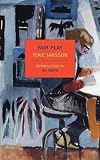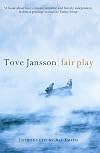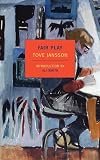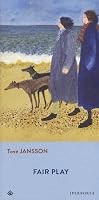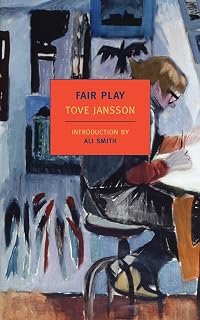
Fair Play
by Tove Jansson
On This Page
Description
Fair Play is the type of love story that is rarely told, a revelatory depiction of contentment, hard-won and exhilarating.Mari is a writer and Jonna is an artist, and they live at opposite ends of a big apartment building, their studios connected by a long attic passageway. They have argued, worked, and laughed together for decades. Yet they've never really stopped taking each other by surprise. Fair Play shows us Mari and Jona's intertwined lives as they watch Fassbinder films and show more Westerns, critique each other's work, spend time on a solitary island (recognizable to readers of Jansson's The Summer Book), travel through the American Southwest, and turn life into nothing less than art.
. show less
Tags
Recommendations












Member Recommendations
by anonymous user
Member Reviews
this was absolutely lovely. there's a possibility that i might feel differently had i been in a different mood, because i may have wanted more (literally more in length and details) from it, but as it was this time, i thought it was virtually perfect. these tiny slices of life, of a relationship, were beautiful.
the vignettes are held together not by plot, but by the decades of relationship between these two women. these women who aren't even all that likable much of the time. but their relationship is and that's what we focus on. the way they know each other, care for each other, remain themselves. they have this solid uniting while not losing anything of themselves, and it shows the strength of each of them individually but also show more together. they don't worry about their future or feel insecure, even as they live apart some of the time.
the writing is also really wonderful. this is my first jansson and i will definitely read more. i loved the way she said so much in so few words and with so little outwardly happening. beautiful, relatable moments that make a life. show less
the vignettes are held together not by plot, but by the decades of relationship between these two women. these women who aren't even all that likable much of the time. but their relationship is and that's what we focus on. the way they know each other, care for each other, remain themselves. they have this solid uniting while not losing anything of themselves, and it shows the strength of each of them individually but also show more together. they don't worry about their future or feel insecure, even as they live apart some of the time.
the writing is also really wonderful. this is my first jansson and i will definitely read more. i loved the way she said so much in so few words and with so little outwardly happening. beautiful, relatable moments that make a life. show less
I read this entire book in one sitting, in the waiting room at the oral surgeon for my oldest kid (wisdom teeth) and it was perfection. (The book. Not the waiting room.) An absolute delight. Everything I wanted and then some.
Do you want thoughts on how to fill a day, how to live a life, how to balance the creative and emotional needs of two people who have been life partners for decades? Do you want depctiions of the kind of relationship where you can have a circular argument about unresolved issues from years ago that goes nowhere, but also understand each other so well that you can silently arrange to salve unexpressed disappointments for the other? Do you want women who take their art, their careers, their legacies seriously? Do you show more want boats and islands and attics that connect the artist lofts and homes of the two? Do you want a series of vignettes that depicts a relationship that closely resembles the author's own? All depicted with a hand so light and matter of fact that it almost hides how skilled it all is?
This might be my new favorite Tove Jansson. It was so wonderful. I am still reeling. show less
Do you want thoughts on how to fill a day, how to live a life, how to balance the creative and emotional needs of two people who have been life partners for decades? Do you want depctiions of the kind of relationship where you can have a circular argument about unresolved issues from years ago that goes nowhere, but also understand each other so well that you can silently arrange to salve unexpressed disappointments for the other? Do you want women who take their art, their careers, their legacies seriously? Do you show more want boats and islands and attics that connect the artist lofts and homes of the two? Do you want a series of vignettes that depicts a relationship that closely resembles the author's own? All depicted with a hand so light and matter of fact that it almost hides how skilled it all is?
This might be my new favorite Tove Jansson. It was so wonderful. I am still reeling. show less
I always used to be impressed by the author bio in the front of the Moomin books that told us that Tove Jansson lived on her own on a small island. Obviously there were some compensations to be looked forward to in adult life...
It turns out that that wasn't entirely true - the island was the site of her parents' summer-house, and she lived there only seasonally, and mostly together with her life-partner, the artist Tuulikki Pietilä. Since we wouldn't have got this rather lovely little book without that set of circumstances, I'm not too disappointed, though.
Jonna and Mari are two women of a certain age - one a visual artist and film-maker, the other a writer and illustrator - who live and work together, but not too close together. They show more are Finnish, after all. There has to be an attic corridor with many closed doors between their two studios.
We see their life in a series of short glimpses, on their island, in Helsinki and on various journeys. We see them enjoying the oddness of each other's ways of seeing the world, confronting artistic and practical problems together, quarrelling and making up, and above all feeding into each other's creative work. Although what Jansson tells us about Jonna and Mari is never objectively any more than what we might have seen and heard as a visitor to their house, put together in context it becomes an incredibly intimate account of how two people can share their lives without ever giving up their own contrasting personalities. A beautiful, restrained, delicately funny and very Nordic love story. show less
It turns out that that wasn't entirely true - the island was the site of her parents' summer-house, and she lived there only seasonally, and mostly together with her life-partner, the artist Tuulikki Pietilä. Since we wouldn't have got this rather lovely little book without that set of circumstances, I'm not too disappointed, though.
Jonna and Mari are two women of a certain age - one a visual artist and film-maker, the other a writer and illustrator - who live and work together, but not too close together. They show more are Finnish, after all. There has to be an attic corridor with many closed doors between their two studios.
We see their life in a series of short glimpses, on their island, in Helsinki and on various journeys. We see them enjoying the oddness of each other's ways of seeing the world, confronting artistic and practical problems together, quarrelling and making up, and above all feeding into each other's creative work. Although what Jansson tells us about Jonna and Mari is never objectively any more than what we might have seen and heard as a visitor to their house, put together in context it becomes an incredibly intimate account of how two people can share their lives without ever giving up their own contrasting personalities. A beautiful, restrained, delicately funny and very Nordic love story. show less
We aren't introduced to Jonna and Mari - they quietly enter onto the stage and go about their lives as if we're not here, watching them. We listen in on their conversations about family trivia and art, we watch with them the second-rate Western movies which Jonna enjoys so, and which Mari tolerates because Jonna does enjoy them.
When we meet them, Mari and Jonna have been together for thirty years and are sprightly still in their seventies. Each chapter is a vignette of their shared lives, displaying the little annoyances and intimacies, the small unnoticed things done to please the other, that make up the mundane existence of two people so deeply in love that they are rarely conscious of it anymore as it has become who they are.
There show more aren't any grand dramatic scenes; even the storm that terrifies an unwanted visitor to their island is a backdrop for the human figures in the foreground, and Mari's quiet kindness towards somebody whose presence she resented until she saw their need. A road trip to the USA centres not around any great events or sights, but rather Jonna and Mari's unassuming friendship with their hotel maid, who introduces them to the patrons of an unremarkable back street bar. The closest the book gets to drama is with the coming of Wladislav, a ninety-two year old puppet sculptor whose short visit to show Mari the marionette hands he's made of her character illustrations is more disrupting and terrifying than any sea-storm. Mari, initially disconcerted by Wladyslaw's intensity and brusqueness, is instantly won over by the exquisitely expressive craftmanship of his work.
We leave Mari and Jonna much as we found them, quietly, without fanfare, but certain in the knowledge of their deep and abiding love for each other, a gift to us of hope in the possibilty of living an unassuming, long life of fulfilment with another. The final line of the book is probably the most perfect ending I've read in a long time, which I won't quote, not because it's a spoiler, but because it needs the experience of the rest of the book to truly appreciate. show less
When we meet them, Mari and Jonna have been together for thirty years and are sprightly still in their seventies. Each chapter is a vignette of their shared lives, displaying the little annoyances and intimacies, the small unnoticed things done to please the other, that make up the mundane existence of two people so deeply in love that they are rarely conscious of it anymore as it has become who they are.
There show more aren't any grand dramatic scenes; even the storm that terrifies an unwanted visitor to their island is a backdrop for the human figures in the foreground, and Mari's quiet kindness towards somebody whose presence she resented until she saw their need. A road trip to the USA centres not around any great events or sights, but rather Jonna and Mari's unassuming friendship with their hotel maid, who introduces them to the patrons of an unremarkable back street bar. The closest the book gets to drama is with the coming of Wladislav, a ninety-two year old puppet sculptor whose short visit to show Mari the marionette hands he's made of her character illustrations is more disrupting and terrifying than any sea-storm. Mari, initially disconcerted by Wladyslaw's intensity and brusqueness, is instantly won over by the exquisitely expressive craftmanship of his work.
We leave Mari and Jonna much as we found them, quietly, without fanfare, but certain in the knowledge of their deep and abiding love for each other, a gift to us of hope in the possibilty of living an unassuming, long life of fulfilment with another. The final line of the book is probably the most perfect ending I've read in a long time, which I won't quote, not because it's a spoiler, but because it needs the experience of the rest of the book to truly appreciate. show less
Familiarity and understanding in a committed relationship and lifelong connection seep through each short story in Tove Jansson's Fair Play. Reads like fragments of memories permeated by an enduring albeit muted love between two women, the infectious charm and humour of these stories is delicately drawn through household chores, hobbies, vacations, even the usual banter, inside jokes, and intersection of their work which sprung from years of togetherness and companionship. It's where support is limpid beyond the suggestions and criticisms they have for/of each other. And while this collection wholeheartedly recognises how one gets accustomed to someone's constant presence, it also admires the importance of one's independence within the show more relationship; that one's identity should not disappear nor get compromised by one's devotion to another. Since Fair Play takes this relationship centre stage then almost mirrors the partnership between Tove and Tooti, it's a little disappointing how it somehow cowardly conceals the real nature of the relationship by referring to each other as a 'friend.' Its subtle, intimate moments can feel distant too. And it is perhaps the unavoidable cost of any story pulled directly from personal experiences, much more when it's about a romantic affair (particularly a same-sex relationship during the 1950s) carefully celebrated in hushed tones and soft murmurs. Nonetheless, a worthwhile collection that pulls the mouth into a contented smile. show less
There is lots of fair play in this collection of linked sketches, but above all else, there is a love story. Not a romantic book, not a steamy novel, it is a quiet picture of two people deeply in love, able to give each other time together and time alone.
The reader is drawn slowly to this realization. The first episode, "Changing Pictures", has a rather bossy woman bustling around her friend's apartment, organizing and rehanging pictures, discarding ephemera, gaining definition for the display. In the next vignette, the scene is set: They lived at opposite ends of a large apartment building near the harbor, and between their studios lay the attic, an impersonal no-man's- land of tall corridors with locked plank doors on either side. show more Mari liked wandering across the attic; it drew a necessary, neutral interval between their domains. She could pause on the way to listen to the rain on the metal roof, look out across the city as it lit its lights, or just linger for the pleasure of it.
They never asked "Were you able to work today?" Maybe they had twenty or thirty years earlier, but they'd gradually learned not to. There are empty spaces that must be respected -- those often long periods when a person can't see the pictures or find the words and needs to be left alone.
The two were meeting for one of their film and discussion nights. This night it would be Fassbinder, another night it might be Robin Hood. As the book moves on through the seasons and the years, we see the two women, one an artist and one a writer, in the most domestic of situations. They are completely comfortable with one another, supportive of each other's work, yet fiercely independent in their creative lives.
Summers see them on their island in the Gulf of Finland, winters in the city. They bicker about their respective mothers, hang out in a bar in Phoenix, they do the chores and go fishing. In the hands of most writers, tedium would be mounting swiftly, but with each episode, Jansson develops the relationship in a way that makes the reader care about their lives. By the time the final surprising story is told,, the resolution seems completely apt.
This book of course is the story of Jansson and her lover Tuulikki Pietila, written when Jansson was in her mid-seventies. There is a sense of looking back on life, together with the assurance that despite encroaching age that life is by no means finished. There are always new possibilities. show less
The reader is drawn slowly to this realization. The first episode, "Changing Pictures", has a rather bossy woman bustling around her friend's apartment, organizing and rehanging pictures, discarding ephemera, gaining definition for the display. In the next vignette, the scene is set: They lived at opposite ends of a large apartment building near the harbor, and between their studios lay the attic, an impersonal no-man's- land of tall corridors with locked plank doors on either side. show more Mari liked wandering across the attic; it drew a necessary, neutral interval between their domains. She could pause on the way to listen to the rain on the metal roof, look out across the city as it lit its lights, or just linger for the pleasure of it.
They never asked "Were you able to work today?" Maybe they had twenty or thirty years earlier, but they'd gradually learned not to. There are empty spaces that must be respected -- those often long periods when a person can't see the pictures or find the words and needs to be left alone.
The two were meeting for one of their film and discussion nights. This night it would be Fassbinder, another night it might be Robin Hood. As the book moves on through the seasons and the years, we see the two women, one an artist and one a writer, in the most domestic of situations. They are completely comfortable with one another, supportive of each other's work, yet fiercely independent in their creative lives.
Summers see them on their island in the Gulf of Finland, winters in the city. They bicker about their respective mothers, hang out in a bar in Phoenix, they do the chores and go fishing. In the hands of most writers, tedium would be mounting swiftly, but with each episode, Jansson develops the relationship in a way that makes the reader care about their lives. By the time the final surprising story is told,, the resolution seems completely apt.
This book of course is the story of Jansson and her lover Tuulikki Pietila, written when Jansson was in her mid-seventies. There is a sense of looking back on life, together with the assurance that despite encroaching age that life is by no means finished. There are always new possibilities. show less
Turnabout is fair play. In Tove Jansson’s Fair Play, a precise and delicate series of dramatic scenes are presented that paint the relationship between Mari and Jonna, lifelong friends, artistic colleagues, travelling companions. They tolerate each other’s minor manias, accommodate their idiosyncrasies, make blunders and rectify them, and contribute to each other’s art – writing (primarily) in the case of Mari, visual art in the case of Jonna. But most of all they remain open to the almost priceless small acts of kindness that are possible when love, respect, and friendship are the deep foundation of a relationship.
Such spare descriptive writing seemingly insists on transmuting into symbolism. For example, Mari and Jonna share a show more well-weathered boat named Viktoria, and fathers that were each named Viktor. But even here, Jansson refuses to accept mere symbolism opting instead for the transformative effects of nostalgia. In like fashion, their experience of the American west in the segment set in Phoenix follows hard on the heels of a discussion of the B-movie western. You might be thinking Baudrillard, but don’t. As the hostess of the Phoenix bar says, “Give these ladies some space…They’re from Finland.” That sounds like good advice. Recommended. show less
Such spare descriptive writing seemingly insists on transmuting into symbolism. For example, Mari and Jonna share a show more well-weathered boat named Viktoria, and fathers that were each named Viktor. But even here, Jansson refuses to accept mere symbolism opting instead for the transformative effects of nostalgia. In like fashion, their experience of the American west in the segment set in Phoenix follows hard on the heels of a discussion of the B-movie western. You might be thinking Baudrillard, but don’t. As the hostess of the Phoenix bar says, “Give these ladies some space…They’re from Finland.” That sounds like good advice. Recommended. show less
Members
- Recently Added By
Published Reviews
ThingScore 100
Fair Play beschrijft de bijna gewone, dagelijkse bezigheden en gesprekken van de twee dames. Juist door de “gewoonheid” van de gebeurtenissen geeft Jansson een prachtige inkijk in de intimiteit van de relatie. Ook de stilte van het samenzijn, van de verbinding tussen twee mensen die elkaar heel goed kennen en waartussen diepe genegenheid bestaat – “daar waar geen woorden nodig zijn” show more – komt sterk naar voren. Dat laatste wordt nog versterkt, doordat een deel van het leven van de dames zich op een eiland afspeelt…lees verder > show less
added by Jordaan
Lists

Female Friendship
54 works; 12 members

Books Read in 2017
4,249 works; 129 members

Schwob Nederland
207 works; 2 members

Books discovered on LibraryThing
256 works; 36 members

Books Read in 2012
816 works; 34 members

Leah Eady's Book Mentions
18 works; 2 members
Author Information

642+ Works 31,230 Members
Tove Jansson has received the Hans Christian Andersen prize for children's literature. The world of the Moomintroll has become internationally famous thanks to her brilliant sense of humor and fabulous illustrations. The delightful Moomintrolls make it through catastrophe after catastrophe through cooperation and plain luck. Although Jansson is show more best known for her children's books, her adult fiction is equally entertaining. (Bowker Author Biography) show less
Some Editions
Awards and Honors
Awards
Notable Lists
Series
Belongs to Publisher Series
Work Relationships
Is contained in
Common Knowledge
- Canonical title
- Fair Play
- Original title
- Rent spel
- Alternate titles
- Fair Play: A Novel
- Original publication date
- 1989
- People/Characters
- Mari; Jonna
- Important places
- Phoenix, Arizona, USA; Porto Vecchio, Corsica, France; Finland
- First words
- Jonna had a happy habit of waking each morning as if to a new life.
- Last words
- (Click to show. Warning: May contain spoilers.)She felt something close to exhilaration, of a kind that people can permit themselves when they are blessed with love.
- Original language
- Swedish
Classifications
- Genres
- General Fiction, Fiction and Literature, LGBTQ+
- DDC/MDS
- 839.7374 — Literature & rhetoric German & related literatures Other Germanic literatures Swedish literature Swedish fiction 1900-1999 1945-1999
- LCC
- PT9875 .J37 .R4613 — Language and Literature German, Dutch and Scandinavian literatures Swedish literature Individual authors or works 1900-1960
- BISAC
Statistics
- Members
- 901
- Popularity
- 29,827
- Reviews
- 37
- Rating
- (3.96)
- Languages
- 8 — Dutch, English, Finnish, French, German, Italian, Norwegian (Bokmål), Swedish
- Media
- Paper, Audiobook, Ebook
- ISBNs
- 20
- ASINs
- 8