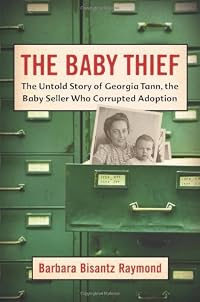
The Baby Thief: The Untold Story of Georgia Tann, the Baby Seller Who Corrupted Adoption
by Barbara Bisantz Raymond
On This Page
Description
For almost three decades, renowned baby-seller Georgia Tann ran a children's home in Memphis, Tennessee, selling her charges to wealthy clients nationwide, Joan Crawford among them. Part social history, part detective story, part expose, The Baby Thief is a riveting investigative narrative that explores themes that continue to reverberate today.Tags
Recommendations







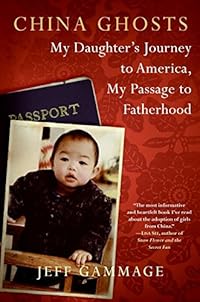
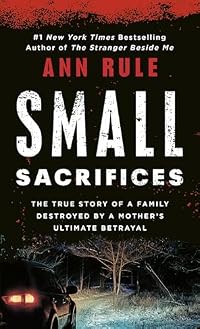

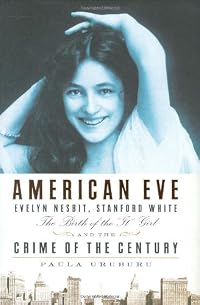




Member Recommendations

dara85 Fictionalized story of a family of children taken by Georgia Tann and put up for adoption.
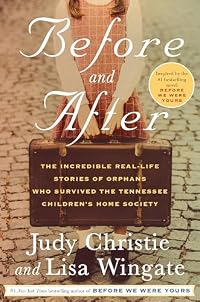
Before and After: The Incredible Real-Life Stories of Orphans Who Survived the Tennessee Children's Home Society by Judy Christie
dara85 Non-fiction story of Georgia Tann
Member Reviews
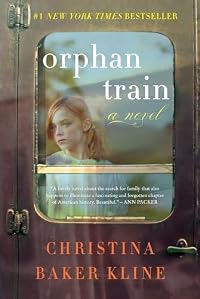
Prior to the 1920s, adoption in America seldom represented the acceptance of a child into an established non-biological family with the intent of seamlessly forming a new family unit. Children tended to be “adopted” as a matter of convenience, frequently for the purpose of providing labor to the adoptive family, as in the infamous “orphan trains” of the mid-to-late 1800s. In those instances, abandoned and neglected, as well as genuinely orphaned children from urban centers were loaded onto trains and sent through frontier areas of the Midwest, where they would be offloaded onto a platform so local families could choose likely candidates for fosterage while the unchosen were put back on the train to repeat the process at the next show more stop.
Children whose birth parents were not able to care for them were not socially acceptable as additions to prosperous, upper- and middle-class families. Eugenics theories popular around the turn of the 20th century led to assumptions that children from poor or immigrant families were somehow genetically inferior, although it was perfectly acceptable to foster a few as servants or laborers. Children too young for these roles were often sent to “baby farms” where foster parents received small payments for their care, but many of the placements were done with little true concern for the well-being of the children.
A Tennessee woman named Georgia Tann set that system on its ear, beginning in the mid-1920s, and for a time was nationally lauded for her work at her private children’s homes, where as many as 5,000 infants and children were adopted. The reality behind Tann’s work, however, was much darker, and led to countless cases where desperate parents were pressured into surrendering their children with lies about the process, where single mothers were falsely told that their infants had been stillborn, and where children from poor families were at risk of being literally kidnapped and placed for adoption without appropriate screening of the adoptive parents, as long as they had deep pockets and a willingness to not look too closely at the process.
The truth behind Georgia Tann’s lucrative and pernicious activities forms the basis of Barbara Bisantz Raymond’s The Baby Thief, but it goes far beyond the tawdry acts of baby-snatching. It was born out of the regional economic hardships of the Depression, supported by Tann’s political connections in a corrupt and wide-ranging cabal, and eventually influenced legislation that continues to thwart adoptees’ searches for their birth families even today.
It's a story of evil so blatant and so apparently ignored by courts that readers may frequently step back in disbelief that it could have continued for so long, with so little repercussions for those who fed children into the system and profited from their evil acts. It also raises thorny questions about current laws keeping adoption records sealed in some states, and about the balance between the needs of birth parents, adoptive parents, and adoptees, and takes a cautionary look at today’s international adoptions.
Readers may have divided opinions on Raymond’s inclusion of her personal family history into the story, some feeling it’s inappropriate in a general social history, while others think it brings a more relatable note to it. This reader tends to lean toward the former. Raymond’s adopted daughter was not one of Tann’s direct victims, although her search for her birth mother was complicated by the secrecy restrictions largely imposed through Tann’s influence on the industry. The information often feels intrusive, and that feeling is re-emphasized by the author’s frequent descriptions of her personal revulsion at the details of Tann’s activities.
Wherever one comes down on Raymond’s choice to personalize large portions of the story, The Baby Thief remains a compelling read. show less
Children whose birth parents were not able to care for them were not socially acceptable as additions to prosperous, upper- and middle-class families. Eugenics theories popular around the turn of the 20th century led to assumptions that children from poor or immigrant families were somehow genetically inferior, although it was perfectly acceptable to foster a few as servants or laborers. Children too young for these roles were often sent to “baby farms” where foster parents received small payments for their care, but many of the placements were done with little true concern for the well-being of the children.
A Tennessee woman named Georgia Tann set that system on its ear, beginning in the mid-1920s, and for a time was nationally lauded for her work at her private children’s homes, where as many as 5,000 infants and children were adopted. The reality behind Tann’s work, however, was much darker, and led to countless cases where desperate parents were pressured into surrendering their children with lies about the process, where single mothers were falsely told that their infants had been stillborn, and where children from poor families were at risk of being literally kidnapped and placed for adoption without appropriate screening of the adoptive parents, as long as they had deep pockets and a willingness to not look too closely at the process.
The truth behind Georgia Tann’s lucrative and pernicious activities forms the basis of Barbara Bisantz Raymond’s The Baby Thief, but it goes far beyond the tawdry acts of baby-snatching. It was born out of the regional economic hardships of the Depression, supported by Tann’s political connections in a corrupt and wide-ranging cabal, and eventually influenced legislation that continues to thwart adoptees’ searches for their birth families even today.
It's a story of evil so blatant and so apparently ignored by courts that readers may frequently step back in disbelief that it could have continued for so long, with so little repercussions for those who fed children into the system and profited from their evil acts. It also raises thorny questions about current laws keeping adoption records sealed in some states, and about the balance between the needs of birth parents, adoptive parents, and adoptees, and takes a cautionary look at today’s international adoptions.
Readers may have divided opinions on Raymond’s inclusion of her personal family history into the story, some feeling it’s inappropriate in a general social history, while others think it brings a more relatable note to it. This reader tends to lean toward the former. Raymond’s adopted daughter was not one of Tann’s direct victims, although her search for her birth mother was complicated by the secrecy restrictions largely imposed through Tann’s influence on the industry. The information often feels intrusive, and that feeling is re-emphasized by the author’s frequent descriptions of her personal revulsion at the details of Tann’s activities.
Wherever one comes down on Raymond’s choice to personalize large portions of the story, The Baby Thief remains a compelling read. show less
This was an excellent, well-written and -researched social history, thoughtfully interlaced with the author’s own adoption experience. I had no idea Georgia Tann was so important a figure, and so evil (almost deliciously so). This is a must-read for anyone interested in adoption, from any perspective.
A fascinating book about a woman named Georgia Tann and her impact on the adoption industry. Georgia was born in Mississippi and grew up wanting to be a lawyer, but her father, a judge, wouldn’t have it. So, she turned to one of the careers available to women at the time—social work. After starting to work in Mississippi and then mysteriously leaving, she ended up in Memphis in 1924 in an environment ripe for exploitation. There she coerced impoverished mothers to relinquish or stole some of their children. Her practices were repulsive, yet she was allowed to continue her work until her death in 1950 by a system that looked the other way. Those that did try to fight her were stymied by her power and supporters.
As an individual who, show more during my youth, spent considerable time in Memphis, I found this book informative and intriguing. Barbara Bisantz Raymond uses the history of Memphis to show how Georgia Tann was able to establish and continue her appalling methods of adoption. I was not aware of the Yellow Fever epidemics of 1878 and 1897 and their impact on the city—a loss of many of its prominent citizens, the arrival of more rural poor, and a trust of people caring for orphaned children. As Ms. Raymond lays out the story of Georgia and her crimes, she also tells the stories of some of her victims, the adopted children and their birth parents. Theirs are tragic, yet in some cases, hopeful stories of survival.
I have but one complaint with the book. I found myself wanting conclusions tied more to facts. For instance, she claims that Georgia made adoption of orphaned children acceptable, but I wasn’t sure if that was Georgia’s doing or changes in the times when others involved in adoption might be doing the same. However, it’s a minor complaint, so I still recommend this book for anyone interested in adoption and its history in the United States. show less
As an individual who, show more during my youth, spent considerable time in Memphis, I found this book informative and intriguing. Barbara Bisantz Raymond uses the history of Memphis to show how Georgia Tann was able to establish and continue her appalling methods of adoption. I was not aware of the Yellow Fever epidemics of 1878 and 1897 and their impact on the city—a loss of many of its prominent citizens, the arrival of more rural poor, and a trust of people caring for orphaned children. As Ms. Raymond lays out the story of Georgia and her crimes, she also tells the stories of some of her victims, the adopted children and their birth parents. Theirs are tragic, yet in some cases, hopeful stories of survival.
I have but one complaint with the book. I found myself wanting conclusions tied more to facts. For instance, she claims that Georgia made adoption of orphaned children acceptable, but I wasn’t sure if that was Georgia’s doing or changes in the times when others involved in adoption might be doing the same. However, it’s a minor complaint, so I still recommend this book for anyone interested in adoption and its history in the United States. show less
Wow! An excellent book for book clubs and people working with families. How one woman in one corrupt city in the early 1900's could affect the national direction and legislation of adoption and be so evil and corrupt! Didn't realize where our notion of the importance of adoption secrecy came from, but here it is. It was to protect her group of baby thieves and the families who sometimes did not know or care where their adopted child came from. Important even today for the world's legality in international adoptions. Families who want to adopt through legit channels always struggle mightily with the paperwork and magnifying glass put on them for approval, but wow, Georgia Tann didn't check out who she put babies or children with, 5,000 show more of them. show less
While the subject matter was difficult (sometimes nearly painful to read), I found this book kept my interest. One one hand, I feel that an author's personal opinion should be avoided when writing non-fiction, on the other, I can understand how the author (an adoptive mother herself) would be effected by the subject. However, I think I'd like to have seen that in two separate books: a memoir and a non-fiction relaying the travesty Georgia Tann inflicted upon the adoption industry and her victims, living and passed on. ⭐️⭐️⭐️⭐️
I read "Before We Were Yours" last year and wanted to read the facts behind the fictionalized version. Georgia Tann was just plain evil, as were the people who helped her carry out these kidnappings of children from their parents and the subsequent selling of those children to wealthy patrons. I only gave it three stars because, although it was non-fiction, the book was rather dry reading and seemed to jump around quite a bit. Several times I started to get into a storyline, and the author would jump backwards or forwards to something else and never seemed to get back to the original line. I would have preferred a more linear retelling of the facts.
The Baby Thief: The Untold Story of Georgia Tann, the Baby Seller Who Corrupted Adoption by Barbara Raymond
302 pages
★★ ½
Georgia Tann was considered the mother of modern adoption – noble…right? Maybe not so much so. From 1926-1950 she had the nasty habit of stealing children from unwed mothers and selling them for a hefty price to the rich and the famous and death among children in her “care” was common. Even after it came out with what she did, parents whose children were stolen had no right to do anything, nor did the adopted children – what was done was done according to the state (she had quite a backing in high up places).
The subject matter in this book is quite fascinating. The writing… not so much so. The show more author is known for writing articles for magazines and perhaps that’s what she should stick to. This book comes off as one very long article. The research is extensive but she at times has a habit of making it more of an editorial with her “I think” thrown in quite commonly. It was repetitive in many parts. I found myself counting down the pages towards the end… “only 23 pages left….only 22 pages left…” which as anyone knows if they’ve watched the time, makes it that much more slow. But regardless, this is a part of history that deserves to be told, it has effected many and still does up to this day. It is disturbing and tragic. show less
302 pages
★★ ½
Georgia Tann was considered the mother of modern adoption – noble…right? Maybe not so much so. From 1926-1950 she had the nasty habit of stealing children from unwed mothers and selling them for a hefty price to the rich and the famous and death among children in her “care” was common. Even after it came out with what she did, parents whose children were stolen had no right to do anything, nor did the adopted children – what was done was done according to the state (she had quite a backing in high up places).
The subject matter in this book is quite fascinating. The writing… not so much so. The show more author is known for writing articles for magazines and perhaps that’s what she should stick to. This book comes off as one very long article. The research is extensive but she at times has a habit of making it more of an editorial with her “I think” thrown in quite commonly. It was repetitive in many parts. I found myself counting down the pages towards the end… “only 23 pages left….only 22 pages left…” which as anyone knows if they’ve watched the time, makes it that much more slow. But regardless, this is a part of history that deserves to be told, it has effected many and still does up to this day. It is disturbing and tragic. show less
Members
- Recently Added By
Lists

True Crime
216 works; 16 members

Books Read in 2018
4,360 works; 110 members

Books Tagged Abuse
152 works; 4 members

Books I have Recommended
207 works; 1 member
Author Information
2 Works 211 Members
Awards and Honors
Distinctions
Common Knowledge
- Canonical title
- The Baby Thief: The Untold Story of Georgia Tann, the Baby Seller Who Corrupted Adoption
- Original publication date
- 2007
- People/Characters
- Georgia Tann
- Important places
- Memphis, Tennessee, USA; Tennessee Children's Home
- First words
- I learned of Georgia Tann in 1990 from Alma Sipple who met her decades earlier.
- Blurbers
- Mike Wallace; Larry Brinton; Carol Schaefer
Classifications
- Genres
- Nonfiction, General Nonfiction, History, Biography & Memoir, Politics and Government
- DDC/MDS
- 364.15 — Society, Government, and Culture Social problems and social services Crime Criminal offenses Offenses against the person
- LCC
- HV875.56 .T36 .R39 — Social sciences Social pathology. Social and public welfare. Criminology Social pathology. Social and public welfare. Protection, assistance and relief Special classes Children Destitute, neglected, and abandoned
- BISAC
Statistics
- Members
- 210
- Popularity
- 155,021
- Reviews
- 14
- Rating
- (3.61)
- Languages
- English
- Media
- Paper, Audiobook, Ebook
- ISBNs
- 8
- ASINs
- 4