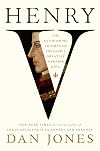
Henry V: The Astonishing Triumph of England's Greatest Warrior King
by Dan Jones
On This Page
Description
"The New York Times bestselling author returns with a biography examining the dramatic life and unparalleled leadership of England's greatest medieval king. In 1413, when Henry V ascended to the English throne, his kingdom was hopelessly torn apart by political faction and partisanship. Public finances and law and order were in a state of crisis. Pirates tormented the coast; plots, conspiracies, and heresy threatened society. The lingering effects of the worst pandemic in human history show more continued to menace daily life. And then, in less than ten years, Henry turns it all around. By common consensus in his day, and for hundreds of years afterward, Henry was the greatest medieval king that ever lived. Through skillful leadership, unwavering vision, and seemingly by sheer force of personality, he managed to catapult his realm into the greatest triumphs it has ever achieved: he united the political community behind the crown, renewed the justice system, revived England's maritime dominance. And then there are his military achievements in France, most notably the resounding, against-the-odds victory at Agincourt. He was tough, lucky, intelligent, farsighted, and cultured. But he was also, at times, cold, callous, violent, by instinct a traditionalist and even a reactionary. A historical titan, his legacy over the years has become a complicated one. As an exceptional leader, Henry V transcends the Middle Ages which produced him, and his life story has much to teach us today. Drawing on the latest scholarship and writing with his characteristic wit and style, Dan Jones examines the king's legendary life-and he puts Henry's claim to greatness very vigorously to the test"-- show lessTags
Recommendations






Member Reviews
Henry V reigned for a mere nine years and most of our knowledge of him is centred around the battle of Agincourt. Portrayed by Shakespeare as a wild youth forced to become a warrior king, Jones looks more deeply into Henry's background and considers his reign in its totality.
I am a huge admirer of Jones' work as he is able to be an engaging narrator and presenter and yet also very scholarly. Therefore I had anticipated this book with excitement and it does not disappoint. I really admire the fact that Henry's life before he accedes to to the throne is given the detail it deserves, Henry had a tough apprenticeship but this forged his manner as a king. I also like the fact that Agincourt is not made the centre of the story, much has been show more written about the battle but here it is placed in context and as part of a greater picture. All in all a book to be savoured. show less
I am a huge admirer of Jones' work as he is able to be an engaging narrator and presenter and yet also very scholarly. Therefore I had anticipated this book with excitement and it does not disappoint. I really admire the fact that Henry's life before he accedes to to the throne is given the detail it deserves, Henry had a tough apprenticeship but this forged his manner as a king. I also like the fact that Agincourt is not made the centre of the story, much has been show more written about the battle but here it is placed in context and as part of a greater picture. All in all a book to be savoured. show less
Dan Jones is such an amazing writer. He has a way of showing us historical figures and making us feel and see them as if they were on our level. But yet his writing gives them just enough edge to make us realize the place these individuals held in the weaving of our world. Henry V is no exception. Jones puts us in his shoes and makes us touch the world he lived in. He gives us a wide view of a boy that became a man in a violent and uncertain time while instilling in the reader the fact that he seemingly met his destiny head on and accepted it...warts and all. The actions and events that shaped his life...not to mention the fact that he survived sets up the chess board and prepares the reader for the next several centuries and how much show more his decisions in life would affect the crown long after his early death. Now... Mr. Jones. Where is your next book? show less
All I knew about Henry V came from Shakespeare and analyses of the battle of Agincourt Agincourt 1415, The Battle of Agincourt, plus general histories of England. Thus Henry V in my mind was the Prince Hal of Shakespeare plus the inspirational war leader at Agincourt. Dan Jones gave me an altogether different Henry V in his biography. First off, Jones notes there was a long leadup to Henry’s kingship; he was in Richard II’s court while his father Henry and brother Thomas were in exile in France; when his father usurped the throne as Henry IV, Henry (then aged 16) was immediately thrown into battle against the various rebellions that contested that usurpation, with reasonable success: he took an arrow to the face at the Battle of show more Shrewsbury, fought in Wales against Owain Glyndŵr, again with reasonable success, and sat on his father’s council while Henry IV suffered from a debilitating (but unknown) illness. There’s no hint of the feckless Prince Hal (Jones allows there was a relatively brief time when Henry was slightly out of favor with his father when he might have been at loose ends and engaged in some Shakespearian shenanigans; some chroniclers, both English and foreign, commented on Henry V’s transformation from irresponsible youth to inspirational king, but they were all writing well after his reign).
Next, both Shakespeare and the accounts of Agincourt make it seem like Henry V immediately took control of France, married Princess Katherine, and became heir to the French throne immediately after that battle. In fact, there were three more years of strenuous and expensive campaigns in France before that came about. Henry was a skillful leader in all these battles – and apparently he did engage in “a little touch of Harry in the night”, personally inspecting troops and positions before each engagement. But he doesn’t come across as that personable; contemporary accounts make him seem cold and focused. Unlike just about every other English monarch, he didn’t have mistresses or engage in conspicuous sexual activity until he married Katherine of France. He was devoutly religious, engaging in numerous pilgrimages to various shrines, and brutally suppressed the Lollard heresy (since Lollards were both traitors and heretics, they were executed with the “Lollard gallows”, that allowed them to be hanged and burnt simultaneously). Up to the very end of his life, he was planning a crusade; with his usual careful preparation he had dispatched an agent to the Levant to inspect on report on prospects.
Jones is cautious but fair in his interpretation of Henry V’s life. He notes that the conquest of France was extremely expensive in British blood and treasure, but evaporated within a few decades after Henry’s death – and that death lead to the destructive War of the Roses. And he acknowledges that Henry was a brutal religious fanatic – but observes that EVERYBODY in the 15th century was a brutal religious fanatic by 21st century standards.
I am curious about the arrow to the face at Shrewsbury. It supposedly lodged against the back of Henry’s skull; the best doctor in England came from London to remove the arrowhead with a special tool of his own devising. It’s hard to imagine a wound of that description being nonfatal; however, Jones includes a reference to a medical journal article describing it so I may track that down and get more details.
An easy, well-written read. Contemporary illustrations in a color plate section. Footnotes detailing text points as necessary, extensive endnotes, and a comprehensive bibliography of both primary and secondary sources. Recommended. show less
Next, both Shakespeare and the accounts of Agincourt make it seem like Henry V immediately took control of France, married Princess Katherine, and became heir to the French throne immediately after that battle. In fact, there were three more years of strenuous and expensive campaigns in France before that came about. Henry was a skillful leader in all these battles – and apparently he did engage in “a little touch of Harry in the night”, personally inspecting troops and positions before each engagement. But he doesn’t come across as that personable; contemporary accounts make him seem cold and focused. Unlike just about every other English monarch, he didn’t have mistresses or engage in conspicuous sexual activity until he married Katherine of France. He was devoutly religious, engaging in numerous pilgrimages to various shrines, and brutally suppressed the Lollard heresy (since Lollards were both traitors and heretics, they were executed with the “Lollard gallows”, that allowed them to be hanged and burnt simultaneously). Up to the very end of his life, he was planning a crusade; with his usual careful preparation he had dispatched an agent to the Levant to inspect on report on prospects.
Jones is cautious but fair in his interpretation of Henry V’s life. He notes that the conquest of France was extremely expensive in British blood and treasure, but evaporated within a few decades after Henry’s death – and that death lead to the destructive War of the Roses. And he acknowledges that Henry was a brutal religious fanatic – but observes that EVERYBODY in the 15th century was a brutal religious fanatic by 21st century standards.
I am curious about the arrow to the face at Shrewsbury. It supposedly lodged against the back of Henry’s skull; the best doctor in England came from London to remove the arrowhead with a special tool of his own devising. It’s hard to imagine a wound of that description being nonfatal; however, Jones includes a reference to a medical journal article describing it so I may track that down and get more details.
An easy, well-written read. Contemporary illustrations in a color plate section. Footnotes detailing text points as necessary, extensive endnotes, and a comprehensive bibliography of both primary and secondary sources. Recommended. show less
For more reviews and bookish posts visit: https://www.ManOfLaBook.com
Henry V: The Astonishing Triumph of England’s Greatest Warrior King by Dan Jones is a biography of the young king who reigned for less than a decade. Mr. Jones is a British historian and journalist.
The only thing I knew about Henry V before reading this book was from the fictionalized account written by William Shakespeare. The immortal line of “we few, we happy few, we band of brothers” during the Battle of Agincourt have inspired thousands, if not hundreds of thousands.
Too bad the real Henry V never said them.
Mr. Jones wrote a biography in present tense. His Henry is lives, and breaths, and feels as if he lived today. It’s a bold choice for historians, but he show more manages to transform a historical figure which is still somewhat divisive into an actual person.
Rather than focus on his nine years as monarch, Mr. Jones attempts to find out what made Henry not only an outstanding military commander, but a leader that also understand the importance of pomp, as well as mastering the nuances of running a kingdom. Along the way, Mr. Jones breathes life into an array of characters, from Henry’s allies to his foes.
The key to understand Henry V, according to the author, is to focus on what made him a king to begin with. Started when he became a Prince at 13, when his father, Henry IV usurped the crown, killing King Richard II. Going from one crisis to another, toughened the new Prince of Wales and hardened his heart.
The author does not shy away from Henry’s cold-hearted decisions and actions. Mr. Jones does not make up flowery prose to make his protagonist appealing to modern audience. Instead, he tells us how the King was viewed by his contemporaries. All of Henry V’s achievement, dearly paid in blood and treasure, were lost after his death at age 35.
I believe Dan Jones achieved his goal of writing an exciting biography in gripping, and somewhat conversational narrative. You can tell how passionate he is about the life and legacy on England’s warrior king. show less
Henry V: The Astonishing Triumph of England’s Greatest Warrior King by Dan Jones is a biography of the young king who reigned for less than a decade. Mr. Jones is a British historian and journalist.
The only thing I knew about Henry V before reading this book was from the fictionalized account written by William Shakespeare. The immortal line of “we few, we happy few, we band of brothers” during the Battle of Agincourt have inspired thousands, if not hundreds of thousands.
Too bad the real Henry V never said them.
Mr. Jones wrote a biography in present tense. His Henry is lives, and breaths, and feels as if he lived today. It’s a bold choice for historians, but he show more manages to transform a historical figure which is still somewhat divisive into an actual person.
Rather than focus on his nine years as monarch, Mr. Jones attempts to find out what made Henry not only an outstanding military commander, but a leader that also understand the importance of pomp, as well as mastering the nuances of running a kingdom. Along the way, Mr. Jones breathes life into an array of characters, from Henry’s allies to his foes.
The key to understand Henry V, according to the author, is to focus on what made him a king to begin with. Started when he became a Prince at 13, when his father, Henry IV usurped the crown, killing King Richard II. Going from one crisis to another, toughened the new Prince of Wales and hardened his heart.
The author does not shy away from Henry’s cold-hearted decisions and actions. Mr. Jones does not make up flowery prose to make his protagonist appealing to modern audience. Instead, he tells us how the King was viewed by his contemporaries. All of Henry V’s achievement, dearly paid in blood and treasure, were lost after his death at age 35.
I believe Dan Jones achieved his goal of writing an exciting biography in gripping, and somewhat conversational narrative. You can tell how passionate he is about the life and legacy on England’s warrior king. show less
Jones gives an account of an interesting, charismatic leader with admirable qualities of self belief, integrity and competence in war and politics. One feels he would have been a successful leader in any age. Shakespeare’s version was perhaps more relatable and had more humour
Incredibly dry book with very wordy description of the ins and outs of royalty and how many people they killed in battle or as traitors or heretics. The footnote asterisks are very hard to find. Eventually I got into the flow of it after about 2 or 3 chapters. The English just plundered France ruthlessly. It gets quite grim re how they tortured people to death back then. Very brutal.
This does not stand out in my memory. He was a "good" king, fulfilling his martial duties with valor, giving the French a hard time, particularly at Agincourt. He cut his teeth in Wales fighting rebels. He died of dysentery or something random, and most of his gains were soon lost. He is remembered fondly. He led an active event-filled dangerous life, like so many in that time. Writing a complete biography of an ancient figure with few sources and keeping it interesting is a difficult challenge.
Members
- Recently Added By
Lists

Library Books
71 works; 1 member
Author Information

24 Works 9,906 Members
Dan Jones is a British Author, Historian and Journalist. He was born Daniel Gwynne Jones in Reading, England on July 27, 1981, to Welsh parents. Jones was educated at The Royal Latin School before attending Pembroke College, University of Cambridge, where he received a first in History. In addition to his work as a newspaper columnist, Jones show more writes primarily about the middle ages. His titles include The Wars of the Roses, The Plantagenets and Summer of Blood. (Bowker Author Biography) show less
Awards and Honors
Common Knowledge
- People/Characters
- Henry V, King of England
- Dedication
- For D.
- Original language
- English
Classifications
- Genres
- History, Nonfiction, Biography & Memoir, General Nonfiction
- DDC/MDS
- 942.04 — History & geography History of Europe England and Wales England Lancaster and York 1400-85
- LCC
- DA256 .J66 — History of Europe, Asia, Africa and Oceania Great Britain History of Great Britain England History By period Early and medieval to 1485 1154-1485. Angevins. Plantagenets.
- BISAC
Statistics
- Members
- 545
- Popularity
- 54,548
- Reviews
- 7
- Rating
- (4.22)
- Languages
- Dutch, English, Spanish
- Media
- Paper, Audiobook, Ebook
- ISBNs
- 10
- ASINs
- 5