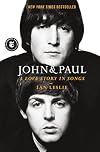
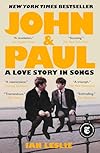
John & Paul: A Love Story in Songs
by Ian Leslie
On This Page
Description
"John Lennon and Paul McCartney knew each other for twenty-three years, from 1957 to 1980. This book is the myth-shattering biography of a relationship that changed the cultural history of the world. The Beatles shook the world to its core in the 1960's and, to this day, new generations continue to fall in love with their songs and their story. At the heart of this phenomenon lies the dynamic between John Lennon and Paul McCartney. Few other musical partnerships have been rooted in such a show more deep, intense and complicated personal relationship. John and Paul's relationship was defined by its complexity: compulsive, tender and tempestuous; full of longing, driven by jealousy. Like the band, their relationship was always in motion, never in equilibrium for long. John & Paul traces its twists and turns and reveals how these shifts manifested themselves in the music. The two of them shared a private language, rooted in the stories, comedy and songs they both loved as teenagers, and later, in the lyrics of Beatles songs. In John & Paul, acclaimed writer Ian Leslie uses the songs they wrote to trace the shared journey of these two compelling men before, during, and after The Beatles. Drawing on recently released footage and recordings, Leslie offers us an intimate and insightful new look at two of the greatest icons in music history, and rich insights into the nature of creativity, collaboration, and human intimacy"-- show lessTags
Recommendations











Member Reviews
I've just read a book
I can't forget the time or place...
It's John & Paul, A Love Story in Songs by Ian Leslie. If you love the Beatles, this book will imbed them even deeper into your soul.
The author's focus is on John and Paul's ever-evolving non-sexual couple status, their love for and dependence upon each other, and how their traumatic childhoods informed their unbreakable bond.
Song by song, we learn who wrote what, which songs "belonged" to each, and how they switched leads in harmony and lyrics. As founder and builder, John felt that the Beatles were "his" band, from Liverpool on. Paul's stronger work ethic, musical versatility, and his uncanny ability to "hear" a song even before they finished writing forced John to acknowledge show more that they were equals.
That change in dynamics left John feeling the loss of top dog power, although they both sensed that their unique skills and their ability to mesh that creativity thrust the band to its heights.
The Beatles were the first performers to understand how refusing to play outsized stadiums could light up an explosion of artistry and inventiveness in the studio. If you were present at the creation, as a fan in 1964 and beyond, this book will envelop you in joy and sorrow.
Quotes:
"Ticket to Ride" is a Lennon idea, a Lennon and McCartney song, and a McCartney production."
"It is hard for us, looking back, to grasp just how much the Beatles had to invent a whole new category of music in order to be seen for what they were. They went from making LPs to making album-length artistic statements."
"Ray Davies of the Kinks said, "Paul was one of the most competitive people I've ever met. Lennon wasn't. He just thought everyone else was shit." show less
I can't forget the time or place...
It's John & Paul, A Love Story in Songs by Ian Leslie. If you love the Beatles, this book will imbed them even deeper into your soul.
The author's focus is on John and Paul's ever-evolving non-sexual couple status, their love for and dependence upon each other, and how their traumatic childhoods informed their unbreakable bond.
Song by song, we learn who wrote what, which songs "belonged" to each, and how they switched leads in harmony and lyrics. As founder and builder, John felt that the Beatles were "his" band, from Liverpool on. Paul's stronger work ethic, musical versatility, and his uncanny ability to "hear" a song even before they finished writing forced John to acknowledge show more that they were equals.
That change in dynamics left John feeling the loss of top dog power, although they both sensed that their unique skills and their ability to mesh that creativity thrust the band to its heights.
The Beatles were the first performers to understand how refusing to play outsized stadiums could light up an explosion of artistry and inventiveness in the studio. If you were present at the creation, as a fan in 1964 and beyond, this book will envelop you in joy and sorrow.
Quotes:
"Ticket to Ride" is a Lennon idea, a Lennon and McCartney song, and a McCartney production."
"It is hard for us, looking back, to grasp just how much the Beatles had to invent a whole new category of music in order to be seen for what they were. They went from making LPs to making album-length artistic statements."
"Ray Davies of the Kinks said, "Paul was one of the most competitive people I've ever met. Lennon wasn't. He just thought everyone else was shit." show less
You can’t believe that there is anything you don’t already know about the Beatles. Yet Leslie comes up with a new approach to examine the incredible body of work that Lennon and McCartney created. He views their songs, especially the lyrics, through a behavioral lens. From this, a biography takes shape that sheds new light on their complicated relationship. “In music” Leslie points out, “they could say what they felt without having to say it.” He speculates that they took on tough personas to serve as shields to hide their true emotions, especially how they felt about each other. The fun of his approach is that the shields come down revealing hidden meanings that may have always been there in the songs that most of us have show more known by heart for over 50 years.
Of course, we are familiar with their boyhood friendship, their rise to fame and their eventual breakup. Also, we have been given a stereotypical understanding of their individual characteristics. This is where Leslie’s approach provides new insights. We know John was tough, sardonic, volatile, and articulate. But maybe were unaware of his neediness, introversion, and predispositions toward jealousy and depression. Similarly, we know of Paul’s extroversion, musical expertise and exuberant eclecticism. But maybe we didn’t know that, despite being a forceful leader with business acumen, he had a quiet side that cherished strong family ties.
Their successful careers as solo artists aside, the synergy they brought to their collaboration was the key to their success. This is a theme that resonates throughout the biography. The collaboration was indeed greater than the sum of its parts and both knew it at a gut level. Indeed, they were emotionally reliant on each other. This may have begun when both lost their mothers as teenagers but seemed to appear again when each developed close relationships with strong women that tended to pull them apart.
Leslie covers events surrounding the ultimate breakup of the quartet in excessive detail. Much of it has been well documented and much of what he covers seems to verge on gossip. Notwithstanding all of the rancor, Leslie finds a few nuggets that strongly suggest, not unlike divorce following a longstanding marriage, John and Paul could never really quit each other. Their ties were far too strong. show less
Of course, we are familiar with their boyhood friendship, their rise to fame and their eventual breakup. Also, we have been given a stereotypical understanding of their individual characteristics. This is where Leslie’s approach provides new insights. We know John was tough, sardonic, volatile, and articulate. But maybe were unaware of his neediness, introversion, and predispositions toward jealousy and depression. Similarly, we know of Paul’s extroversion, musical expertise and exuberant eclecticism. But maybe we didn’t know that, despite being a forceful leader with business acumen, he had a quiet side that cherished strong family ties.
Their successful careers as solo artists aside, the synergy they brought to their collaboration was the key to their success. This is a theme that resonates throughout the biography. The collaboration was indeed greater than the sum of its parts and both knew it at a gut level. Indeed, they were emotionally reliant on each other. This may have begun when both lost their mothers as teenagers but seemed to appear again when each developed close relationships with strong women that tended to pull them apart.
Leslie covers events surrounding the ultimate breakup of the quartet in excessive detail. Much of it has been well documented and much of what he covers seems to verge on gossip. Notwithstanding all of the rancor, Leslie finds a few nuggets that strongly suggest, not unlike divorce following a longstanding marriage, John and Paul could never really quit each other. Their ties were far too strong. show less
If you believe that "sometimes a cigar is just a cigar," you might not find this umpteenth book about the Beatles entertaining. But for armchair analysts like myself, it was fascinating. Ian Leslie lasers in on the complicated relationship between John Lennon and Paul McCartney, from their first meeting as teenagers to their final conversation before Lennon's assassination. The joy that they found playing and writing together was balm to souls devastated by loss (Paul's mother had recently died; John's father abandoned the family and his mother flitted in and out of his life until she was killed in a car accident).
But as the Beatles became more successful, Lennon and McCartney became more competitive and envious of each other. As the show more founder of the band (more specifically, its precursor The Quarrymen), John considered himself the leader of the Beatles. Paul saw himself as the leader by virtue of his more active role in the band's process. Leslie looks deep into the young men's songs to find evidence of their charged dynamics, forgoing the facile labels of Paul as the sentimental one and Lennon as the cool, brainy one. Leslie's explanations of the unconscious messages in their songs occasionally stretch credulity; realistically, we can only theorize about their true meaning. But his description of their bond made me mourn John's death anew as the cruel end to a beautiful friendship.
But as the Beatles became more successful, Lennon and McCartney became more competitive and envious of each other. As the show more founder of the band (more specifically, its precursor The Quarrymen), John considered himself the leader of the Beatles. Paul saw himself as the leader by virtue of his more active role in the band's process. Leslie looks deep into the young men's songs to find evidence of their charged dynamics, forgoing the facile labels of Paul as the sentimental one and Lennon as the cool, brainy one. Leslie's explanations of the unconscious messages in their songs occasionally stretch credulity; realistically, we can only theorize about their true meaning. But his description of their bond made me mourn John's death anew as the cruel end to a beautiful friendship.
Musically, "In My Life" is a descendent of "If I Fell," and is as wrapped up in the Lennon-McCartney relationship as that song is. Many of Lennon's songs from that period...are about someone glamorous and emotionally distant, tantalizingly out of reach. These songs are not "about" Paul directly, but they do have a flavor of his golden progress through London society as seen through the eyes of a socially awkward suburbanite. Paul needed John to trust in him - he wanted to get through to John, to convince him that he was committed to their partnership, and worthy of his trust. What he didn't quite see is that John wanted an acknowledgement of love, since love and trust were for him almost synonymous. Of course, neither of them could say so.. show less
I grew up with new Beatles records, and am a lifelong fan. I loved this book! It was thoughtful, and had a lot of good insights. It was written by a fan, but one with a critical, but kind, eye. I am making myself a note to check it out again, since I couldn't both play the tracks as they were discussed AND stick to the library loan period. There are so many interesting takes on songs that I really want to listen as I read. I highly recommend this book to anyone who's a fan of the band. Else, why bother?
About the relationship between John & Paul. Very sympathetic to Paul; John comes across as an extremely damaged person at best, mentally ill at worst. The cruel things he wrote to and about Paul after the breakup were the rantings of an immature and insecure individual. Paul, in this telling, was just stoic, perplexed, bewildered. I felt so bad for him.
Both young men endured terrible losses early in life; John had the much more confused and unstable upbringing, despite his Aunt Mimi's efforts to supply the opposite. Each man named his first child after his mother.
The premise of the book is that we can read the John/Paul relationship as a bromance conveyed in their songs. Men in that time and place could not openly express their show more feelings, especially about each other. I guess it's what Jim Croce said: "I'll have to say I love you in a song." The song analyses in the book are spot-on and convincing.
Favorite quotes:
Actually an Arthur Schopenhauer quote. "Talent hits a target no one else can hit. Genius hits a target no one else can see." The Beatles were just on another plane.
"All of the Beatles, with the partial exception of Ringo, were promiscuous; what distinguished Paul's philandering was the scale of it, and his attention to logistical detail. He really put the work in." Isn't that so him?
Paul seemed "annoyed by John's dalliances with avant-garde art. (When Lindsay-Hogg asks, 'Where's John?' Paul replies, 'Probably in a bag in his dressing room with Yoko. I think they brought their own bag with them today.')" Everybody's talking about bagism. show less
Both young men endured terrible losses early in life; John had the much more confused and unstable upbringing, despite his Aunt Mimi's efforts to supply the opposite. Each man named his first child after his mother.
The premise of the book is that we can read the John/Paul relationship as a bromance conveyed in their songs. Men in that time and place could not openly express their show more feelings, especially about each other. I guess it's what Jim Croce said: "I'll have to say I love you in a song." The song analyses in the book are spot-on and convincing.
Favorite quotes:
Actually an Arthur Schopenhauer quote. "Talent hits a target no one else can hit. Genius hits a target no one else can see." The Beatles were just on another plane.
"All of the Beatles, with the partial exception of Ringo, were promiscuous; what distinguished Paul's philandering was the scale of it, and his attention to logistical detail. He really put the work in." Isn't that so him?
Paul seemed "annoyed by John's dalliances with avant-garde art. (When Lindsay-Hogg asks, 'Where's John?' Paul replies, 'Probably in a bag in his dressing room with Yoko. I think they brought their own bag with them today.')" Everybody's talking about bagism. show less
One of my sons likes to buy me books on the Beatles and the Nazis (two subjects I find pretty compelling). I read this well written book that focusses on John and Paul and their relationship, especially in song writing,close after completing a previous book on the Beatles so I noticced what was in the previous book and what was missing. Truth is the Beatles are so well documented and there are so many disputes over certain stories that it is difficult to keep up. Very interesting stab this, which I enjoyed reading. He suggests that with his marriage to Linda Paul switched from being markedly promiscuous to markedly monogamous, which he puts down to love of extremes, probably correctly. I an Leslie is a champion of Paul over John but show more tries to be fair. I still find myself wanting to favour John, even though he was clearly a monster in many respects. I guess they are both very talneted opeople with huge flaws whose relationship with one another is tangled and full of fascination. The book contains an interesting bibliography so I am in danger of spending even more time on this subject if I am not careful. show less
This is an exploration of the Lennon and McCartney relationship viewed as a bromance. It would have made an excellent extended essay; the book, however, is just shy of four hundred pages. A promising idea has been teased out beyond its natural length and weighed down with a lot of over-familiar facts. There are some interesting insights here: how two separate songwriters combined to create a third creative voice, how they communicated with each through songs, and continued to do so even after the Beatles ended. It’s the story of a deep bond formed in adolescence and never entirely sundered, and is sometimes very touching. Unfortunately, it has been encased within yet another trawl through the entire Beatles saga, from Woolton fete to show more Lennon’s murder.
With so much already written and known about the group, I suspect the best new Beatles books are likely to be selective in focus, non-chronological, subjective, playful and, above all, brief. That is actually a pretty good description of Leslie’s attractive online essay 64 Reasons To Celebrate Paul McCartney, which was the genesis of this. The book itself feels more conventional and familiar - the standard attempt to write the definitive account (and why is ‘definitive’ always synonymous with very long?) Just as the White Album was a brilliant single LP trapped inside a double, there is a thoughtful and original slim volume trying to get out of this overlong work. show less
With so much already written and known about the group, I suspect the best new Beatles books are likely to be selective in focus, non-chronological, subjective, playful and, above all, brief. That is actually a pretty good description of Leslie’s attractive online essay 64 Reasons To Celebrate Paul McCartney, which was the genesis of this. The book itself feels more conventional and familiar - the standard attempt to write the definitive account (and why is ‘definitive’ always synonymous with very long?) Just as the White Album was a brilliant single LP trapped inside a double, there is a thoughtful and original slim volume trying to get out of this overlong work. show less
Members
- Recently Added By
Lists

Entertainment
174 works; 1 member

To Read
133 works; 1 member

2024-2025 Ezra Klein Guest Recommendations
213 works; 5 members
Author Information

7 Works 725 Members
Ian Leslie writes on psychology, social trends, and politics for publications including Slate, Economist, Guardian, Financial Times and Granta. He lives in London.
Awards and Honors
Awards
Distinctions
Common Knowledge
- Original title
- John & Paul: A Love Story in Songs
- Original publication date
- 2025
- Related movies
- A Hard Day's Night (1964 | IMDb); Austin Powers: International Man of Mystery (1997 | IMDb)
- Dedication
- For Alive, Io, and Douglas
- First words
- Paul McCartney emerges from the recording studio in which he has been working all day to face a group of reporters holding microphones toward him under blinding lights. They ask for his reaction to John Lennon's murder, the n... (show all)ight before. McCartney is chewing gum. His answers are short, laconic. -Prologue, December 9,1980
They met on a hot day in July 1957 - twelve years after the war, ten years before Sgt. Pepper- amid the homespun pageantry of a suburban English garden party: brass band, fancy-dress parades, cake stalls, and hoopla ga... (show all)mes, police dogs jumping through ring of fire. Paul McCartney, fifteen years old, was a tourist that day, over from Allerton, a mile or two across the gold course. He didn't hang out in Woolton much - it was a posh neighborhood, a little prissy - but his friend from school, Ivan, lived there, and Ican had suggested they go to the fete. There would be girls, plus Ivan had this local friend, John Lennon, whom Paul might like to meet, or at least see play with his group. -Chapter 1, Come Go With Me - Blurbers
- Adam Gopnik; Caitlin Moran; Rob Sheffield; Jon Savage; James Shapiro; Tom Holland
- Original language
- English
- Canonical DDC/MDS
- 782.42166092
- Canonical LCC
- ML421.B4 L45
Classifications
- Genres
- Music, Nonfiction, Biography & Memoir, General Nonfiction, History
- DDC/MDS
- 782.42166092 — Arts & recreation Music Vocal music [formerly: Dramatic music and production of musical drama] Secular forms of vocal music Songs General principles and musical forms Traditions of secular songs {genres} Rock songs modified standard subdivisions History, geographic treatment, biography Biography
- LCC
- ML421 .B4 .L45 — Music Literature on music Literature on music History and criticism Biography
- BISAC
Statistics
- Members
- 211
- Popularity
- 154,071
- Reviews
- 16
- Rating
- (4.31)
- Languages
- English, Portuguese
- Media
- Paper, Audiobook, Ebook
- ISBNs
- 8
- ASINs
- 5